
Understanding how to estimate your Social Security benefits is a crucial step in comprehensive retirement planning. This knowledge empowers you to make informed financial decisions, bridge potential income gaps, and ensure a more secure future. While the Social Security Administration (SSA) provides official statements, external estimation tools and a grasp of the underlying calculations can offer valuable insights and allow for more proactive planning. This article will guide you through the process of estimating your future Social Security income, focusing on the financial implications and strategies.
Understanding the Foundations of Social Security Benefit Calculation
The Social Security benefit calculation is based on your lifetime earnings history, specifically your highest 35 years of earnings that were subject to Social Security taxes. This data is indexed for inflation, meaning that wages from earlier years are adjusted to reflect their current value. The SSA uses this adjusted total to determine your Average Indexed Monthly Earnings (AIME). From your AIME, a formula is applied to arrive at your Primary Insurance Amount (PIA), which is the benefit you would receive if you claim retirement benefits at your Full Retirement Age (FRA).

The Role of Your Earnings Record
Your Social Security earnings record is the bedrock of your benefit calculation. Each year you work and pay Social Security taxes, your earnings are recorded by the SSA. It’s essential to review this record periodically to ensure its accuracy. Errors can occur, and correcting them is much easier when addressed promptly. You can obtain your Statement of Earnings from the Social Security Administration’s website, which provides a detailed history of your contributions. This statement is invaluable for verifying that all your years of employment and income have been properly accounted for. The SSA only considers earnings up to an annual limit, which changes each year. Any earnings above this limit are not included in the calculation.
The Impact of Inflation Indexing
Inflation erodes the purchasing power of money over time. The Social Security system accounts for this through a process called “indexing.” This means that your past earnings are adjusted to reflect the general rise in wages over time. For example, earnings from 30 years ago are not valued at their nominal amount but are instead brought up to a more current wage level. This ensures that your benefit calculation is based on a more realistic representation of your earnings relative to the economic conditions when you are likely to claim benefits. The indexing process is complex and performed by the SSA, but understanding its purpose highlights why your entire earnings history, not just your most recent years, is crucial.
Calculating Your Average Indexed Monthly Earnings (AIME)
The first step in determining your benefit is calculating your AIME. This involves:
- Identifying Your Highest 35 Years: The SSA looks at your entire earnings record and identifies the 35 years with the highest inflation-adjusted earnings. If you have fewer than 35 years of earnings, the years with no earnings will be counted as zero, which will lower your AIME.
- Summing Your Indexed Earnings: The indexed earnings for these 35 years are then summed.
- Dividing by 420: The total sum is then divided by 420 (the number of months in 35 years) to arrive at your AIME.
The AIME is a critical component as it forms the basis for calculating your PIA. Even small discrepancies in your earnings record or a misunderstanding of the indexing process can lead to a significant difference in your estimated AIME and, consequently, your future benefits.
Estimating Your Retirement Benefit Amount
Once your AIME is determined, the SSA applies a formula to calculate your Primary Insurance Amount (PIA). This formula is progressive, meaning it replaces a higher percentage of earnings for lower-income workers than for higher-income workers. This is a key feature designed to provide a more substantial safety net for those who earned less throughout their careers.
The Progressive Benefit Formula
The current formula for calculating your PIA, which is subject to change annually, typically involves three “bend points.” For example, for a worker who reaches age 62 in 2024, the formula might look something like this:
- 90% of the first $1,174 of your AIME
- 32% of the AIME between $1,174 and $7,078
- 15% of the AIME over $7,078
The exact bend points and percentages are adjusted each year to reflect changes in average wages. This progressive nature ensures that Social Security provides a more significant income replacement for lower earners. Therefore, accurately estimating your AIME is paramount to understanding how this formula will apply to your specific earnings history.
Understanding Your Full Retirement Age (FRA)
Your Full Retirement Age (FRA) is the age at which you can receive your full Social Security retirement benefit without any reduction. The FRA is determined by your birth year. For those born between 1943 and 1954, the FRA is 66. For those born in 1960 or later, the FRA is 67. For individuals born between these years, the FRA gradually increases by two months per year. Claiming benefits before your FRA will result in a permanently reduced benefit amount, while delaying benefits beyond your FRA can result in increased benefits.
The Impact of Early or Delayed Retirement Claims
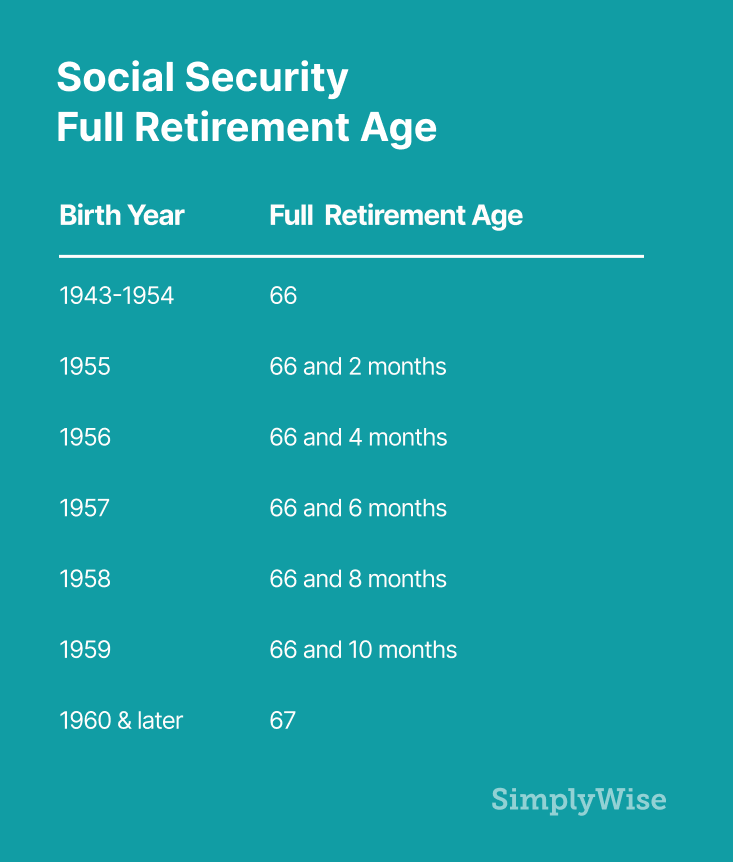
The age at which you choose to claim your Social Security benefits has a substantial impact on the amount you receive.
- Claiming Before FRA: For each month you claim benefits before your FRA, your benefit is reduced by a small percentage. For example, if you claim at age 62, your benefit could be reduced by up to 30% permanently. This reduction is permanent and will affect your monthly payments for the rest of your life.
- Claiming After FRA: Conversely, delaying your claim beyond your FRA earns you “delayed retirement credits.” For each month you delay claiming after your FRA, up to age 70, your benefit increases. This increase is typically 8% per year for those born after 1943. The maximum benefit you can receive is by delaying until age 70.
Understanding these options is crucial for optimizing your retirement income strategy. A financial advisor can help you assess the trade-offs based on your personal circumstances, health, and other income sources.
Utilizing Social Security Administration Tools for Estimation
The Social Security Administration provides official resources designed to help individuals estimate their future benefits. These tools are generally considered the most accurate sources of information, as they are based directly on your earnings record and the SSA’s current benefit formulas.
The Official Social Security Statement
Your annual Social Security Statement is a personalized document that provides an estimate of your future retirement, disability, and survivor benefits. It also shows your earnings history as recorded by the SSA. It is highly recommended that you obtain and review this statement at least once a year, particularly as you approach retirement age. You can access your statement online through the SSA’s website. This statement is invaluable for verifying the accuracy of your earnings record and getting a preliminary estimate of your benefits.
The Retirement Estimator Tool
The SSA offers an online “Quick Calculator” and a more detailed “Retirement Estimator” on its website. The Quick Calculator provides a rough estimate based on your current age and estimated future earnings. The Retirement Estimator requires you to create an account and input more specific information about your earnings to generate a personalized benefit estimate. These tools use your actual earnings record to provide more precise projections.
Creating a “My Social Security” Account
Creating a “My Social Security” account on the SSA’s website is a crucial step for managing your Social Security information. This account allows you to:
- View your Social Security Statement online.
- Access your earnings record and check for accuracy.
- Get personalized benefit estimates using the Retirement Estimator.
- Apply for benefits online when the time comes.
- Manage your benefits if you are already receiving them.
Having this account provides ongoing access to vital information and simplifies the process of understanding your Social Security entitlements.
Advanced Strategies and Considerations for Benefit Estimation
While official tools provide a baseline, several advanced strategies and considerations can refine your benefit estimations and inform your retirement planning. These include understanding the impact of different claiming strategies and exploring supplemental financial tools.
The Significance of Your Highest-Earning Years
As mentioned, your benefit is calculated based on your highest 35 years of indexed earnings. This means that if you have a period of significantly lower earnings, it can pull down your average. Conversely, if you have a strong earnings history, maximizing those years and ensuring they are accurately reflected is critical. If you are still working and have years with lower earnings, consider strategies to increase your income in those years, if feasible, to potentially improve your overall AIME. For those nearing retirement, understanding how many years of zero or low earnings are factored into your calculation can be eye-opening.
Exploring Online Benefit Calculators and Financial Planning Software
Beyond the SSA’s tools, numerous third-party financial websites and software offer sophisticated Social Security benefit calculators. These tools often allow for more complex scenarios, such as modeling the impact of different claiming ages, considering spousal benefits, or factoring in potential changes in future earnings. While these tools can be helpful for scenario planning, it’s essential to remember that they are estimates and may not be as accurate as the official SSA calculations. They can, however, be excellent for visualizing different retirement pathways and their financial implications. Some financial planning software integrates Social Security projections with other retirement assets, providing a holistic view of your financial future.

The Interplay Between Social Security and Other Retirement Income Sources
It’s vital to remember that Social Security is rarely your sole source of retirement income. Its purpose is to provide a foundation, not to replace your entire pre-retirement income. When estimating your Social Security benefits, consider how they will integrate with other retirement savings, such as 401(k)s, IRAs, pensions, and any other investments. A comprehensive retirement plan will account for the combined income from all these sources to ensure you can maintain your desired lifestyle. Understanding your projected Social Security income allows you to determine how much you need to save and withdraw from other sources to meet your financial goals. For example, if your Social Security estimate falls short of your projected needs, you may need to adjust your savings rate or investment strategy.
By actively engaging with these estimation methods and understanding the underlying principles, you can gain a clearer picture of your future financial landscape and make more confident decisions about your retirement.
aViewFromTheCave is a participant in the Amazon Services LLC Associates Program, an affiliate advertising program designed to provide a means for sites to earn advertising fees by advertising and linking to Amazon.com. Amazon, the Amazon logo, AmazonSupply, and the AmazonSupply logo are trademarks of Amazon.com, Inc. or its affiliates. As an Amazon Associate we earn affiliate commissions from qualifying purchases.