
In the intricate world of personal finance, investing, and business, percentages are more than just mathematical concepts; they are the bedrock upon which sound financial decisions are built. From understanding discount rates on your next big purchase to calculating interest on a loan, assessing investment returns, or even deciphering profit margins, the ability to accurately find percentages of a number is an indispensable skill. It empowers you to navigate economic landscapes with confidence, make informed choices, and ultimately, secure your financial well-being.
This guide will demystify percentages, providing you with a clear, step-by-step methodology to calculate them, alongside practical applications tailored for the money-savvy individual. We’ll explore the foundational math, delve into real-world financial scenarios, and equip you with the tools and insights to master this crucial aspect of financial literacy.

The Foundational Math: Deconstructing Percentages for Financial Clarity
At its core, a percentage is simply a way of expressing a number as a fraction of 100. The term “percent” literally means “per hundred” or “out of one hundred.” This makes percentages incredibly useful for comparing different quantities or proportions in a standardized way, a capability that is particularly vital when dealing with diverse financial figures.
What is a Percentage, Really?
Imagine you’re comparing two investment opportunities. One offers a return of $500 on an initial investment of $10,000, while another offers $300 on an initial investment of $5,000. Without a common baseline, it’s hard to tell which is better. By converting these returns into percentages, we immediately get a clear picture:
- Investment 1: ($500 / $10,000) * 100% = 5%
- Investment 2: ($300 / $5,000) * 100% = 6%
Suddenly, the second investment, despite a lower absolute dollar return, proves to be more profitable in percentage terms. This simple example highlights why understanding percentages is non-negotiable in finance. They standardize comparisons, reveal relative growth or decline, and illuminate the true impact of financial figures.
The Core Formula: Unlocking Any Calculation
The fundamental formula to find what percentage one number (the “part”) is of another number (the “whole”) is:
Percentage = (Part / Whole) × 100
Let’s break down how this works with a common financial example:
- Example 1: Calculating a Budget Allocation
If your monthly income is $4,000 (the “whole”) and you spend $1,200 on rent (the “part”), what percentage of your income goes to rent?
Percentage = ($1,200 / $4,000) × 100 = 0.3 × 100 = 30%
So, 30% of your income is allocated to rent.
Calculating a Percentage Of a Number
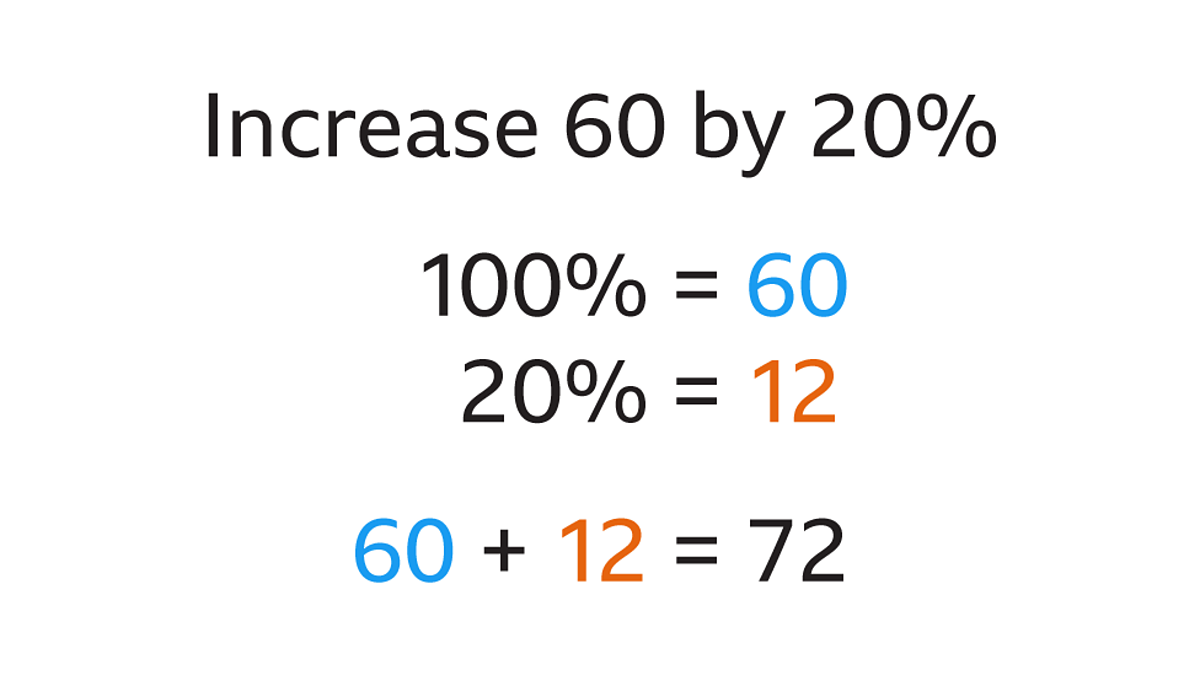
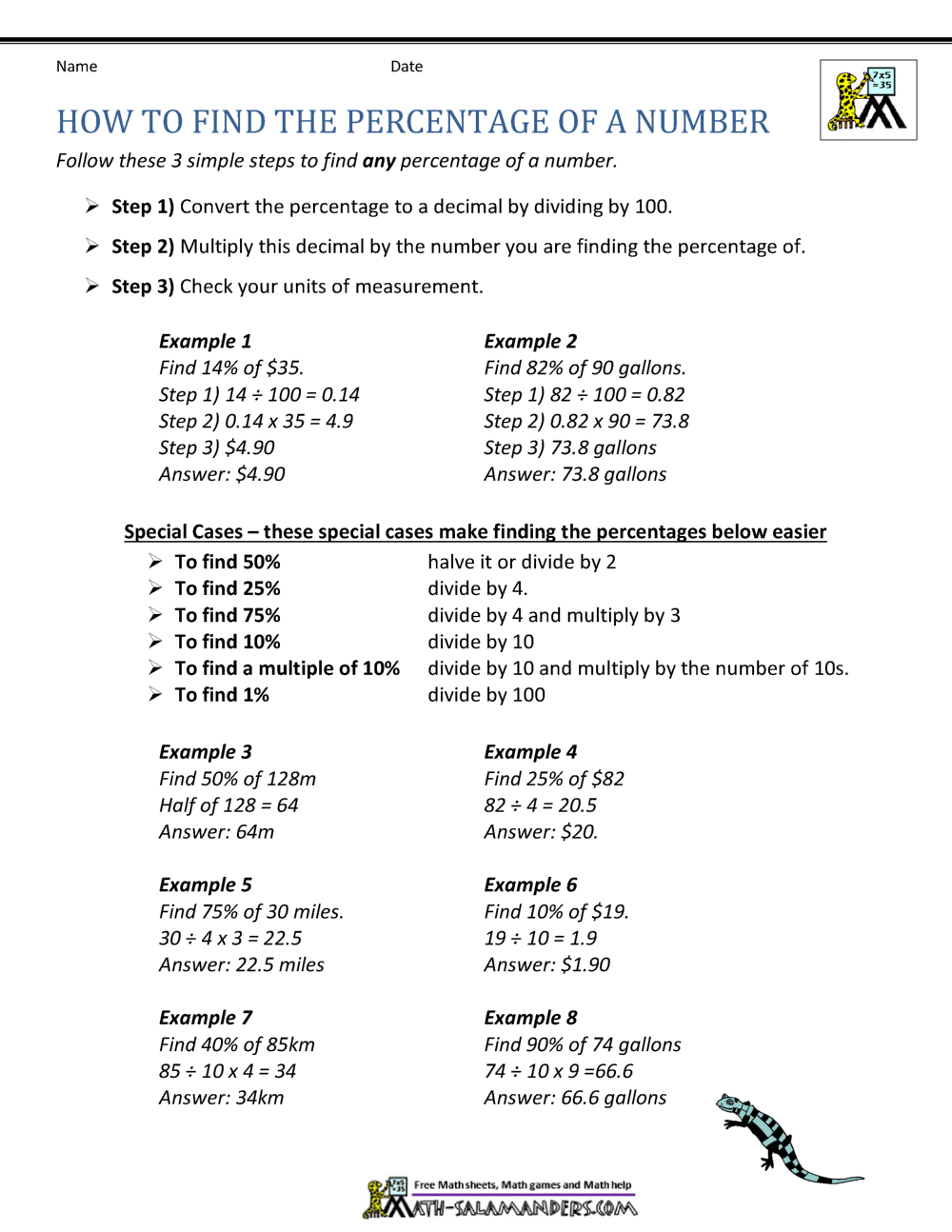
Often, you’ll need to find a specific percentage of a given number. This is common when calculating discounts, interest, or commissions. The process involves two simple steps:
- Convert the percentage to a decimal: Divide the percentage by 100. (e.g., 20% becomes 0.20, 5% becomes 0.05).
- Multiply the decimal by the number: This gives you the numerical value of that percentage.
-
Example 2: Discovering a Discount Price
You see a laptop advertised for $800, with a 15% discount. How much is the discount, and what’s the final price?- Convert 15% to a decimal: 15 / 100 = 0.15
- Calculate the discount amount: 0.15 × $800 = $120
- Final price: $800 – $120 = $680
-
Example 3: Estimating a Sales Tax
You’re buying an item for $50, and the sales tax is 8%. How much tax will you pay?- Convert 8% to a decimal: 8 / 100 = 0.08
- Calculate the tax amount: 0.08 × $50 = $4
These fundamental calculations form the basis for almost every percentage-related financial operation you’ll encounter.
Real-World Financial Applications: Where Percentages Drive Decisions
The power of percentages truly shines in their practical application across various financial domains. Understanding how to use them can significantly impact your personal wealth and business success.
Personal Finance: Navigating Discounts, Interest, and Budgets
Percentages are omnipresent in personal finance:
- Discounts and Sales: When a store advertises “30% off,” you use percentages to calculate your savings and the final price, ensuring you’re getting the best deal.
- Interest Rates: Whether it’s the interest you earn on savings (e.g., 0.5% APY) or the interest you pay on loans (e.g., 18% APR on a credit card, 3.5% mortgage rate), percentages dictate how much your money grows or costs over time. A small difference in percentage points can mean thousands of dollars saved or spent.
- Budgeting: Financial advisors often recommend allocating specific percentages of your income to categories like housing (e.g., 30%), savings (e.g., 15%), and discretionary spending (e.g., 20%). Percentages simplify tracking and adherence to these guidelines.
- Inflation: The annual inflation rate (e.g., 3%) tells you by what percentage the cost of goods and services has increased, eroding the purchasing power of your money.
Investing Strategies: Understanding Returns and Risk
For investors, percentages are the primary language of performance and risk:
- Return on Investment (ROI): This crucial metric is always expressed as a percentage. If you invest $1,000 and it grows to $1,200, your ROI is (($1,200 – $1,000) / $1,000) × 100 = 20%. This allows for easy comparison across different investment vehicles.
- Portfolio Allocation: Financial planners use percentages to recommend diversifying your investments, suggesting, for instance, that 60% of your portfolio be in stocks, 30% in bonds, and 10% in cash, based on your risk tolerance and age.
- Dividend Yield: For income investors, the dividend yield (annual dividends per share / share price) is a percentage that indicates the cash flow return on their investment.
- Expense Ratios: In mutual funds or ETFs, the expense ratio is a percentage representing the annual cost of managing the fund, directly impacting your net returns.
Business and Online Income: Profitability and Growth
Businesses, from startups to multinationals, rely heavily on percentages for operational insights:
- Profit Margins: Gross profit margin, operating profit margin, and net profit margin are all percentages that reveal how efficiently a business converts revenue into profit. A healthy profit margin (e.g., 10% net profit margin) indicates financial strength.
- Sales Growth: Businesses track month-over-month or year-over-year sales growth as a percentage. For example, a “15% increase in Q3 sales” is a vital performance indicator.
- Commission Rates: Many sales roles, especially in online income models like affiliate marketing, involve commission rates (e.g., “earn 10% commission on every sale”), directly linking effort to earnings.
- Tax Rates: Understanding various tax rates (corporate income tax, sales tax, payroll tax) as percentages is fundamental for accurate financial planning and compliance.
Tools and Techniques for Effortless Percentage Calculation
While the basic formulas are simple, leveraging modern tools can significantly streamline percentage calculations, especially for complex financial scenarios.
Leveraging Digital Calculators and Apps
Your smartphone is a powerful percentage calculator. Basic calculators allow you to input numbers and percentages directly (e.g., “800 – 15%”). Dedicated financial apps often include specialized percentage calculators for loans, tips, or savings growth. These tools are indispensable for quick, on-the-go calculations, whether you’re at the store or reviewing your budget.
Mastering Spreadsheets for Complex Scenarios
For more detailed financial analysis, budgeting, and investment tracking, spreadsheets like Microsoft Excel or Google Sheets are unparalleled. They allow you to:
- Automate calculations: Input formulas once, and they automatically update as your data changes.
- To find what percentage one number (A1) is of another (B1):
=(A1/B1)*100 - To find X% (A1) of a number (B1):
=(A1/100)*B1or simply=A1*B1if A1 is formatted as a percentage.
- To find what percentage one number (A1) is of another (B1):
- Track budgets: Easily see what percentage of your income goes to different categories.
- Project investments: Model compound interest scenarios over decades, revealing the exponential growth potential.
- Analyze business metrics: Calculate profit margins, growth rates, and other KPIs across multiple periods.
Quick Mental Math Hacks for Everyday Scenarios
While tools are great, sometimes you need a quick estimate. Here are a couple of mental math tricks:
- Finding 10%: To find 10% of any number, just move the decimal point one place to the left. (e.g., 10% of $50 is $5; 10% of $345 is $34.50).
- Using 10% to find other percentages:
- 20%: Double 10%. (e.g., 20% of $50 = 2 * (10% of $50) = 2 * $5 = $10).
- 5%: Half of 10%. (e.g., 5% of $50 = (10% of $50) / 2 = $5 / 2 = $2.50).
- 15%: 10% + 5%. (e.g., 15% of $50 = $5 + $2.50 = $7.50).
These quick estimates are perfect for checking restaurant bills, assessing sale prices, or making rough budget adjustments on the fly.
Avoiding Common Pitfalls and Enhancing Your Financial Acumen
Even with a solid understanding of calculations, misinterpreting percentages can lead to costly financial mistakes. A truly astute financial mind understands not just how to calculate, but how to interpret and contextualize these figures.
The Trap of Percentage Point vs. Percentage Change
One of the most common errors is confusing “percentage points” with “percentage change.”
- Percentage Points: This refers to the absolute difference between two percentages.
- Example: If an interest rate increases from 4% to 5%, that’s a 1 percentage point increase.
- Percentage Change: This refers to the relative change in a number, expressed as a percentage.
- Example: An increase from 4% to 5% is also a ((5-4)/4) * 100 = 25% increase.
This distinction is crucial in finance. A mutual fund manager might boast of reducing fees by 0.2 percentage points (e.g., from 1.0% to 0.8%), but if the base fee was small, this could represent a significant percentage reduction in the fee itself. Always clarify which is being referred to.
- Example: An increase from 4% to 5% is also a ((5-4)/4) * 100 = 25% increase.
Compound Interest: The Power (and Peril) of Percentages Over Time
Compound interest, often called the “eighth wonder of the world,” demonstrates the exponential power of percentages. When interest is earned not only on the initial principal but also on the accumulated interest from previous periods, the growth accelerates dramatically.
- Savings: A seemingly small annual percentage yield (APY) on your savings, compounded over decades, can lead to substantial wealth accumulation.
- Debt: Conversely, high-interest credit card debt, compounded monthly, can quickly spiral out of control, making even small balances grow into overwhelming sums.
Understanding the long-term impact of compounding percentages is foundational for both saving and debt management.
Critical Thinking: Not All Percentages Are Created Equal
Finally, always apply critical thinking when presented with percentages:
- Beware of Base Numbers: A “50% increase in profits” sounds great, but if the initial profit was $10, it’s only an extra $5. Always ask, “50% of what?”
- Context Matters: A “10% return” on an investment might be excellent in a bear market but disappointing in a booming bull market.
- Look for Misleading Statistics: Marketers can often manipulate how percentages are presented. For example, “Save up to 70%!” usually means only a few items are at 70%, with most at a much lower discount.
By questioning the source, understanding the base, and considering the context, you can cut through financial jargon and make decisions based on true value and impact.
Empowering Your Financial Journey
The ability to accurately find percentages of a number is not just a mathematical skill; it’s a cornerstone of financial literacy. From personal budgeting and smart shopping to savvy investing and effective business management, percentages provide the lens through which we understand value, growth, and risk. By mastering the foundational calculations, applying them to real-world financial scenarios, utilizing available tools, and engaging in critical thinking, you empower yourself to navigate the complexities of the monetary world with confidence and precision. Embrace percentages, and unlock a more informed and prosperous financial future.
aViewFromTheCave is a participant in the Amazon Services LLC Associates Program, an affiliate advertising program designed to provide a means for sites to earn advertising fees by advertising and linking to Amazon.com. Amazon, the Amazon logo, AmazonSupply, and the AmazonSupply logo are trademarks of Amazon.com, Inc. or its affiliates. As an Amazon Associate we earn affiliate commissions from qualifying purchases.