
In the intricate world of finance, numbers tell a story. Whether you’re tracking your personal investments, analyzing a company’s performance, or evaluating economic trends, understanding change is paramount. One of the most fundamental and frequently used metrics to quantify this change is the “percentage increase.” It provides a standardized, easily comparable way to grasp the magnitude of growth, progress, or expansion. Without the ability to accurately calculate a percentage increase, financial decisions become less informed, projections lose their reliability, and the true impact of financial movements remains obscured.
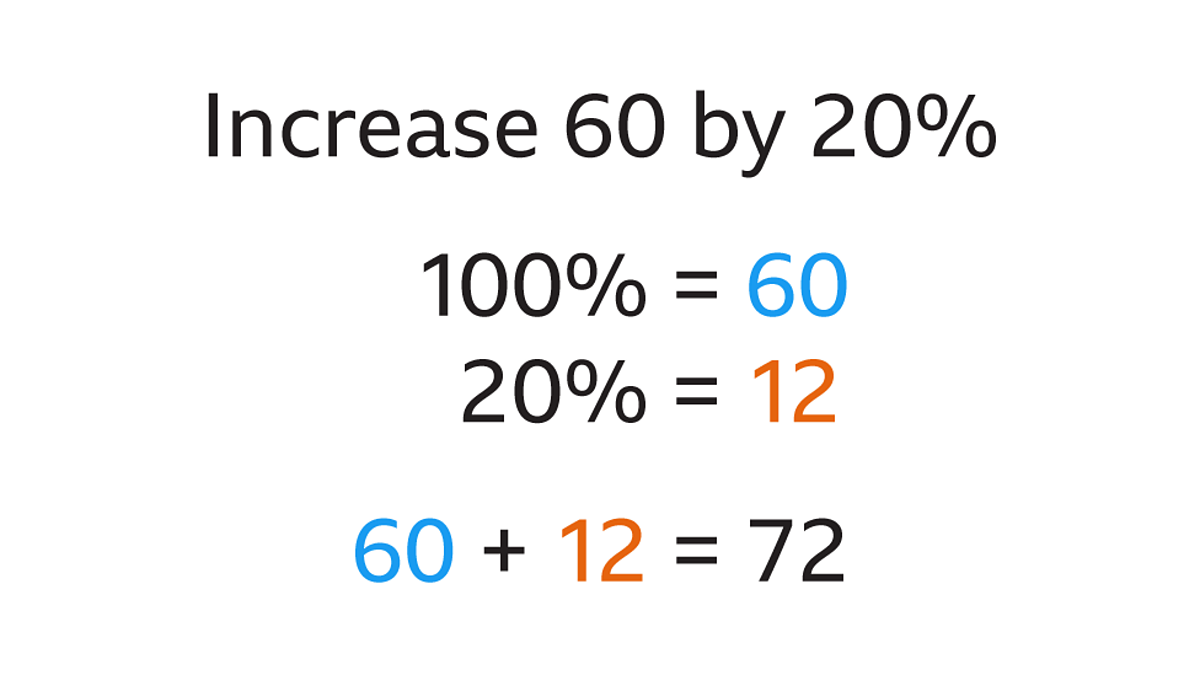
This article will demystify the process of calculating a percentage increase, offering a clear, step-by-step guide applicable to various financial scenarios. We’ll delve into why this metric is indispensable for individuals and businesses alike, explore its practical applications across personal finance, investing, and business operations, and highlight best practices to ensure accurate interpretation and informed decision-making. By mastering this simple yet powerful calculation, you empower yourself with a vital tool for navigating and understanding the financial landscape.
Understanding the Fundamentals: The Percentage Increase Formula
At its core, calculating a percentage increase is about expressing the relative change between an initial value and a final value as a proportion of the initial value, multiplied by 100 to convert it into a percentage. It provides context to numerical growth, making disparate figures comparable and interpretable.
Defining Percentage Increase
A percentage increase quantifies how much a value has grown in relation to its original size. For instance, if your investment portfolio grew from $10,000 to $12,000, a percentage increase tells you not just that it grew by $2,000, but that it grew by 20%, offering a clearer picture of its performance relative to its starting point. This metric is crucial because an absolute increase of $1,000 means very different things if the starting point was $100 (a 1,000% increase) versus $1,000,000 (a 0.1% increase). The percentage provides the necessary relativity.
The Core Calculation: Step-by-Step Breakdown
The formula for calculating a percentage increase is straightforward and universally applicable:
Percentage Increase = ((New Value – Original Value) / Original Value) * 100
Let’s break down the process with a practical financial example:
- Identify the Original Value: This is the starting point or baseline figure.
- Identify the New Value: This is the ending point or the figure after the change has occurred.
- Calculate the Absolute Change: Subtract the Original Value from the New Value. This will tell you the raw numerical increase.
- Absolute Change = New Value – Original Value
- Calculate the Relative Change: Divide the Absolute Change by the Original Value. This gives you the change as a decimal.
- Relative Change = Absolute Change / Original Value
- Convert to a Percentage: Multiply the Relative Change by 100. This converts the decimal into a percentage.
- *Percentage Increase = Relative Change * 100*
Example:
Imagine your monthly income increased from $4,000 (Original Value) to $4,500 (New Value).
- Original Value: $4,000
- New Value: $4,500
- Absolute Change: $4,500 – $4,000 = $500
- Relative Change: $500 / $4,000 = 0.125
- Percentage Increase: 0.125 * 100 = 12.5%
Therefore, your monthly income increased by 12.5%. This calculation can be applied across virtually any financial data point where a growth trajectory is observed.
Unlocking Financial Insights: Practical Applications in Money
The ability to calculate a percentage increase is not merely an academic exercise; it’s a fundamental skill that empowers individuals and businesses to make smarter financial decisions. Its applications span across personal finance, investing, and business operations, providing clear insights into performance and potential.
Personal Finance: Tracking Your Wealth Journey
For individuals, percentage increase is a powerful tool for monitoring financial health and progress.
- Income Growth and Budgeting: Tracking the percentage increase in your salary or other income streams over time allows you to assess your earning power and negotiate effectively. It also helps in adjusting budgets, as a 5% raise will impact your disposable income differently than a fixed dollar amount, especially as your income grows. Similarly, analyzing percentage increases in specific spending categories (e.g., groceries, utilities) helps identify areas for potential savings or where inflation is most impacting your budget.
- Savings and Debt Reduction: When you’re working towards a savings goal, monitoring the percentage increase in your savings account balance provides tangible evidence of progress. If your goal is to save $10,000 and you’ve saved $1,000, you’re 10% of the way there. Conversely, for debt reduction, calculating the percentage decrease in your outstanding balance (which is essentially a negative percentage increase) helps motivate you and track your journey towards financial freedom. Understanding the percentage increase in interest rates on loans is also critical for managing debt costs.
Investing: Measuring Returns and Portfolio Performance
In the realm of investments, percentage increase is the lingua franca for discussing returns and evaluating performance.
- Stock Gains and Market Trends: Investors constantly use percentage increases to understand the performance of individual stocks, mutual funds, or entire portfolios. If a stock you own went from $50 to $55, that’s a 10% gain. Comparing this to the percentage increase of a market index like the S&P 500 helps you determine if your investment is outperforming or underperforming the broader market. This metric is essential for making informed buy, sell, or hold decisions.
- Compound Interest and Long-Term Growth: The magic of compound interest relies heavily on percentage increases. When your investments earn a return, and that return itself starts earning returns, the growth is exponential. Calculating the annual percentage increase (Annual Percentage Yield or APY) allows you to project the long-term growth of your investments and savings, highlighting the power of consistent, even modest, percentage gains over time. Understanding the percentage increase in dividends received from stocks is also a key income metric.
Business Finance: Assessing Growth and Profitability
Businesses, from startups to multinational corporations, rely on percentage increases to evaluate performance, make strategic decisions, and attract investors.

- Revenue and Profit Margins: A primary application is tracking the percentage increase in revenue (sales) from one period to another (e.g., quarter-over-quarter, year-over-year). This indicates market penetration and growth trajectory. Similarly, monitoring the percentage increase in gross profit margins or net profit margins provides crucial insights into a company’s operational efficiency and profitability. An increase in profit margin percentage means the business is becoming more efficient at converting sales into profit.
- Cost Analysis and Efficiency: Businesses also use percentage increases to analyze changes in operating costs. A significant percentage increase in a particular cost category (e.g., raw materials, labor) might signal a need for cost-cutting measures or price adjustments. Conversely, a percentage decrease in costs (a negative percentage increase) reflects improved efficiency. Furthermore, percentage increases are vital for understanding market share growth, customer acquisition rates, and employee productivity gains, all of which are critical for sustainable business growth.
Avoiding Common Misinterpretations and Enhancing Accuracy
While calculating a percentage increase is mathematically straightforward, its interpretation requires nuance. Misunderstanding or misrepresenting these figures can lead to flawed financial conclusions.
The Difference Between Percentage Point and Percentage Change
One of the most common pitfalls is confusing a “percentage point” increase with a “percentage change” (which is what we’ve been discussing as percentage increase).
- Percentage Change (or Percentage Increase): This is the relative change we’ve calculated, e.g., an investment growing from $100 to $110 is a 10% increase.
- Percentage Point: This refers to the arithmetic difference between two percentages. For example, if a company’s profit margin increased from 10% to 15%, that is a 5 percentage point increase. However, it’s a ((15-10)/10)*100 = 50% *percentage increase* in the profit margin itself. Failing to distinguish between these two can lead to vastly different perceptions of financial performance.
Context is King: Interpreting the Numbers Correctly
A percentage increase is rarely meaningful in isolation. Its significance often depends on the context:
- Time Period: Is the 20% increase over a month, a year, or a decade? A 20% annual return on investment is excellent; a 20% monthly return is extraordinary and potentially unsustainable. Always specify the timeframe.
- Base Value: A 100% increase on a $1 investment ($1 to $2) is less impactful than a 100% increase on a $1 million investment ($1 million to $2 million). While the percentage is the same, the absolute impact differs greatly.
- Industry Benchmarks: Is a 15% revenue increase good? It depends on the industry. In a mature, slow-growth industry, it might be phenomenal. In a rapidly expanding tech sector, it might be merely average. Compare against peers and industry averages.
- Inflation: A 5% increase in your salary might feel good, but if inflation was 3%, your “real” purchasing power only increased by about 2%. Always consider inflation when evaluating financial growth.
When to Use Percentage Increase vs. Other Metrics
While powerful, percentage increase isn’t always the best or only metric.
- For very small base numbers, a percentage increase can look deceptively large (e.g., increasing from 1 to 2 is a 100% increase, but only a gain of 1 unit). In such cases, absolute numbers might be more informative.
- When comparing items with vastly different scales, percentage changes can be useful, but also consider absolute dollar changes to understand the true financial impact.
- For financial ratios, sometimes percentage point changes or just the raw ratio itself might be more appropriate depending on the analysis. Understand the goal of your analysis before defaulting to percentage increase.
Leveraging Tools for Seamless Calculation
While manual calculation is straightforward for simple cases, financial professionals and individuals often deal with large datasets. Fortunately, various tools can automate and simplify the process of finding percentage increases, ensuring efficiency and accuracy.
Spreadsheet Software: Your Financial Calculator
Spreadsheet programs like Microsoft Excel, Google Sheets, or LibreOffice Calc are indispensable tools for financial analysis. They offer built-in functions that make calculating percentage increases effortless, especially when dealing with multiple data points or needing to track changes over time.
- Simple Calculation: If you have an original value in cell A1 and a new value in cell B1, the formula
=((B1-A1)/A1)*100will give you the percentage increase. - Tracking Trends: You can easily set up columns for dates, original values, new values, and then a calculated column for percentage increase. This allows for quick visualization of trends, month-over-month or year-over-year growth, and comparison across different financial categories.
- What-If Scenarios: Spreadsheets enable you to plug in hypothetical future values to see the potential percentage increase under different scenarios, aiding in financial planning and forecasting.
Online Calculators and Financial Apps
For quick, one-off calculations without the need for a full spreadsheet, numerous online percentage increase calculators are readily available. These tools are user-friendly, requiring you only to input the original and new values, and they instantly provide the result. Many personal finance and investment apps also incorporate these calculations, automatically displaying portfolio gains, income changes, or expense fluctuations as percentage increases. While convenient, always double-check the source and methodology of online tools, especially for critical financial decisions.
The Importance of Data Accuracy
Regardless of the tool used, the accuracy of your percentage increase calculation hinges entirely on the accuracy of your input data. Incorrect original or new values will inevitably lead to an incorrect percentage increase.
- Verify Sources: Ensure your financial data comes from reliable sources (bank statements, investment reports, payroll stubs, audited financial statements).
- Clean Data: Before inputting data into a spreadsheet or calculator, ensure there are no typos, missing values, or inconsistencies.
- Unit Consistency: Make sure both your original and new values are in the same units (e.g., both in dollars, both in thousands of dollars).
By combining a solid understanding of the percentage increase formula with the efficient use of appropriate tools and a commitment to data accuracy, you can consistently derive meaningful financial insights.

Conclusion: Empowering Your Financial Decisions
The ability to accurately find and interpret a percentage increase is more than just a mathematical skill; it’s a cornerstone of financial literacy and strategic decision-making in the Money domain. From personal budgeting and investment analysis to robust business financial planning, this metric provides a universal language for understanding growth, performance, and change.
We’ve explored the straightforward formula, broken down the calculation process, and highlighted its critical applications across your personal financial journey, investment strategies, and business operations. Moreover, we’ve emphasized the importance of contextual interpretation, distinguishing between percentage points and percentage change, and leveraging reliable tools to ensure accuracy.
By mastering “how to find an increase in percentage,” you equip yourself with the power to:
- Track your financial progress with precision.
- Make informed investment choices.
- Evaluate business health and growth potential.
- Negotiate salaries and manage debt more effectively.
- Understand economic indicators and market movements.
In a world driven by numbers, the percentage increase stands out as a clear, concise, and incredibly versatile metric. Embrace this tool, integrate it into your financial analyses, and watch as your understanding of the financial landscape deepens, leading to more confident and successful monetary decisions.
aViewFromTheCave is a participant in the Amazon Services LLC Associates Program, an affiliate advertising program designed to provide a means for sites to earn advertising fees by advertising and linking to Amazon.com. Amazon, the Amazon logo, AmazonSupply, and the AmazonSupply logo are trademarks of Amazon.com, Inc. or its affiliates. As an Amazon Associate we earn affiliate commissions from qualifying purchases.