
In the realm of personal and professional finance, numbers are the language of progress. Whether you are evaluating the performance of a stock portfolio, determining the sustainability of a business model, or simply trying to stick to a monthly budget, one mathematical concept reigns supreme: the percentage. Understanding how to find the percentage of two numbers is not merely a middle-school math requirement; it is a fundamental financial skill that empowers individuals to make informed, data-driven decisions.
When we talk about money, percentages provide the necessary context that raw numbers often lack. For instance, earning $1,000 on an investment might sound impressive, but its true value is only revealed when expressed as a percentage of the initial capital. A $1,000 gain on a $2,000 investment is a transformative 50% return, whereas the same gain on a $1,000,000 investment is a negligible 0.1%. This article explores the mechanics of calculating percentages and their critical applications across the spectrum of money management.

The Fundamental Formula: Understanding Percentages in a Financial Context
At its core, a percentage is a way of expressing a number as a fraction of 100. In financial terms, it represents a portion of a whole—be it a portion of your income, a portion of a market, or a portion of a debt. To navigate the world of money effectively, one must move beyond using a calculator blindly and understand the logic behind the calculation.
The Basic Equation: Part Over Whole
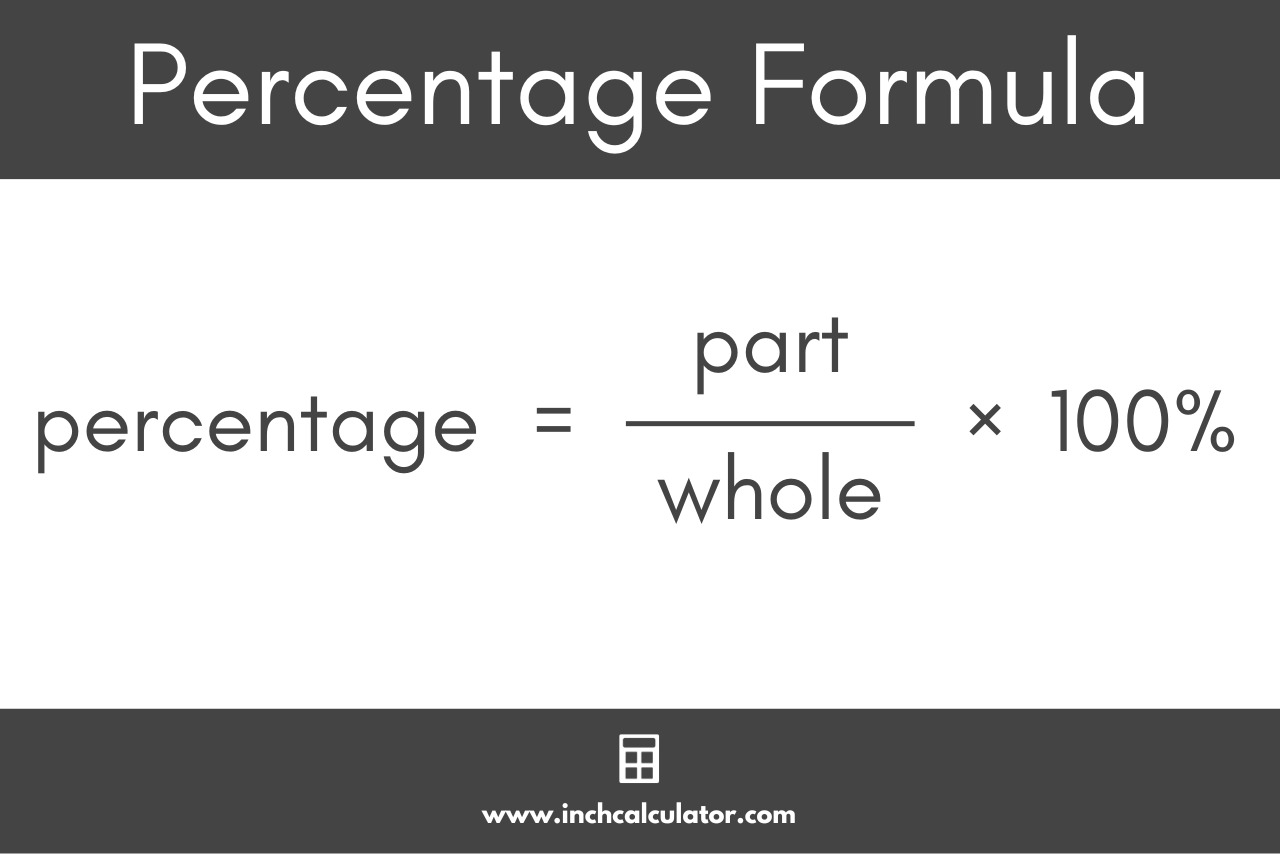
To find the percentage of two numbers, the formula is deceptively simple: divide the “part” (the number you are interested in) by the “whole” (the total value), and then multiply the result by 100.
Formula: (Part / Whole) × 100 = Percentage
For example, if you decide to set aside $600 from a $4,000 monthly paycheck for your emergency fund, you are calculating what percentage of your income is being saved.
- Part: $600
- Whole: $4,000
- Calculation: (600 / 4,000) = 0.15
- Percentage: 0.15 × 100 = 15%
This 15% figure is far more useful for long-term planning than the raw number of $600, as it allows you to maintain a consistent savings rate even if your income fluctuates.
Why Precision Matters in Personal Finance
In the world of money, rounding errors can lead to significant financial leaks. When calculating interest rates, tax brackets, or investment fees, the difference between 0.5% and 0.75% might seem trivial on paper, but over several decades, it can equate to tens of thousands of dollars.
Understanding the “how” behind the percentage allows you to verify the figures provided by financial institutions. Whether you are checking a credit card statement or an investment prospectus, being able to manually calculate the percentage of two numbers serves as a vital safeguard for your wealth.
Percentages in Investing: Calculating Growth and ROI
For investors, percentages are the ultimate yardstick. The primary goal of investing is to grow capital, and the rate of that growth is always measured in percentages. By converting dollar gains and losses into percentages, investors can compare the performance of different asset classes—such as stocks, real estate, and bonds—on an equal playing field.
Measuring Portfolio Performance
Return on Investment (ROI) is perhaps the most common use of percentages in the financial world. It tells you how much profit or loss you have made relative to the amount of money you invested.
To find the ROI percentage:
[(Current Value – Initial Value) / Initial Value] × 100
Suppose you purchased shares of a tech company for $5,000, and a year later, the shares are worth $6,200. To find the percentage growth:
- Find the gain: $6,200 – $5,000 = $1,200.
- Divide the gain by the initial investment: $1,200 / $5,000 = 0.24.
- Multiply by 100: 24%.
A 24% return is an objective measure of success, allowing you to compare this stock’s performance against the S&P 500 average or your high-yield savings account.
The Power of Compound Interest Percentages
While simple percentages measure a one-time gain, compound interest involves calculating percentages on top of percentages. This is the “eighth wonder of the world,” according to Albert Einstein. When your investment earns a 7% return, and that total amount earns another 7% the following year, your wealth begins to grow exponentially. Understanding how these percentages stack is the key to retirement planning and long-term wealth accumulation.
Business Finance: Profit Margins and Markup Percentages

In the corporate world, and especially for small business owners and freelancers, percentages are the pulse of the company’s health. Revenue alone does not tell the full story; a business can generate millions of dollars in sales but still be failing if its cost percentages are too high.
Gross vs. Net Profit Margins
A profit margin is a percentage that expresses how much out of every dollar of sales a company actually keeps in earnings.
- Gross Profit Margin: This calculates the percentage of revenue exceeding the Cost of Goods Sold (COGS). It is found by dividing Gross Profit by Total Revenue. This tells a business how efficiently it is producing its products.
- Net Profit Margin: This is the “bottom line.” It is calculated by taking the Net Income (after all expenses, taxes, and interest) and dividing it by Total Revenue.
If a boutique sells a dress for $200 and the net profit after all expenses is $40, the net profit margin is ($40 / $200) × 100 = 20%. Knowing this percentage allows the owner to determine if they can afford to hire new staff or if they need to cut operational costs.
Calculating Markup to Ensure Sustainability
Many new entrepreneurs confuse “margin” with “markup.” While margin is based on the selling price, markup is based on the cost. To find the markup percentage:
(Profit / Cost) × 100
If a product costs $50 to make and you want to sell it for $100, your profit is $50.
The markup is ($50 / $50) × 100 = 100%.
However, the profit margin is ($50 / $100) × 100 = 50%.
Confusing these two can lead to pricing errors that jeopardize the financial stability of a business.
Debt and Credit: Navigating Interest Rates
Just as percentages can work for you in investments, they can work against you in the form of debt. Interest rates are essentially the “rent” you pay to borrow money, and they are always expressed as a percentage.
APR and the Cost of Borrowing
The Annual Percentage Rate (APR) is the most critical number to look at when taking out a loan or opening a credit card. It represents the yearly cost of funds over the specified term of a loan.
When you see an APR of 18% on a credit card, you can calculate the monthly interest percentage by dividing by 12 (1.5% per month). If you carry a balance of $2,000, that 1.5% monthly interest translates to $30 in interest charges for that month alone. By understanding the percentage of the debt you are paying in interest, you can prioritize which debts to pay off first (typically the ones with the highest percentages).
Debt-to-Income Ratio: A Key Financial Metric
Lenders use the Debt-to-Income (DTI) ratio to determine your creditworthiness. This is a classic “percentage of two numbers” calculation.
Formula: (Total Monthly Debt Payments / Gross Monthly Income) × 100
If your monthly debt payments (mortgage, car loan, student loans) total $2,000 and your gross monthly income is $6,000, your DTI is ($2,000 / $6,000) × 100 = 33.3%. Most lenders prefer a DTI below 36%. Monitoring this percentage is essential for anyone looking to secure a mortgage or maintain a healthy financial profile.
Smart Budgeting: Using Percentages to Allocate Wealth
The most practical application of percentages for the average person is in the creation of a sustainable budget. Raw dollar amounts can be overwhelming, but percentages provide a framework that scales with your lifestyle.
The 50/30/20 Rule Explained
A popular and effective budgeting strategy is the 50/30/20 rule, which uses percentages to allocate after-tax income:
- 50% to Needs: Housing, groceries, utilities, and insurance.
- 30% to Wants: Dining out, travel, and hobbies.
- 20% to Savings and Debt Repayment: Building an emergency fund and paying down principal.
By calculating these percentages against your take-home pay, you create a balanced financial life. If you find that your “Needs” are taking up 70% of your income, the percentage calculation clearly signals that you may be “house poor” or over-leveraged in your lifestyle choices.
Tracking Savings Rates for Long-Term Security
Your savings rate is perhaps the single most important percentage in your financial life. It is calculated by dividing your monthly savings by your total income. Financial independence experts often suggest aiming for a savings rate of 15% to 25%.
By consistently finding the percentage of your income that goes toward your future self, you move away from reactive spending and toward proactive wealth building. Whether the numbers involved are small or large, the percentage remains the most honest reflection of your financial priorities.
In conclusion, knowing how to find the percentage of two numbers is more than a calculation; it is a lens through which you can view your entire financial world. From the ROI of your investments to the margin of your business and the interest on your debt, percentages provide the clarity needed to grow, protect, and manage your money effectively. Mastering this simple mathematical tool is an essential step on the path to financial mastery.
aViewFromTheCave is a participant in the Amazon Services LLC Associates Program, an affiliate advertising program designed to provide a means for sites to earn advertising fees by advertising and linking to Amazon.com. Amazon, the Amazon logo, AmazonSupply, and the AmazonSupply logo are trademarks of Amazon.com, Inc. or its affiliates. As an Amazon Associate we earn affiliate commissions from qualifying purchases.