
In the intricate world of personal and business finance, numbers tell a story. But raw figures often lack context until they are translated into percentages. From understanding a discount on a new car to calculating your investment returns, or even deciphering the true cost of a loan, percentages are the universal language that brings financial data to life. Mastering how to find the percentage of a number isn’t just a mathematical exercise; it’s a critical skill that empowers you to make informed financial decisions, manage your money more effectively, and navigate the economic landscape with greater confidence.

This guide will demystify percentage calculations, anchoring them firmly in financial contexts. We’ll explore the core concepts, practical methods, and real-world applications that make percentage prowess an indispensable asset in your financial toolkit.
Understanding the Fundamentals: What is a Percentage?
Before diving into calculations, it’s crucial to grasp what a percentage truly represents and why it holds such sway in financial discussions.
The Core Concept: Parts of a Whole
At its heart, a percentage is a way of expressing a number as a fraction of 100. The word “percent” originates from the Latin “per centum,” meaning “by the hundred.” It’s denoted by the symbol “%”. So, 25% literally means 25 out of 100, or 25/100.
This standardized comparison tool is incredibly powerful because it allows us to compare different quantities in a consistent manner, regardless of their original scale. Whether you’re comparing the profit margins of two different-sized companies or the interest rates of various savings accounts, converting values to percentages provides an apples-to-apples comparison. It allows for a clearer understanding of proportion and relative change, which are key to financial analysis.
Why Percentages Matter in Your Finances
In the financial realm, percentages are everywhere. They are the language through which we understand:
- Discounts and Sales Tax: Is that 30% off sofa a good deal? What will the 8% sales tax add to the final price?
- Interest Rates: How much will your 5% mortgage rate cost you over its lifetime? What return can you expect from a savings account offering 0.5% interest?
- Investment Performance: Did your portfolio grow by 12% this year, outpacing the market’s 10% gain?
- Budgeting and Expense Ratios: Is 35% of your income going towards housing too much? What percentage of your business revenue is consumed by operating costs?
- Inflation and Economic Growth: Understanding that 3% inflation erodes your purchasing power, or that GDP grew by 2.5% last quarter.
Without the ability to calculate and interpret percentages, making sense of these crucial financial indicators would be incredibly challenging.
Mastering Basic Percentage Calculations for Financial Insight
While the concept is simple, there are several ways percentages are applied, each addressing a different financial question. Let’s break down the most common calculations.
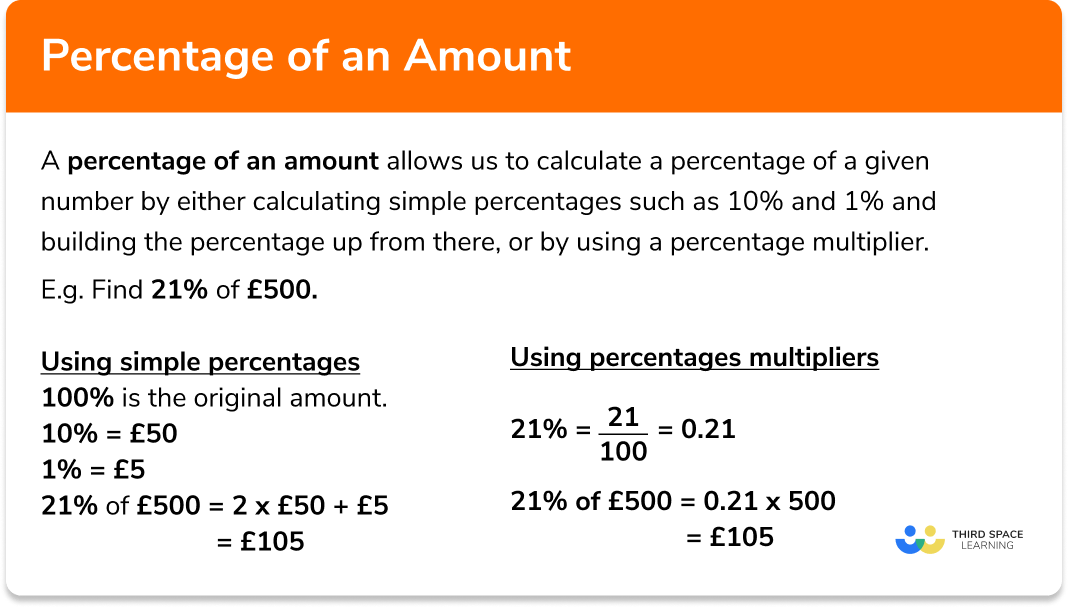
Method 1: Calculating a Percentage OF a Number (e.g., Discounts, Taxes, Commission)
This is perhaps the most common application: finding out what a certain percentage of a given total amounts to.
Formula: (Percentage / 100) * Whole Number
Examples:
- Sales Tax: You buy a new laptop for $1,200, and the sales tax rate is 7.5%.
- Tax amount = (7.5 / 100) * $1,200 = 0.075 * $1,200 = $90.
- Your total cost is $1,200 + $90 = $1,290.
- Discount: A jacket is priced at $150, but it’s on sale for 20% off.
- Discount amount = (20 / 100) * $150 = 0.20 * $150 = $30.
- Your final price is $150 – $30 = $120.
- Down Payment: You need to make a 10% down payment on a $300,000 house.
- Down payment amount = (10 / 100) * $300,000 = 0.10 * $300,000 = $30,000.
Method 2: Calculating What Percentage One Number IS OF Another (e.g., Performance Metrics, Expense Ratios)
This method helps you understand the proportion of a “part” in relation to a “whole,” often used for analyzing allocations or contributions.
Formula: (Part / Whole) * 100
Examples:
- Budget Allocation: Your monthly income is $4,000, and your rent is $1,200. What percentage of your income goes to rent?
- Percentage for rent = ($1,200 / $4,000) * 100 = 0.30 * 100 = 30%.
- Investment Return: You invested $5,000 and earned a profit of $750. What is your percentage return on investment (ROI)?
- ROI = ($750 / $5,000) * 100 = 0.15 * 100 = 15%.
- Sales Conversion Rate: Your business had 500 website visitors and made 25 sales. What is your conversion rate?
- Conversion Rate = (25 / 500) * 100 = 0.05 * 100 = 5%.
Method 3: Calculating Percentage Change (Growth, Decline, Inflation)
This calculation is vital for understanding increases or decreases over time, whether in asset values, prices, or economic indicators.
Formula: ((New Value - Old Value) / Old Value) * 100
Examples:
- Portfolio Growth: Your investment portfolio was worth $50,000 last year and is now worth $57,500. What is the percentage growth?
- Percentage Growth = (($57,500 – $50,000) / $50,000) * 100 = ($7,500 / $50,000) * 100 = 0.15 * 100 = 15%.
- Price Increase (Inflation): A gallon of milk cost $3.00 last year and now costs $3.15. What is the percentage increase?
- Percentage Increase = (($3.15 – $3.00) / $3.00) * 100 = ($0.15 / $3.00) * 100 = 0.05 * 100 = 5%.
- Sales Decline: A business sold 1,000 units last quarter and 800 units this quarter. What is the percentage decline in sales?
- Percentage Decline = ((800 – 1,000) / 1,000) * 100 = (-200 / 1,000) * 100 = -0.20 * 100 = -20%. (A negative percentage indicates a decrease).
Real-World Financial Applications of Percentage Calculations
Understanding these calculation methods unlocks a powerful analytical capability across various financial domains.
Personal Finance & Budgeting
Percentages are the bedrock of effective personal financial management.
- Budget Allocation: Rules like the 50/30/20 budget (50% for needs, 30% for wants, 20% for savings/debt) rely entirely on percentage calculations. You can track exactly what percentage of your income goes to housing, food, entertainment, and debt repayment to ensure you’re on track.
- Savings Rate: Knowing what percentage of your income you save each month is a key indicator of financial health and progress towards long-term goals.
- Debt-to-Income Ratio: Lenders often assess your ability to repay loans based on the percentage of your gross income that goes towards debt payments.
Investing & Wealth Management
For investors, percentages are indispensable for evaluating performance, risk, and potential returns.
- Return on Investment (ROI): Crucial for comparing the profitability of different investments.
- Portfolio Performance: Tracking the percentage change in your portfolio’s value over various periods.
- Dividend Yield: Understanding the percentage of a stock’s price that is paid out in dividends annually.
- Expense Ratios: In mutual funds and ETFs, this percentage represents the annual fee charged to cover operating expenses. A seemingly small percentage can significantly erode long-term returns.
- Asset Allocation: Deciding what percentage of your portfolio to allocate to stocks, bonds, and other assets based on your risk tolerance and financial goals.
Business Finance & Entrepreneurship
Businesses thrive on metrics, many of which are expressed as percentages.
- Profit Margins: Gross profit margin, operating profit margin, and net profit margin are critical indicators of a business’s efficiency and profitability.
- Sales Growth: Tracking the percentage increase in sales revenue quarter-over-quarter or year-over-year.
- Market Share: What percentage of the total market does your business capture?
- Discounting Strategies: Businesses use percentages to set promotional discounts and understand their impact on revenue.
- Key Performance Indicators (KPIs): Many business KPIs, like customer retention rates, employee turnover, and production efficiency, are percentage-based.
Tools and Tips for Accurate and Efficient Percentage Calculations
While the formulas are straightforward, accuracy and efficiency are paramount when dealing with financial figures.
Leveraging Digital Calculators and Spreadsheets
For anything beyond simple mental math, modern tools are your best friend.
- Standard Calculators: Most scientific and even basic calculators have a “%” button, which can simplify some operations (though understanding the underlying math is still crucial).
- Online Percentage Calculators: Numerous free online tools are available for specific percentage problems.
- Spreadsheets (Excel, Google Sheets): These are perhaps the most powerful tools for financial percentage calculations.
- You can set up formulas that automatically calculate percentages for large datasets.
=(Part/Whole)will give you a decimal, which you can then format as a percentage.=A2*B2where A2 contains a percentage as a decimal (e.g., 0.20) and B2 contains the whole number.- For percentage change,
=(New-Old)/Oldthen format as percentage. - Spreadsheets allow for scenario planning and complex financial modeling, where percentages play a central role.
Mental Math Shortcuts and Estimation
Developing a knack for mental percentage calculations can be incredibly useful for quick financial assessments on the go.
- Finding 10%: Move the decimal one place to the left (e.g., 10% of $250 is $25).
- Finding 1%: Move the decimal two places to the left (e.g., 1% of $250 is $2.50).
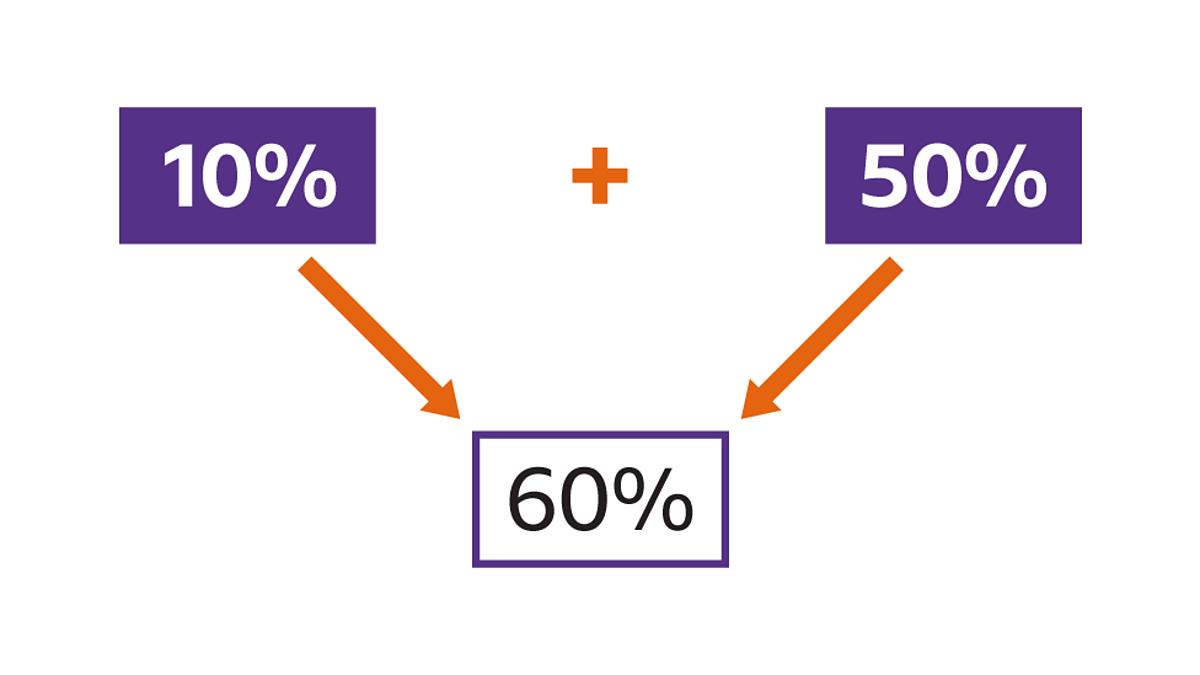
- Using 10% as a base: To find 20%, calculate 10% and double it. To find 5%, calculate 10% and halve it. To find 15%, calculate 10% and add half of that amount.
- Rounding: For quick estimates, round numbers to make them easier to work with. For instance, estimating 19% of $305 can be approximated as 20% of $300 ($60).
Common Pitfalls to Avoid
Even seasoned financial professionals can trip up on percentages.
- Confusing the “Whole”: Always be clear about what constitutes the “100%” in your calculation. Is it the original price, the current value, or total income?
- Percentage Points vs. Percentage Change: A common error is confusing a change in percentage points with a percentage change. For example, if an interest rate goes from 4% to 5%, that’s a 1 percentage point increase, but a (1/4)*100 = 25% *percentage increase*.
- Compounding Errors: When dealing with multiple percentage changes (e.g., a 10% increase followed by a 10% decrease), remember that they don’t simply cancel each other out because the base number changes.
- Absolute vs. Relative Change: Percentages describe relative change. An absolute change of $100 means very different things if the base was $1,000 (10% change) versus $1,000,000 (0.01% change).
Conclusion: Empowering Your Financial Journey with Percentage Prowess
Percentages are far more than just a mathematical concept; they are a critical lens through which we view and interpret the financial world. From managing personal budgets and assessing investment performance to understanding business profitability and economic trends, the ability to calculate and apply percentages is a cornerstone of financial literacy.
By mastering the simple formulas for finding a percentage of a number, determining what percentage one number is of another, and calculating percentage change, you gain invaluable insight and control over your financial destiny. Leverage digital tools for accuracy, practice mental shortcuts for speed, and always be mindful of the context of your calculations. With this knowledge, you are better equipped to make sound decisions, grow your wealth, and navigate the complex financial landscape with confidence and clarity. Embrace the power of percentages, and empower your financial journey.
aViewFromTheCave is a participant in the Amazon Services LLC Associates Program, an affiliate advertising program designed to provide a means for sites to earn advertising fees by advertising and linking to Amazon.com. Amazon, the Amazon logo, AmazonSupply, and the AmazonSupply logo are trademarks of Amazon.com, Inc. or its affiliates. As an Amazon Associate we earn affiliate commissions from qualifying purchases.