
Understanding how to calculate percentage increase is an indispensable skill in today’s financial landscape. Far from being a mere academic exercise, this fundamental mathematical concept serves as a powerful lens through which individuals and businesses can measure growth, assess performance, and make informed decisions. Whether you’re tracking the rise in your investment portfolio, analyzing a salary increase, monitoring inflation’s impact on your expenses, or evaluating your business’s revenue trajectory, the ability to accurately determine a percentage increase provides clarity and empowers strategic planning.
In a world driven by data, growth metrics are paramount. A raw numerical increase might seem significant on its own, but it’s the percentage increase that contextualizes that growth, allowing for meaningful comparisons over time or against benchmarks. It helps us answer crucial questions like: “By what proportion did my income grow?” or “How much has this asset appreciated relative to its original cost?” This guide will demystify the process, demonstrating its practical applications across personal finance, investing, and business operations, equipping you with a vital tool for navigating your financial journey with greater confidence and insight.
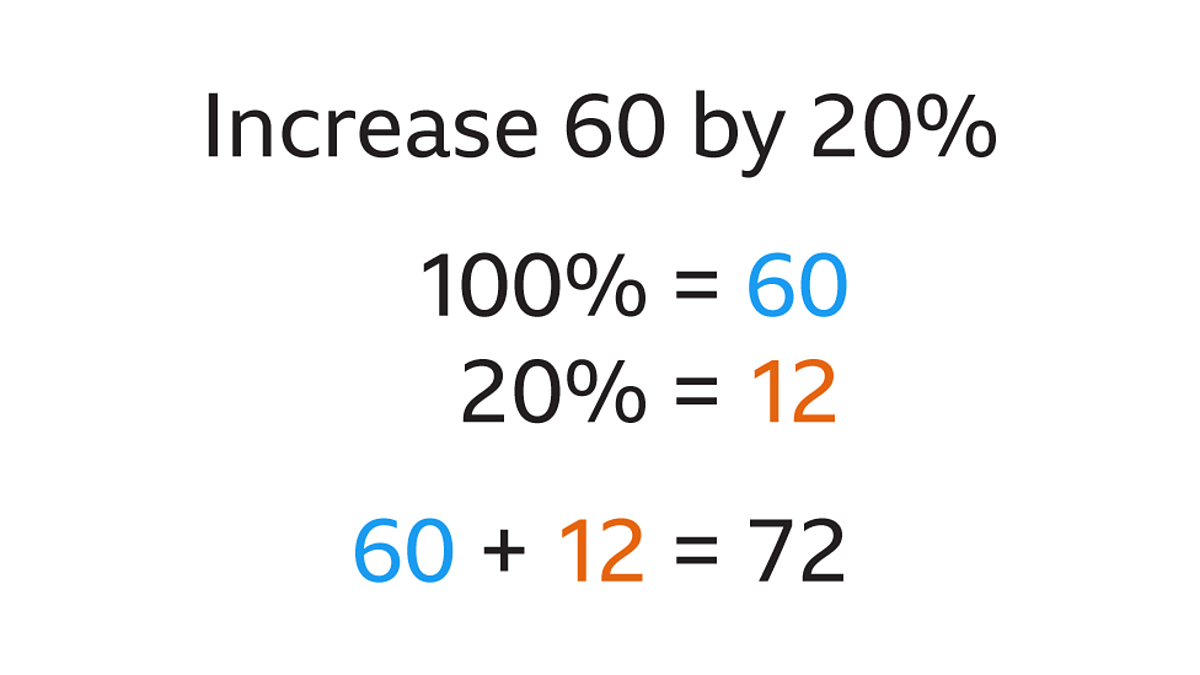
The Fundamental Formula: Understanding Percentage Increase
At its core, calculating percentage increase is about quantifying the relative change between an initial value and a final value, expressed as a proportion of the initial value. This fundamental concept is the bedrock upon which countless financial analyses are built, providing a standardized way to compare growth across different scales and periods.
Deconstructing the Formula
The formula for percentage increase is straightforward:
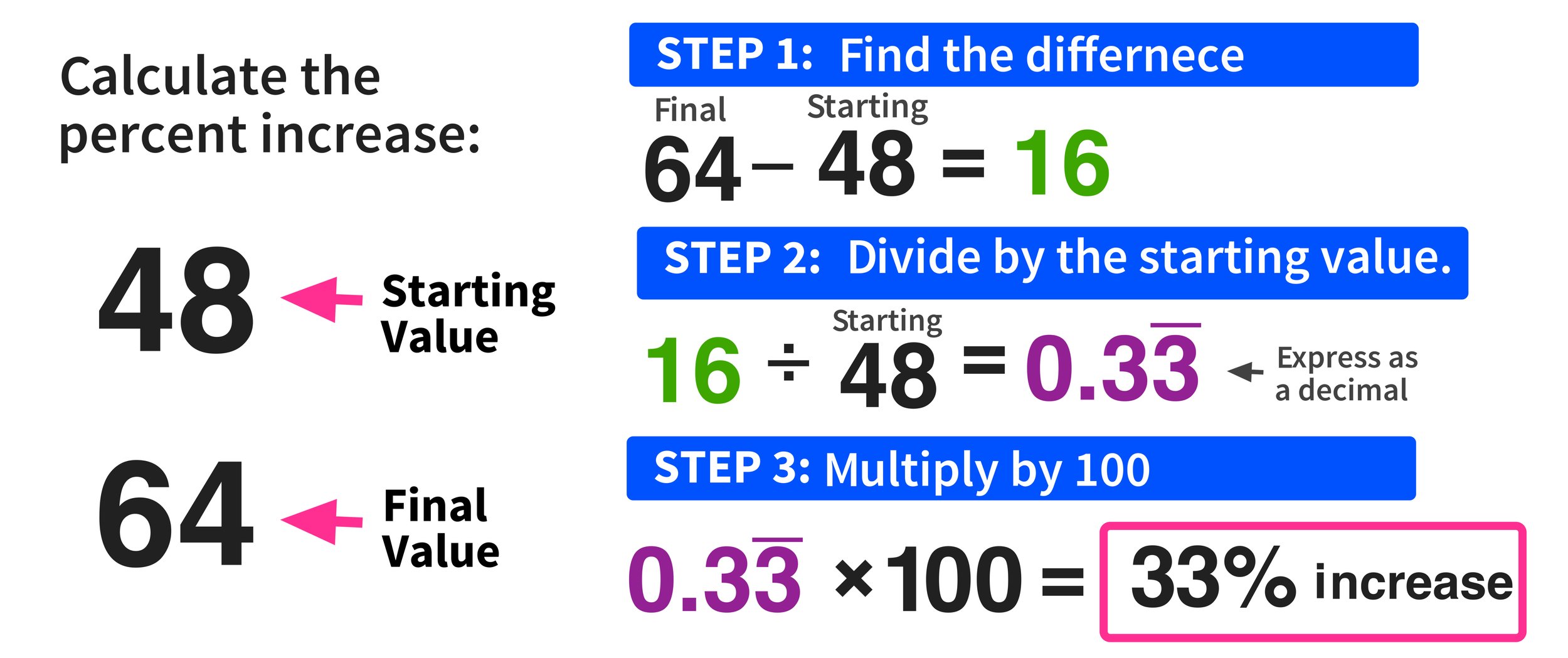
Percentage Increase = [(New Value – Old Value) / Old Value] × 100
Let’s break down each component:
-
New Value (or Final Value): This is the larger number, representing the amount after the increase has occurred.
-
Old Value (or Initial Value): This is the smaller number, representing the starting point or the amount before the increase.
-
Difference (New Value – Old Value): This calculates the absolute amount of the increase.
-
Divided by Old Value: This step normalizes the absolute increase by expressing it as a fraction of the original amount. This is crucial because it allows us to understand the proportional change, rather than just the raw numerical change. For example, an increase of $100 on a $1,000 investment is very different from an increase of $100 on a $10,000 investment.
-
Multiplied by 100: Finally, multiplying by 100 converts the decimal fraction into a percentage, making it easier to read and interpret.
Understanding these components ensures you apply the formula correctly, yielding accurate and meaningful results for your financial analysis.
Step-by-Step Calculation
Let’s walk through a practical example to solidify your understanding. Suppose your monthly income was $3,000 last year, and this year it has increased to $3,300. To find the percentage increase:
-
Identify the Old Value: Old Value = $3,000
-
Identify the New Value: New Value = $3,300
-
Calculate the Difference: New Value – Old Value = $3,300 – $3,000 = $300
-
Divide the Difference by the Old Value: $300 / $3,000 = 0.10
-
Multiply by 100 to get the Percentage: 0.10 × 100 = 10%
So, your monthly income has experienced a 10% increase. This simple example illustrates the power of the formula in quantifying growth in an easily digestible format.
Common Pitfalls to Avoid
While the formula itself is simple, several common mistakes can lead to incorrect results:
-
Misidentifying Old and New Values: Always ensure the “Old Value” is the starting point and the “New Value” is the ending point. Reversing these will either give you a percentage decrease (if the new value is actually smaller) or an incorrect positive percentage that doesn’t reflect the true growth.
-
Forgetting to Multiply by 100: This is a common oversight. Without multiplying by 100, your result will be a decimal fraction (e.g., 0.10), not a percentage (10%). While the decimal is mathematically correct for representing the proportion, percentages are the standard for conveying proportional changes in finance.
-
Using Negative Old Values: The percentage increase formula is typically used for positive values where growth is expected. If you are dealing with negative numbers (e.g., a business moving from a loss to a smaller loss, or a loss to a profit), the interpretation and application of the percentage change become more complex and might require a different approach or careful contextualization.
-
Rounding Errors: When dealing with complex calculations or very small numbers, be mindful of rounding. It’s often best to perform calculations with a higher degree of precision and round only at the final step, if necessary.
By understanding the formula and being aware of these potential pitfalls, you can confidently calculate percentage increases and apply them to various financial scenarios.
Applications in Personal Finance
In the realm of personal finance, tracking percentage increase is not just a useful skill; it’s a vital component of prudent money management and strategic financial planning. It allows individuals to monitor their financial health, adapt to economic changes, and make informed decisions about their income, expenses, and savings.
Tracking Income Growth
One of the most immediate and impactful applications is monitoring your income. Whether it’s your annual salary review, the performance of a side hustle, or passive income streams, calculating percentage increase helps you understand your financial progress. For instance, if your salary increased from $60,000 to $63,000, that’s a 5% increase. This figure is more insightful than just the $3,000 raise, especially when comparing it to inflation or the average raise in your industry. It helps you assess if your earning power is keeping pace with economic realities or if you’re truly advancing financially.
Monitoring Expenses and Inflation
Just as income can increase, so too can expenses. Percentage increase is crucial for understanding how much your living costs are rising. If your grocery bill goes from $500 to $550 per month, that’s a 10% increase, which might prompt you to re-evaluate your spending habits or seek ways to reduce costs. More broadly, understanding the percentage increase in the Consumer Price Index (CPI) allows you to gauge the impact of inflation on your purchasing power. If your income increases by 3% but inflation is 5%, your real income has actually decreased, meaning you can buy less with the same amount of money.
Assessing Savings Growth
For those diligently building their wealth, tracking the percentage increase in savings and investment accounts is highly motivating. Calculating the percentage growth of your emergency fund, retirement savings, or general investment accounts provides a clear picture of your progress towards financial goals. For example, if your savings account balance grew from $10,000 to $10,300 in a year due to interest, that’s a 3% increase. This helps you evaluate the effectiveness of your savings strategies and the interest rates you’re earning.
Loan Interest Increases
In situations involving variable-rate loans, such as certain mortgages or credit cards, interest rates can fluctuate. Understanding the percentage increase in these rates is critical for budgeting and managing debt. If your mortgage interest rate increases from 3.5% to 4.0%, while seemingly small, the percentage increase in the rate itself is substantial (0.5/3.5 = 14.28% increase in the rate!), which will impact your monthly payments and overall cost of the loan. Knowing how to calculate this helps you anticipate changes and adjust your financial plan accordingly.
Unlocking Insights in Investing
For investors, the ability to calculate percentage increase is not just a fundamental skill—it’s the language of performance. It provides the essential metrics needed to evaluate returns, compare opportunities, and make strategic portfolio adjustments. Without it, navigating the complexities of the market would be akin to flying blind.
Calculating Investment Returns (ROI)
The most direct application in investing is determining the Return on Investment (ROI). Whether it’s stocks, bonds, mutual funds, exchange-traded funds (ETFs), or real estate, ROI helps quantify how much profit you’ve made relative to your initial outlay. If you bought a stock for $100 and sold it for $120, your percentage increase (ROI) is 20%. This metric is crucial for understanding the profitability of individual assets within your portfolio. For real estate, if you bought a property for $300,000 and it’s now appraised at $360,000, you’ve seen a 20% appreciation (excluding costs).

Analyzing Portfolio Growth
Beyond individual assets, percentage increase allows you to assess the overall growth of your entire investment portfolio. By tracking the total value of your investments over time, you can calculate the percentage by which your wealth has grown from one period to the next. This holistic view helps you understand the effectiveness of your asset allocation, diversification strategies, and long-term financial planning. A portfolio that grows from $100,000 to $108,000 in a year has achieved an 8% increase, offering a clear measure of its performance.
Evaluating Asset Appreciation
Certain assets, like collectibles, precious metals, or real estate, appreciate in value over time. Calculating the percentage appreciation helps investors understand the performance of these non-traditional investments. If a vintage watch purchased for $5,000 is now valued at $7,500, that represents a 50% appreciation. This metric is essential for assessing the investment potential of such items and for making decisions about holding or selling them.
Comparing Investment Performance
One of the most powerful uses of percentage increase in investing is for comparison. You can use it to:
-
Benchmark against market indices: How does your portfolio’s 8% increase compare to the S&P 500’s 10% increase over the same period? This helps you gauge if your investments are outperforming, matching, or underperforming the broader market.
-
Compare different investment vehicles: If Fund A yielded a 12% increase and Fund B yielded an 8% increase, the choice becomes clear, assuming similar risk profiles.
-
Evaluate different time horizons: Calculating annualized percentage increase helps normalize returns across investments held for different durations, providing a standardized basis for comparison.
By consistently applying the percentage increase calculation, investors gain a profound understanding of their financial progress and can make data-driven decisions to optimize their returns and achieve their long-term financial goals.
Driving Business Growth and Analysis
In the corporate world, the ability to find out percentage increase transitions from a personal finance tool to a critical instrument for strategic business analysis. It forms the backbone of performance measurement, operational efficiency assessments, and future planning. Businesses of all sizes rely on these calculations to gauge health, identify trends, and make competitive decisions.
Revenue and Profit Growth
Perhaps the most fundamental application in business is tracking revenue and profit growth. A company’s revenue increasing from $1,000,000 to $1,200,000 represents a 20% growth, a vital indicator of market penetration and sales effectiveness. Similarly, if net profit rises from $150,000 to $180,000, that’s a 20% profit increase, demonstrating improved efficiency or higher margins. These percentages are not just numbers; they tell a story about market acceptance, operational control, and financial stability, influencing investor confidence and internal resource allocation.
Customer Acquisition Cost (CAC) and Lifetime Value (LTV) Increases
Marketing and sales teams heavily rely on percentage changes. Monitoring the percentage increase in Customer Acquisition Cost (CAC) over time helps businesses understand if their marketing efforts are becoming more or less efficient. If CAC increases significantly without a proportional increase in customer value, it signals a need to re-evaluate strategies. Conversely, tracking the percentage increase in Customer Lifetime Value (LTV) indicates the long-term profitability of customer relationships. A growing LTV percentage suggests successful customer retention and upselling efforts.
Inventory Turnover and Sales Growth
For businesses dealing with physical products, understanding operational efficiency is key. An increase in inventory turnover percentage indicates that goods are being sold more quickly, reducing holding costs and improving cash flow. If a company’s sales volume increases by a certain percentage, it needs to ensure its inventory management can support that growth without incurring excessive costs or stockouts. Calculating the percentage increase in sales year-over-year (YoY) or quarter-over-quarter (QoQ) provides critical insights into market demand and product performance, directly impacting production and purchasing decisions.
Employee Compensation Increases
From an HR and financial planning perspective, understanding percentage increases in employee compensation is essential. This includes annual salary raises, bonus pools, and benefits costs. If the average salary increase across a company is 3%, this figure needs to be budgeted for and also compared against industry averages to ensure competitive compensation. For an employee, a 5% raise could significantly impact their personal finances. For a business, a 5% average increase across 1,000 employees represents a substantial budget adjustment, necessitating careful financial forecasting and cost management. This also feeds into overall operational costs and profit margins.
Tools and Technologies for Financial Growth Calculation
While the manual calculation of percentage increase is straightforward, modern financial management often benefits from tools and technologies that automate, integrate, and present these calculations efficiently. These resources can save time, reduce errors, and provide a clearer, more dynamic view of your financial growth.
Spreadsheet Software (Excel, Google Sheets)
For many individuals and small businesses, spreadsheet software like Microsoft Excel or Google Sheets is the go-to solution for financial calculations. They offer powerful functions that automate percentage increase calculations.
Example Formula in Excel/Google Sheets:
If your old value is in cell A1 and your new value is in cell B1, the formula to calculate percentage increase would be:
=(B1-A1)/A1 (This gives you the decimal change)
To display it as a percentage, simply select the cell containing this formula and apply the “Percentage” number format. For example, if A1 is 3000 and B1 is 3300, the formula yields 0.1, which formats to 10%.
Spreadsheets also allow you to create complex models, track multiple variables over time, and visualize growth trends with charts and graphs, making them invaluable for financial analysis across personal and business contexts.
Financial Calculators and Apps
For quick, on-the-go calculations or those who prefer dedicated tools, various financial calculators and mobile apps are available. Many online financial websites offer simple percentage change calculators. Mobile apps can also integrate these functions, sometimes directly linking to bank accounts or investment platforms to pull in real-time data for calculation. These are particularly useful for rapid assessments, such as evaluating a potential investment’s return or quickly seeing the impact of a price change.
Online Financial Dashboards and Investment Platforms
Sophisticated online financial dashboards and investment platforms (like those provided by brokerages, wealth management firms, or personal finance tracking apps such as Mint or Personal Capital) often automate the calculation and display of percentage increases for your entire portfolio or individual holdings. These platforms can show you:
-
Your portfolio’s overall percentage growth since inception or over specific periods.
-
The percentage increase of each stock, fund, or asset in your portfolio.
-
Visualizations of historical growth trends.
By aggregating data from various sources, these tools provide a comprehensive and dynamic view of your financial health, often including annualized growth rates and comparisons against benchmarks.
When to Seek Professional Advice
While understanding percentage increase is a powerful personal skill, there are times when seeking professional advice is prudent. For complex financial planning, large-scale business analysis, tax implications of gains, or intricate investment strategies, a financial advisor, accountant, or business consultant can provide tailored insights. They can help interpret growth figures within a broader financial context, identify underlying drivers of change, and guide you in making decisions that align with your long-term objectives. Using professional tools and expertise ensures that your understanding of financial growth is robust and strategically sound.
Conclusion
The ability to find out percentage increase is more than just a mathematical operation; it’s a fundamental financial literacy skill that empowers individuals and businesses to navigate the complexities of economic life. From meticulously tracking personal income and expenses to evaluating investment performance and driving strategic business growth, this single calculation provides clarity, context, and the foundational data needed for informed decision-making.
By mastering the simple formula—[(New Value - Old Value) / Old Value] × 100—and understanding its nuanced applications, you gain an invaluable analytical tool. It allows you to move beyond raw numbers and understand the true proportional change, enabling meaningful comparisons and insightful trend analysis. Whether you rely on manual calculations, leverage the power of spreadsheets, or utilize sophisticated financial dashboards, consistently applying this concept will enhance your financial intelligence.
In a world where change is the only constant, the percentage increase serves as your compass, guiding you through financial fluctuations and helping you assess progress toward your goals. Embrace this essential skill, and you will be better equipped to manage your money, optimize your investments, and contribute to the growth and success of any financial endeavor you undertake. Continuous learning and diligent application of such core financial principles are the cornerstones of lasting financial well-being and strategic advantage.
aViewFromTheCave is a participant in the Amazon Services LLC Associates Program, an affiliate advertising program designed to provide a means for sites to earn advertising fees by advertising and linking to Amazon.com. Amazon, the Amazon logo, AmazonSupply, and the AmazonSupply logo are trademarks of Amazon.com, Inc. or its affiliates. As an Amazon Associate we earn affiliate commissions from qualifying purchases.