
Traveling in business class is often viewed as a luxury reserved for the ultra-wealthy or high-level corporate executives. However, when viewed through the lens of personal finance and strategic asset management, securing a seat at the front of the plane becomes a matter of tactical optimization rather than sheer extravagance. For the savvy professional or entrepreneur, the goal is not merely to “find a deal,” but to master the financial ecosystem of the aviation industry to maximize the Return on Investment (ROI) of every dollar spent on travel.
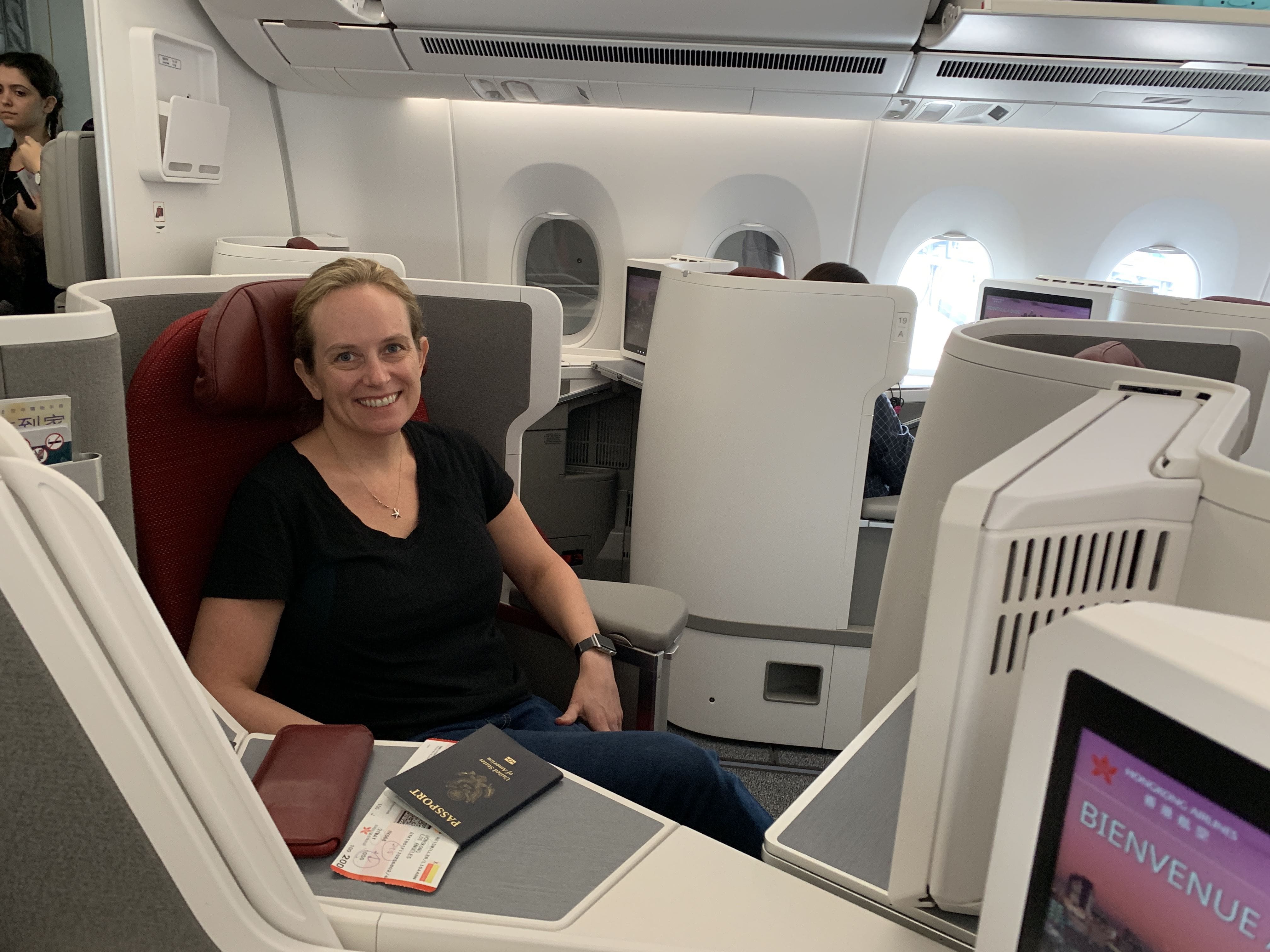
This guide explores the methodologies for securing business class inventory at a fraction of the retail price, treating travel as a sophisticated financial portfolio that requires constant rebalancing and strategic entry points.
1. The Financial Framework: Understanding the Valuation of Travel Assets
To find cheap business class flights, one must first understand how airlines price their inventory. Unlike consumer goods with fixed prices, airline seats are “perishable assets” governed by complex yield management algorithms. From a financial perspective, a business class seat is a high-value asset that loses 100% of its value the moment the cabin door closes.
The Arbitrage of “Cents Per Point” (CPP)
The most critical metric in the world of discounted premium travel is Cents Per Point (CPP). When you use credit card rewards or airline miles to book a flight, you are essentially engaging in currency exchange. If a business class ticket costs $4,000 in cash but can be redeemed for 80,000 miles, the value you are receiving is 5 cents per mile. Since the baseline value of a mile is often pegged at 1 to 1.5 cents, achieving a 5-cent redemption represents a significant financial gain. Mastering this arbitrage is the cornerstone of affordable luxury travel.
Points as an Inflation-Hedge Currency
In an era of fluctuating fiat currency values, airline miles and “transferable points” (like those from Chase, Amex, or Capital One) act as an alternative currency. However, unlike traditional investments, these assets are prone to “devaluation” by the issuers. A sound financial strategy for travel involves “earning and burning”—accumulating points through strategic business spending and deploying them quickly to lock in high-value business class redemptions before the “exchange rate” worsens.
Opportunity Cost and Productivity ROI
For the business owner, the “cheapness” of a flight is not just about the ticket price; it is about the ROI of the trip. A business class seat provides a bed, privacy, and noise reduction, allowing a traveler to arrive at a global meeting ready to perform. If a $2,000 business class upgrade prevents two days of jet-lag-induced lost productivity for an executive billing $500 an hour, the upgrade has paid for itself. Financial optimization means looking at the total economic impact of the travel experience.
2. Leveraging Credit Card Ecosystems and Capital Allocation
The most effective way to secure “cheap” business class flights is to decouple the flight from your cash flow. By leveraging high-yield credit card ecosystems, you can fund your travel through existing business or personal expenses.
Sign-Up Bonuses (SUBs) as Venture Capital
Think of credit card sign-up bonuses as an infusion of “travel capital.” A single business credit card might offer a 100,000-point bonus after meeting a spending requirement. In the world of premium travel, those 100,000 points could easily represent a one-way business class ticket to Europe or Asia that would otherwise cost $5,000. For a business with high overhead, rotating spend through new cards is the most efficient way to generate the “capital” needed for business class travel.
Transferable Points vs. Fixed-Value Points
A common financial mistake is using a credit card that gives “fixed value” (e.g., 1 point = 1 cent toward a flight). While this provides simplicity, it caps your upside. To find truly cheap business class flights, you must utilize “transferable points” ecosystems. By transferring points to partner airlines (such as transferring Amex points to Virgin Atlantic or Singapore Airlines), you can access “award charts” where the cost of a business class seat remains fixed regardless of the cash price. This is where the highest financial leverage is found.
Stacking and Category Multipliers
Optimizing your “spend-to-point” ratio is essential. A disciplined financial approach involves using specific cards for specific categories—4x points on dining, 3x on advertising, or 5x on flights. By “stacking” these multipliers, you are essentially getting a 5% to 10% rebate on all business expenses, which is then funneled directly into your business class travel fund.

3. Market Timing and Strategic Booking Tactics
In finance, entry points matter. The same applies to the aviation market. Securing a cheap business class seat requires an understanding of market cycles and the willingness to exploit inefficiencies in airline pricing.
The Art of the “Mistake Fare” and Currency Arbitrage
Occasionally, due to human error or algorithm glitches, airlines post “mistake fares” where business class tickets are sold for economy prices. More commonly, savvy travelers use currency arbitrage. By booking a flight departing from a country with a weak currency or a highly competitive market (like Cairo, Colombo, or Ho Chi Minh City), you can often find business class fares at 50% of the price of a flight departing from London or New York. This requires “positioning”—taking a cheap flight to a different hub to start your long-haul journey.
Utilizing Companion Passes and Two-for-One Deals
Many high-tier credit cards and airline loyalty programs offer “companion passes” or “buy one get one” vouchers after reaching a certain spending threshold. For a couple or two business partners traveling together, this effectively cuts the cost of a business class ticket in half. From a cash-flow perspective, this is one of the most powerful tools for reducing the per-seat cost of premium cabins.
Buying Miles During Promotion Cycles
Sometimes the cheapest way to buy a business class ticket is not to buy the ticket at all, but to buy the miles required for the ticket. Airlines like Avianca, United, and Qatar Airways frequently sell their miles with a 100% to 150% bonus. If a business class seat to Japan costs $6,000, but you can buy the necessary miles for $1,800 during a sale, you have successfully “manufactured” a 70% discount through a simple financial transaction.
4. Business Finance Integration: Tax Deductions and Corporate Spend
For the entrepreneur, the cost of a business class flight can be further mitigated through smart accounting and tax planning. When travel is a legitimate business expense, the net cost of the flight is significantly lower than the sticker price.
Tax Deductibility of Premium Travel
In many jurisdictions, the full cost of a business class flight is a deductible business expense, provided the trip is for a valid business purpose. For a business in a 30% tax bracket, a $3,000 business class flight effectively costs $2,100 after tax savings. When combined with points or discounted fares, the actual “out of pocket” economic impact becomes negligible compared to the benefits of arriving refreshed.
Maximizing Corporate Travel Portals
Many mid-sized companies have access to corporate travel portals or “soft” contracts with specific airline alliances. These portals often provide “negotiated rates” that are not visible to the general public. Additionally, some corporate programs allow for “back-end” rebates where a percentage of the total annual spend is returned to the company or converted into status upgrades for employees.
Employee Retention as a Financial Benefit
From a human resources and business finance perspective, providing business class travel for long-haul flights can be a cost-effective way to improve employee retention and satisfaction. Replacing a high-level executive costs a company significantly more than the price of a few business class upgrades. By framing premium travel as an investment in human capital, the “cost” is reassessed as a “retention asset.”
5. Developing a High-Net-Worth Travel Mindset
The final component of finding cheap business class flights is a shift in mindset. It requires moving from a “consumer” mentality—where you pay whatever price is listed—to an “investor” mentality, where you look for value, leverage, and strategic opportunities.
Finding cheap business class flights is an ongoing process of monitoring the market, managing your points portfolio, and understanding the tax and productivity benefits of premium travel. By treating your travel strategy with the same rigor as your investment portfolio, you can enjoy the pinnacle of aviation luxury without the traditional price tag.
In the modern economy, the “front of the plane” isn’t just for those with the most money—it’s for those with the best financial strategy. Whether through the calculated use of credit card rewards, the exploitation of currency fluctuations, or the strategic acquisition of airline miles, the path to business class is paved with financial literacy. By applying these principles, you ensure that your travel is not an expense to be minimized, but a high-performing asset that supports your professional and personal growth.
aViewFromTheCave is a participant in the Amazon Services LLC Associates Program, an affiliate advertising program designed to provide a means for sites to earn advertising fees by advertising and linking to Amazon.com. Amazon, the Amazon logo, AmazonSupply, and the AmazonSupply logo are trademarks of Amazon.com, Inc. or its affiliates. As an Amazon Associate we earn affiliate commissions from qualifying purchases.