
In an increasingly globalized and interconnected world, travel has become more accessible than ever. However, the cost of airfare often remains a significant barrier for many aspiring adventurers, business travelers, and families looking to explore new horizons or reconnect with loved ones. Navigating the complex world of airline pricing can feel like a daunting task, a labyrinth of fluctuating fares, hidden fees, and seemingly random price drops. Yet, for the financially savvy traveler, finding truly great airfare deals is not a matter of luck but rather a strategic endeavor. It requires a blend of astute timing, smart research, leveraging specialized tools, and cultivating a flexible mindset—all geared towards optimizing your personal travel budget.

This article delves into the most effective financial strategies and practical tactics that can transform your approach to booking flights, ensuring you stretch your travel budget further and unlock more opportunities to see the world without breaking the bank. By adopting these methods, you’ll move from passively accepting prices to proactively seeking out the best value, turning a major travel expense into a manageable and often surprisingly affordable component of your financial planning.
Master the Art of Timing and Flexibility
The single most impactful factor in securing favorable airfare deals often boils down to timing and a willingness to be flexible. Airlines employ sophisticated dynamic pricing models, meaning the price of a seat can change minute by minute based on demand, capacity, time until departure, and even competitor pricing. Understanding these dynamics is crucial for making financially sound booking decisions.
The Sweet Spot for Booking
There’s a widely debated “golden window” for booking flights, and while it varies, general financial wisdom suggests avoiding last-minute bookings (when prices typically surge due to high demand from business travelers) and booking too far in advance (when airlines might start with higher prices to capture early demand before adjusting downwards). For domestic flights, the sweet spot often falls between 1 to 3 months before departure. For international journeys, this window extends to 2 to 5 months out. Booking within these periods often aligns with when airlines have a clearer picture of demand and are looking to fill seats strategically, offering competitive fares to entice bookings. Stepping outside this window, especially closer to departure, risks encountering significantly higher prices as available seats dwindle and urgency premiums kick in.
Embrace Off-Peak Travel
Perhaps the most straightforward way to save money on flights is to travel during periods of lower demand. This typically means avoiding major holidays, school breaks, and peak tourist seasons. Consider flying mid-week (Tuesdays, Wednesdays, and Saturdays are often the cheapest days) rather than on popular Fridays or Sundays. Early morning flights or late-night red-eyes, while less convenient, almost universally offer lower fares because fewer people are willing to endure them. Shifting your travel by even a day or two can yield substantial financial savings, sometimes hundreds of dollars per ticket. This strategy leverages the fundamental economic principle of supply and demand: when demand is low, prices follow suit.
Be Flexible with Dates and Destinations
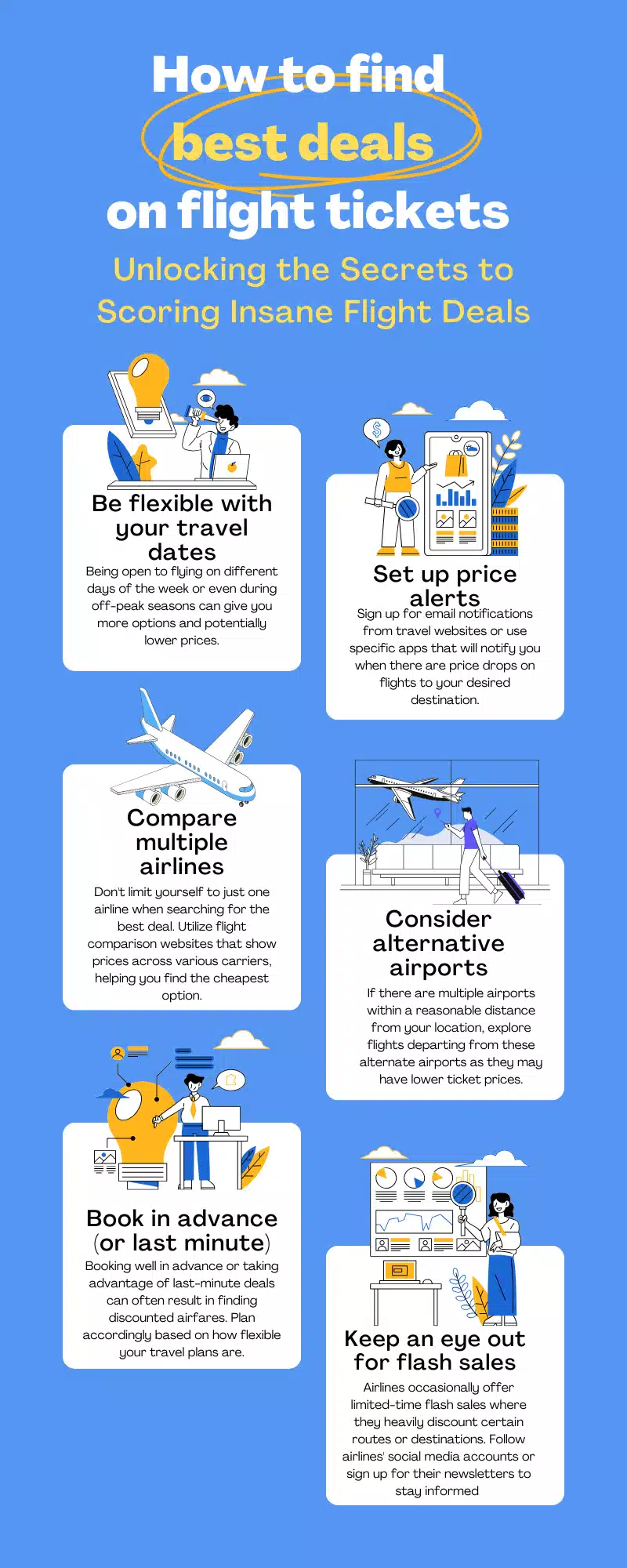
A rigid travel plan is often an expensive one. If your primary goal is to save money, cultivate flexibility in both your travel dates and your destination. Many flight search engines offer “flexible date” options, allowing you to see prices across an entire month or even a year. Tools like Google Flights’ “Explore” map or Skyscanner’s “Everywhere” search function can reveal surprisingly affordable destinations you hadn’t considered, simply because a specific route has lower demand or is served by a budget airline. Being open to flying a day earlier or later, or considering a slightly different but equally appealing destination, can unlock significant savings and make your travel budget stretch much further.
Leverage Smart Search Strategies and Financial Tools
In the digital age, a plethora of online tools and clever strategies exist to help you navigate the complex world of airfare pricing. Employing these effectively can give you a significant financial edge.
The Power of Incognito Mode and VPNs
A widely discussed, though sometimes debated, tactic is to clear your browser cookies or use an incognito/private browsing window when searching for flights. The theory is that travel websites can track your searches, potentially raising prices on routes you’ve repeatedly checked, inferring increased interest and a willingness to pay more. While the direct impact of this specific practice can be hard to prove definitively, using incognito mode ensures a fresh start for each search, preventing any potential algorithmic bias from affecting the prices displayed. Similarly, using a Virtual Private Network (VPN) to change your perceived geographical location can sometimes reveal different pricing, as airlines occasionally offer varied fares based on the country of origin. This is a financial defense strategy, ensuring you’re seeing the most unbiased pricing possible.
Comparison Sites vs. Direct Bookings
Flight comparison websites (aggregators) like Google Flights, Skyscanner, Kayak, and Momondo are invaluable for quickly surveying the market and identifying the cheapest routes and dates. They sift through millions of data points to present you with a wide array of options, effectively saving you hours of manual research. However, once you’ve identified a promising deal, it’s always financially prudent to cross-check the price directly on the airline’s website. Sometimes, airlines offer exclusive deals, loyalty program benefits, or simply slightly lower prices when you book directly, bypassing the commission fees charged by third-party aggregators. Furthermore, booking direct can simplify any potential changes or cancellations, a valuable financial safeguard.
Set Price Alerts and Explore Alternative Airports
Don’t have time to constantly monitor flight prices? Let the tools do the work for you. Most major flight comparison sites and even direct airline apps offer price alert features. You simply input your desired route and dates, and the system notifies you via email or push notification if the price changes significantly. This passive monitoring ensures you’re immediately aware of any opportune financial moments to book.
Another astute financial move is to consider flying into or out of alternative airports. Major cities often have several airports, and smaller regional airports nearby can sometimes offer significantly cheaper fares, especially when served by budget carriers. While this might involve a slightly longer commute to or from the airport, the financial savings on the flight itself can often outweigh the additional ground transportation costs. Always calculate the total cost (flight + transportation) to ensure it’s truly a better deal.
Unconventional Tactics for Deeper Savings
Beyond the standard advice, some more advanced or unconventional strategies can unlock even greater financial savings for the savvy traveler. These require a bit more effort and awareness of potential caveats.
The “Hidden City” or “Skiplagging” Technique (with caveats)

This controversial but often financially rewarding technique involves booking a flight with a layover at your actual desired destination, but then simply exiting the airport at the layover city instead of continuing to the final destination on the ticket. For example, if you want to fly from City A to City B, but a flight from City A to City C (with a layover in City B) is cheaper, you book the A-C flight and disembark at City B. This strategy exploits quirks in airline pricing models where longer, less direct routes can sometimes be cheaper.
Caveats are crucial here: Airlines strongly discourage this practice and it violates their terms of service. Risks include:
-
No Checked Bags: Your luggage will go to the final destination (City C). Only viable with carry-on.
-
Missed Connections/Cancellations: If the airline changes the itinerary, your layover city might change.
-
Airline Penalties: If caught, airlines can cancel your return flights (if part of the same booking), revoke frequent flyer miles, or even charge you the difference in fare.
-
Not for Round Trips: Only works for one-way legs, as missing a segment typically cancels all subsequent segments.
While it can offer substantial financial savings, it’s a technique for informed and risk-aware travelers.
Open-Jaw and Multi-City Tickets
Instead of booking a simple round-trip, consider an “open-jaw” or “multi-city” itinerary. An open-jaw flight is one where you fly into one city and depart from another (e.g., fly into London, travel overland to Paris, and fly out of Paris). A multi-city ticket involves several stops. These options can sometimes be surprisingly cheaper than two separate one-way tickets or a standard round-trip, particularly for international travel. They also offer greater flexibility for your itinerary, allowing you to optimize your travel experience and potentially save on internal transportation costs by not having to loop back to your arrival city. Many comparison sites have a “multi-city” option that allows you to experiment with different combinations.
Bundling Flights and Accommodation (Carefully)
Sometimes, travel packages that combine flights and hotels (or even car rentals) can offer significant savings compared to booking each component separately. Online travel agencies (OTAs) often negotiate bulk rates with airlines and hotels, passing some of those savings onto consumers. However, always exercise caution. While convenient, bundled deals aren’t always the cheapest. Before committing, compare the package price against the cost of booking the flight and hotel individually. Ensure the bundled accommodation meets your needs and isn’t just a way to offload less desirable rooms. A careful calculation of the individual costs versus the package price is essential to confirm genuine financial value.
Harness Loyalty Programs and Credit Card Perks
For frequent travelers, leveraging loyalty programs and travel-focused credit cards can transform the financial landscape of airfare, turning substantial costs into significantly reduced expenses or even free travel.
Airline Loyalty Programs
Enrolling in airline frequent flyer programs costs nothing and can yield substantial financial rewards over time. Even if you don’t fly one airline exclusively, accumulating miles can lead to free flights, discounted upgrades, or access to exclusive perks like priority boarding or lounge access—all of which represent tangible financial value. Pay attention to airline alliances (e.g., Star Alliance, SkyTeam, Oneworld), as miles earned on one airline within an alliance can often be redeemed on partner airlines, broadening your options. Consolidating your flights with a preferred airline or alliance whenever possible is a financially savvy long-term strategy.
Travel Rewards Credit Cards
Travel rewards credit cards are arguably one of the most powerful financial tools for reducing airfare costs. Many cards offer generous sign-up bonuses (e.g., 50,000-100,000 points) after meeting an initial spending requirement. These points can often be redeemed for hundreds of dollars in free flights or transferred to airline loyalty programs. Beyond sign-up bonuses, these cards typically offer accelerated earnings on travel-related purchases, free checked bags, travel insurance, airport lounge access, and statement credits for travel expenses. While many come with an annual fee, the financial benefits often far outweigh the cost, especially for those who travel even a few times a year. Always use credit cards responsibly, paying off your balance in full each month to avoid interest charges, which would negate any travel savings.
Utilize Stopovers Wisely
Some airlines, particularly international carriers, offer free or significantly discounted stopovers in their hub cities. This means you can extend a layover into a multi-day stay at no extra airfare cost, essentially getting two destinations for the price of one flight. This can be an incredible financial boon for travelers looking to maximize their trips. For instance, if you’re flying from North America to Asia via a European hub, you might be able to spend a few days exploring the European city without additional flight charges. Research airlines known for stopover programs (e.g., Icelandair in Reykjavik, Emirates in Dubai, TAP Air Portugal in Lisbon) and incorporate them into your trip planning to unlock hidden value.
Avoid Common Pitfalls and Hidden Costs
The quest for the best airfare deals can sometimes lead to unexpected financial traps. Being aware of common pitfalls and hidden costs is as important as actively seeking savings.
Beware of Budget Airline Extras
Budget airlines are masters of the low base fare. They often appear to offer incredibly cheap flights, but these prices rarely include anything beyond a seat. Luggage fees (even for carry-ons), seat selection fees, priority boarding, in-flight meals, and even printing your boarding pass at the airport can quickly add up, often making the final cost comparable to, or even more expensive than, a full-service carrier. Always calculate the “true cost” of a budget airline ticket by adding up all necessary extras before booking. Sometimes, paying a little more upfront for a full-service airline that includes baggage and amenities can be the more financially sound decision.
Currency Conversion and Payment Methods
When booking international flights, be mindful of currency conversion. Always try to pay in the local currency of the airline or the country where the flight originates if your credit card offers favorable exchange rates and no foreign transaction fees. If your card charges foreign transaction fees, those small percentages can add up. Some booking platforms might offer to convert the price to your home currency, but often at an unfavorable exchange rate, known as Dynamic Currency Conversion (DCC). Always decline DCC and pay in the local currency to let your bank handle the conversion, which is almost always better. Using a travel-specific credit card that waives foreign transaction fees is a smart financial move for international purchases.
Read the Fine Print
Finally, a crucial financial safeguard is to thoroughly read the fine print before clicking “book.” Understand the cancellation policy, change fees, baggage allowances, and any restrictions associated with the fare class you’re purchasing. While a non-refundable, non-changeable basic economy fare might be the cheapest, its lack of flexibility can become a significant financial liability if your plans unexpectedly change. Consider whether the potential savings outweigh the risk of losing your entire fare or incurring hefty change fees. Investing a little more for a slightly more flexible ticket can sometimes be a wise financial decision, offering peace of mind and protection against unforeseen circumstances.
In conclusion, finding the best airfare deals is a continuous financial education. It’s about being proactive, strategic, and adaptable. By mastering the art of timing and flexibility, leveraging smart financial tools, exploring unconventional tactics, and intelligently utilizing loyalty programs and credit card perks, you can significantly reduce your travel expenses. Crucially, by avoiding common pitfalls and understanding the true cost of your choices, you’ll empower yourself to travel more, experience richer journeys, and allocate your hard-earned money towards the adventures themselves, rather than just the journey to get there. Happy travels, and happy saving!
aViewFromTheCave is a participant in the Amazon Services LLC Associates Program, an affiliate advertising program designed to provide a means for sites to earn advertising fees by advertising and linking to Amazon.com. Amazon, the Amazon logo, AmazonSupply, and the AmazonSupply logo are trademarks of Amazon.com, Inc. or its affiliates. As an Amazon Associate we earn affiliate commissions from qualifying purchases.