
In the intricate world of finance, numbers speak a language all their own, but percentages provide the crucial context that allows us to truly understand their meaning. From evaluating investment returns to dissecting household budgets, calculating discounts, or understanding interest rates, percentages are the ubiquitous tool that translates raw figures into actionable insights. Mastering “how to find a percentage of two numbers” isn’t merely a mathematical exercise; it’s a foundational skill for anyone seeking financial literacy, sound decision-making, and robust wealth management. This guide will demystify the process, demonstrating its profound relevance across personal finance, investing, and business operations, empowering you to navigate the financial landscape with greater confidence and precision.

Understanding the Fundamentals of Percentage
At its core, a percentage is simply a way of expressing a number as a fraction of 100. The term “percent” derives from the Latin “per centum,” meaning “by the hundred.” It’s a standardized way to compare parts to a whole, or to show relative change, making it an invaluable concept when dealing with varying scales and magnitudes in financial data.
What Exactly is a Percentage? The Financial Lens
When we say 50%, we mean 50 out of every 100. If an item is discounted by 20%, it means you save 20 cents for every dollar of its original price. If an investment yields 7% annually, it means for every $100 invested, you gain $7 over a year. This consistent framework is why percentages are so powerful in finance: they allow for easy comparison and understanding, regardless of the absolute values involved. Without them, comparing a $50 return on a $1,000 investment to a $500 return on a $10,000 investment would be less intuitive. Percentages normalize these figures, immediately showing that both represent a 5% return.
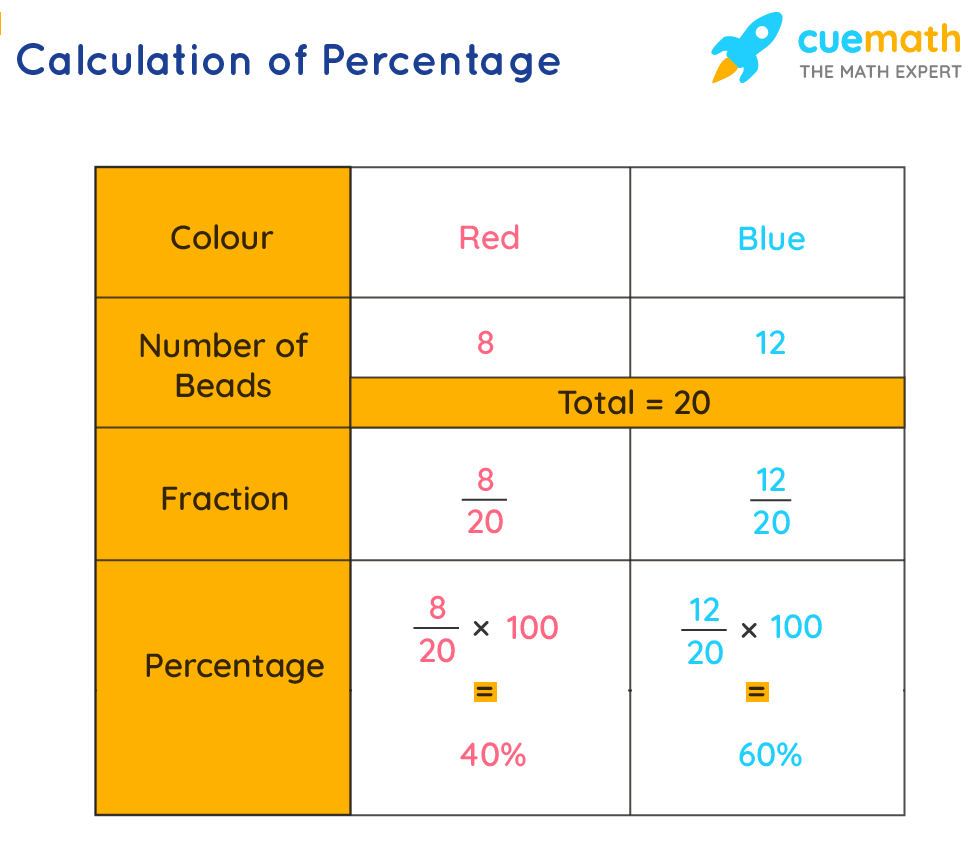
The Core Formula: Part / Whole x 100
The fundamental formula for finding a percentage is deceptively simple, yet incredibly versatile:
Percentage = (Part / Whole) × 100
Let’s break down these components in a financial context:
- Part: This is the specific amount or portion you are interested in. It could be the discount amount, the profit earned, the interest paid, or the portion of your income allocated to a specific expense.
- Whole: This represents the total amount or the base figure against which the “part” is being measured. This might be the original price of an item, the initial investment capital, your total monthly income, or the total value of your assets.
- × 100: Multiplying by 100 converts the decimal fraction (Part/Whole) into a percentage format, giving it the familiar ‘%’ symbol.
Understanding this formula is the gateway to unlocking countless financial calculations, from basic budgeting to complex investment analysis.
Why Percentages Matter in Your Financial Life
The application of percentages permeates nearly every aspect of personal and business finance. Far from being an abstract mathematical concept, it’s a practical tool that empowers individuals and organizations to make informed decisions, track progress, and evaluate performance.
Personal Finance: Budgeting, Savings, Debt
In personal finance, percentages are your compass.
- Budgeting: You might allocate 30% of your income to housing, 15% to food, 10% to savings, and so on. These percentages help ensure your spending aligns with your financial goals and prevents overspending in any single category. To calculate this, you’d take your housing cost (Part) divided by your total income (Whole) and multiply by 100.
- Savings: Setting a goal to save 20% of your paycheck each month provides a clear, scalable target. If your income increases, your savings automatically increase proportionally.
- Debt: Understanding the percentage interest rate on loans (mortgages, credit cards, personal loans) is critical. A seemingly small percentage difference can translate into thousands of dollars over the life of a loan. Calculating your debt-to-income ratio (total monthly debt payments / total monthly gross income × 100) is a key indicator of financial health for lenders and for yourself.
Investing: Returns, Growth, Diversification
For investors, percentages are indispensable for measuring performance and managing risk.
- Investment Returns: The most common metric, a percentage return (e.g., 8% annual return), allows investors to compare the profitability of different investments, regardless of the initial capital invested. You calculate this by taking the gain/loss (Part) divided by the initial investment (Whole) and multiplying by 100.
- Growth Rates: Compound annual growth rate (CAGR) is expressed as a percentage, indicating the average annual growth over multiple periods, crucial for long-term financial planning.
- Diversification: Portfolio allocation is often discussed in percentages (e.g., 60% stocks, 30% bonds, 10% cash). This helps investors maintain a desired risk profile.
Business Finance: Profit Margins, Discounts, Taxes
Businesses rely heavily on percentages for operational efficiency, pricing strategies, and compliance.
- Profit Margins: Gross profit margin, operating profit margin, and net profit margin are all percentages, providing insights into a company’s profitability at different stages. (Profit / Revenue × 100).
- Discounts: Offering a 15% discount requires calculating 15% of the original price to determine the new selling price or the amount saved.
- Taxes: Sales tax, income tax, payroll tax—all are calculated as a percentage of a base amount. Businesses must accurately calculate and remit these percentages to remain compliant.
Everyday Transactions: Sales, Tips, Interest Rates
Beyond formal finance, percentages are part of our daily economic interactions.
- Sales and Discounts: A “25% off” sale immediately tells you how much you’re saving.
- Tips: Calculating a 15% or 20% tip for service is a common percentage application.
- Interest Rates: Whether it’s the interest you earn on a savings account or the interest you pay on a credit card, these are almost universally expressed as percentages.
Step-by-Step Calculation: Mastering the Process
Let’s put the formula into practice with common financial scenarios. The core principle remains (Part / Whole) × 100, but the identification of “Part” and “Whole” shifts based on the question.
Scenario 1: Calculating a Percentage of a Total (e.g., Tax, Discount)
This is the most straightforward application: finding a specific portion of a given whole.

Example: You want to calculate the 8% sales tax on an item priced at $150.
- Identify the Whole: The total price of the item is $150.
- Identify the Percentage: You need to find 8%. Convert this percentage to a decimal by dividing by 100: 8 / 100 = 0.08.
- Calculate the Part: Multiply the Whole by the decimal equivalent of the percentage.
- Part (Sales Tax) = $150 × 0.08 = $12
- Result: The sales tax is $12. The total cost would be $150 + $12 = $162.
Another Example (Discount): An item costing $200 is on sale for 25% off.
- Identify the Whole: Original price = $200.
- Identify the Percentage: Discount = 25% = 0.25.
- Calculate the Discount Amount (Part): $200 × 0.25 = $50.
- Calculate the New Price: $200 – $50 = $150.
Scenario 2: Finding Percentage Change (e.g., Investment Growth, Inflation)
This calculation is vital for understanding growth or decline over time. The “Part” here is the change itself.
Formula: Percentage Change = ((New Value – Original Value) / Original Value) × 100
Example: Your investment portfolio grew from $10,000 to $12,500 over a year.
- Identify Original Value (Whole): $10,000.
- Identify New Value: $12,500.
- Calculate the Change (Part): New Value – Original Value = $12,500 – $10,000 = $2,500.
- Apply the Formula: ($2,500 / $10,000) × 100 = 0.25 × 100 = 25%.
- Result: Your investment grew by 25%.
Example (Decrease): A stock you own dropped from $50 per share to $40 per share.
- Identify Original Value (Whole): $50.
- Identify New Value: $40.
- Calculate the Change (Part): $40 – $50 = -$10 (a decrease).
- Apply the Formula: (-$10 / $50) × 100 = -0.20 × 100 = -20%.
- Result: The stock decreased by 20%.
Scenario 3: Determining One Number as a Percentage of Another (e.g., Debt-to-Income, Expense Ratios)
This is used to understand proportions and ratios.
Example: Your monthly income is $4,000, and your total monthly debt payments are $1,000. What is your debt-to-income (DTI) ratio?
- Identify the Part: Debt payments = $1,000.
- Identify the Whole: Total income = $4,000.
- Apply the Formula: ($1,000 / $4,000) × 100 = 0.25 × 100 = 25%.
- Result: Your DTI ratio is 25%. (Lenders often prefer DTI below 36%).
Example (Expense Ratio): If a mutual fund has total annual expenses of $200 on a $10,000 investment.
- Identify the Part: Expenses = $200.
- Identify the Whole: Investment = $10,000.
- Apply the Formula: ($200 / $10,000) × 100 = 0.02 × 100 = 2%.
- Result: The expense ratio is 2%.
Advanced Applications and Common Financial Misinterpretations
While the basic percentage calculations are straightforward, finance introduces nuances that require careful attention to avoid misinterpretations that can lead to poor financial decisions.
Understanding Basis Points and Compound Interest
- Basis Points (bps): In finance, particularly with interest rates, bond yields, and fee structures, changes are often expressed in basis points. One basis point is equal to 0.01% (one-hundredth of a percentage point). So, 100 basis points equals 1%. This precision avoids ambiguity when discussing small changes in rates. If a rate moves from 3.25% to 3.35%, it’s a 10 basis point increase, not a 0.1% increase (which would imply 0.1% of 3.25%, a different value entirely).
- Compound Interest: Often called the “eighth wonder of the world,” compound interest involves earning interest not only on the initial principal but also on the accumulated interest from previous periods. While the calculation involves percentages, understanding its exponential growth requires appreciating how a percentage applied repeatedly over time dramatically increases the “whole” upon which the next percentage is calculated. This is crucial for long-term savings and investment growth.
The Pitfalls of Percentage Points vs. Percentage Change
This is a common source of confusion. Consider a mutual fund’s expense ratio increasing from 1% to 1.5%.
- Increase in Percentage Points: The increase is 0.5 percentage points (1.5% – 1%).
- Percentage Change: The percentage change in the expense ratio itself is ((1.5 – 1) / 1) × 100 = 50%.
It’s vital to distinguish between these two. Stating “expenses increased by 0.5%” is very different from “expenses increased by 50%,” though both are technically correct depending on whether you’re referring to the absolute point change or the relative change of the percentage itself.
Leveraging Financial Tools for Percentage Calculations
While understanding the manual calculation is paramount, modern financial tools simplify the process, especially for complex scenarios:
- Spreadsheets (Excel, Google Sheets): These are indispensable. You can input formulas (e.g.,
=A1/B1*100) to automate calculations for large datasets, track budgets, and project investment growth. - Financial Calculators: Dedicated financial calculators (physical or app-based) often have specific functions for interest rates, compounding, and time value of money calculations, which are all percentage-based.
- Online Calculators: Numerous websites offer free calculators for mortgage payments, retirement savings, loan interest, and more, all relying on percentage mechanics behind the scenes.
By using these tools, you can focus more on interpreting the results and making decisions, rather than getting bogged down in manual arithmetic, especially when dealing with complex scenarios like amortization schedules or multi-year growth projections.
Empowering Your Financial Decisions with Percentage Savvy
The ability to find and interpret percentages of two numbers is more than just a math skill; it’s a cornerstone of financial intelligence. It equips you to critically analyze information, compare options objectively, and project future outcomes with greater accuracy.
Practical Tips for Integrating Percentage Understanding
- Always Ask “Percentage Of What?”: When someone quotes a percentage, always clarify what the “whole” or base figure is. A 10% return on $100 is very different from a 10% return on $1,000,000.
- Context is King: Understand the financial context. A 5% interest rate on a savings account is excellent, but a 5% interest rate on a credit card balance is detrimental.
- Practice Regularly: Apply percentage calculations to your daily life: grocery discounts, utility bill increases, stock market reports. The more you practice, the more intuitive it becomes.
- Verify Information: Don’t just accept percentages at face value. A “guaranteed 20% return” on an investment should immediately raise a red flag and prompt you to question the source and the calculation.
- Focus on Net Percentages: When considering income or returns, look at net percentages (after taxes, fees, inflation) for a truer picture of your financial gain or loss.
The Long-Term Impact of Small Percentage Changes
One of the most profound lessons percentages teach us in finance is the significant long-term impact of seemingly small percentage differences.
- Saving: Increasing your savings rate from 5% to 10% of your income might seem minor month-to-month, but over decades, with compounding, it can lead to a dramatically larger retirement nest egg.
- Debt: Reducing a credit card interest rate from 20% to 15% can save you hundreds, if not thousands, of dollars in interest payments over time, accelerating your path out of debt.
- Investing: A fund with an average annual return of 8% versus one with 7% might not look like much over one year, but over 30 years, the 1% difference can mean a substantial difference in your wealth accumulation. This is precisely why savvy investors scrutinize expense ratios, as even a 0.5% difference in fees can erode significant wealth over time.
In conclusion, understanding “how to find a percentage of two numbers” is a fundamental analytical skill that transcends basic arithmetic. It is the lens through which we interpret financial data, assess risks, identify opportunities, and ultimately, make more informed and strategic financial decisions that pave the way to greater financial security and prosperity. By mastering this essential concept, you empower yourself to take control of your financial destiny.
aViewFromTheCave is a participant in the Amazon Services LLC Associates Program, an affiliate advertising program designed to provide a means for sites to earn advertising fees by advertising and linking to Amazon.com. Amazon, the Amazon logo, AmazonSupply, and the AmazonSupply logo are trademarks of Amazon.com, Inc. or its affiliates. As an Amazon Associate we earn affiliate commissions from qualifying purchases.