
In the realm of finance, numbers are the fundamental language of progress, but percentages are the syntax that gives those numbers meaning. Whether you are assessing the performance of a stock portfolio, determining the impact of inflation on your purchasing power, or simply trying to calculate the sales tax on a business expense, understanding how to find a percentage of a number is an indispensable skill. In personal and professional finance, a percentage is rarely just a mathematical exercise; it is a tool for risk assessment, a metric for growth, and a roadmap for wealth accumulation.

To master your money, you must move beyond a basic awareness of decimals and fractions and learn to apply percentage calculations to real-world economic scenarios. This guide explores the core mechanics of percentage calculation through the lens of financial literacy, providing you with the insights needed to navigate complex fiscal landscapes with confidence.
The Fundamental Role of Percentages in Personal and Business Finance
At its core, a percentage is a way of expressing a number as a fraction of 100. In the world of money, this standardization allows us to compare vastly different figures on an even playing field. Without percentages, comparing a $500 profit on a $1,000 investment to a $5,000 profit on a $100,000 investment would be confusing; percentages clarify that the former is a 50% gain while the latter is only 5%.
Defining Percentages in a Financial Context
The word “percent” comes from the Latin per centum, meaning “by the hundred.” In financial terms, when we look at an interest rate of 5%, we are acknowledging that for every 100 units of currency, five units are generated or charged. The basic formula to find the percentage of a specific number is:
** (Percentage / 100) × Total Amount = Part **
For example, to find 15% of a $1,200 investment dividend, you would divide 15 by 100 (0.15) and multiply by 1,200, resulting in $180. Understanding this simple movement of decimals is the first step toward sophisticated financial analysis.
Why Mathematical Literacy is a Prerequisite for Wealth Building
Wealth is rarely built through high income alone; it is built through the optimization of margins. Investors and business owners who can calculate percentages mentally or via quick formulas have a distinct advantage. They can instantly see if a “discounted” business asset is truly a value or if a high-yield savings account’s APY (Annual Percentage Yield) is sufficient to outpace the current rate of inflation. Percentages allow for the “normalization” of data, enabling you to see the relative health of your finances regardless of the raw dollar amounts involved.
Practical Applications: Calculating Percentages in Daily Money Management
Everyday financial decisions are saturated with percentages. From the moment you receive a paycheck to the moment you pay your monthly bills, you are interacting with percentage-based variables that dictate your net worth.
Determining Tax Obligations and Deductions
Taxation is perhaps the most pervasive application of percentages in finance. Income tax brackets are structured as percentages that increase as your income rises. If you are a freelancer or a small business owner, calculating a percentage of your gross income to set aside for quarterly taxes is vital for avoiding penalties.
For instance, if you live in a jurisdiction with a 22% effective tax rate and you earn $8,000 in a month, knowing that 0.22 × 8,000 = $1,760 ensures that you don’t overspend money that technically belongs to the government. Similarly, understanding sales tax—a percentage added to the base price of goods—is essential for accurate business bookkeeping and personal budgeting.
Managing Interest Rates on Debt and Savings
Interest is the cost of borrowing money or the reward for saving it, and it is almost always expressed as a percentage. When you take out a mortgage or a car loan, the Annual Percentage Rate (APR) determines how much you will ultimately pay over the life of the loan.
If you have a $20,000 credit card balance at an 18% APR, the interest alone is a significant financial drain. Conversely, in a high-interest savings account offering 4.5%, finding the percentage of your balance that will be earned in interest helps you project your future cash flow. Being able to calculate these figures allows you to prioritize debt repayment strategies, such as the “avalanche method,” which focuses on the highest percentage interest rates first.
Budgeting with the 50/30/20 Rule
One of the most popular financial frameworks is the 50/30/20 rule. This strategy suggests allocating your after-tax income into three percentage-based categories: 50% for needs, 30% for wants, and 20% for savings and debt repayment. To implement this, you must be able to find the percentage of your total monthly income. If your take-home pay is $5,500, calculating $5,500 × 0.50 ($2,750 for needs) gives you a concrete limit for your housing and utility costs.
Advanced Financial Analytics: Percentages in Investing
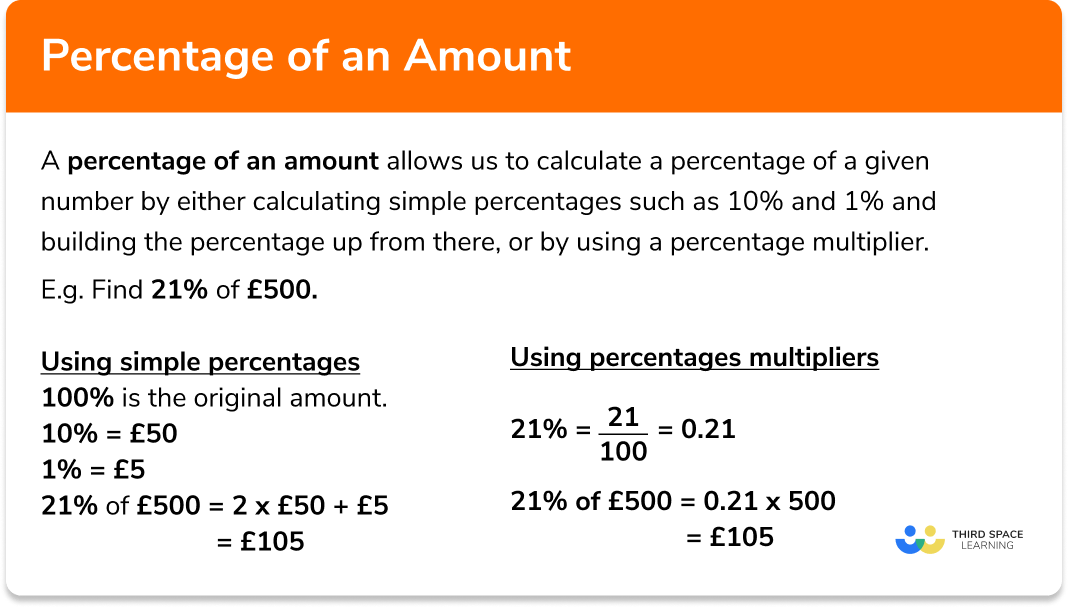
In the investment world, percentages are the primary metric for success. Raw dollar gains are secondary to the percentage return, as the percentage dictates the efficiency of the capital deployed.
Calculating Return on Investment (ROI)
ROI is the ultimate litmus test for any financial endeavor. The formula involves finding the percentage of gain relative to the original cost.
** ROI = [(Current Value – Cost) / Cost] × 100 **
If you buy a stock for $150 and it rises to $180, your gain is $30. To find the percentage of the original number that $30 represents, you divide 30 by 150 to get 0.20, or a 20% ROI. This calculation allows investors to compare the performance of a real estate holding against a stock market index or a crypto asset.
Understanding Portfolio Allocation and Diversification
Modern Portfolio Theory emphasizes the importance of diversification, which is managed through percentage allocations. A balanced portfolio might consist of 60% equities, 30% bonds, and 10% alternative assets. As the market fluctuates, these percentages shift. If your stocks perform exceptionally well, they might grow to represent 70% of your portfolio. “Rebalancing” then requires calculating how much of that asset to sell to return to your original 60% target. This percentage-based discipline prevents investors from becoming over-exposed to a single market sector.
Analyzing Compound Interest Projections
Einstein famously called compound interest the “eighth wonder of the world.” Its power lies in the fact that you earn a percentage not just on your principal, but on the interest already accumulated. Calculating a percentage of an ever-growing number is what leads to exponential wealth growth. By using the Rule of 72—a quick mental math trick where you divide 72 by your percentage interest rate—you can estimate how many years it will take for your money to double.
Business Finance: Margin Analysis and Growth Tracking
For entrepreneurs and corporate executives, percentages are the vital signs of a company’s health. They provide insights into operational efficiency and market competitiveness that raw totals often obscure.
Gross vs. Net Profit Margins
A business can have millions in revenue but still be failing if its margins are too slim. The Gross Profit Margin is calculated by finding what percentage of revenue remains after deducting the Cost of Goods Sold (COGS). The Net Profit Margin is even more critical, as it represents the percentage of revenue left over after all expenses, including taxes and interest, have been paid.
A company with a 20% net profit margin is generally considered much healthier than one with a 5% margin, even if the latter has higher total sales. High margins provide a “moat” or a safety net during economic downturns.
Calculating Year-over-Year (YoY) Growth
To determine if a business is expanding, analysts look at percentage growth over time. If a side hustle earned $10,000 in 2022 and $15,000 in 2023, the raw increase is $5,000. To find the percentage growth, you divide the increase ($5,000) by the original number ($10,000), resulting in a 50% growth rate. This percentage is a key indicator for investors looking for “growth stocks” or for business owners setting annual performance targets.
Common Pitfalls and Tools for Accurate Financial Calculations
While the math behind percentages is straightforward, the application can often lead to errors if one is not careful. Misinterpreting a percentage can lead to poor investment choices or unexpected tax bills.
Avoiding Misinterpretation of Percentage Change
A common mistake in finance is the “asymmetric” nature of percentage gains and losses. If a stock portfolio drops by 50%, it does not need a 50% gain to get back to even; it needs a 100% gain. For example, $100 dropping by 50% leaves you with $50. To get from $50 back to $100, you must increase that $50 by 100%. Understanding this mathematical reality is crucial for risk management and setting stop-loss orders in trading.

Leveraging Financial Calculators and Spreadsheets
In the modern era, you don’t always have to do the heavy lifting manually. Software tools like Microsoft Excel and Google Sheets are designed around percentage logic. Using the “Percentage” cell format allows you to input “0.05” and have it display as “5%.”
Furthermore, specialized financial calculators—available as both hardware and mobile apps—can handle complex calculations like the Internal Rate of Return (IRR) or mortgage amortization schedules, which involve finding percentages of declining balances over time. Leveraging these tools ensures precision, which is non-negotiable when dealing with significant sums of money.
Ultimately, the ability to find a percentage of a number is more than a classroom requirement; it is a foundational pillar of financial freedom. By mastering these calculations, you gain the clarity to see through marketing gimmicks, the precision to budget effectively, and the analytical power to grow your wealth systematically. In the world of money, those who understand percentages earn them, while those who don’t, pay them.
aViewFromTheCave is a participant in the Amazon Services LLC Associates Program, an affiliate advertising program designed to provide a means for sites to earn advertising fees by advertising and linking to Amazon.com. Amazon, the Amazon logo, AmazonSupply, and the AmazonSupply logo are trademarks of Amazon.com, Inc. or its affiliates. As an Amazon Associate we earn affiliate commissions from qualifying purchases.