
Navigating the annual tax season can often feel like a daunting task, fraught with complex forms, specific deadlines, and the potential for costly preparation fees. However, a significant number of taxpayers qualify to file their federal and sometimes even state tax returns completely free of charge. Understanding these options is not just about saving money; it’s about empowering individuals to manage their personal finances more efficiently and confidently. This guide delves into the various avenues available for free tax filing, breaking down eligibility, process, and key considerations to ensure a smooth and cost-effective tax season.
Understanding Your Eligibility for Free Filing
The availability of free tax filing options is a crucial component of financial accessibility, often overlooked by many. While the notion of “free” tax preparation might sound too good to be true, it is a reality for millions of Americans, primarily facilitated by the Internal Revenue Service (IRS) and its partners. Eligibility for these services typically hinges on your Adjusted Gross Income (AGI), the complexity of your tax situation, and sometimes your age or specific circumstances.
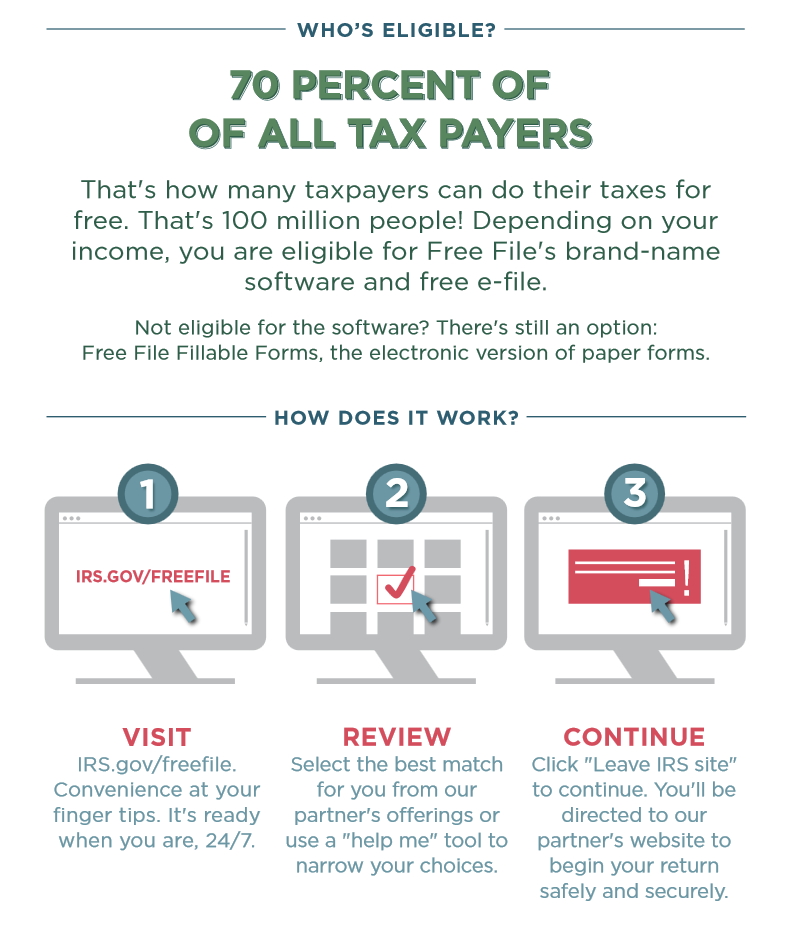
The IRS itself offers the IRS Free File Program, a public-private partnership with commercial tax software providers that make their online products available for free to taxpayers meeting specific income thresholds. For instance, for the 2023 tax year, individuals and families with an AGI below a certain amount (which is typically updated annually, e.g., $79,000) can access free federal tax software. These programs guide you through the process, performing calculations and ensuring your return is accurate. Crucially, these are legitimate, secure services designed to help you fulfill your tax obligations without incurring preparation fees.
Beyond software, community-based initiatives like the Volunteer Income Tax Assistance (VITA) and Tax Counseling for the Elderly (TCE) programs offer personalized, in-person assistance. These services cater to different demographics: VITA typically assists people who generally make $64,000 or less, persons with disabilities, and limited English-speaking taxpayers; TCE specifically serves taxpayers age 60 and over, specializing in pensions and retirement-related issues. Understanding your unique financial profile—whether you have simple W-2 income, a few deductions, or more complex investment scenarios—will help determine which free filing avenue is best suited for your needs. Even if you have a state tax return, many of these free federal options include corresponding state filing at no additional cost or direct you to state-specific free resources.
Leveraging Government-Sponsored Free Tax Programs
The U.S. government, through the IRS, provides robust programs designed to help taxpayers file their returns without professional fees. These initiatives are not just about saving money but also about ensuring accurate and compliant filing for those who might otherwise struggle with the process.
IRS Free File Program
The IRS Free File Program is a cornerstone of free tax preparation. It’s a collaboration between the IRS and several leading tax software companies. If your Adjusted Gross Income (AGI) falls below a specific threshold (e.g., $79,000 for tax year 2023), you are eligible to use one of the participating software products to prepare and e-file your federal tax return for free. The beauty of this program is that it offers guided preparation, much like paid software, walking you through income reporting, deduction identification, and credit claims. It ensures calculations are correct and helps avoid common errors. To access the official IRS Free File program, it’s critical to start your search directly from the IRS website (IRS.gov). If you go directly to a commercial tax software provider’s website, you may be redirected to their own free versions, which often have different income limits or service offerings than the official IRS Free File products. Some Free File providers also offer free state tax filing, while others may charge a fee or direct you to a separate state-specific free filing option. Always verify the scope of services provided by your chosen Free File partner.
Volunteer Income Tax Assistance (VITA) and Tax Counseling for the Elderly (TCE)
For taxpayers who prefer hands-on assistance or have limited computer access, the VITA and TCE programs are invaluable. These programs are staffed by IRS-certified volunteers who provide free tax preparation help to qualifying individuals. VITA sites are generally located in community centers, libraries, schools, shopping malls, and other convenient locations. They cater to individuals earning $64,000 or less, persons with disabilities, and limited English-speaking taxpayers. Volunteers assist with basic tax returns, including those with earned income tax credits (EITC), child tax credits, and various other deductions.
The TCE program specifically targets taxpayers aged 60 and over. These volunteers specialize in questions about pensions and retirement-related income, making it particularly beneficial for seniors navigating their unique tax situations. Both VITA and TCE volunteers offer face-to-face support, answering questions, preparing returns, and e-filing them. This personal touch can be incredibly reassuring for those who feel overwhelmed by the complexities of tax law or who simply prefer human interaction over software. These programs often help identify credits and deductions that taxpayers might miss on their own, maximizing potential refunds. Finding a VITA or TCE site near you can be done through the IRS website, which provides a searchable database of locations and operating hours during tax season.
Exploring Commercial Software with Free Options
Beyond the direct government partnerships, several commercial tax software providers offer “freemium” models or entirely free services that can be a viable option for many taxpayers. These platforms aim to attract users with their free basic offerings, hoping they will upgrade for more complex features or future years.
“Freemium” Models
Many well-known tax software companies offer free versions that allow you to file your federal tax return at no cost, often for simpler tax situations. Companies like TurboTax Free Edition and H&R Block Free Online are prominent examples. These free versions typically support common forms like W-2 income, the standard deduction, child tax credit, and earned income tax credit. However, it’s crucial to read the fine print. As soon as your tax situation becomes slightly more complex—for instance, if you have self-employment income (1099 forms), itemized deductions, capital gains or losses from investments, or certain education credits—you may be prompted to upgrade to a paid version. State tax filing is also often an add-on service that incurs a fee in these freemium models, even if the federal filing remains free. The goal for these companies is to provide an accessible entry point, but taxpayers must be mindful of potential upgrade triggers to avoid unexpected costs.
Truly Free Software Solutions
While less common for comprehensive filing, there are some platforms that offer truly free federal and state tax filing for a wider range of situations, sometimes with fewer marketing upsells. One notable example is Cash App Taxes (formerly Credit Karma Tax). This service has distinguished itself by offering free federal and free state filing for most common tax situations, including some more complex scenarios like self-employment income (Schedule C), capital gains and losses (Schedule D), and rental income (Schedule E), which typically trigger fees on other freemium platforms. Its business model relies on integrating with other financial services offered by Cash App, rather than charging for tax preparation itself. While these platforms might have a different user interface or fewer advanced features than their paid counterparts, they can be an excellent choice for taxpayers seeking a genuinely free solution for both federal and state returns. Always verify the current year’s offerings and any eligibility restrictions directly on their websites, as services can evolve.

Essential Preparations for Free Tax Filing
Regardless of whether you choose an IRS Free File partner, a VITA/TCE site, or a commercial free software option, thorough preparation is key to a smooth and accurate tax filing experience. Gathering all necessary documents and understanding your basic tax situation beforehand will save time and reduce stress.
Gather All Necessary Documents
The bedrock of accurate tax filing is having all your income and deduction information readily available. This includes:
- Income Statements: Your W-2 forms from employers, 1099 forms (1099-INT for interest, 1099-DIV for dividends, 1099-MISC or 1099-NEC for freelance/gig economy income, 1099-R for retirement distributions, 1099-G for unemployment compensation).
- Deduction and Credit Documents: Form 1098 (mortgage interest), 1098-E (student loan interest), receipts for charitable contributions, medical expenses, childcare costs (including provider’s Tax ID), and education expenses (Form 1098-T).
- Proof of Identity: Social Security numbers (SSNs) or Individual Taxpayer Identification Numbers (ITINs) for yourself, your spouse, and any dependents.
- Prior Year’s Tax Return: This is crucial, especially for your Adjusted Gross Income (AGI), which is often required to verify your identity when e-filing. It also helps track carryover losses or credits.
- Health Insurance Information: Form 1095-A, B, or C, if applicable, to verify health coverage under the Affordable Care Act.
Organizing these documents into a physical or digital folder well before the tax deadline will streamline the entire process and prevent last-minute scrambles.
Understand Your Tax Situation
Before you even start inputting numbers, take a moment to understand the basics of your tax year.
- Filing Status: Determine your correct filing status (Single, Married Filing Jointly, Married Filing Separately, Head of Household, or Qualifying Widow(er)). This choice significantly impacts your tax liability and eligibility for certain credits.
- Dependents: Identify who qualifies as your dependent, as this affects exemptions, the Child Tax Credit, and other dependent-related benefits.
- Potential Deductions and Credits: Familiarize yourself with common deductions (e.g., student loan interest, educator expenses, HSA contributions) and credits (e.g., Earned Income Tax Credit, Child and Dependent Care Credit, education credits). Even if you plan to use the standard deduction, being aware of potential itemized deductions can help you decide if it’s worth exploring further or if your situation would require an upgrade from a free version.
Set Up Secure Accounts and Banking Information
If you’re using online software, create your account well in advance, using strong, unique passwords and enabling two-factor authentication. Have your banking routing and account numbers ready if you expect a refund via direct deposit, which is the fastest way to receive your money. Similarly, if you anticipate owing taxes, having your bank information for direct debit or knowing other payment methods will be important. Consider setting up an IRS online account (IRS.gov) to access tax transcripts, payment history, and other useful information, which can assist in your filing or future tax planning.
Post-Filing Steps and What to Expect
Once you’ve diligently prepared and submitted your tax return, the process isn’t quite over. A few critical post-filing steps ensure everything is finalized and that you are prepared for future tax seasons.
Confirming Your Return Was Accepted
After electronically filing your return, always look for confirmation. Most online filing services will send you an email indicating that your return has been “submitted” and then a follow-up email confirming it has been “accepted” by the IRS. This second email is the crucial one, signifying that the IRS has received and processed your return. If your return is rejected, the email will typically explain why (e.g., incorrect AGI from previous year, misspelled name) and provide instructions on how to correct and resubmit it. If you filed through a VITA or TCE site, they will inform you of the acceptance status. Do not assume your return was accepted without this explicit confirmation.
Understanding Your Refund or Payment
If you are due a refund, the quickest and most secure way to receive it is via direct deposit into your bank account. You can track the status of your federal refund using the IRS “Where’s My Refund?” tool on IRS.gov (or via the IRS2Go mobile app), which updates typically 24 hours after e-filing. State tax agencies usually have similar tools. While the IRS aims to issue refunds within 21 days for most e-filed returns, various factors can cause delays, such as claiming certain credits (like EITC or Additional Child Tax Credit) which may result in a longer hold period due to fraud prevention measures. If you owe taxes, make sure to pay by the deadline to avoid penalties and interest. Most free filing software will offer direct debit from your bank account, or you can pay directly through IRS.gov using various methods, including debit cards, credit cards, or electronic funds withdrawal.
Keeping Records
Even after your return is accepted and any refund or payment is processed, your tax obligations aren’t entirely finished. It is paramount to keep accurate records. Maintain a copy of your filed tax return (federal and state, if applicable) along with all supporting documents—W-2s, 1099s, receipts for deductions, charitable donation records, etc.—for at least three years from the date you filed your original return or two years from the date you paid the tax, whichever is later. In some cases, such as underreporting income, the IRS can audit you for up to six years. Digital copies are generally acceptable, but ensure they are backed up securely. This documentation is vital if your return is ever audited or if you need to reference past information for future financial planning or tax years.
Preparing for Next Year
Tax planning is an ongoing process. Throughout the year, consider organizing your financial documents proactively. Keep a digital folder for receipts related to potential deductions or credits. Review your withholding allowances with your employer (Form W-4) to ensure you’re not overpaying or underpaying taxes throughout the year. Staying informed about changes in tax law can also help you anticipate adjustments to your filing strategy. By adopting good financial habits year-round, you can make the process of filing your free tax return even simpler and more efficient in the years to come.
aViewFromTheCave is a participant in the Amazon Services LLC Associates Program, an affiliate advertising program designed to provide a means for sites to earn advertising fees by advertising and linking to Amazon.com. Amazon, the Amazon logo, AmazonSupply, and the AmazonSupply logo are trademarks of Amazon.com, Inc. or its affiliates. As an Amazon Associate we earn affiliate commissions from qualifying purchases.