
Understanding how your wages contribute to Social Security is a cornerstone of responsible personal finance and business management. Whether you’re an employee, self-employed, or a business owner, correctly figuring Social Security wages is vital for accurate tax payments, proper benefit calculations, and ensuring long-term financial security. This article delves into the intricacies of Social Security wages, demystifying the calculation process and empowering you with the knowledge to navigate this critical aspect of your financial life. We will explore what constitutes Social Security wages, key factors influencing their calculation, how different employment scenarios impact your contributions, practical steps to ascertain your wages, and the broader implications for your financial future.

Understanding the Foundation: What Are Social Security Wages?
At its core, Social Security is a social insurance program providing old-age, survivors, and disability benefits to millions of Americans. It is primarily funded through dedicated payroll taxes, known as Federal Insurance Contributions Act (FICA) taxes, which are levied on wages and self-employment income. The portion of your earnings subject to these taxes is what we refer to as Social Security wages.
The Purpose of Social Security Contributions
When you or your employer pay Social Security taxes, those contributions don’t go into a personal account earmarked solely for your future. Instead, they flow into trust funds that pay benefits to current retirees, survivors, and individuals with disabilities. This “pay-as-you-go” system ensures a continuous flow of support for those who rely on these vital benefits. Your contributions today are essentially an investment in the system that will, in turn, provide for you and your loved ones in the future. The amount you contribute over your working life, specifically your total “covered earnings” (Social Security wages), directly influences the level of benefits you or your family may receive later.
Defining “Wages” for Social Security
For Social Security purposes, “wages” are broadly defined and encompass most forms of remuneration you receive from an employer for services performed. This includes:
-
Salary and hourly pay: Your regular earnings from a job.
-
Bonuses: Additional payments given for performance or as incentives.
-
Commissions: Payments based on a percentage of sales or services.
-
Tips: Cash and non-cash tips of $20 or more in a calendar month, which must be reported to your employer.
-
Certain taxable fringe benefits: While many fringe benefits are tax-exempt, some, like certain employer-provided vehicles or group term life insurance above a certain amount, are considered taxable wages.
-
Severance pay: Payments made to an employee upon termination of employment.
It’s crucial to understand that while these generally constitute Social Security wages, certain pre-tax deductions can reduce the amount of your gross income subject to Social Security taxes. For instance, contributions to a 401(k) or traditional IRA typically do not reduce your Social Security wages, but contributions to a Section 125 cafeteria plan (e.g., for health insurance premiums, flexible spending accounts, or health savings accounts) usually do reduce your Social Security taxable wages.
Distinguishing from Gross Income
It’s a common misconception that your entire gross income is subject to Social Security taxes. While gross income is your total income before any deductions, Social Security wages specifically refer to the portion of that income subject to FICA taxes. As mentioned, some pre-tax deductions (like those for certain health insurance premiums through a cafeteria plan) reduce your Social Security wages, making them lower than your total gross income. Additionally, the Social Security wage base limit (discussed below) ensures that earnings above a certain threshold are not subject to Social Security tax, even though they are part of your gross income. Therefore, it’s essential to look beyond your gross income figure to accurately determine your Social Security wages.
Key Components in Calculating Social Security Wages
Calculating Social Security wages involves understanding a few critical elements: the wage base limit, the applicable tax rates, and specific inclusions and exclusions. These components interact to determine the exact amount of tax you and your employer contribute.
The Social Security Wage Base Limit
Perhaps the most significant factor in figuring Social Security wages is the Social Security wage base limit. This is an annual maximum amount of earnings subject to Social Security tax. Any earnings above this limit are not subject to the Social Security portion of FICA tax. This limit changes annually, typically increasing each year based on the national average wage index. For example, in 2023, the wage base limit was $160,200, meaning that if you earned $200,000, only the first $160,200 would be subject to Social Security tax. In 2024, this limit increased to $168,600. Understanding this limit is crucial, especially for high-income earners or individuals with multiple employers.
Social Security Tax Rates
The Social Security tax rate is split between employees and employers, with a different rate for self-employed individuals.
-
For Employees: The employee portion of Social Security tax is 6.2% of your Social Security wages, up to the annual wage base limit. Your employer also pays a matching 6.2% on your behalf.
-
For Employers: Employers contribute 6.2% of each employee’s Social Security wages, up to the wage base limit.
-
For Self-Employed Individuals: Self-employed individuals are responsible for paying both the employee and employer portions of Social Security and Medicare taxes, collectively known as Self-Employment Tax (SE Tax). This rate is 12.4% for Social Security (up to the wage base limit) and 2.9% for Medicare, totaling 15.3% on your net earnings from self-employment. However, the calculation is slightly more nuanced, as you can deduct one-half of your self-employment tax when calculating your adjusted gross income, and the tax is calculated on 92.35% of your net earnings from self-employment.
It’s important to remember that these rates apply only to the Social Security component; Medicare tax (1.45% for employees/employers, 2.9% for self-employed) has no wage base limit, meaning all earned income is subject to it.
What’s Included and Excluded
To accurately figure your Social Security wages, it’s essential to know what compensation is included and what might be excluded from the calculation.
Generally Included:
-
Regular salary, wages, and hourly pay
-
Bonuses, commissions, and severance pay
-
Reported tips ($20 or more in a month)
-
Taxable fringe benefits (e.g., value of group term life insurance over $50,000, some non-cash payments)
-
Back pay awards
Generally Excluded (or can reduce taxable wages):
-
Contributions to certain qualified retirement plans (e.g., 401(k), 403(b), traditional IRA, SEP IRA, SIMPLE IRA) – Note: While these reduce your taxable income for federal income tax, they do not reduce your Social Security wages.
-
Certain pre-tax contributions to Section 125 cafeteria plans (e.g., health insurance premiums, FSA, HSA) – These do reduce your Social Security wages.
-
Qualified business expense reimbursements under an accountable plan.
-
Workers’ compensation benefits.
-
Unemployment benefits.
-
Value of certain fringe benefits (e.g., qualified employee discounts, no-additional-cost services, de minimis fringe benefits).
Understanding these distinctions is vital for both employees reviewing their pay stubs and employers ensuring compliance.
Navigating Different Employment Scenarios
The method for figuring Social Security wages can vary significantly depending on your employment status. Whether you’re a traditional employee, a self-employed individual, or juggling multiple roles, each scenario presents unique considerations for Social Security contributions.
For W-2 Employees
For most employees, figuring Social Security wages is relatively straightforward because your employer handles the calculations, withholding, and reporting. Each pay period, your employer withholds the employee portion of Social Security tax from your wages. They also contribute the matching employer portion.
-
Understanding Box 3 on Form W-2: At the end of the year, your employer will provide you with Form W-2, Wage and Tax Statement. Box 3 of your W-2 explicitly shows your “Social Security wages.” This figure represents the total amount of your earnings subject to Social Security tax for that employer, up to the annual wage base limit. Box 4 shows the total Social Security tax withheld.
-
Multiple Employers Exceeding the Wage Base: A common situation for employees working more than one job is inadvertently overpaying Social Security tax. If you work for multiple employers in a single year, each employer will withhold Social Security tax up to the wage base limit independently. This means if your combined earnings from all employers exceed the wage base, you might have paid more Social Security tax than legally required. For instance, if the wage base is $168,600 and you earn $100,000 from Employer A and $80,000 from Employer B, both employers will withhold Social Security tax on their respective $100,000 and $80,000, even though your total income ($180,000) exceeds the wage base. The good news is that any excess Social Security tax withheld is refundable. You can claim this overpayment as a credit on your federal income tax return (Form 1040).
For Self-Employed Individuals (Schedule C Filers)
If you’re self-employed, an independent contractor, or own a business as a sole proprietor or partner, you’re responsible for paying Self-Employment Tax (SE Tax). This includes both the Social Security and Medicare components that an employer and employee would normally split.

-
Introduction to Self-Employment Tax (SE Tax): SE Tax is a tax consisting of Social Security and Medicare taxes primarily for individuals who work for themselves. It’s similar to the FICA taxes withheld from the pay of most wage earners.
-
Calculating Net Earnings from Self-Employment: To figure your Social Security wages as self-employed, you first need to determine your “net earnings from self-employment.” This is typically calculated on Schedule C (Profit or Loss From Business) or Schedule K-1 (for partners) and represents your gross income from your business minus your allowable business deductions.
-
The 92.35% Rule: For SE tax purposes, you don’t pay tax on 100% of your net earnings. Instead, you multiply your net earnings from self-employment by 92.35% to arrive at the amount subject to SE tax. This adjustment accounts for the fact that employees don’t pay Social Security taxes on the employer’s portion of FICA.
-
Applying the Wage Base: Just like W-2 employees, your self-employment earnings are subject to the Social Security wage base limit. If your adjusted net earnings from self-employment exceed this limit, only the amount up to the limit will be subject to the 12.4% Social Security portion of the SE tax. The 2.9% Medicare portion, however, applies to all your net earnings, with no limit.
Hybrid Scenarios and Special Cases
Some individuals find themselves in hybrid employment situations. For example, you might have a W-2 job and also perform freelance work as a 1099 independent contractor. In such cases:
-
Combining W-2 and Self-Employment Income: You combine your W-2 Social Security wages (from Box 3 of your W-2) with your adjusted net earnings from self-employment. The Social Security wage base limit applies to the total of these earnings. If your W-2 wages alone hit the limit, you won’t pay any Social Security tax on your self-employment income, although you’ll still owe the Medicare portion.
-
S-Corp Shareholders: If you own an S corporation, you must pay yourself a “reasonable salary” as a W-2 employee, and this salary is subject to FICA taxes. Any additional income taken as a distribution from the S-Corp is not subject to FICA, provided the salary was reasonable.
-
Partners in Partnerships: Partners’ guaranteed payments and their share of the partnership’s ordinary business income are generally subject to self-employment tax.
These varied scenarios underscore the importance of understanding your specific employment circumstances to accurately figure your Social Security wages.
Practical Steps to Figure Your Social Security Wages
Accurately figuring your Social Security wages doesn’t have to be a daunting task. With a few practical steps and an understanding of key documents, you can confidently determine your contributions and ensure your records are correct.
Reviewing Your Pay Stubs and W-2 Forms
Your most direct sources for figuring Social Security wages are your personal financial documents:
-
Pay Stubs: Throughout the year, regularly review your pay stubs. Look for a line item that indicates “Social Security wages” or “SS wages” (sometimes labeled “Taxable Wages for SS”). This line shows the cumulative amount of your earnings subject to Social Security tax up to that pay period. You’ll also see the Social Security tax withheld for that period and year-to-date. This ongoing review allows you to monitor your contributions and catch any discrepancies early.
-
Form W-2, Wage and Tax Statement: At the end of each tax year, your employer provides you with Form W-2. Box 3, “Social Security wages,” is the definitive figure for your Social Security taxable earnings from that employer for the year. Box 4, “Social Security tax withheld,” shows the total amount of Social Security tax your employer remitted on your behalf. If you have multiple W-2s, sum the amounts in Box 3 from all of them to get your total Social Security wages for the year, and verify that the combined total doesn’t exceed the annual wage base limit. If it does, and Box 4 totals more than the maximum allowable tax for that year (wage base x 6.2%), you’ve overpaid and can claim a refund on your tax return.
-
Schedule SE (Form 1040) for Self-Employed: If you are self-employed, you will use Schedule SE, Self-Employment Tax, to calculate your Social Security and Medicare tax. This form starts with your net earnings from self-employment (typically from Schedule C, Line 31) and guides you through the 92.35% calculation and application of the wage base limit to arrive at your total self-employment tax.
Utilizing IRS Resources and Online Calculators
Both the Internal Revenue Service (IRS) and the Social Security Administration (SSA) provide invaluable resources to help you understand and calculate your Social Security wages and contributions.
-
IRS.gov: The IRS website offers numerous publications (e.g., Publication 15, Circular E, Employer’s Tax Guide; Publication 334, Tax Guide for Small Business) that detail what constitutes wages for tax purposes, including Social Security. They also provide forms and instructions for self-employment tax.
-
SSA.gov: The Social Security Administration’s website is an excellent resource for information on benefits, earnings records, and general Social Security rules. While it doesn’t offer direct “wage calculators” in the same way the IRS might for specific tax scenarios, it allows you to access your personal earnings statement.
-
Online Calculators: Various reputable financial websites offer Social Security tax calculators. These tools can be helpful for estimating your contributions, especially if you have complex income streams or are self-employed. Always use calculators from trusted sources.
Accessing Your Social Security Statement
The most direct way to verify that your Social Security wages have been correctly reported to the government is by accessing your Social Security Statement. This statement is a personalized record from the SSA that shows:
-
Your estimated future benefits (retirement, disability, survivor).
-
A year-by-year breakdown of your reported earnings that were subject to Social Security taxes.
You can create an account and access your statement online at www.ssa.gov/myaccount. Reviewing this statement annually is critical. It allows you to:
-
Verify Earnings: Check if your reported earnings match your W-2s and self-employment records. Any discrepancies could affect your future benefits.
-
Track Progress: See how close you are to earning enough “credits” to qualify for various Social Security benefits.
Handling Discrepancies
If you discover a discrepancy between your records (pay stubs, W-2s, Schedule SE) and your Social Security Statement, it’s essential to act promptly:
-
Contact Your Employer: If the discrepancy involves W-2 wages, first contact your employer or former employer. They may need to correct a mistake by filing a W-2c, Corrected Wage and Tax Statement, with the SSA.
-
Contact the Social Security Administration: If your employer cannot or will not correct the issue, or if the discrepancy pertains to self-employment earnings, you should contact the SSA directly. You’ll need to provide documentation, such as pay stubs, W-2s, or tax returns (Schedule SE), to support your claim. The SSA has a process for correcting earnings records.
Maximizing Your Understanding and Future Benefits
Figuring Social Security wages is more than just a compliance exercise; it’s an investment in your future. A thorough understanding of how your contributions are calculated has profound implications for your long-term financial security.
The Long-Term Impact of Accurate Reporting
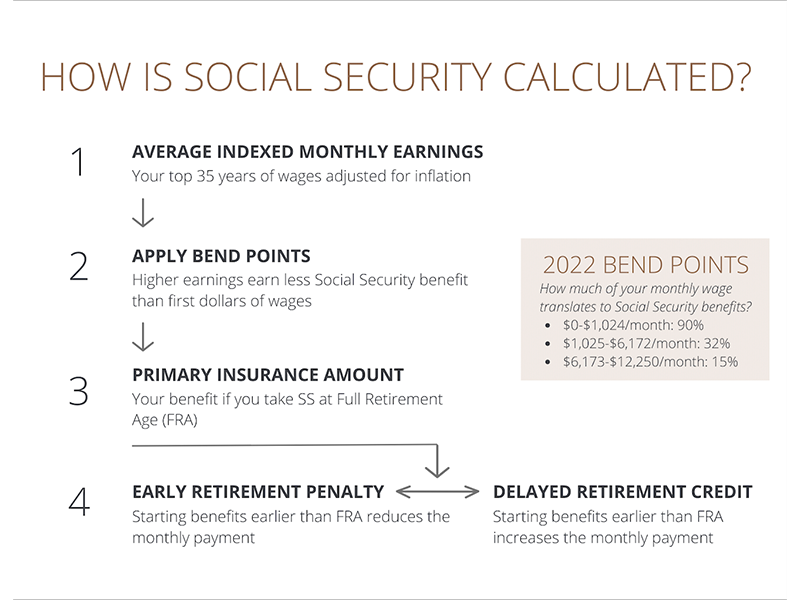
Every dollar of Social Security wages you report correctly contributes to your lifetime earnings record with the SSA. This record is the foundation upon which your future Social Security benefits are calculated. Your retirement, disability, and survivor benefits are based on your highest 35 years of earnings, adjusted for inflation. If your earnings are underreported, your future benefits could be significantly lower than what you’re entitled to. Conversely, ensuring accurate reporting means you’re building a robust foundation for a secure financial future, maximizing the benefits you and your family may receive.
Importance of Diligent Record Keeping
Maintaining meticulous records is paramount. Keep copies of:
-
All W-2 Forms: These are your official records of wages and taxes withheld by employers.
-
Schedule SE (Form 1040): For self-employed individuals, this form documents your net earnings and self-employment tax paid.
-
Pay Stubs: While W-2s are year-end summaries, pay stubs provide granular detail of each pay period’s wages and deductions.
-
Tax Returns: Your complete tax returns (Form 1040 and all schedules) provide a comprehensive overview of your annual income and tax obligations.
-
Social Security Statements: Keep copies of your annual Social Security statements, or ensure you can easily access them online.
These documents serve as proof of your earnings and contributions, which are crucial for resolving any discrepancies with the SSA or for future financial planning.
When to Seek Professional Advice
While this article provides a comprehensive overview, some situations warrant professional guidance:
-
Complex Employment Situations: If you have multiple employers, foreign income, are a partner in a complex business structure, or have unique forms of compensation, a tax professional or financial advisor can provide tailored advice.
-
Large Discrepancies: If you uncover significant discrepancies in your Social Security earnings record that you’re unable to resolve with your employer or the SSA independently.
-
Business Owners: Business owners, especially those with employees, need to ensure proper payroll tax compliance, which includes accurately figuring and remitting Social Security taxes. A qualified payroll specialist or accountant can be invaluable.
-
Retirement Planning: As you approach retirement, understanding how your Social Security wages translate into actual benefits is critical. A financial advisor can help you integrate your Social Security benefits into your broader retirement strategy.
In conclusion, taking the time to understand and accurately figure your Social Security wages is a critical financial habit. It ensures you’re meeting your tax obligations, and more importantly, it secures your future eligibility and the amount of your Social Security benefits, providing a vital safety net for you and your loved ones.
aViewFromTheCave is a participant in the Amazon Services LLC Associates Program, an affiliate advertising program designed to provide a means for sites to earn advertising fees by advertising and linking to Amazon.com. Amazon, the Amazon logo, AmazonSupply, and the AmazonSupply logo are trademarks of Amazon.com, Inc. or its affiliates. As an Amazon Associate we earn affiliate commissions from qualifying purchases.