
In the realm of personal finance and wealth management, the ability to calculate percentages is not merely a mathematical skill—it is a foundational pillar of financial literacy. Whether you are assessing the growth of a retirement portfolio, calculating the impact of inflation on your purchasing power, or determining the interest rate on a high-yield savings account, percentages serve as the universal language of value. Understanding how to figure percentages allows an individual to move beyond surface-level numbers and gain a deeper insight into the mechanics of their money.
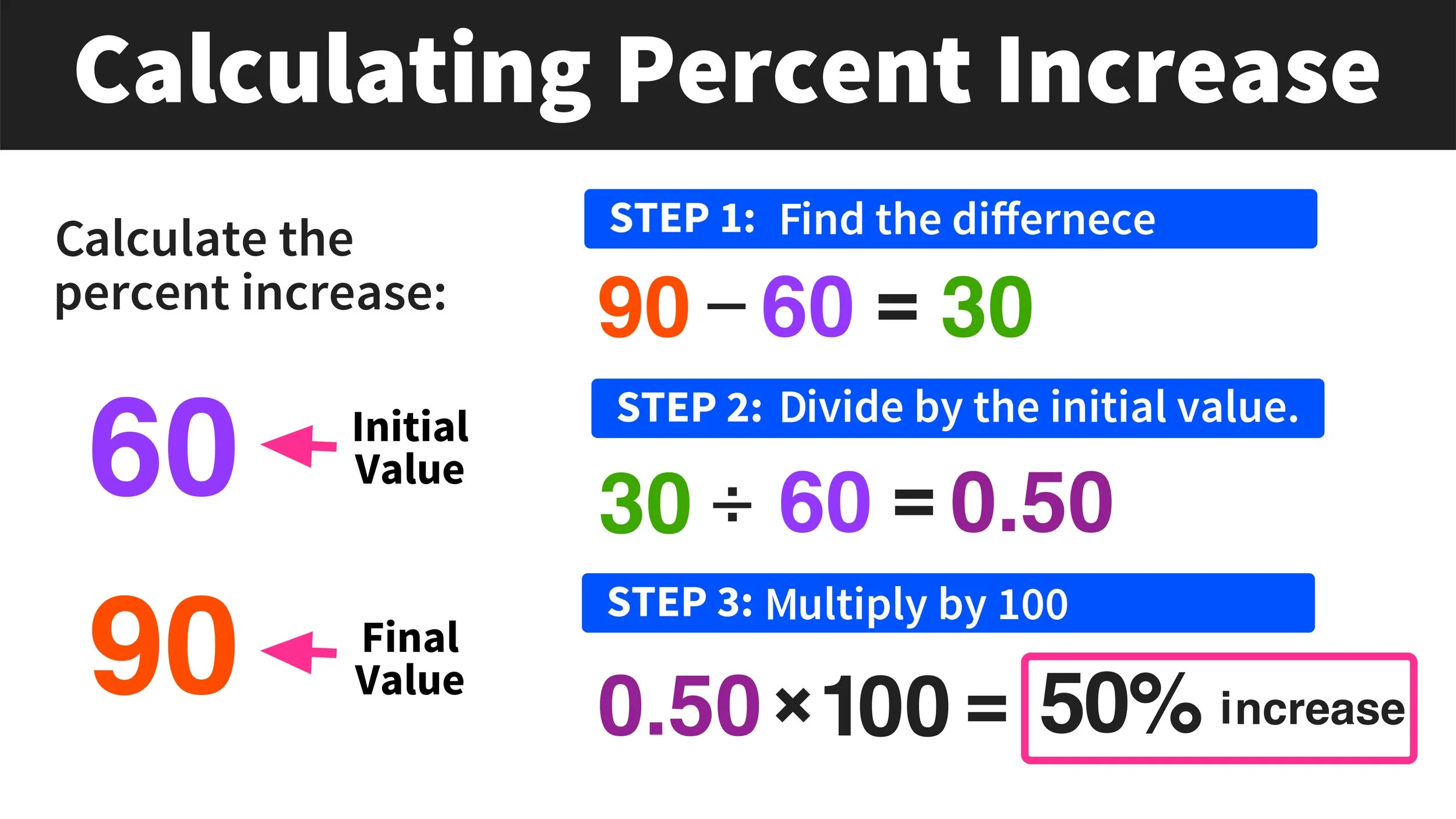
To master your finances, you must first master the ratios that govern them. This guide explores the essential methods for calculating percentages within the context of money management, providing you with the tools to make more informed, data-driven financial decisions.
The Foundation of Financial Literacy: Understanding the Basics
Before diving into complex investment strategies or tax planning, one must have a firm grasp of the basic percentage formula. In finance, a percentage represents a part of a whole, expressed as a fraction of 100. This standardization allows us to compare different financial products—such as two different credit cards or two different mutual funds—on an equal playing field.
The Fundamental Formula for Financial Calculations
The most basic way to figure a percentage is to divide the “part” by the “whole” and then multiply by 100. In a financial context, the “part” is often the specific amount of interest, profit, or expense you are looking at, while the “whole” is the total principal or total income.
Formula: (Amount / Total) × 100 = Percentage
For example, if you set aside $500 from a $5,000 monthly paycheck for savings, you would divide 500 by 5,000 to get 0.10. Multiplying by 100 reveals that your savings rate is 10%. This simple calculation is the starting point for every budget and investment analysis.
Converting Decimals and Fractions in Money Management
Financial tools and bank statements often oscillate between fractions, decimals, and percentages. Professional money management requires the ability to switch between these formats fluidly. To convert a decimal to a percentage, you shift the decimal point two places to the right. This is particularly useful when dealing with interest rates; an interest rate of 0.05 is equivalent to 5%.
Understanding these conversions is critical when comparing loan offers. A lender might quote a rate as “five and a quarter percent,” which you must mentally translate to 5.25% or 0.0525 to perform any meaningful calculations regarding your monthly payments.
Percentages in Personal Finance: Budgeting and Savings
A successful financial life is built on the foundation of a well-structured budget. Percentages are the most effective way to allocate resources because they scale with your income. Unlike fixed dollar amounts, percentage-based budgeting ensures that your financial habits remain sustainable even as your salary increases or decreases.
The 50/30/20 Rule: A Percentage-Based Framework
One of the most popular frameworks in personal finance is the 50/30/20 rule. This strategy dictates that 50% of your after-tax income should go toward “needs” (housing, utilities, groceries), 30% toward “wants” (entertainment, dining out), and 20% toward financial goals (debt repayment, savings, and investments).
To implement this, you must first calculate your net income. If your take-home pay is $4,000, you figure your percentages as follows:
- Needs: $4,000 × 0.50 = $2,000
- Wants: $4,000 × 0.30 = $1,200
- Financial Goals: $4,000 × 0.20 = $800
By focusing on the percentage rather than the raw dollar amount, you maintain a balanced lifestyle and ensure that your savings grow in proportion to your earnings.
Calculating and Improving Your Savings Rate
Your savings rate is perhaps the single most important percentage in your financial life. It represents the portion of your disposable income that you retain for the future. To figure this percentage, divide your total monthly savings by your total monthly take-home pay.
If you earn $6,000 and save $1,200, your savings rate is 20%. If you receive a raise and now earn $7,000 but keep your expenses the same, saving $2,200, your savings rate jumps to approximately 31.4%. Tracking this percentage over time provides a much clearer picture of your path to financial independence than simply looking at your bank balance.
Navigating the World of Debt: Interest Rates and APR
Debt is a tool that can either build or destroy wealth, and the difference usually lies in the percentage. When borrowing money, whether for a mortgage, a car, or a credit card, you must understand how to figure the cost of that debt through interest rates.
Deciphering the Annual Percentage Rate (APR)

The APR is a more comprehensive percentage than a simple interest rate because it includes both the interest and any additional fees associated with the loan. To truly understand the cost of borrowing, you must look at the APR.
For instance, two mortgage lenders might offer a 6% interest rate. However, Lender A has $500 in closing fees, while Lender B has $2,000. Lender B will have a higher APR. Figuring the percentage difference in APR allows you to see the “real” cost of the loan over its entire term, preventing you from being misled by a low “teaser” interest rate.
The Impact of Compounding Percentages on Debt
In finance, percentages often compound, meaning you pay interest on the interest already accrued. This is most prevalent in credit card debt. If you carry a balance with a 20% APR, the daily periodic rate is figured by dividing the annual percentage by 365 (20 / 365 = 0.054%).
While 0.054% sounds negligible, it is applied to your balance every single day. Understanding how this small percentage compounds is vital for debt management. It illustrates why paying even 1% or 2% above the minimum payment can result in saving thousands of dollars in interest over the life of the debt.
Investment Metrics: Calculating Returns and Growth
Investing is essentially the pursuit of positive percentages. Whether you are trading stocks, buying real estate, or funding a startup, your goal is to achieve a percentage return that exceeds inflation and the “risk-free” rate (the return on government bonds).
Figuring Your Return on Investment (ROI)
ROI is the gold standard for measuring investment performance. To figure this percentage, you subtract the initial cost of the investment from its current value, divide that number by the initial cost, and multiply by 100.
Formula: [(Current Value – Original Cost) / Original Cost] × 100 = ROI
Suppose you invested $10,000 in a brokerage account, and a year later, the account is worth $11,200.
- Subtract the original cost: $11,200 – $10,000 = $1,200 (your gain).
- Divide by the original cost: $1,200 / $10,000 = 0.12.
- Multiply by 100: 12%.
Your ROI is 12%. By calculating this percentage, you can compare the performance of your stock portfolio against other benchmarks, such as the S&P 500, which historically returns about 10% annually.
Year-Over-Year (YoY) Growth and Portfolio Rebalancing
For long-term investors, figuring Year-Over-Year (YoY) growth is essential for tracking progress toward retirement. This involves comparing the percentage change in your total net worth from one year to the next.
Furthermore, percentages dictate “asset allocation.” If your goal is to have a portfolio of 60% stocks and 40% bonds, and the stock market has a massive year, your portfolio might shift to 70% stocks and 30% bonds. By figuring these new percentages, you realize you are “overweight” in stocks and must rebalance—selling stocks and buying bonds—to return to your target percentage and manage your risk exposure effectively.
Business Finance and Taxation
For entrepreneurs, side-hustlers, and even savvy taxpayers, percentages are the key to profitability and compliance. Understanding margins and tax brackets is the difference between a thriving business and a failing one.
Profit Margins: Gross vs. Net
A business’s health is often measured by its “margin,” which is a percentage of revenue that remains after costs.
- Gross Profit Margin: This is figured by subtracting the Cost of Goods Sold (COGS) from total revenue and dividing by revenue. It shows how efficiently a company produces its products.
- Net Profit Margin: This is figured by subtracting all expenses (including taxes and interest) from revenue and dividing by revenue.
If a business has $100,000 in revenue and $20,000 in net profit, it has a 20% net profit margin. Investors look for high and consistent profit margin percentages as a sign of a “moat” or a competitive advantage in the marketplace.
Understanding Marginal Tax Brackets
One of the most common financial misconceptions involves tax percentages. The U.S. federal income tax system is progressive, meaning different portions of your income are taxed at different percentages.
If you move into a “24% tax bracket,” it does not mean your entire income is taxed at 24%. It means only the dollars earned within that specific range are taxed at that rate. To figure your “effective tax rate,” you divide your total tax bill by your total taxable income. This percentage is almost always lower than your marginal bracket and is the most accurate representation of what you actually pay to the government.
Conclusion: The Power of Percentage-Based Thinking
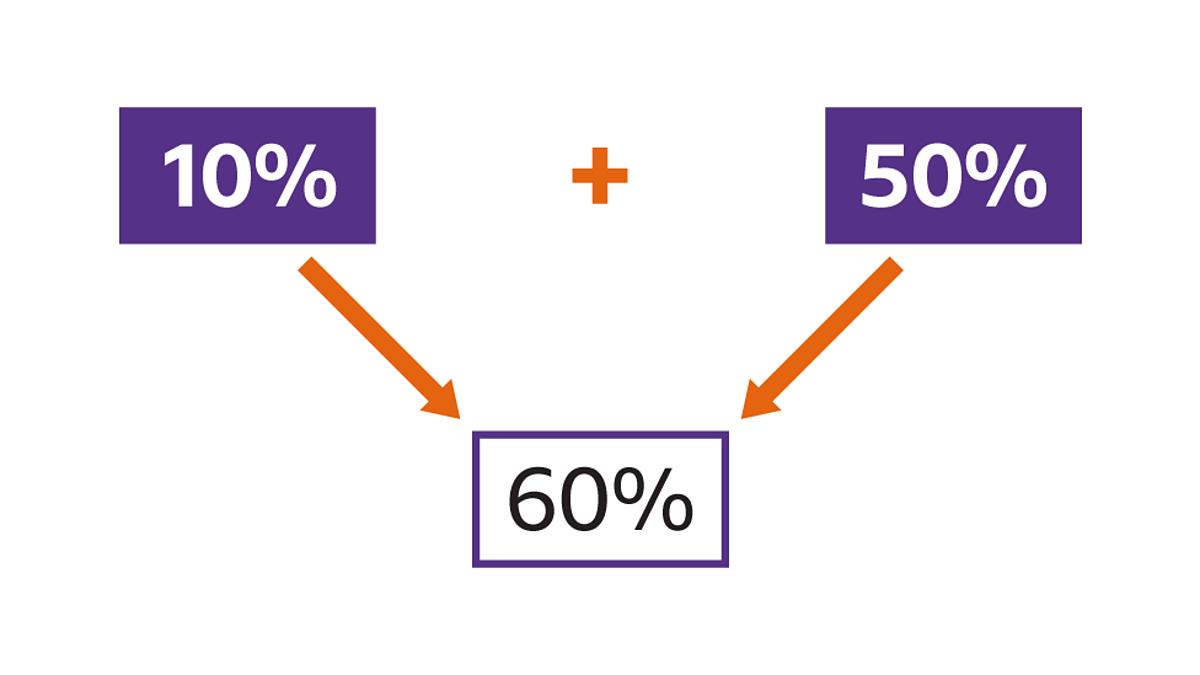
Mastering how to figure percentages is more than a mathematical exercise; it is a shift in mindset. When you view your financial world through the lens of percentages, you gain the ability to compare apples to oranges, evaluate risks objectively, and track growth with precision. From the 20% you save for your future to the 7% you earn in the market, these numbers are the heartbeat of your economic life. By applying these formulas and concepts, you move from being a passive observer of your bank account to an active architect of your financial future.
aViewFromTheCave is a participant in the Amazon Services LLC Associates Program, an affiliate advertising program designed to provide a means for sites to earn advertising fees by advertising and linking to Amazon.com. Amazon, the Amazon logo, AmazonSupply, and the AmazonSupply logo are trademarks of Amazon.com, Inc. or its affiliates. As an Amazon Associate we earn affiliate commissions from qualifying purchases.