
In the world of personal finance, business, and investing, understanding percentages isn’t just a useful skill—it’s absolutely fundamental. From calculating a discount on a new purchase to dissecting investment returns, and from budgeting for your monthly expenses to understanding tax rates, percentages are the universal language of financial comparison and growth. While the concept might seem simple on the surface, its profound implications across virtually every financial decision you make cannot be overstated. This guide aims to demystify the process of calculating percentages, grounding it firmly in real-world financial contexts, and equipping you with the knowledge to navigate your monetary landscape with greater confidence and insight.

Understanding the Core Concept: What is a Percentage?
Before diving into the mechanics, let’s establish a clear understanding of what a percentage truly represents. At its heart, a percentage is a way to express a number as a fraction of 100. The term “percent” literally means “per one hundred” or “out of one hundred.” It’s a standardized way to talk about proportions, making it incredibly useful for comparisons, especially in finance, where different quantities need to be measured against a common benchmark.
The Foundation: Decimals and Fractions
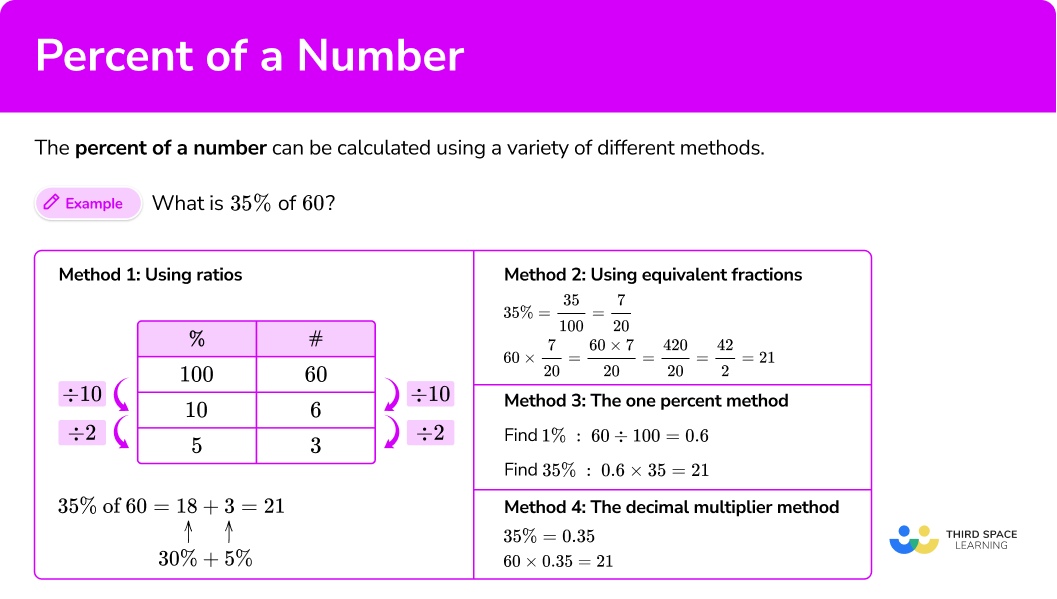
Every percentage can be expressed as a decimal or a fraction. For example, 50% is equivalent to the fraction 50/100, which simplifies to 1/2. As a decimal, it’s 0.50. This interchangeability is crucial for calculation. When you want to find a percentage of a number, you almost always convert the percentage into its decimal equivalent first. For instance, to find 20% of 150, you’d convert 20% to 0.20 and then multiply. This simple conversion is the gateway to most percentage calculations.
Visualizing Percentages: The 100-Part System
Imagine a pie chart divided into 100 equal slices. If you have 25% of the pie, you have 25 of those 100 slices. This visual helps to concretize the abstract idea. In financial terms, if a company reports a profit margin of 10%, it means that for every $100 in revenue, $10 is profit. This 100-part system provides a universal scale, allowing us to compare things like interest rates across different loans, growth rates of investments, or discount percentages on various products, regardless of the original monetary amounts involved.
Mastering the Calculation: Step-by-Step Methods
Calculating a percentage of a number is a straightforward process, but understanding the underlying logic solidifies your financial comprehension. There are primarily two common methods, both yielding the same result, and a third approach for quick, efficient calculations using digital tools.
Method 1: The Decimal Conversion
This is arguably the most common and intuitive method for finding a percentage of a number.
- Convert the percentage to a decimal: Divide the percentage by 100 (or simply move the decimal point two places to the left).
- Example: 25% becomes 0.25; 5% becomes 0.05; 120% becomes 1.20.
- Multiply the decimal by the number: The result is the percentage of that number.
- Financial Application: You want to buy a new appliance priced at $800, and it’s on sale for 15% off.
- Convert 15% to 0.15.
- Multiply $800 by 0.15: $800 * 0.15 = $120.
- The discount is $120. To find the final price, subtract the discount from the original price: $800 – $120 = $680.
- Financial Application: You want to buy a new appliance priced at $800, and it’s on sale for 15% off.
Method 2: The Proportion Method
While less common for direct percentage-of-a-number calculations, the proportion method is excellent for understanding the relationship and can be particularly useful when you’re trying to find the original number given a percentage, or what percentage one number is of another.
- Set up the proportion: $frac{text{Part}}{text{Whole}} = frac{text{Percent}}{100}$
- Fill in the known values:
- Financial Application: You want to calculate the sales tax on a $50 item if the sales tax rate is 8%.
- Here, the “whole” is $50, and the “percent” is 8. We are looking for the “part” (the tax amount).
- $frac{text{Tax Amount}}{$50} = frac{8}{100}$
- Financial Application: You want to calculate the sales tax on a $50 item if the sales tax rate is 8%.
- Solve for the unknown: Cross-multiply and solve.
- $100 times text{Tax Amount} = 8 times $50$
- $100 times text{Tax Amount} = $400$
- $text{Tax Amount} = frac{$400}{100} = $4$.
- The sales tax is $4, making the total price $54.
Using a Calculator Efficiently
Most modern calculators (including smartphone apps and computer software) have a dedicated ‘%’ button or can perform these calculations seamlessly. When using a calculator:
- To find ‘X% of Y’: Enter Y * X % (e.g., 800 * 15 %). Some calculators will directly give you the percentage amount (120), while others might directly show the result after applying the percentage (e.g., 800 – 15% might directly show 680). Familiarize yourself with your specific calculator’s functionality.
- For consistency and fewer errors, converting the percentage to a decimal (Method 1) before multiplying is often the most reliable calculator approach.
Real-World Financial Applications of Percentages
The ability to calculate percentages is not just an academic exercise; it’s a critical skill for making informed financial decisions daily.
Personal Finance: Budgeting, Savings, and Debt
- Budgeting: You might allocate specific percentages of your income to different categories: 50% for needs, 30% for wants, 20% for savings and debt repayment (the 50/30/20 rule). Calculating these amounts helps you manage your money effectively. If your monthly income is $4,000, 20% for savings is $4,000 * 0.20 = $800.
- Savings Goals: If you want to save $10,000 in a year and need to calculate what percentage of your monthly income that represents, or what percentage of your income you need to save each month.
- Debt Repayment: Understanding interest rates on loans (mortgages, car loans, credit cards) is crucial. A 15% interest rate on a credit card balance means a significant portion of your payment goes towards interest if not managed carefully.

Investing: Returns, Gains, and Losses
- Investment Returns: Performance of stocks, bonds, or mutual funds is almost always expressed as a percentage. If your investment grew from $1,000 to $1,100, that’s a 10% gain ( ($1100 – $1000) / $1000 * 100% ). Understanding this helps you evaluate investment performance.
- Portfolio Allocation: Financial advisors often recommend allocating a certain percentage of your portfolio to different asset classes (e.g., 60% stocks, 40% bonds). Calculating the dollar amounts for these percentages ensures your portfolio aligns with your risk tolerance and goals.
Business Finance: Profit Margins, Discounts, and Growth
- Profit Margins: Businesses use percentages extensively to measure profitability. Gross profit margin, operating profit margin, and net profit margin are all expressed as percentages of revenue. A 20% net profit margin means that for every dollar of revenue, 20 cents becomes net profit.
- Discounts and Markups: Retailers constantly calculate percentage discounts for sales or percentage markups to determine selling prices from their cost.
- Growth Rates: Businesses track growth in sales, customer base, or market share as percentages over time, essential for strategic planning and investor relations.
Taxes and Gratuities: Everyday Percentage Use
- Sales Tax: As demonstrated earlier, sales tax is a percentage applied to purchases.
- Income Tax: Your income tax bracket determines the percentage of your income you owe in taxes. Understanding effective tax rates involves calculating the percentage of your total income paid in taxes.
- Gratuities (Tips): Tipping 15-20% at a restaurant is a common practice. Quickly calculating this percentage ensures you show appropriate appreciation for service. For a $75 bill, a 20% tip is $75 * 0.20 = $15.
Common Percentage Pitfalls and How to Avoid Them
Even with a solid understanding of the basics, some common mistakes can lead to miscalculations and poor financial decisions.
Confusing “Percent Of” with “Percent Change”
While related, finding a “percent of a number” is different from calculating a “percent change” (increase or decrease). Percent change involves comparing an original value to a new value and expressing the difference as a percentage of the original value. For instance, if an investment went from $100 to $120, that’s a 20% increase. If it went from $120 back to $100, that’s a 16.67% decrease ( ($100 – $120) / $120 * 100% ), not 20%. Understanding the distinction is vital for analyzing financial performance accurately.
Misinterpreting Basis Points vs. Percentage Points
In financial markets, especially for interest rates or bond yields, you might encounter “basis points” (bps). One basis point is 0.01%, or one-hundredth of a percentage point. So, 100 basis points equal 1%. When you hear an interest rate increased by “50 basis points,” that means it increased by 0.50% (e.g., from 3.00% to 3.50%). Confusing this with a “50 percentage point” increase (which would be from 3.00% to 53.00%!) can lead to drastically different interpretations of financial news.
The Importance of the “Whole” in Financial Contexts
Always be clear about what constitutes the “whole” or the original amount when calculating percentages. For example, a business might offer a “profit margin” or a “markup.” A 25% profit margin means profit is 25% of the selling price. A 25% markup means the profit is 25% of the cost. These are two very different financial metrics, even though both involve 25%. Understanding the base number is paramount to accurate financial analysis.
Leveraging Digital Tools for Percentage Calculations
While mental math and manual calculations are excellent for building foundational understanding, digital tools offer speed and accuracy for complex financial scenarios.
Spreadsheet Functions (Excel, Google Sheets)
Spreadsheets are indispensable for financial planning. They can instantly calculate percentages across large datasets.
- To find X% of Y: If Y is in cell A1 and X is in cell B1 (as a decimal, e.g., 0.15 for 15%), you’d use the formula
=A1*B1. - To find a percentage: If you want to know what percentage of a budget an expense is, you’d use
= (Expense_Amount / Total_Budget) * 100. Spreadsheets can even format the result directly as a percentage.
Online Financial Calculators
Numerous websites offer specialized financial calculators for mortgages, loan interest, investment returns, savings goals, and more. These tools automate complex percentage-based calculations, allowing you to quickly model different financial scenarios.
Mobile Banking and Budgeting Apps
Many personal finance apps integrate percentage calculations directly. They can show you what percentage of your income you spend on dining out, what percentage of your investment portfolio is allocated to a particular stock, or even calculate tips automatically based on your bill.
In conclusion, the ability to “figure percent of a number” is far more than a simple mathematical trick; it’s a cornerstone of financial literacy. By understanding its fundamental principles, mastering various calculation methods, and recognizing its diverse applications in personal finance, investing, and business, you empower yourself to make smarter, more informed monetary decisions. Embrace this essential skill, and watch as your confidence in navigating the complex world of finance grows exponentially.
aViewFromTheCave is a participant in the Amazon Services LLC Associates Program, an affiliate advertising program designed to provide a means for sites to earn advertising fees by advertising and linking to Amazon.com. Amazon, the Amazon logo, AmazonSupply, and the AmazonSupply logo are trademarks of Amazon.com, Inc. or its affiliates. As an Amazon Associate we earn affiliate commissions from qualifying purchases.