
In the realm of finance, numbers are the primary language, but percentages are the grammar that gives those numbers meaning. Whether you are analyzing a stock portfolio, calculating the interest on a mortgage, or determining the profit margins of a startup, understanding how to figure out the percentage of a number is an indispensable skill. It is the bridge between raw data and actionable financial intelligence.
While basic arithmetic might seem elementary, the application of percentages in financial decision-making requires a nuanced understanding. This guide explores the mechanics of percentage calculations and applies them to the complex landscapes of personal finance, investing, and business management.

The Foundation of Financial Literacy: Basic Percentage Calculations
At its core, a percentage is a way of expressing a number as a fraction of 100. The word literally translates to “per hundred.” In money management, this allows us to standardize different values so they can be compared equitably.
The Fundamental Formula for Success
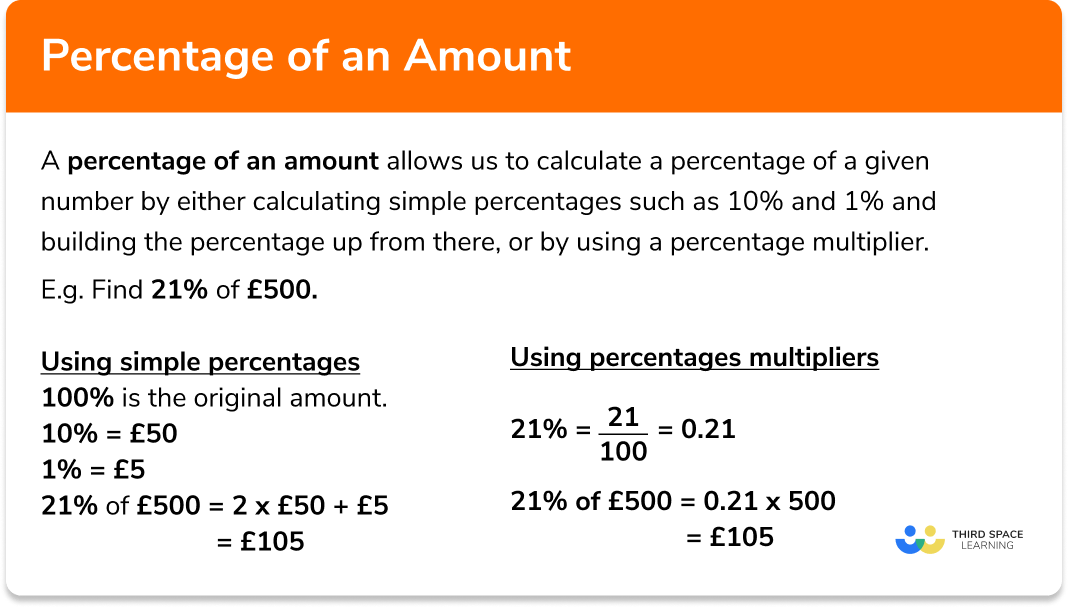
To figure out the percentage of a number, the most straightforward method is the “Is over Of” formula, or more formally:
(Part / Whole) × 100 = Percentage.
For example, if you saved $150 out of a $1,000 paycheck, you would divide 150 by 1,000 (0.15) and multiply by 100 to get 15%. Conversely, if you need to find a specific percentage of a total—such as a 15% tip on a $60 bill—you convert the percentage to a decimal (0.15) and multiply it by the total (0.15 × 60 = $9.00). Mastering this mental shift between percentages and decimals is the first step toward financial fluency.
Decimal Conversions and Their Importance
In financial modeling and spreadsheet software like Excel or Google Sheets, percentages are almost always handled as decimals. Understanding that 7% is 0.07, while 70% is 0.70, is a critical distinction. A single misplaced decimal point in a business loan application or a tax filing can result in catastrophic financial discrepancies. Professional financial planning requires a rigorous habit of double-checking these conversions to ensure that calculations for inflation, depreciation, or interest remain accurate.
Percentages in the World of Investing
For the sophisticated investor, raw dollar gains are often less important than percentage returns. Percentages provide the context necessary to evaluate the performance of an asset relative to its cost and the broader market.
Calculating Return on Investment (ROI)
ROI is the ultimate metric for any investor. It tells you how efficiently your capital is working for you. The formula is:
((Current Value – Original Cost) / Original Cost) × 100.
If you purchased a share of a tech company for $200 and it is now worth $250, your profit is $50. To find the percentage gain, you divide $50 by the original $200, resulting in a 25% ROI. This percentage allows you to compare that stock’s performance against a high-yield savings account or a real estate investment, regardless of the differing dollar amounts involved.
Understanding Yields and Capital Gains
Investors must also distinguish between dividend yields and capital gains. A dividend yield is calculated by taking the annual dividend payment and dividing it by the stock’s current price. If a company pays $2.00 per year in dividends and the stock costs $50, the yield is 4%.
Understanding these percentages is vital for income-focused investors who rely on cash flow. By focusing on the percentage yield rather than the dollar amount of the dividend, an investor can determine if the “price” they are paying for that income is justified compared to other market opportunities.
Consumer Finance and Budgeting Applications
On a personal level, percentages serve as the guardrails for a healthy financial life. They help consumers navigate the hidden costs of debt and the structured discipline of savings.
Mastering Interest Rates and APR
When you borrow money, whether through a credit card or a car loan, the cost of that money is expressed as an Annual Percentage Rate (APR). Figuring out the percentage of your balance that goes toward interest each month is crucial for debt elimination.
If you carry a $5,000 balance on a credit card with a 24% APR, your monthly interest isn’t 24%; it is 24% divided by 12 months, or 2% per month. Calculating 2% of $5,000 reveals that $100 of your payment is going toward interest alone before you even touch the principal. Visualizing debt through these percentages often provides the psychological motivation needed to prioritize high-interest debt repayment.
The 50/30/20 Rule: Percentages in Budgeting
One of the most popular frameworks for personal finance is the 50/30/20 rule. This strategy suggests allocating your after-tax income into three percentage-based categories:
- 50% for Needs: Housing, groceries, utilities, and insurance.
- 30% for Wants: Dining out, travel, and hobbies.
- 20% for Savings and Debt Repayment: Building an emergency fund or 401(k) contributions.
By viewing your budget through the lens of percentages rather than fixed dollar amounts, your financial plan becomes scalable. As your income increases, your “needs” don’t necessarily have to grow, allowing you to shift those percentages toward the 20% savings bracket, thereby accelerating your path to financial independence.
Business Finance and Profit Margins
For entrepreneurs and business owners, percentages are the primary indicators of a company’s health and sustainability. They are used to measure efficiency, set pricing, and evaluate competition.
Gross vs. Net Profit Margins
A business may have high revenue, but without healthy percentage margins, it is a house of cards.
- Gross Profit Margin is calculated as: ((Revenue – Cost of Goods Sold) / Revenue) × 100. This shows how efficiently a company produces its products.
- Net Profit Margin is the “bottom line”: (Net Income / Revenue) × 100. This accounts for all expenses, including taxes and interest.
A company might generate $1 million in sales, but if its net profit margin is only 2%, it only keeps $20,000. Understanding how to calculate and improve these percentages is what separates a struggling business from a thriving one.
Markups vs. Margins: Avoiding Costly Errors
A common mistake in business finance is confusing markup with margin. If an item costs $80 to produce and you want a 20% profit, adding a 20% markup ($16) results in a sale price of $96. However, your margin on that $96 sale is actually only 16.6% ($16 / $96).
To achieve a true 20% margin, you must use a different percentage calculation: Cost / (1 – Desired Margin). In this case, $80 / 0.80 = $100. Understanding this distinction is critical for maintaining the cash flow necessary to cover overhead and reinvest in growth.
Advanced Financial Tools and Tax Calculations
As one’s financial life becomes more complex, percentages are used to navigate the intricacies of government regulations and the physics of wealth accumulation.
Calculating Effective Tax Rates
Many taxpayers are confused by the difference between their marginal tax bracket and their effective tax rate. In a progressive tax system, not every dollar is taxed at the same percentage. Your “marginal” rate is the percentage paid on your last dollar of income, but your “effective” rate is the actual percentage of your total income that goes to the IRS.
To find your effective tax rate, divide your total tax tax liability by your total taxable income. For instance, if you earned $100,000 but paid $15,000 in taxes after deductions, your effective tax rate is 15%, even if you are in the 22% marginal bracket. Knowing this percentage is essential for accurate tax planning and determining how much to set aside from each paycheck.
Compounding Interest: The Percentage That Builds Wealth
Albert Einstein famously called compound interest the “eighth wonder of the world.” It is the process where the percentage return on an investment is applied not just to the original principal, but also to the accumulated interest from previous periods.
The formula for compound interest—A = P(1 + r/n)^nt—relies entirely on the power of percentages. Even a small 1% difference in annual returns can result in hundreds of thousands of dollars in difference over a thirty-year investment horizon. By understanding how to calculate and project these percentages, individuals can better appreciate the “time value of money” and the importance of starting their investment journey as early as possible.
In conclusion, knowing how to figure out the percentage of a number is more than just a math trick; it is a fundamental tool for financial mastery. From the simple act of budgeting a monthly paycheck to the complex analysis of corporate profit margins, percentages provide the clarity needed to make informed, strategic, and profitable decisions in an increasingly complex financial world.
aViewFromTheCave is a participant in the Amazon Services LLC Associates Program, an affiliate advertising program designed to provide a means for sites to earn advertising fees by advertising and linking to Amazon.com. Amazon, the Amazon logo, AmazonSupply, and the AmazonSupply logo are trademarks of Amazon.com, Inc. or its affiliates. As an Amazon Associate we earn affiliate commissions from qualifying purchases.