
In the realms of personal finance and business management, precision is the difference between a thriving portfolio and a stagnant one. One of the most common yet frequently misunderstood mathematical concepts in finance is the calculation of a “percentage of a percentage.” While it sounds like a redundant academic exercise, this calculation is the bedrock of understanding compound interest, investment fee structures, tax implications on capital gains, and tiered commission models in side hustles.
To master your money, you must move beyond simple addition and subtraction. You must understand how different layers of percentages interact to determine your true net take-home pay or your actual investment performance. This guide will break down the mechanics of these calculations and apply them to real-world financial scenarios to help you optimize your wealth.
The Mathematics of Compound Ratios: Understanding the Core Logic
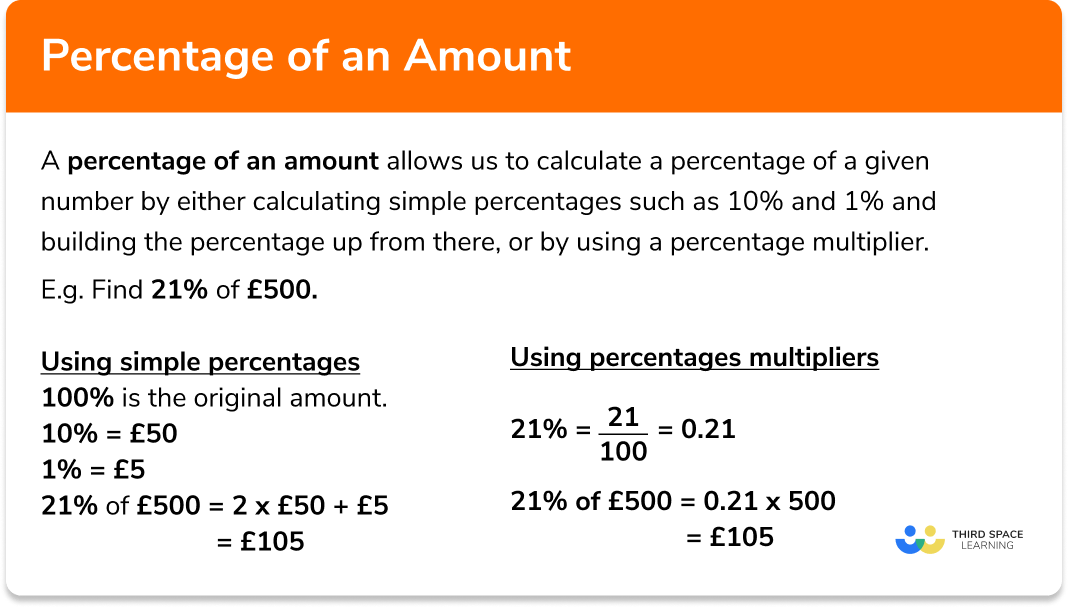
Before applying the concept to your bank account, you must understand the underlying arithmetic. Calculating a percentage of a percentage—often called a compound percentage—is essentially an exercise in multiplication. Many people make the mistake of adding percentages together, which leads to significant errors in financial forecasting.
Converting Percentages to Decimals
The first step in any professional financial calculation is to move away from the “%” symbol and into decimals. To convert a percentage to a decimal, you simply divide by 100 or move the decimal point two places to the left. For example, 20% becomes 0.20, and 5% becomes 0.05. When you are looking for 5% of 20%, you are looking for 0.05 multiplied by 0.20.
The Multiplication Principle
Once you have your decimals, the formula is straightforward:
Decimal A × Decimal B = Final Percentage (as a decimal)
For instance, if you are an affiliate marketer and you earn a 10% commission on a product that is currently discounted by 25% of its original price, you aren’t just subtracting figures. You are calculating your slice of a specific portion of the pie. If you need to find 10% of 25%, the math is 0.10 × 0.25 = 0.025. Multiplying that result by 100 gives you 2.5%. Thus, your total “take” is 2.5% of the original price.
Why Addition Fails in Finance
A common pitfall is “additive thinking.” If a stock drops 10% one day and 10% the next, many assume it has dropped 20% total. However, the second 10% drop is calculated based on the new, lower value. This is the “percentage of a percentage” logic in reverse. Understanding that these numbers are multiplicative rather than additive is the first step toward sophisticated financial literacy.
Investment Performance: Navigating Fees and Realized Returns
In the world of investing, “percentage of a percentage” is most commonly encountered when dealing with expense ratios, management fees, and performance hurdles. These layers can quietly erode your wealth if you do not know how to calculate their impact on your gross returns.
The Impact of Management Fees on Gross Yield
Consider a mutual fund or a private equity investment that promises a 10% annual return. However, the fund charges a 2% management fee on the total assets under management. While this seems simple, more complex “Hedge Fund” models often use a “2 and 20” structure: a 2% management fee plus 20% of any profits made.
If your investment earns a 10% return, the “20% of profits” fee is a percentage (20%) of a percentage (the 10% gain). To calculate this, you multiply 0.20 by 0.10, resulting in 0.02, or 2%. Therefore, your 10% gain is immediately reduced by 2% due to the performance fee, leaving you with 8% before the standard management fee is even applied.
Gross vs. Net Returns
Understanding the “net” is vital for comparing different financial tools. If an investment vehicle offers a 12% return but carries high administrative costs that take 15% of those gains, your actual return is 12% – (0.15 × 12%).
Calculation: 0.15 × 0.12 = 0.018 (or 1.8%).
Your net return is 12% – 1.8% = 10.2%.
By understanding this, you can better compare that 12% “high-fee” investment against a 10.5% “low-fee” index fund, realizing the “lower” return is actually more profitable.
Inflation and Purchasing Power
Investors also use this logic to calculate real returns. If your portfolio grows by 7% (the first percentage) but inflation is at 3% (the second percentage), your real gain isn’t a simple 4% in terms of purchasing power. While subtraction is a common shorthand, professionals use the Fisher Equation or multiplicative scaling to understand how a percentage of their total wealth is being “taxed” by the rising cost of living.
Business Profitability: Margin on Margin and Sales Structures
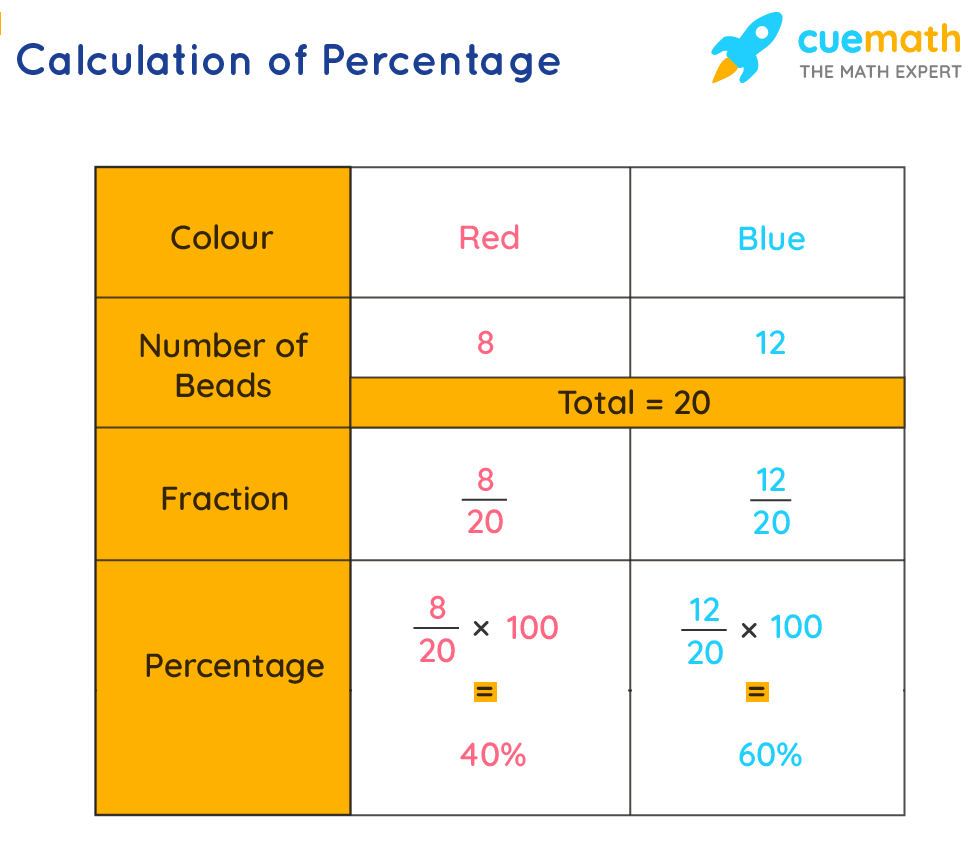
For business owners and side hustlers, percentages represent the lifeblood of the company. Whether you are dealing with wholesale markups, sales tax, or multi-tiered distribution, you are constantly calculating percentages of percentages.
Retailer vs. Wholesaler Margins
In a standard supply chain, a manufacturer might sell a product to a wholesaler at a 30% profit margin. The wholesaler then sells it to a retailer at a 20% markup on their cost. If you are the manufacturer trying to understand the final consumer price, you must calculate these compounding percentages.
If the base cost is $100 and the manufacturer wants a 30% margin, the price is $130. If the wholesaler adds a 20% markup on that $130, they are adding 20% of 130% of the original cost.
Calculation: 1.30 × 1.20 = 1.56.
The final price is 156% of the original manufacturing cost. Knowing how to stack these percentages allows for better price positioning in the market.
Affiliate and Commission Tiers
Many modern online income streams, such as affiliate marketing or multi-level sales, operate on “override” commissions. You might earn 5% of the sales made by your recruits. If your recruit earns a 20% commission on a $1,000 sale, they make $200. Your 5% is often calculated as a percentage of their percentage or a percentage of the total.
If the contract states you get “5% of all referred commissions,” you are finding 5% of 20%.
Calculation: 0.05 × 0.20 = 0.01.
You are effectively earning 1% of the total sale ($10). Misunderstanding this distinction can lead to significant disappointments when the “commission check” arrives.
Sales Tax and VAT Considerations
In international business, Value Added Tax (VAT) is a classic example of percentage layering. If you are importing goods, you may pay a 10% customs duty on the value of the goods. Then, a 20% VAT might be applied to the total value (Value + Duty). This is a percentage (20%) applied to a value that has already been increased by a percentage (10%). Mastering this prevents “hidden” costs from turning a profitable import side hustle into a deficit.
Taxation and Net Profit: Navigating the Percentages of Your Earnings
The most common “percentage of a percentage” calculation for the average person involves taxes. Specifically, how taxes apply to investment gains or business revenue.
Capital Gains and Effective Tax Rates
If you sell an asset for a 50% profit, you might feel wealthy—until the government takes its share. If the capital gains tax rate is 15%, that 15% is applied to your 50% gain.
Calculation: 0.15 × 0.50 = 0.075.
The government takes 7.5% of the original total value of the investment, leaving you with a net gain of 42.5%. When planning for retirement or large purchases, you must always calculate the “percentage of the percentage” to know what is actually in your pocket.
Tiered Tax Brackets and Side Hustle Income
For those with side hustles, additional income is often taxed at your “marginal” rate. If your side business has a 40% profit margin, but that extra income pushes you into a 30% tax bracket, your true take-home profit is a percentage of a percentage.
You keep 70% (100% – 30% tax) of your 40% profit.
Calculation: 0.70 × 0.40 = 0.28.
Your effective take-home pay from that side hustle is 28% of its gross revenue. This insight is crucial for deciding whether a side hustle is worth the time investment.
Strategic Financial Optimization: Leveraging Percentages for Wealth
Understanding these calculations isn’t just about avoiding mistakes; it’s about strategic optimization. By manipulating these variables, you can significantly increase your long-term wealth.
The Power of Reinvestment
Compounding interest is the most famous “percentage of a percentage.” When your investments grow by 10% this year, and you reinvest that 10%, next year’s 10% growth is calculated on the original 100% plus the 10% gain. You are earning a percentage on a percentage. Over 30 years, this “stacking” effect is what creates millionaires from modest monthly contributions.
Tax-Loss Harvesting and Percentage Mitigation
Savvy investors use “percentage of a percentage” logic to offset gains. If you have a 20% gain in one stock and a 20% loss in another, the “tax percentage” you save by selling the loser can be viewed as a percentage of the percentage you would have owed on the winner. By calculating the net tax impact, you can decide exactly how much of an asset to sell to bring your effective tax rate to zero.
Conclusion
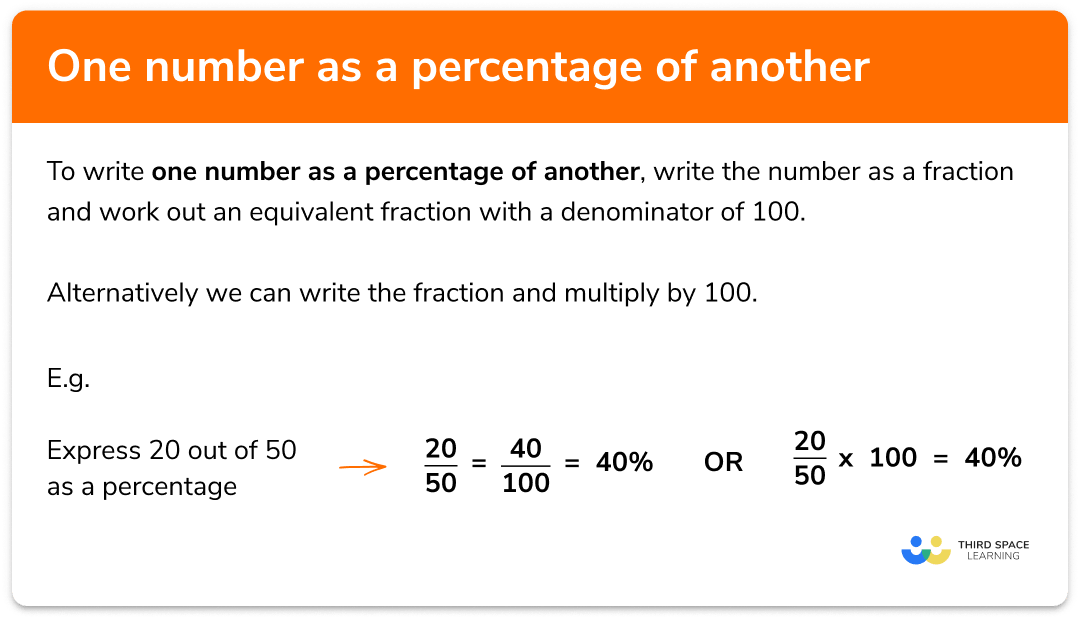
Figuring out a percentage of a percentage is more than a math trick; it is a fundamental skill for anyone serious about money. Whether you are calculating the “real” cost of an investment fee, determining the true profitability of a business venture, or planning for the inevitable slice the tax man takes, these calculations provide clarity. In a world of complex financial instruments, the ability to peel back the layers and see the actual percentages underneath is the ultimate competitive advantage.
aViewFromTheCave is a participant in the Amazon Services LLC Associates Program, an affiliate advertising program designed to provide a means for sites to earn advertising fees by advertising and linking to Amazon.com. Amazon, the Amazon logo, AmazonSupply, and the AmazonSupply logo are trademarks of Amazon.com, Inc. or its affiliates. As an Amazon Associate we earn affiliate commissions from qualifying purchases.