
In the intricate world of finance, where every dollar, every percentage point, and every share can make a significant difference, a strong grasp of foundational mathematical concepts is not merely helpful — it’s indispensable. Among these crucial skills, understanding how to figure fractions of a number stands out as a core competency. Far from being a relic of elementary school math, fractions are the silent architects behind budgets, investment returns, loan interest, and even the everyday discounts we encounter. For anyone aspiring to achieve financial literacy, make informed economic decisions, or simply manage their money more effectively, mastering this skill is a non-negotiable step.

This article will demystify the process of calculating fractions of a number, translating abstract mathematical principles into practical, real-world financial applications. We’ll explore various methods, illustrate them with pertinent examples, and uncover why this seemingly simple concept is an invaluable tool in your financial arsenal, from managing daily expenses to strategizing long-term wealth accumulation.
The Foundational Importance of Fractions in Finance
At its heart, finance is about understanding relationships and proportions – how much of your income goes to rent, what percentage of your portfolio is allocated to stocks, or what fraction of a company you own. Fractions provide the most direct and intuitive language for expressing these proportional relationships. Without them, deciphering financial statements, negotiating terms, or even just splitting a bill fairly becomes significantly more challenging.
Beyond Basic Arithmetic: Why Fractions Matter for Your Wallet
Many people associate fractions primarily with academic exercises, but their utility extends deeply into the practicalities of managing money. Consider any scenario where a portion of a whole needs to be understood or calculated: a sales discount of “1/4 off,” an investment opportunity offering “1/3 ownership,” or a budget recommending that “no more than 1/2 of your income goes to necessities.” These are all fractional representations that dictate financial outcomes. A solid understanding of how these fractions translate into concrete numbers empowers you to make smarter choices, avoid costly misunderstandings, and accurately project financial scenarios. It’s the difference between guessing your financial position and knowing it with certainty.
Bridging the Gap: From Theory to Real-World Financial Scenarios
The power of fractions lies in their ability to bridge the gap between abstract mathematical concepts and tangible financial realities. They transform percentage points into specific dollar amounts, convert ownership stakes into quantifiable equity, and help us compare different financial instruments on an apples-to-apples basis. For instance, comparing a 1/20 return on one investment to a 3/50 return on another requires an understanding of how to evaluate and compare these fractional values, ultimately guiding sound investment decisions. This conceptual bridge is what transforms raw data into actionable financial intelligence.
Demystifying the Core Calculation: Methods and Examples
Calculating a fraction of a number is a straightforward process once the underlying logic is understood. Essentially, it involves identifying the ‘whole’ and then determining what ‘part’ the fraction represents.
The Multiplication Method: Your Go-To Approach
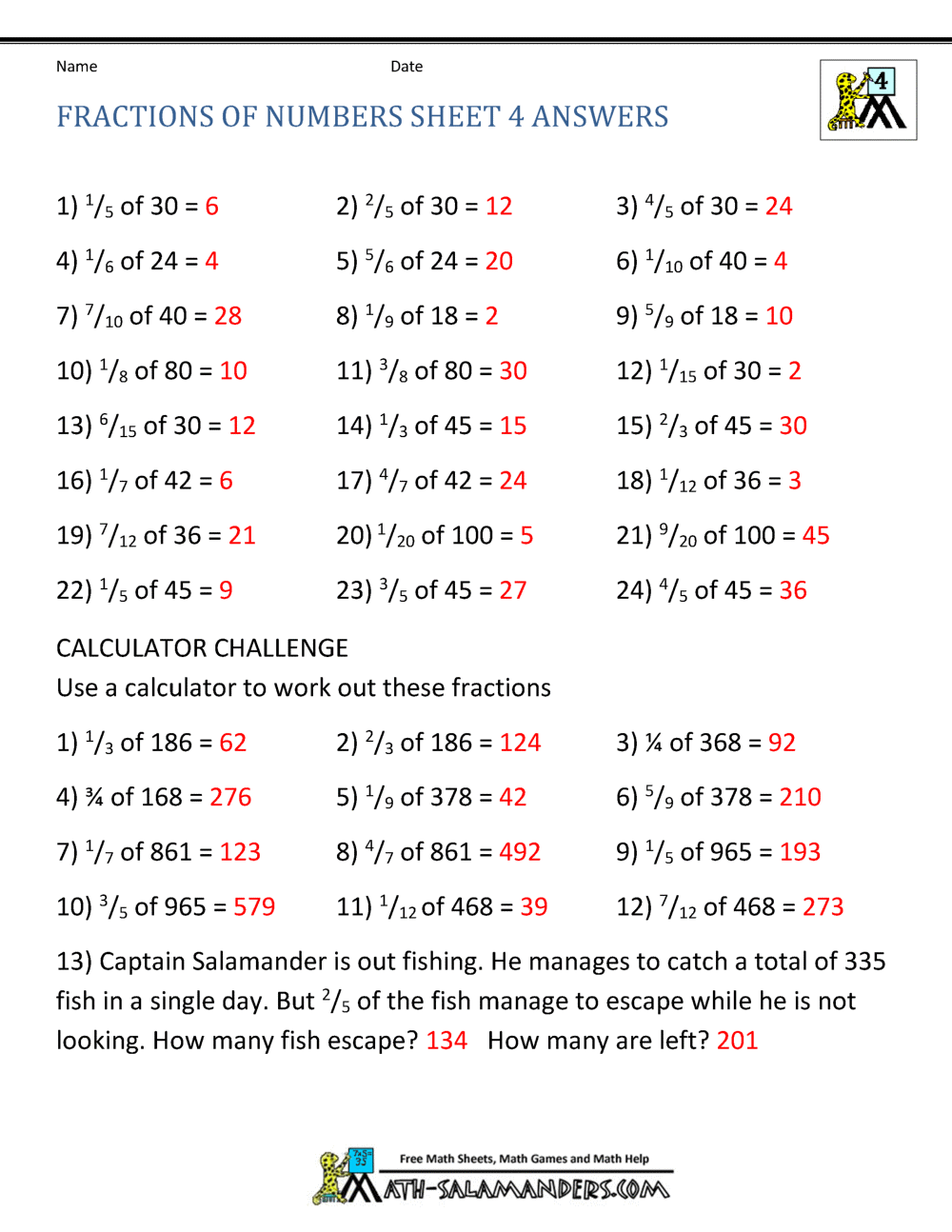
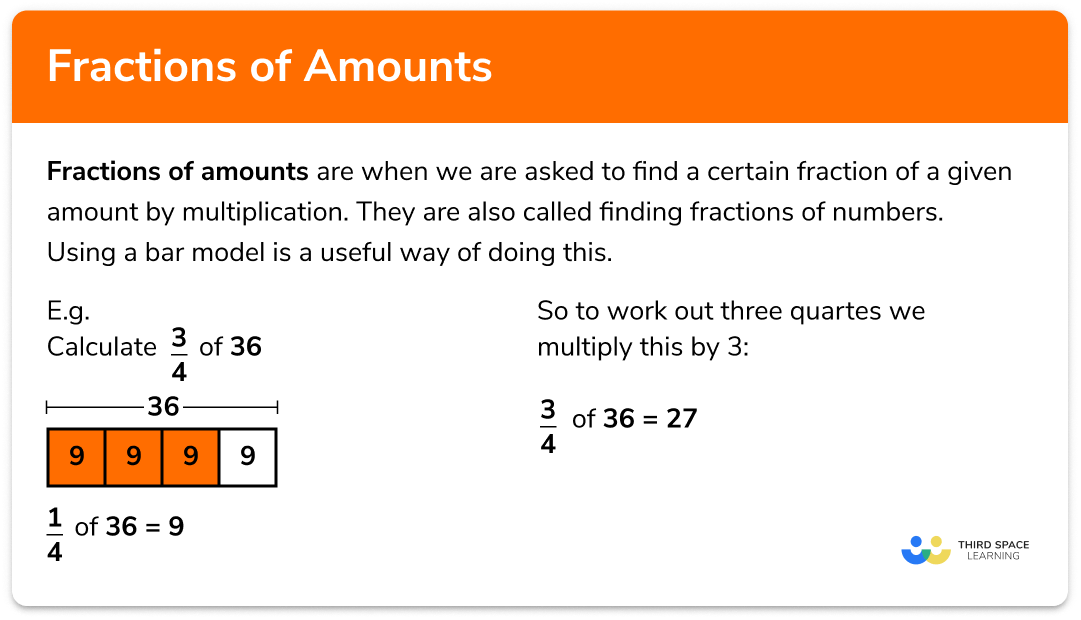
The most common and direct method to figure a fraction of a number is through multiplication. The process is simple: multiply the number (the ‘whole’) by the fraction.
Formula:
Fraction of a Number = Fraction × Whole Number
When multiplying, remember that a fraction consists of a numerator (the top number) and a denominator (the bottom number). You multiply the numerator by the whole number, and then divide the result by the denominator.
Example 1: Budgeting
You earn $3,000 per month, and you want to allocate 1/3 of your income to rent.
-
Fraction = 1/3
-
Whole Number = $3,000
-
Rent Allocation = (1/3) × $3,000 = ($1 × 3,000) / 3 = $3,000 / 3 = $1,000
You should allocate $1,000 for rent.
Example 2: Investment Returns
You invested $5,000, and your portfolio grew by 1/10 of its initial value.
-
Fraction = 1/10
-
Whole Number = $5,000
-
Growth Amount = (1/10) × $5,000 = ($1 × 5,000) / 10 = $5,000 / 10 = $500
Your investment grew by $500.
Converting to Decimals: An Alternative Pathway
Sometimes, especially with complex fractions or when using calculators, it can be easier to convert the fraction into its decimal equivalent first, and then multiply. To convert a fraction to a decimal, simply divide the numerator by the denominator.
Formula:
Decimal Equivalent = Numerator ÷ Denominator
Fraction of a Number = Decimal Equivalent × Whole Number
Example 1 (Budgeting re-visited):
You earn $3,000 per month, and you want to allocate 1/3 of your income to rent.
-
Decimal Equivalent of 1/3 = 1 ÷ 3 = 0.3333… (recurring)
-
Rent Allocation = 0.3333 × $3,000 = $999.90 (approximately, due to rounding the decimal)
While this method is effective, be mindful of rounding, especially in financial contexts where precision is paramount. For exact results, the multiplication method with fractions is often preferred or using more decimal places for conversion.
Understanding Percentages as Special Fractions
Percentages are, in essence, fractions where the denominator is always 100. The term “percent” literally means “per hundred.” This makes them exceptionally easy to convert into decimals or traditional fractions for calculation.
Conversion:
-
To convert a percentage to a fraction: place the percentage value over 100 (e.g., 25% = 25/100).
-
To convert a percentage to a decimal: divide the percentage value by 100 (e.g., 25% = 25 ÷ 100 = 0.25).
Example: Sales Discount
You see a coat originally priced at $200 with a “20% off” sign.
-
Percentage = 20%
-
Whole Number = $200
-
Convert 20% to a fraction: 20/100
-
Discount Amount = (20/100) × $200 = ($20 × 200) / 100 = $4,000 / 100 = $40
The discount is $40, making the final price $160.
Applying Fractions in Personal Finance and Budgeting
Fractions are fundamental to sound personal finance. They provide the mathematical backbone for creating and adhering to budgets, understanding the true cost of purchases, and planning for future financial goals.
Budgeting for Success: Allocating Income and Expenses
Effective budgeting often involves allocating specific portions of your income to different categories like housing, food, savings, and entertainment. Many popular budgeting rules, such as the “50/30/20 rule” (50% for needs, 30% for wants, 20% for savings/debt repayment), are inherently fractional.
Example: The 50/30/20 Rule
If your net monthly income is $4,000:
-
Needs (50% or 1/2) = (1/2) × $4,000 = $2,000
-
Wants (30% or 3/10) = (3/10) × $4,000 = $1,200
-
Savings/Debt (20% or 1/5) = (1/5) × $4,000 = $800
Understanding how to calculate these fractions ensures you are allocating your money correctly and not overspending in any category.
Navigating Sales and Discounts: Real Savings Through Fractions
Discounts are typically expressed as percentages, which, as we’ve seen, are just special fractions. Whether it’s “25% off,” “Buy one get one half off,” or “Save 1/3 on your next purchase,” calculating the actual savings requires converting these fractional statements into dollar amounts. This skill allows you to quickly identify genuine bargains and avoid the illusion of savings.
Example: Combined Discounts
A shirt costs $50. It’s on sale for “20% off,” and you have an additional “1/10 off” coupon.
-
First Discount (20% off):
-
20% of $50 = (1/5) × $50 = $10 discount.
-
New price = $50 – $10 = $40.
-
-
Second Discount (1/10 off the new price):
-
1/10 of $40 = $4 discount.
-
Final price = $40 – $4 = $36.
-
Understanding the sequence and calculation of fractional discounts is key to maximizing savings.
Calculating Interest, Loan Payments, and Savings Growth
Interest rates on loans, savings accounts, and investments are usually quoted as percentages per annum. Calculating the exact interest accrued or paid over a period often involves fractions of a year or fractions of the principal amount.
Example: Simple Interest
You take out a short-term loan of $1,000 with an annual interest rate of 12% for 6 months.
-
Annual interest rate = 12% = 12/100 = 0.12
-
Fraction of a year = 6 months / 12 months = 1/2
-
Interest paid = Principal × Rate × Time (as fraction of year)
-
Interest = $1,000 × 0.12 × (1/2) = $1,000 × 0.06 = $60
Knowing this, you can accurately project your loan costs or savings growth.
Fractions in Investing and Wealth Building
For investors, fractions are more than just mathematical curiosities; they are the language of portfolio allocation, risk management, and performance analysis. Every share, every dividend, and every return on investment can be understood through a fractional lens.
Stock Ownership and Portfolio Allocation
When you buy a share of a company, you own a tiny fraction of that company. Similarly, portfolio allocation — deciding what proportion of your investments goes into different asset classes (stocks, bonds, real estate) — is a fractional exercise.
Example: Portfolio Allocation
You have an investment portfolio worth $50,000, and your strategy dictates that 3/5 should be in stocks, and 2/5 in bonds.
-
Stocks allocation = (3/5) × $50,000 = ($3 × 50,000) / 5 = $150,000 / 5 = $30,000
-
Bonds allocation = (2/5) × $50,000 = ($2 × 50,000) / 5 = $100,000 / 5 = $20,000
This ensures your portfolio aligns with your risk tolerance and financial goals.
Understanding Returns and Investment Performance
Investment returns are frequently expressed as percentages or fractions, representing the gain or loss relative to the initial investment. Calculating these fractions is essential for evaluating the success of your investment decisions.
Example: Calculating Return on Investment (ROI)
You invest $10,000 and sell it for $12,000.
-
Profit = $12,000 – $10,000 = $2,000
-
ROI as a fraction = Profit / Initial Investment = $2,000 / $10,000 = 2/10 = 1/5
-
ROI as a percentage = (1/5) × 100% = 20%
This clarity helps you compare different investment opportunities and track your wealth growth.
The Role of Fractions in Diversification Strategies
Diversification, the strategy of spreading investments across various assets to reduce risk, is fundamentally a fractional concept. It’s about ensuring no single asset constitutes too large a fraction of your overall portfolio, thus mitigating the impact of any one investment underperforming. A common guideline might suggest that no more than 1/10 of your portfolio should be in any single stock. By calculating these fractions, you can maintain a balanced and resilient investment strategy.
Business Finance: From Profit Margins to Equity Distribution
In the realm of business, fractions are the building blocks of financial analysis, operational efficiency, and partnership agreements. From calculating profit shares to understanding market share, fractions provide a quantitative framework for business decisions.
Profit and Loss: Calculating Proportional Shares
Businesses frequently need to calculate fractional portions of revenue, expenses, or profits. This could be for determining commissions, distributing dividends, or allocating funds to different departments.
Example: Profit Sharing
A business makes a net profit of $100,000. The agreement states that 1/4 of the profit goes to retained earnings, and the remaining 3/4 is distributed among partners.
-
Retained earnings = (1/4) × $100,000 = $25,000
-
Distributable profit = (3/4) × $100,000 = $75,000
If there are three partners, and they share equally, each receives (1/3) of the distributable profit: (1/3) × $75,000 = $25,000.
Equity and Ownership: Distributing Stakes Accurately
For startups and partnerships, accurately dividing equity is paramount. Ownership stakes are almost always expressed in fractions or percentages, and understanding these calculations is vital for legal agreements and future valuations.
Example: Startup Equity
Three co-founders decide on equity distribution: Founder A gets 1/2, Founder B gets 1/3, and Founder C gets the remainder.
-
Founder C’s share = 1 (whole) – 1/2 – 1/3
-
To subtract, find a common denominator (6): 6/6 – 3/6 – 2/6 = 1/6
-
Founder C gets 1/6 of the company.
This ensures fair and unambiguous ownership.
Commission Structures and Revenue Sharing
Many sales roles and partnership agreements involve commission or revenue-sharing models that are based on fractions or percentages of sales or profits. Precisely calculating these amounts is critical for compensation and financial planning.
Example: Sales Commission
A salesperson earns a 1/20 commission on all sales. If they sell $50,000 worth of products in a month.
- Commission = (1/20) × $50,000 = $2,500
Accurate calculations ensure correct payroll and budget forecasting.
In conclusion, the ability to figure fractions of a number is far more than a basic mathematical exercise; it is a cornerstone of financial literacy. From personal budgeting and wise spending to complex investment decisions and sophisticated business finance, fractions provide the clarity and precision needed to navigate the financial world confidently and successfully. By mastering this fundamental skill, you empower yourself to make better decisions, understand your financial landscape more deeply, and ultimately build a more secure and prosperous future.
aViewFromTheCave is a participant in the Amazon Services LLC Associates Program, an affiliate advertising program designed to provide a means for sites to earn advertising fees by advertising and linking to Amazon.com. Amazon, the Amazon logo, AmazonSupply, and the AmazonSupply logo are trademarks of Amazon.com, Inc. or its affiliates. As an Amazon Associate we earn affiliate commissions from qualifying purchases.