
When you walk onto a car lot or browse online listings, the focus is almost always on two numbers: the sticker price and the monthly payment. However, neither of these figures tells the full story of what that vehicle will actually cost you over the life of the loan. To understand the true financial impact of an auto purchase, you must look at the Annual Percentage Rate (APR).
The APR is the most critical metric in personal finance when it’s time to borrow money. It is the yearly cost of credit, expressed as a percentage, including not just the interest rate but also any fees or additional costs associated with the loan. Understanding how to figure APR—and more importantly, how it is calculated behind the scenes—empowers you to compare loan offers accurately and potentially save thousands of dollars over the duration of your contract.
The Difference Between Interest Rate and APR
To figure out the APR on a car loan, you must first understand that the interest rate and the APR are not the same thing. This is a common point of confusion for many borrowers. The interest rate is the percentage of the principal amount that the lender charges you to borrow the money. If you borrow $20,000 at a 5% interest rate, that 5% is the cost of the money itself.
The APR, however, is a broader measure. It includes the interest rate plus other charges such as loan origination fees, documentation fees, and sometimes credit insurance or prepaid interest. Because these fees are “baked in,” the APR is almost always higher than the base interest rate.
Under the Truth in Lending Act (TILA), lenders are legally required to disclose the APR to you before you sign a contract. This was designed specifically to prevent lenders from hiding the cost of a loan in a low interest rate while padding the profit with high upfront fees. When you are comparing a loan from a credit union against a loan from a dealership, the APR is the “apples-to-apples” comparison tool you need.
Why Fees Matter in the APR Calculation
Imagine Lender A offers you a 4.5% interest rate with $1,000 in processing fees. Lender B offers you a 4.8% interest rate with zero fees. At first glance, Lender A seems like the better deal. However, when those fees are factored into the APR over a 60-month term, Lender B might actually be the more affordable option. By figuring the APR, you are essentially amortizing those upfront costs over the life of the loan, allowing you to see the true annual cost of the debt.
The Step-by-Step Process of Calculating Car Loan APR
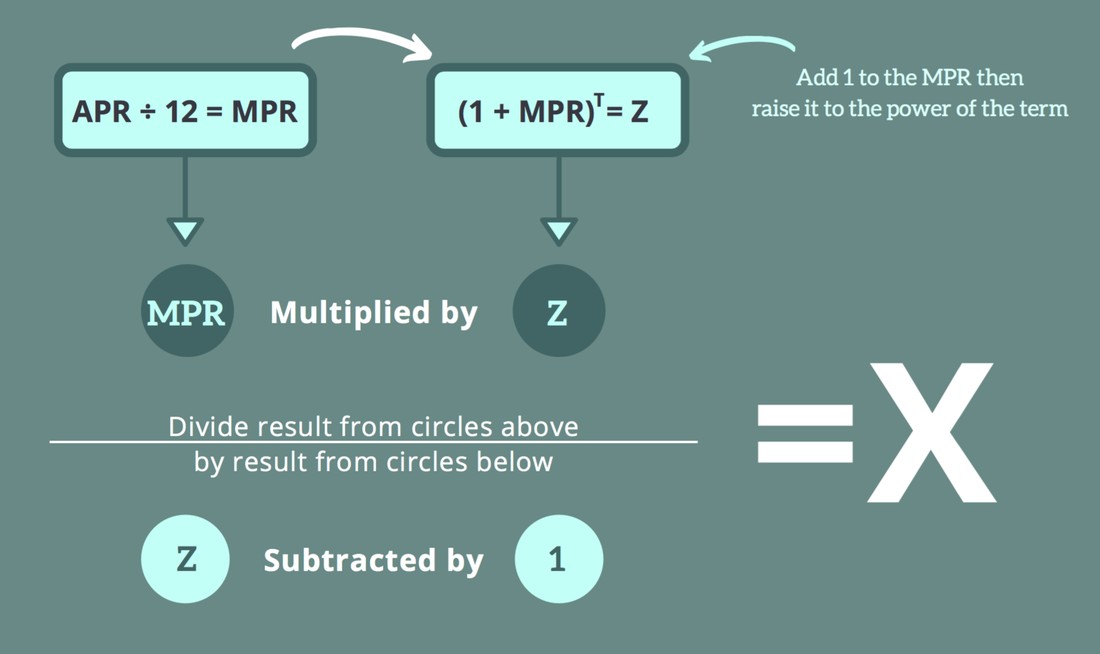
Figuring the exact APR manually can be mathematically complex because it involves solving for an internal rate of return, but you can estimate it or use a financial formula to get a precise figure. Most borrowers use online calculators, but knowing the logic behind the calculation is vital for financial literacy.
The Manual Estimation Formula
If you want a “quick and dirty” way to estimate your APR, you can use the following steps:
-
Identify the Total Finance Charges: Add up the total interest you will pay over the life of the loan plus all mandatory fees (origination, doc fees, etc.).
-
Divide by the Loan Amount: Divide the total finance charges by the principal amount of the loan.
-
Divide by the Number of Days: Divide that result by the total number of days in the loan term.
-
Multiply by 365: Multiply that result by 365 to get the daily rate back into a yearly format.
-
Convert to Percentage: Multiply by 100.
While this provides a rough estimate, it doesn’t account for the fact that your principal balance decreases every month as you make payments.
Using the Excel or Google Sheets “RATE” Function
For a precise calculation, digital tools are far more effective. If you have the loan details, you can use the RATE function in a spreadsheet. The syntax is =RATE(nper, pmt, pv) * 12.
-
NPER: The total number of monthly payments (e.g., 60).
-
PMT: The monthly payment amount (as a negative number).
-
PV: The “Present Value” or the total loan amount minus fees.
By using this formula, you can see exactly how much the APR deviates from the advertised interest rate. If the dealership says your rate is 5%, but your spreadsheet says 5.8%, you know there are significant fees hidden in the contract that you need to investigate.
The Impact of Compounding
Car loans typically use “simple interest,” meaning the interest is calculated daily based on the remaining balance. However, the frequency of payments affects the APR calculation. Most auto loans are structured so that a larger portion of your monthly payment goes toward interest at the beginning of the term and a larger portion goes toward the principal at the end. This is known as amortization. When you calculate APR, you are effectively finding the single rate that accounts for this shifting balance over time.

Variables That Move the Needle: What Influences Your Rate?
When you are trying to figure out why a lender offered you a specific APR, you have to look at the risk profile they have constructed for you. Lenders use a variety of metrics to determine how likely you are to pay back the loan, and each of these variables acts as a lever on your APR.
Credit Score and Financial History
Your credit score is the single most influential factor in your APR. Borrowers with “super-prime” scores (usually 780 and above) are offered the lowest rates because they represent the lowest risk. Conversely, “sub-prime” borrowers may see APRs that are triple or quadruple those of prime borrowers. Even a 50-point difference in your credit score can result in thousands of dollars in extra interest charges over a five-year loan.
The Loan-to-Value (LTV) Ratio
Lenders also look at the value of the car relative to the loan amount. If you are buying a $30,000 car but only borrowing $20,000 (an LTV of 66%), you are a lower-risk borrower than someone borrowing $32,000 for the same car to cover taxes and fees (an LTV of 106%). Higher LTV ratios usually result in higher APRs because the lender is at greater risk if they have to repossess and sell the car.
Loan Term Length
It is tempting to opt for a 72-month or 84-month loan to keep monthly payments low. However, longer terms almost always carry higher APRs. Lenders charge more for long-term loans because there is more time for “life to happen”—job loss, accidents, or economic downturns—which increases the risk of default. Additionally, cars depreciate quickly; in a long-term loan, you risk being “underwater” (owing more than the car is worth) for a longer period.
How to Compare Offers and Secure the Best APR
Once you know how to figure the APR, the next step is using that knowledge to shop for the best deal. You should never accept the first financing offer provided by a dealership without having a benchmark for comparison.
The Power of Pre-Approval
Before you even step foot on a car lot, visit your bank or a local credit union. Credit unions are member-owned and often provide significantly lower APRs than commercial banks or dealership financing. Get a pre-approval letter that states the APR they are willing to offer you for a specific loan amount and term. This serves as your “baseline.” When you go to the dealership, you can tell the finance manager, “I already have a 5.2% APR from my credit union. Can you beat it?”
Negotiating the “Buy Rate”
Many consumers don’t realize that the APR offered by a dealership often includes a “markup.” The lender may offer the dealer a “buy rate” of 4%, but the dealer presents you with a “contract rate” of 6%. The 2% difference is pure profit for the dealership. By knowing your credit worthiness and having a pre-approval in hand, you can negotiate this markup.
Considering the Total Cost of the Loan
When comparing APRs, always look at the total interest paid over the life of the loan. A 4% APR over 72 months might actually cost you more in total dollars than a 5% APR over 48 months. Use your calculation skills to determine the “Total Cost of Ownership” rather than just looking at the percentage or the monthly bill.
Navigating the “Zero Percent” Myth and Other Financial Pitfalls
In your quest to figure out the best car loan APR, you will undoubtedly encounter “0% APR” offers from manufacturers. While these look like the ultimate deal, they require careful scrutiny.
The Trade-off Between Low APR and Rebates
Often, a manufacturer will offer a choice: 0% APR financing or a $3,000 cash-back rebate. You have to do the math to see which is better. In many cases, taking the $3,000 rebate and financing at a slightly higher APR from your bank results in a lower total cost than taking the 0% APR on the full sticker price.
Watch Out for Variable Rates
While most car loans are fixed-rate, some specialized lenders offer variable APRs. These might start lower than fixed rates but can increase if market interest rates rise. In a rising-rate environment, a variable APR can quickly become a financial burden. Always ensure you understand if your APR is fixed or variable before signing.

The Hidden Cost of Add-ons
Finally, be wary of “add-ons” like extended warranties, gap insurance, or paint protection that are rolled into the loan principal. While these aren’t part of the APR calculation itself (because they are optional products), they increase the amount you are borrowing. Because you are paying interest on these items at your loan’s APR, a $2,000 warranty could end up costing you $2,800 by the time the loan is paid off.
Figuring the APR on a car loan is about more than just doing math; it is about taking control of your financial health. By looking past the monthly payment and focusing on the APR, you strip away the marketing tactics and see the loan for what it really is: a product with a specific price. Whether you use a manual formula, a spreadsheet, or a pre-approval letter, the goal remains the same—to ensure that every dollar you spend is working toward building your net worth, rather than just lining the pockets of a lender.
aViewFromTheCave is a participant in the Amazon Services LLC Associates Program, an affiliate advertising program designed to provide a means for sites to earn advertising fees by advertising and linking to Amazon.com. Amazon, the Amazon logo, AmazonSupply, and the AmazonSupply logo are trademarks of Amazon.com, Inc. or its affiliates. As an Amazon Associate we earn affiliate commissions from qualifying purchases.