
Estimating your tax return is one of the most vital exercises in personal finance. Far from being a mere administrative hurdle, a precise tax forecast allows you to manage your cash flow, optimize your investment strategies, and avoid the unpleasant surprise of a significant balance due come April. Whether you are an employee with a standard W-2 or an entrepreneur navigating the complexities of the gig economy, understanding how to project your tax liability is the cornerstone of long-term wealth management.
This guide provides a professional framework for estimating your tax return, focusing on the financial principles that govern the United States tax system. By mastering these components, you move from a reactive stance to a proactive one, ensuring that your money works for you throughout the year.

Understanding the Fundamentals of Tax Estimation
Before diving into the numbers, it is essential to understand the structural hierarchy of a tax return. Your final refund or liability is not calculated from your total salary, but rather through a series of subtractions and adjustments that narrow down your “taxable income.”
Gross Income vs. Adjusted Gross Income (AGI)
The starting point for any estimation is your Gross Income. This includes every dollar earned from wages, dividends, interest, capital gains, and business income. However, the IRS allows for “above-the-line” deductions. These are adjustments made to your gross income to arrive at your Adjusted Gross Income (AGI).
Your AGI is perhaps the most important number on your return because it serves as the baseline for many credit Phase-outs and deduction limits. Common adjustments include contributions to a traditional IRA, health savings account (HSA) contributions, and student loan interest payments. By lowering your AGI, you effectively lower the ceiling of your tax liability before you even consider the standard deduction.
Standard Deduction vs. Itemized Deductions
Once you have determined your AGI, you must choose between the standard deduction and itemizing your deductions. The standard deduction is a fixed dollar amount that reduces the income on which you’re taxed. For the vast majority of taxpayers, the standard deduction—which has increased significantly since the Tax Cuts and Jobs Act of 2017—is the most financially beneficial route.
However, if your specific expenses—such as mortgage interest, state and local taxes (SALT) up to $10,000, charitable contributions, and significant medical expenses—exceed the standard deduction threshold, itemizing is the superior strategy. Estimating your return accurately requires a mid-year check on these expenses to decide which path will yield the highest tax efficiency.
Key Components That Influence Your Refund or Liability
A common misconception in personal finance is that a “tax bracket” applies to your entire income. In reality, the U.S. uses a progressive tax system. Understanding how these layers work is critical to a precise estimate.
Tax Brackets and Marginal Rates
Your “marginal tax rate” is the rate of tax applied to the very last dollar you earned. As your income rises, only the money within specific ranges is taxed at higher rates. For example, if you move into the 24% bracket, you are only paying 24 cents on the dollars that fall within that specific range, while your earlier earnings are still taxed at 10%, 12%, and 22%.
When estimating your return, you must calculate the tax for each “bucket” of income. If you anticipate a year-end bonus or a profitable stock sale, you must account for the fact that this additional income will likely be taxed at your highest marginal rate, potentially shifting your overall liability more than you might expect.
Tax Credits: The Most Powerful Way to Lower Your Bill
While deductions lower the amount of income subject to tax, credits provide a dollar-for-dollar reduction of the tax itself. This makes them significantly more valuable. When estimating your return, you must identify which credits you qualify for.
- Child Tax Credit: A significant boon for families, though it is subject to income phase-outs.
- Earned Income Tax Credit (EITC): Targeted at low-to-moderate-income working individuals and couples.
- Education Credits: Such as the American Opportunity Tax Credit (AOTC) or the Lifetime Learning Credit (LLC), which can offset the costs of higher education.
Including these credits in your estimation can turn a projected “break-even” scenario into a substantial refund.
A Step-by-Step Methodology for Accurate Forecasting
Precision in tax estimation requires a systematic approach to data collection and calculation. Guesswork often leads to underpayment penalties or the loss of “opportunity cost” by giving the government an interest-free loan (a massive refund).
Gathering Your Documentation (W-2s, 1099s, and Receipts)
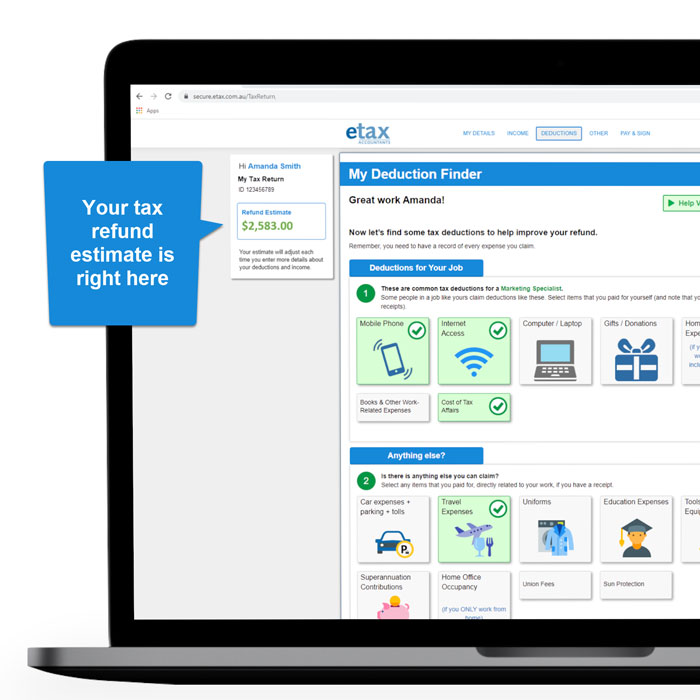
An accurate estimate is only as good as the data you input. For employees, your most recent pay stub is your best resource. It contains your year-to-date (YTD) earnings and, crucially, your YTD federal income tax withholding.
For the self-employed or those with side hustles, documentation is more complex. You must aggregate all 1099-NEC or 1099-K forms, but more importantly, you must have a clean record of business expenses. Estimating your return without accounting for deductible business expenses like home office costs, equipment, and professional services will result in a gross overestimation of your tax bill.
Calculating Your Taxable Income
To find your taxable income, follow this formula:
- Total Anticipated Income (Wages + Side Hustle Profit + Interest)
- Minus Above-the-Line Adjustments (HSA/IRA contributions) = AGI
- Minus Standard or Itemized Deduction = Taxable Income
Once you have this final figure, apply the current year’s tax brackets to determine your “Total Tax Liability.” This is the actual amount of money you owe the government for the year’s activities.
Comparing Withheld Taxes to Total Liability
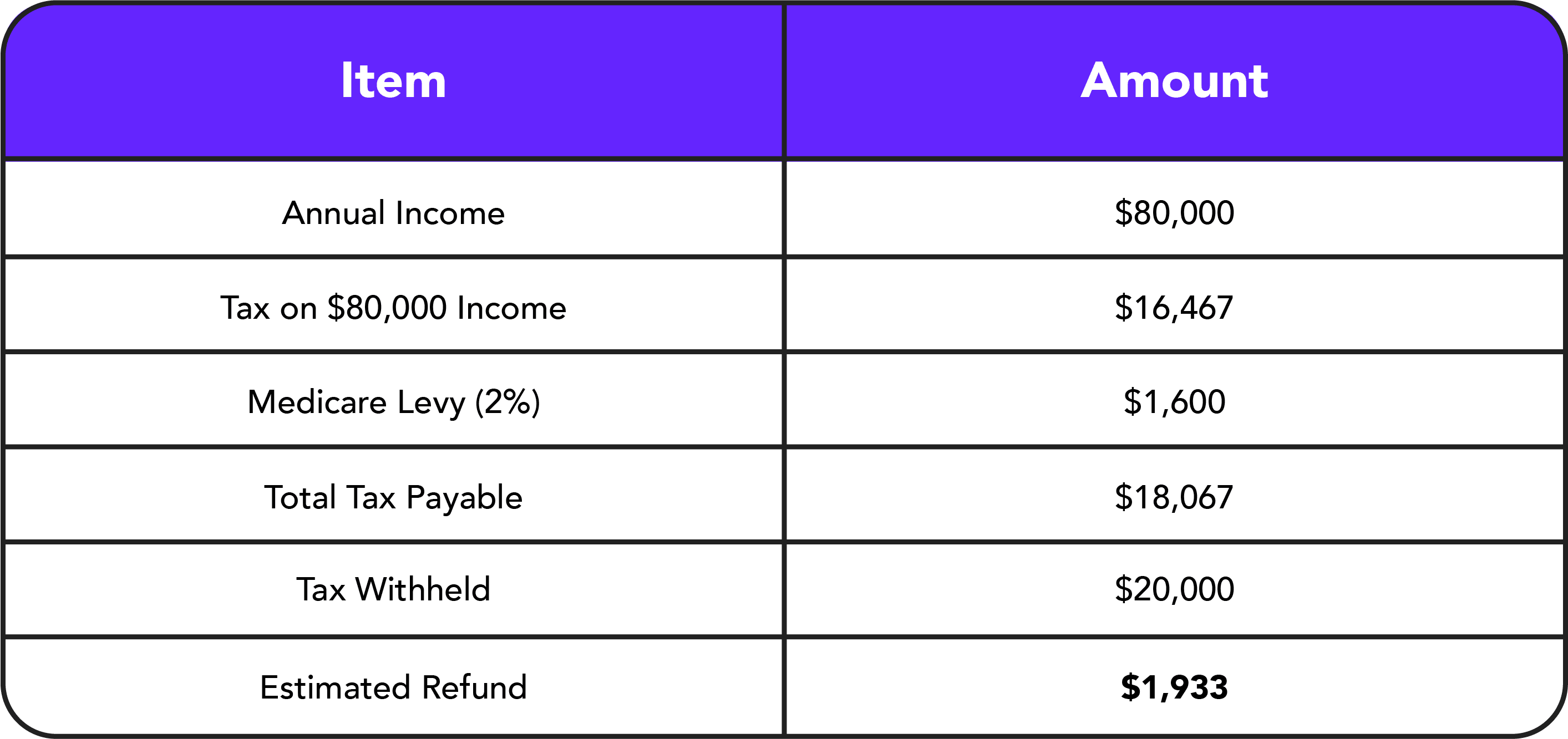
The final step in the estimation process is the comparison. Look at your total projected withholding (from your paychecks) and any estimated tax payments you have made throughout the year.
- If Withholding > Total Tax Liability, you are due for a refund.
- If Total Tax Liability > Withholding, you will owe money.
By performing this calculation in October or November, you still have time to adjust your financial behavior—such as increasing 401(k) contributions—to reduce that liability before the tax year closes on December 31st.
Leveraging Financial Strategy for Tax Optimization
Estimating your tax return shouldn’t just be about finding out a number; it should be about changing that number to favor your net worth. Tax planning is an integral part of wealth building.
Strategic Adjustments: Proactive Tax Planning
If your estimation shows a large balance due, you have several “levers” to pull. You might choose to maximize your 401(k) or 403(b) contributions, which are typically pre-tax and lower your taxable income. Alternatively, if you have realized capital gains from selling stocks, you might engage in “tax-loss harvesting”—selling underperforming assets at a loss to offset your gains.
On the other hand, if you are expecting a massive refund (e.g., $5,000+), you are effectively overpaying the government every month. From a financial tools perspective, this is inefficient. You could instead adjust your W-4 to increase your take-home pay, allowing you to invest that money in a high-yield savings account or the stock market where it can earn interest for you, rather than the Treasury.
The Role of Quarterly Payments for Business Finance
For those with online income or side hustles, estimation is not optional—it is a requirement. The U.S. tax system is “pay-as-you-go.” If you expect to owe more than $1,000, you are generally required to make quarterly estimated payments. Estimating your return quarterly ensures you are staying compliant with IRS safe harbor rules, which protect you from underpayment penalties as long as you pay at least 90% of the current year’s tax or 100% of the prior year’s tax.
Common Pitfalls and How to Avoid Them
Even with a solid plan, certain variables can skew your tax estimation if not properly accounted for.
Overlooking Changes in Life Status
Tax liability is heavily influenced by life events. Getting married, having a child, or buying a home can radically change your tax filing status and available deductions. For instance, moving from “Single” to “Head of Household” or “Married Filing Jointly” changes your tax brackets and doubles your standard deduction. When estimating your return, always ensure you are using the parameters for the status you will hold on December 31st.
Miscalculating Self-Employment Obligations
Many people estimating their first “side hustle” return forget about the Self-Employment (SE) tax. When you are an employee, your employer pays half of your Social Security and Medicare taxes. When you are self-employed, you are responsible for both the employer and employee portions, totaling roughly 15.3%.
When estimating your return, you must calculate this SE tax on your net business profit in addition to your standard income tax. Failing to account for this is the most common reason for financial shortfalls among new entrepreneurs.
Conclusion
Estimating your tax return is an essential discipline for anyone serious about their personal finances. By understanding the flow from gross income to taxable income, recognizing the power of credits, and performing regular “check-ins” on your withholding, you gain mastery over your financial destiny.
A professional approach to tax estimation turns a season of stress into a season of strategy. Whether you use the information to adjust your W-4, increase your retirement contributions, or simply prepare your budget for a payment, you are engaging in the kind of proactive financial management that defines long-term success. Remember, the goal of tax estimation is not just to predict the future, but to create a financial environment where there are no surprises—only calculated results.
aViewFromTheCave is a participant in the Amazon Services LLC Associates Program, an affiliate advertising program designed to provide a means for sites to earn advertising fees by advertising and linking to Amazon.com. Amazon, the Amazon logo, AmazonSupply, and the AmazonSupply logo are trademarks of Amazon.com, Inc. or its affiliates. As an Amazon Associate we earn affiliate commissions from qualifying purchases.