
The American Express Platinum Card is frequently cited as the gold standard of premium consumer credit cards, not merely for its metallic weight or its concierge services, but for its role as a high-octane engine for earning Membership Rewards (MR) points. In the world of personal finance, MR points are a highly liquid currency, often valued at two cents per point or more when utilized through strategic transfer partners. However, the $695 annual fee necessitates a sophisticated approach to point accumulation. To truly justify the card’s place in a financial portfolio, one must look beyond basic spending and master the nuanced layers of the Amex ecosystem.

Earning points on the Platinum card requires a shift from passive spending to strategic allocation. Because the card is structured differently than “catch-all” 2% cash-back cards, users must understand where the multipliers live and how to trigger them. This guide explores the multi-faceted strategies for maximizing your point balance, from leveraging core categories to exploiting third-party partnerships.
Mastering the Core Multipliers: Travel and Beyond
The most potent tool in the Platinum Card’s arsenal is its 5x multiplier on specific travel expenses. For the frequent traveler, this is the primary mechanism for generating hundreds of thousands of points annually. However, the “fine print” of these multipliers determines whether a purchase earns 1 point per dollar or 5.
Direct Airline Purchases and Amex Travel
The Platinum Card earns 5 points per dollar on up to $500,000 per calendar year on flights booked directly with airlines or via American Express Travel. This is a critical distinction in the personal finance space. Unlike many other travel cards that require you to use a specific portal to earn maximum rewards, the Platinum Card allows you to maintain your direct relationship with the airline. Booking directly with carriers like Delta, United, or Emirates ensures you receive elite status credits and better customer service during flight disruptions, all while earning the 5x return.
The 5x Hotel Multiplier: A Specific Use Case
Unlike the flight category, the 5x multiplier on hotels is strictly limited to bookings made through the American Express Travel portal. Furthermore, these must be “Prepaid” bookings. While this offers a significant point-earning opportunity, savvy financial planners must weigh the point gain against the potential loss of hotel loyalty benefits. Typically, when booking through a third-party portal like Amex Travel, major chains (Marriott, Hilton, Hyatt) do not recognize elite status or award stay credits. However, if you are booking a boutique hotel or do not hold status with a major chain, the 5x return represents a 10% effective discount (assuming a 2-cent valuation per point), which is often the best financial move.
Leveraging “Fine Hotels + Resorts” (FHR)
One of the most sophisticated ways to earn points while gaining outsized value is through the Fine Hotels + Resorts program. These bookings earn 5x points when prepaid through Amex Travel. Beyond the points, the program provides a $200 annual hotel credit, complimentary breakfast, room upgrades, and a $100 experience credit. From a personal finance perspective, FHR bookings represent a double-dip: you maximize the earning side with the 5x multiplier while simultaneously reducing out-of-pocket expenses for luxury stays.
Accelerating Growth with Sign-Up Bonuses and Referral Programs
While daily spending provides a steady stream of points, the most significant “inflections” in a Membership Rewards balance come from sign-up bonuses (SUBs) and the strategic use of referral links. These are the “growth stocks” of the point-earning world.
Navigating the “Once Per Lifetime” Rule
American Express generally limits sign-up bonuses to once per lifetime per card product. This makes the timing of your application vital. Bonuses can fluctuate wildly, ranging from 80,000 points to as high as 150,000 or even 175,000 points. A disciplined financial approach involves waiting for these “all-time high” offers. For those who already hold the card, the “once per lifetime” rule means you must look toward other methods to generate large lump sums of points, primarily through the referral system.
The Power of Referrals
The Amex referral program is an often-underutilized asset. By referring a friend or family member, you can earn between 10,000 and 30,000 points per successful application, depending on the current promotion. Amex typically caps these earnings at 100,000 points per calendar year. For a household or a small business owner with a wide network, hitting this cap annually can result in an “organic” influx of points that rivals a sign-up bonus, without any additional spending. It is a pure margin play that leverages your personal brand and network to build your financial assets.

Targeted “NLL” Offers and Upgrades
Occasionally, American Express sends targeted offers that do not contain the “lifetime limit” language (NLL offers). Additionally, users holding an Amex Gold card may receive “Upgrade Offers” to move to the Platinum. These offers might provide 25,000 to 100,000 points for meeting a spending requirement. From a capital allocation standpoint, these upgrades should be evaluated based on the pro-rated annual fee versus the value of the points received.
Advanced Strategies: Amex Offers and the Rakuten Partnership
To truly maximize the Platinum Card, one must move beyond the listed categories on the Schumer Box and look at the “hidden” multipliers found in the Amex ecosystem. These tools turn standard 1x spending into high-yield transactions.
Amex Offers: The Digital Coupon for High Earners
Within the Amex app or online portal, users can “add” specific offers to their card. These are often structured as “Spend $X, Get Y Points.” For example, a common offer might be “Spend $500+ at Best Buy, get 5,000 bonus Membership Rewards points.” This effectively changes the earning rate on that specific purchase from 1x to 11x. A disciplined user will check these offers weekly and sync them with planned major purchases. This is not about spending more; it is about ensuring that inevitable spending occurs on the card—and at the retailer—offering the highest yield.
The Rakuten Multiplier: The Secret Weapon
Perhaps the most powerful “hack” in the world of Membership Rewards is the partnership with the shopping portal Rakuten. Traditionally a cash-back site, Rakuten allows users to opt-in to earning Membership Rewards points instead of cash. The conversion is 1:1 ($1 of cash back = 100 MR points).
During holiday seasons or special events, Rakuten often offers 10% to 15% cash back at hundreds of retailers. If your account is set to MR points, a 15% cash-back offer becomes a 15x points offer. When you stack this with the 1x you earn on the Platinum card (or 1x on a business purchase), you are earning 16 points per dollar. In the context of online income and personal finance optimization, the Rakuten-Amex pairing is the most efficient way to accumulate points on non-travel categories like clothing, electronics, and office supplies.
Portfolio Management: Retention Offers and Multi-Card Synergies
Maximizing points is not just about earning; it is about the “cost of carry” for the card. A sophisticated financial strategy involves managing the annual fee through retention offers and pairing the Platinum with other cards in the “Amex Trifecta.”
The Retention Call
When the annual fee posts, many high-net-worth individuals call the American Express retention department to discuss the value of the card. Often, if you have been a loyal and active spender, Amex will provide a “retention offer” to keep you as a customer. This usually takes the form of a point bonus (e.g., “Spend $3,000 in 3 months, get 40,000 points”). These points act as a rebate on the annual fee. If you value 40,000 points at $800, you have effectively “earned” your way into a profitable year before even considering the card’s other benefits.
The Trifecta Strategy
While the Platinum Card is unbeatable for 5x travel, it is notoriously poor for daily spending (1x on everything else). To maximize point accumulation across a total financial picture, the Platinum should be paired with:
-
The Amex Gold Card: For 4x points on Dining and U.S. Supermarkets.
-
The Blue Business Plus (BBP): For 2x points on all spending up to $50,000 annually.
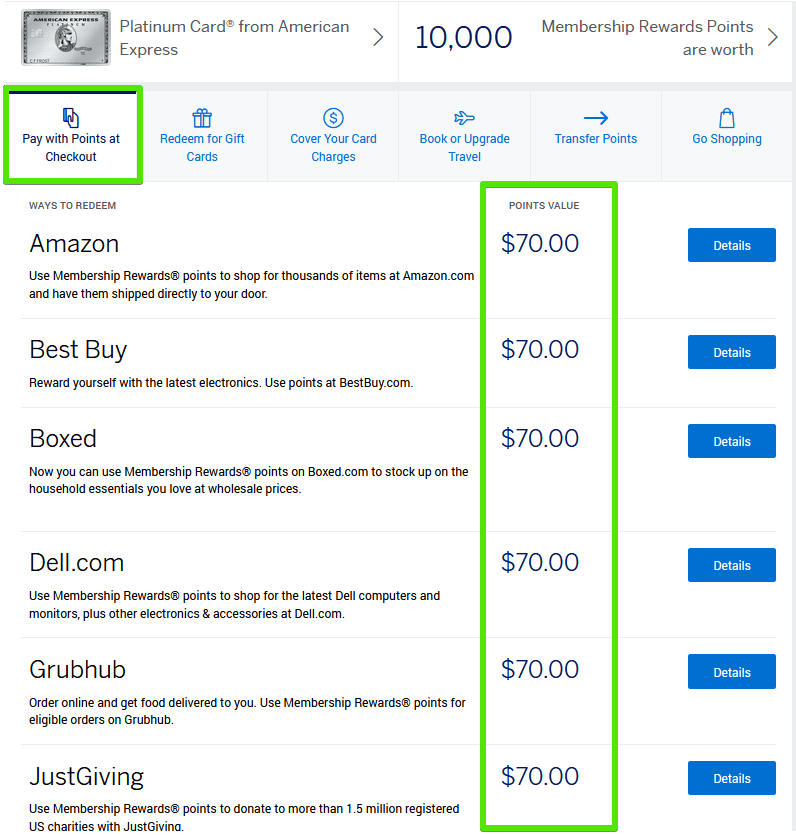
By utilizing the “Money” niche philosophy of optimizing every dollar, you use the Platinum for travel, the Gold for sustenance, and the BBP for everything else. All these points pool into a single Membership Rewards account, allowing for a consolidated and massive balance that can be used for high-value international business class transfers.
Conclusion: The ROI of a Point-First Mindset
Earning points on the Amex Platinum is an exercise in intentionality. By viewing the card not just as a payment method, but as a financial tool with varying yields, you can generate a significant return on your everyday expenses. Between the 5x travel multipliers, the sign-up and referral bonuses, the Rakuten integration, and the strategic use of retention offers, the Platinum Card becomes much more than a status symbol. It becomes a primary engine for funding luxury travel and lifestyle goals through disciplined financial optimization.
aViewFromTheCave is a participant in the Amazon Services LLC Associates Program, an affiliate advertising program designed to provide a means for sites to earn advertising fees by advertising and linking to Amazon.com. Amazon, the Amazon logo, AmazonSupply, and the AmazonSupply logo are trademarks of Amazon.com, Inc. or its affiliates. As an Amazon Associate we earn affiliate commissions from qualifying purchases.