
Trading financial markets offers a compelling avenue for wealth generation and financial independence, attracting individuals eager to capitalize on short-term price movements of various assets. Unlike long-term investing, which focuses on holding assets for years to benefit from compounding returns and fundamental growth, trading is an active endeavor demanding continuous attention, strategic decision-making, and robust risk management. It’s a journey that, while potentially lucrative, requires significant dedication, education, and emotional discipline. This guide delves into the core aspects of how to approach trading effectively, laying out a structured path from foundational knowledge to advanced strategies and continuous adaptation.
Understanding the Fundamentals of Trading
Before embarking on any trading activity, a solid grasp of the foundational concepts and market dynamics is paramount. This initial phase involves familiarizing yourself with the language of the markets, the different arenas where trading occurs, and the fundamental distinctions that separate trading from traditional investing.
What is Trading?
At its heart, trading involves the buying and selling of financial instruments with the objective of profiting from fluctuations in their market prices. Traders aim to predict whether an asset’s price will rise or fall within a relatively short timeframe—minutes, hours, days, or weeks—and execute trades accordingly. This active engagement with the market is distinct from investing, where the focus is typically on a buy-and-hold strategy for long-term capital appreciation.
Key Trading Terminology
Navigating the trading world requires fluency in its unique lexicon. Understanding these terms is crucial for interpreting market information and communicating effectively:
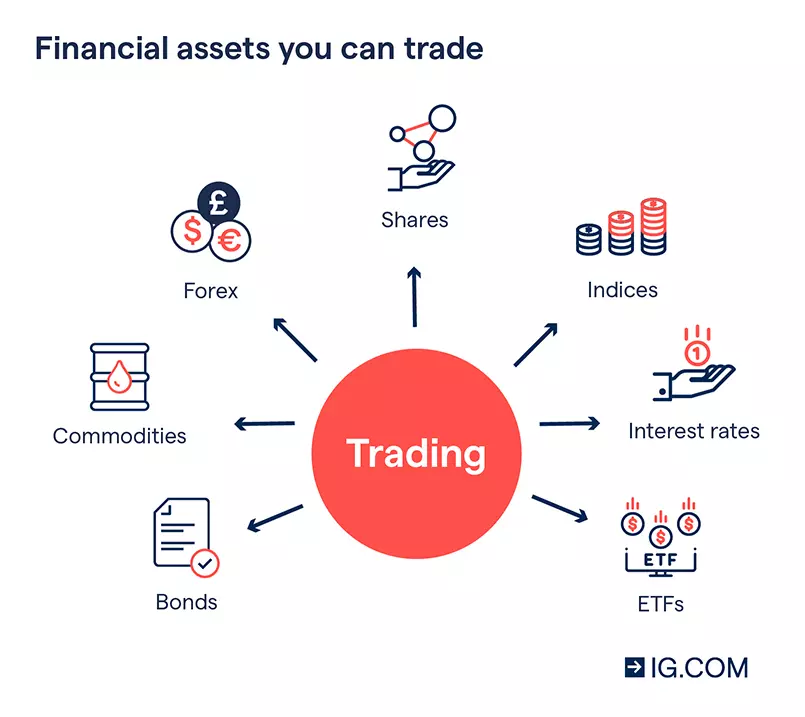
- Assets: The financial instruments being traded, such as stocks (equities), bonds, commodities (gold, oil), currencies (forex), and cryptocurrencies.
- Long/Short: Going “long” means buying an asset with the expectation its price will rise. Going “short” means selling an asset you don’t own (borrowing it) with the expectation its price will fall, allowing you to buy it back cheaper later and profit from the difference.
- Bid/Ask (Spread): The “bid” is the highest price a buyer is willing to pay for an asset, while the “ask” (or offer) is the lowest price a seller is willing to accept. The difference between the bid and ask prices is known as the “spread,” representing a transaction cost.
- Leverage/Margin: Leverage allows traders to control a larger position with a smaller amount of capital (margin). While it can amplify profits, it also significantly magnifies potential losses.
Different Types of Markets
Various markets offer distinct opportunities and challenges for traders:
- Stock Market: Involves trading shares of publicly listed companies. Profits are made from stock price appreciation or dividends.
- Forex (Foreign Exchange) Market: The largest and most liquid financial market globally, where currencies are traded in pairs (e.g., EUR/USD). Traders speculate on exchange rate fluctuations.
- Commodities Market: Deals with raw materials such as crude oil, natural gas, gold, silver, wheat, and corn. Prices are influenced by supply and demand, geopolitical events, and weather.
- Cryptocurrency Market: A decentralized digital asset market (e.g., Bitcoin, Ethereum) known for its high volatility and 24/7 trading.
- Derivatives Market: Includes instruments like options and futures, whose value is derived from an underlying asset. These offer complex strategies but come with higher risks.
The Difference Between Trading and Investing
While often used interchangeably, trading and investing have fundamental differences:
- Time Horizon: Trading is short-term (minutes to weeks), focused on capitalizing on immediate price swings. Investing is long-term (years to decades), aiming for gradual wealth accumulation.
- Risk Profile: Trading typically involves higher risk due to leverage, frequent transactions, and exposure to short-term volatility. Investing generally carries lower risk, especially with diversified portfolios.
- Strategy Focus: Traders rely on technical analysis and market sentiment. Investors emphasize fundamental analysis, evaluating a company’s financial health and growth prospects.
- Active vs. Passive: Trading is highly active, requiring constant monitoring and decision-making. Investing can be more passive, with fewer adjustments once a portfolio is established.
Essential Preparations Before You Start Trading
Success in trading is less about luck and more about meticulous preparation. Before placing your first trade, it’s crucial to build a robust framework encompassing financial readiness, educational grounding, and a detailed plan.
Financial Readiness: Capital and Risk Tolerance
The golden rule of trading is to only trade with capital you can afford to lose. This is often referred to as “risk capital.” Diverting funds essential for living expenses or emergencies into trading is a recipe for disaster. Assess your personal financial situation carefully to determine a dedicated trading budget. Equally important is understanding your personal risk tolerance. How much volatility can you handle emotionally and financially? Acknowledging your comfort level with potential losses will guide your choice of assets and strategies.
Educational Foundation: Books, Courses, and Mentors
Trading is a skill, and like any skill, it requires diligent study. Invest time in building a strong educational foundation:
- Books: Read widely on market psychology, technical analysis, fundamental analysis, and risk management from reputable authors.
- Online Courses: Numerous platforms offer structured courses. Be selective, opting for those with positive reviews and credible instructors, and be wary of exaggerated promises of quick riches.
- Mentors & Communities: Learning from experienced traders or participating in active, supportive trading communities can provide invaluable insights, feedback, and emotional support.
Choosing a Brokerage Account
Your brokerage account is your gateway to the markets. Selecting the right broker is a critical decision:
- Regulation: Ensure the broker is regulated by relevant authorities (e.g., SEC in the US, FCA in the UK) to protect your funds and ensure fair practices.
- Fees and Commissions: Compare trading commissions, spreads, inactivity fees, and withdrawal charges. High fees can significantly erode profits, especially for frequent traders.
- Available Assets: Check if the broker offers access to the markets and assets you intend to trade (stocks, forex, crypto, etc.).
- Trading Platform: Evaluate the platform’s user-friendliness, charting tools, order execution speed, and mobile capabilities.
- Customer Support: Responsive and knowledgeable customer support can be crucial when issues arise.
- Research Tools: Some brokers provide excellent research, educational resources, and analytical tools that can aid your decision-making.
Developing a Trading Plan
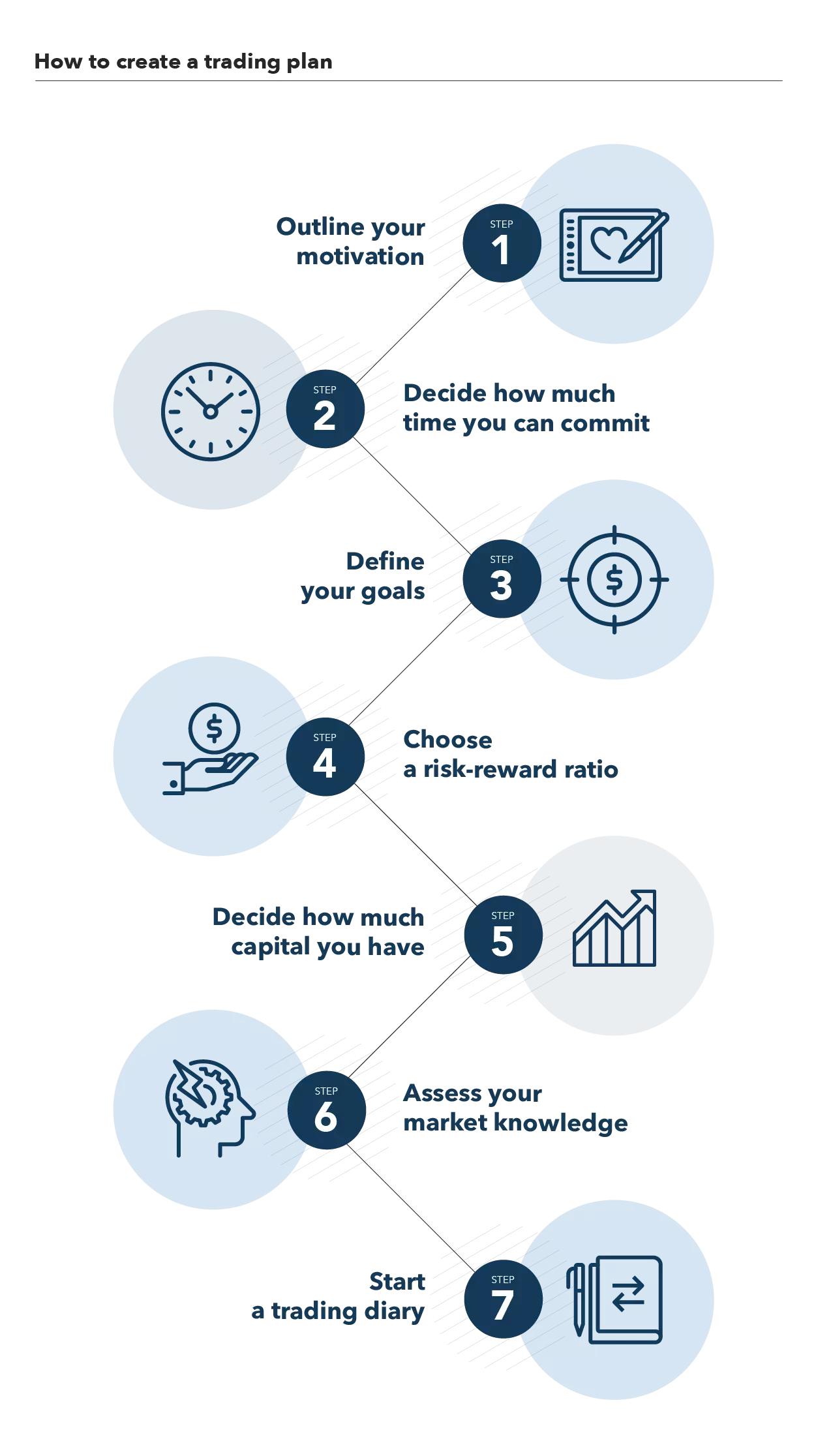
A well-defined trading plan is your roadmap to disciplined trading. It’s a comprehensive document that outlines your objectives, strategies, and risk management rules. Your plan should include:
- Trading Goals: Realistic and measurable objectives (e.g., “achieve a 5% monthly return with a maximum 2% drawdown”).
- Risk Management Rules: Define your maximum risk per trade (e.g., 1-2% of your capital), daily loss limits, and position sizing guidelines.
- Entry and Exit Criteria: Specific conditions that must be met before entering a trade and rules for taking profits or cutting losses.
- Preferred Markets & Timeframes: Specify which assets you will trade and over what time horizon (e.g., day trading S&P 500 futures).
- Daily Routine: Outline your pre-market analysis, trading hours, and post-market review.
- Trading Journal Commitment: A pledge to diligently record and review every trade.
Developing Your Trading Strategy
A trading strategy is a systematic approach to identifying and executing trades. It combines analytical techniques with specific rules for market entry, exit, and risk management. Two primary analytical approaches dominate the trading world.
Technical Analysis: Charting and Indicators
Technical analysis (TA) involves studying historical price and volume data to predict future price movements. It’s based on the premise that all relevant information is already reflected in the asset’s price.
- Chart Patterns: Traders look for recurring patterns in price charts (e.g., head and shoulders, double tops/bottoms, triangles) that can signal potential reversals or continuations.
- Support and Resistance Levels: These are price levels where an asset tends to stop and reverse. Support is a price floor where buying interest is strong, and resistance is a price ceiling where selling pressure is high.
- Indicators: Mathematical calculations based on price, volume, or open interest, plotted on charts to help identify trends, momentum, volatility, and overbought/oversold conditions. Popular indicators include:
- Moving Averages (MA): Smooth out price data to identify trends.
- Relative Strength Index (RSI): Measures the speed and change of price movements to identify overbought or oversold conditions.
- Moving Average Convergence Divergence (MACD): A momentum indicator that shows the relationship between two moving averages of an asset’s price.
- Bollinger Bands: Measure market volatility and can indicate potential price reversals.
Fundamental Analysis: Economic Data and Company News
Fundamental analysis (FA) focuses on evaluating an asset’s intrinsic value by examining economic, financial, and other qualitative and quantitative factors.
- For Stocks: This involves scrutinizing company earnings reports, balance sheets, income statements, management quality, industry trends, and competitive landscape.
- For Forex: Traders analyze macroeconomic indicators like interest rates, inflation rates, GDP growth, employment figures, and geopolitical events that can impact a country’s currency strength.
- For Commodities: Supply and demand reports, weather patterns, geopolitical stability, and global economic growth forecasts are key drivers.
- Interplay: While technical analysis focuses on “what” the price is doing, fundamental analysis often explains “why.” Many traders combine both approaches for a more holistic view.
Types of Trading Strategies

Different strategies cater to varying time horizons, risk appetites, and market conditions:
- Day Trading: All positions are opened and closed within the same trading day, avoiding overnight risk. It’s high-intensity, requiring quick decision-making and precise execution.
- Swing Trading: Trades are held for several days to a few weeks, aiming to capture “swings” in price within a larger trend. It requires less constant monitoring than day trading.
- Position Trading: The longest-term trading strategy, where positions are held for weeks or months to ride major market trends. It often incorporates elements of fundamental analysis.
- Scalping: The shortest-term strategy, involving multiple trades within minutes or even seconds, aiming to profit from tiny price increments. It demands extreme focus and fast execution.
Risk Management Techniques
Effective risk management is the bedrock of sustainable trading success. Without it, even the most brilliant strategy can lead to ruin.
- Stop-Loss Orders: These are crucial. A stop-loss order automatically closes a trade when the price reaches a predetermined level, limiting your potential loss on a single trade.
- Position Sizing: This determines how much capital to allocate to a single trade. A common rule is to never risk more than 1-2% of your total trading capital on any given trade.
- Risk-Reward Ratio: Before entering a trade, evaluate the potential profit versus the potential loss. Aim for trades where the potential reward significantly outweighs the potential risk (e.g., a 1:2 or 1:3 ratio).
- Diversification: While active traders might focus on a few assets, spreading risk across different markets or strategies can provide some protection against adverse movements in a single asset.
The Trading Process: Execution and Management
Once your strategy is developed, the next phase involves the practical execution of trades, diligent monitoring, and critical self-assessment to foster continuous improvement.
Placing Your First Trade: Market vs. Limit Orders
Understanding order types is fundamental to executing your strategy precisely:
- Market Order: An instruction to buy or sell immediately at the best available price. Market orders guarantee execution but not a specific price, making them suitable when speed is critical.
- Limit Order: An instruction to buy or sell at a specific price or better. Limit orders guarantee price but not execution. They are ideal for entering or exiting trades at desired levels, particularly in volatile markets or for larger orders. Always consider the impact of spreads, especially on less liquid assets.
Monitoring and Adjusting Trades
After initiating a trade, active monitoring is necessary, but this shouldn’t translate into constant, anxious hovering. Your trading plan should dictate when and how to monitor:
- Trailing Stop-Losses: As a trade moves in your favor, a trailing stop-loss can be used to lock in profits while still allowing the trade to run further.
- Taking Partial Profits: If a trade has significantly moved in your favor, you might consider closing a portion of your position to secure some profit, allowing the remainder to continue running with reduced risk.
- Adaptability: Markets are dynamic. Be prepared to adjust your strategy or exit a trade early if market conditions change unexpectedly or your original trade thesis is invalidated.
Journaling Your Trades for Improvement
A trading journal is an indispensable tool for every serious trader. It’s not just a record of wins and losses but a rich source of data for self-analysis and improvement. For every trade, record:
- Entry and Exit Points: Prices, dates, and times.
- Reasons for the Trade: What specific criteria from your strategy led you to take the trade?
- Profit/Loss (P&L): The financial outcome.
- Emotions Felt: Document your mental state before, during, and after the trade. Were you fearful, greedy, confident, or stressed?
- Lessons Learned: What could have been done better? What went well?
Regularly reviewing your journal allows you to identify recurring patterns in your decision-making, pinpoint strengths and weaknesses in your strategy, and track your emotional responses, leading to quantifiable feedback for refinement.
Managing Trading Psychology: Discipline and Emotional Control
Perhaps the greatest challenge in trading lies not in market analysis but in mastering one’s own psychology. Emotions like fear, greed, hope, and regret can easily derail even the most meticulously planned strategies.
- Stick to Your Plan: The trading plan is your objective guide. Deviating from it due to impulse, ego, or panic is a common pitfall. Discipline is paramount.
- Avoid Overtrading: Excessive trading, often driven by a desire for quick profits or to recover losses (“revenge trading”), usually leads to increased transaction costs and poor decisions.
- Embrace Losses: Losses are an inevitable part of trading. Successful traders accept small, controlled losses as the cost of doing business, rather than letting them escalate into catastrophic events.
- Cultivate Patience: Waiting for high-probability setups, rather than forcing trades, is a hallmark of seasoned traders. Patience also applies to letting profitable trades develop.
Continuous Learning and Adaptation in Trading
The financial markets are constantly evolving, influenced by a myriad of global factors. To remain successful, traders must commit to continuous learning, strategy refinement, and adaptation.
Staying Updated with Market News
While technical analysis focuses on charts, major market movements are often triggered by fundamental events. Staying informed about key news and economic releases is vital:
- Economic Calendars: Track upcoming economic data releases (e.g., inflation reports, interest rate decisions, employment figures).
- Geopolitical Events: Wars, elections, and international crises can significantly impact global markets.
- Company Earnings: For stock traders, earnings reports are pivotal events that can cause sharp price movements.
- Central Bank Announcements: Statements and policies from central banks (e.g., the Federal Reserve, European Central Bank) heavily influence currency and bond markets.
Understanding how these events can affect your chosen assets allows you to anticipate potential volatility and adjust your positions accordingly, or even avoid trading during periods of high uncertainty.
Backtesting and Strategy Refinement
A trading strategy is not static; it should be a living document that undergoes continuous improvement.
- Backtesting: This involves applying your trading rules to historical price data to see how your strategy would have performed. It helps validate the logic of your strategy before risking real capital. While historical performance is not indicative of future results, it provides valuable insights.
- Forward Testing (Paper Trading): After backtesting, practice your strategy in a simulated trading environment (demo account) with real-time data but without real money. This helps build confidence and refine execution without financial risk.
- Iterative Process: Trading is an iterative process. Based on your journal reviews, backtesting results, and live trading experiences, continuously refine your entry/exit rules, risk management parameters, and overall approach.
Understanding Market Cycles and Economic Events
Markets don’t move in a straight line; they are cyclical, oscillating between periods of expansion (bull markets) and contraction (bear markets), booms, and recessions.
- Adapting Strategies: Different strategies perform better in different market environments. A trend-following strategy might thrive in a strong bull market but struggle in a sideways, range-bound market.
- Economic Impact: Understanding the impact of interest rate changes, inflation, and global economic growth on various asset classes (e.g., how higher interest rates can strengthen a currency or depress stock prices) is crucial for adapting your trading approach.
The Role of Financial Tools in Modern Trading
Technology has revolutionized trading, providing powerful financial tools that were once exclusive to institutional traders. These tools are crucial for efficient analysis and execution:
- Advanced Trading Platforms: Offer sophisticated charting capabilities, a wide array of technical indicators, real-time data feeds, and advanced order types.
- Economic Calendars and News Aggregators: Provide instant access to critical market-moving information.
- Algorithmic Trading Software: For advanced users, these tools can automate trading strategies based on predefined rules, removing emotional bias from execution.
- Performance Tracking Software: Helps analyze trading performance in detail, offering deeper insights than a manual journal alone.
These tools, when used wisely, enhance a trader’s ability to analyze markets, manage risk, and execute trades with precision, contributing significantly to a more disciplined and potentially profitable trading experience.
Trading is a challenging yet potentially rewarding pursuit that demands a blend of analytical skill, emotional resilience, and unwavering discipline. It’s not a get-rich-quick scheme but a profession that requires continuous learning, adaptation, and a deep respect for the markets. By thoroughly understanding the fundamentals, meticulously preparing, developing a robust strategy, and committing to ongoing self-improvement, individuals can embark on a trading journey with a higher probability of sustainable success. Remember, consistency, not intensity, is the ultimate key to navigating the complex world of financial trading.
aViewFromTheCave is a participant in the Amazon Services LLC Associates Program, an affiliate advertising program designed to provide a means for sites to earn advertising fees by advertising and linking to Amazon.com. Amazon, the Amazon logo, AmazonSupply, and the AmazonSupply logo are trademarks of Amazon.com, Inc. or its affiliates. As an Amazon Associate we earn affiliate commissions from qualifying purchases.