
In an era dominated by smartphones and advanced computing, the humble calculator might seem like an antiquated tool. Yet, from solving complex equations in engineering to balancing budgets in daily life, the calculator remains an indispensable device. It’s a testament to focused utility, designed for precision and speed in numerical computation. While many might only scratch the surface of its capabilities, understanding how to effectively “do on calculator” can significantly enhance productivity, accuracy, and problem-solving skills across various domains.
This comprehensive guide aims to demystify the calculator, moving beyond basic arithmetic to unlock its full potential. We’ll explore fundamental operations, delve into advanced scientific functions, examine specialized calculator types, and address common user challenges. Whether you’re a student, professional, or simply someone looking to improve their numerical fluency, mastering your calculator is a fundamental tech skill worth cultivating.
The Foundation: Basic Arithmetic and Operator Precedence
At its core, every calculator is built to perform arithmetic. However, even these fundamental operations come with nuances that, if misunderstood, can lead to incorrect results. Precision starts with understanding the basics.
Standard Operations: Addition, Subtraction, Multiplication, Division
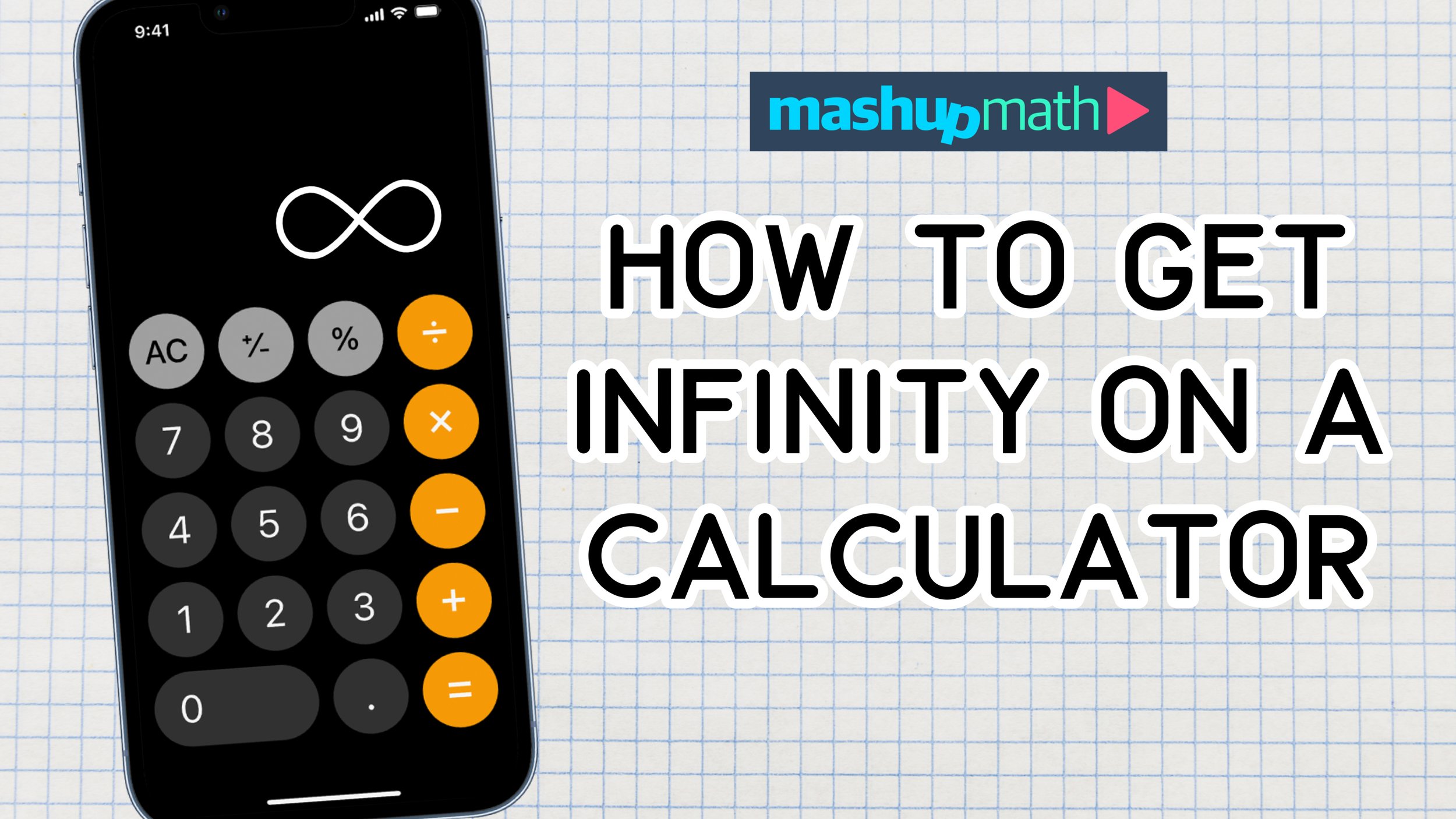
These are the bedrock of all numerical computation. Inputting them correctly is usually straightforward: enter the first number, press the operator key (+, -, x, /), enter the second number, and then press the equals key (=). Modern calculators typically display the full expression as you type, offering a visual check for accuracy.
For example, to calculate 25 + 17, you would press 2, 5, +, 1, 7, =. The result, 42, should appear. While seemingly simplistic, familiarizing yourself with your specific calculator’s button layout and response time is the first step towards efficiency. Some calculators have dedicated buttons for common operations, while others might require a shift key for less frequent functions.
Understanding Parentheses and Order of Operations (PEMDAS/BODMAS)
This is where many users stumble. Calculators, like all computational systems, adhere to a strict order of operations. Commonly remembered by acronyms like PEMDAS (Parentheses, Exponents, Multiplication and Division, Addition and Subtraction) or BODMAS (Brackets, Orders, Division and Multiplication, Addition and Subtraction), this hierarchy dictates the sequence in which operations are performed.
Without parentheses, a calculation like 2 + 3 * 4 will yield 14 (3 * 4 = 12, then 2 + 12 = 14), not 20 ((2 + 3) * 4 = 20). The calculator processes multiplication before addition. To force an operation to be performed first, you must use parentheses. On a calculator, this involves using the ( and ) keys. For instance, to get 20, you would input (, 2, +, 3, ), *, 4, =.
Mastering parentheses is crucial for complex equations, ensuring the calculator interprets your intent precisely. Most scientific and graphing calculators support multiple nested parentheses, allowing for highly intricate calculations to be structured logically.
Percentages and Square Roots for Everyday Use
Beyond the four basic operations, percentages (%) and square roots (√) are frequently used in daily calculations.
- Percentages: The percentage key on a calculator often serves multiple functions.
- To find a percentage of a number (e.g., 15% of 200):
200,*,1,5,%,=. The result, 30, appears. - To add a percentage (e.g., 200 + 15% VAT):
200,+,1,5,%,=. This might show 230, as it calculates 15% of 200 (which is 30) and adds it to 200. - To calculate a discount (e.g., 200 – 15%):
200,-,1,5,%,=. This would display 170.
The exact behavior of the percentage key can vary by calculator model, so it’s always wise to test it with a known calculation.
- To find a percentage of a number (e.g., 15% of 200):
- Square Roots: The square root key (
√orsqrt) is used to find a number that, when multiplied by itself, equals the original number.- To find the square root of 81:
√,8,1,=. The result is 9. - On some calculators, you enter the number first, then press the square root key:
8,1,√.
Understanding these common functions enhances a calculator’s utility for budgeting, shopping, and quick mental checks.
- To find the square root of 81:
Beyond Basics: Scientific and Advanced Functions
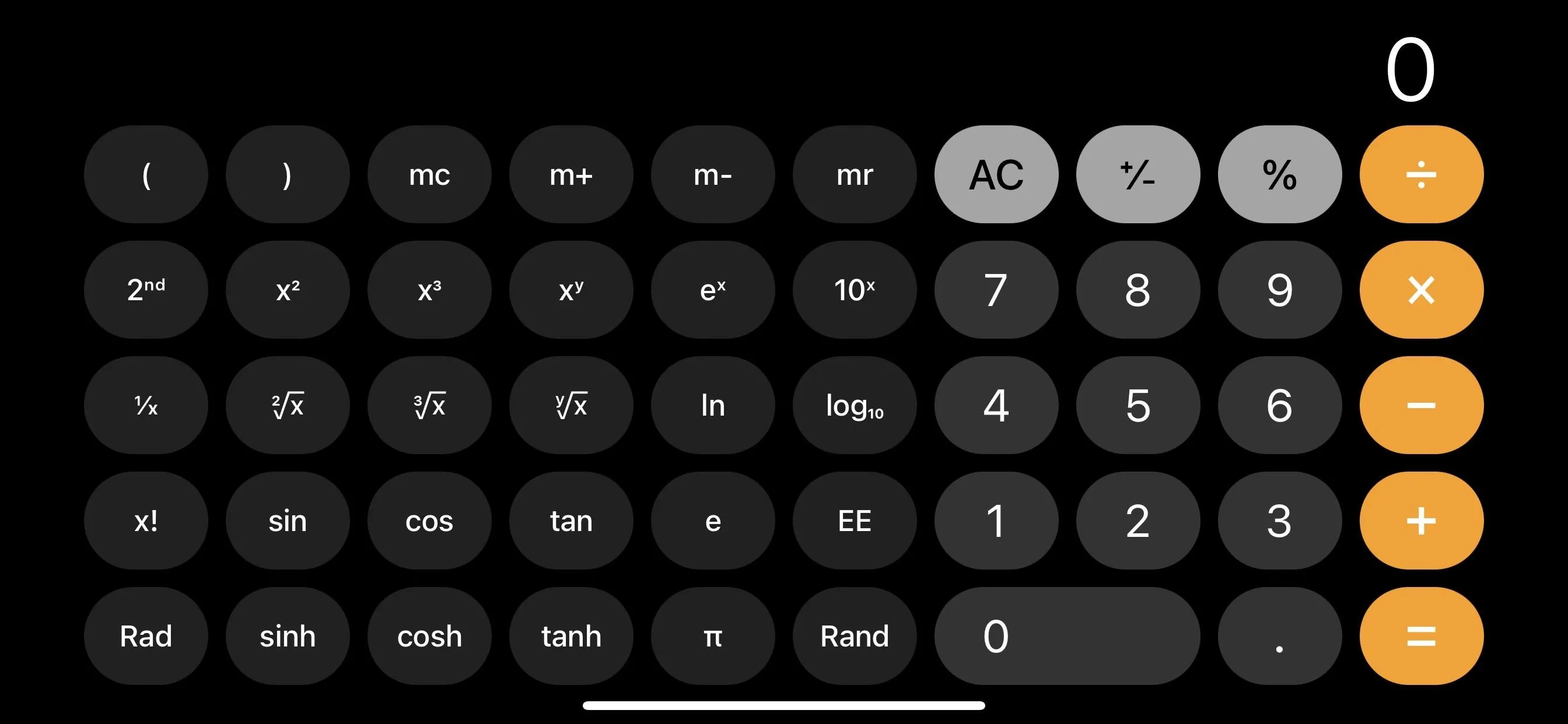
Scientific calculators elevate numerical processing by introducing a vast array of functions essential for mathematics, science, engineering, and statistics. These tools are designed to handle complex computations that would be impractical or impossible to do manually.
Trigonometric Functions (Sine, Cosine, Tangent)
Trigonometric functions—sine (sin), cosine (cos), and tangent (tan), along with their inverse functions (arcsin or sin⁻¹, arccos or cos⁻¹, arctan or tan⁻¹)—are fundamental in geometry, physics, and engineering. They relate angles of a right-angled triangle to the ratios of its sides.
- Mode Setting: Before using these functions, ensure your calculator is in the correct angle mode:
DEG(degrees),RAD(radians), orGRAD(gradians). Most scientific calculators default to degrees. A common error is performing calculations in the wrong mode. Look for aMODEorDRGbutton to cycle through these settings. - Usage: To find the sine of 30 degrees:
sin,3,0,=. (Answer: 0.5). For inverse functions, you typically press a2ndorSHIFTkey before thesin/cos/tankey. For example, to find the angle whose sine is 0.5:SHIFT,sin,0,.,5,=. (Answer: 30 degrees).
Logarithms and Exponents (Log, Ln, e^x, x^y)
Logarithms and exponents are critical for dealing with growth rates, decay, intensity scales (like decibels or pH), and complex algebraic problems.
- Exponents: The
x^yor^(caret) key allows you to raise a number to any power. For example,2^3(2 to the power of 3) means 2 * 2 * 2. On a calculator:2,x^y,3,=. (Answer: 8). There’s usually also a dedicatedx²key for squaring a number. - Logarithms:
log(common logarithm) calculates the logarithm base 10.log(100)is2because10^2 = 100.ln(natural logarithm) calculates the logarithm basee(Euler’s number, approximately 2.71828).ln(e)is1.e^x(exponential function) is the inverse ofln. It raiseseto a given power.
These functions are typically found as primary orSHIFTfunctions on scientific calculators.
Factorials and Combinatorics
For probability and statistics, factorials and combinatorial functions are invaluable.
- Factorial (!): The
!key calculates the product of all positive integers less than or equal to a given number.5!= 5 * 4 * 3 * 2 * 1 = 120. Input:5,!,=. - Combinations (nCr) and Permutations (nPr): These functions calculate the number of ways to choose or arrange a subset of items from a larger set. They are usually accessed via the
2ndorSHIFTkey, often above division or multiplication.nCr(combinations): Order doesn’t matter. To choose 2 items from 5 (5C2):5,nCr,2,=. (Answer: 10).nPr(permutations): Order matters. To arrange 2 items from 5 (5P2):5,nPr,2,=. (Answer: 20).
Memory Functions and Constants (M+, M-, MR, STO, RCL)
Memory functions are powerful for multi-step calculations, allowing you to store and recall intermediate results without re-keying them.
- M+ (Memory Plus): Adds the current display value to the calculator’s memory.
- M- (Memory Minus): Subtracts the current display value from the calculator’s memory.
- MR (Memory Recall) / RM (Recall Memory): Displays the value currently stored in memory.
- MC (Memory Clear): Clears the memory, setting it to zero.
- STO (Store): Stores the current display value into a specific memory register (often labeled A, B, C, etc., or numbered).
- RCL (Recall): Recalls a value from a specific memory register.
Using these functions minimizes errors from writing down and re-entering numbers, significantly speeding up complex calculations. Many scientific calculators also have built-in constants likeπ(pi) ande, often accessed with aSHIFTkey.
Specialized Calculators and Their Applications
While general-purpose calculators are versatile, specialized versions cater to specific fields, offering dedicated functions and interfaces optimized for particular tasks. These represent a significant branch of calculator technology.
Graphing Calculators: Visualizing Data and Equations
Graphing calculators are mini-computers designed for advanced mathematics. They can:
- Plot Functions: Input an equation (e.g.,
y = x^2 + 2x - 1) and the calculator will display its graph, allowing for visual analysis of roots, intercepts, and turning points. - Solve Equations: Find numerical solutions for equations, systems of equations, and inequalities.
- Perform Calculus: Calculate derivatives, integrals, and limits.
- Matrix Operations: Handle matrix algebra, essential for linear algebra.
- Programming: Many graphing calculators can be programmed by users to automate repetitive tasks or solve specific problems, extending their utility far beyond pre-programmed functions.
Popular models like those from Texas Instruments (TI-84, TI-Nspire) and Casio (fx-CG50) are staples in high school and university STEM courses. Learning to navigate their complex menu systems and input syntax is a substantial skill in itself.
Financial Calculators: Time Value of Money and Loan Amortization
Financial calculators are engineered for business, finance, and real estate professionals. Their specialized keys simplify complex financial calculations based on the concept of the time value of money (TVM).
- TVM Variables: Dedicated keys for
N(number of periods),I/Y(interest rate per year),PV(present value),PMT(payment amount), andFV(future value). By inputting four of these variables, the calculator can solve for the fifth. - Loan Amortization: Calculate loan payments, interest paid, principal paid, and remaining balance over time.
- Cash Flow Analysis: Analyze irregular cash flows, net present value (NPV), and internal rate of return (IRR).
- Bond and Depreciation Calculations: Assist with specific accounting and investment scenarios.
Models like the HP 12c or TI BA II Plus are industry standards, requiring specific financial functions to be understood in their context to be used effectively.
Programming and Statistical Calculators
Beyond graphing and financial, some calculators are tailored for specific niches:
- Programming Calculators: While graphing calculators often have programming capabilities, some older or more specialized models are designed primarily for user-defined programs and custom algorithms. They allow users to write and store sequences of operations, essentially creating custom functions.
- Statistical Calculators: Many scientific and graphing calculators have statistical modes, but some basic models might focus specifically on common statistical functions (mean, standard deviation, linear regression, probability distributions). These are crucial for data analysis and hypothesis testing in statistics courses.
Online and App-Based Calculators: Accessibility and Features
The digital age has brought calculators to our fingertips through web applications and smartphone apps. These software-based calculators offer several advantages:
- Accessibility: Available on almost any internet-connected device, often for free.
- Variety: Specialized calculators for unit conversion, currency exchange, mortgage payments, scientific notation, and more are readily available.
- Advanced Features: Some online calculators offer symbolic computation, step-by-step solutions, and interactive graphing that surpass physical calculators.
- Integration: Many are integrated into productivity suites or specialized software, offering seamless calculations within a broader workflow.
Examples include Google’s built-in calculator, Desmos (graphing), WolframAlpha (computational knowledge engine), and numerous apps for iOS and Android that mimic or enhance physical calculator functionalities. While they lack the tactile feedback of a physical device, their convenience and evolving feature sets make them powerful digital tools.
Common Pitfalls and Troubleshooting Tips
Even with a firm grasp of functions, users can encounter issues. Understanding common problems and how to troubleshoot them is a vital part of mastering your calculator.
Input Errors and Syntax Mistakes
The most frequent issues stem from incorrect input.
- Order of Operations: As discussed, not using parentheses correctly is a prime source of error. Always double-check complex expressions.
- Missing Operators: Sometimes users forget to include a multiplication symbol, especially between a number and a parenthesis (e.g.,
2(3+4)needs to be2 * (3+4)on many calculators). - Function Argument Errors: Functions like
sqrt,log,sinoften expect a single argument. Inputtingsin(30+45)without proper parentheses or if the calculator expectssinthen(30+45)can cause errors. - “Syntax Error” / “Math Error”: These messages indicate that the calculator cannot interpret your input. Review your equation for misplaced parentheses, commas, or incorrect function usage. Many modern calculators allow you to move the cursor to the error location.
Understanding Display Modes (Degrees/Radians, Fixed/Scientific)
Incorrect mode settings are a common cause of unexpected results, especially in scientific calculations.
- Angle Mode (DEG/RAD/GRAD): If you’re working with trigonometric functions, ensure the angle mode matches your input. If your problem specifies degrees, but your calculator is in radians, your answers will be wildly off. Look for the
MODEorDRGbutton. - Display Format (FIX/SCI/NORM):
- NORM (Normal): Displays numbers in standard format, using scientific notation only for very large or very small numbers.
- FIX (Fixed): Displays a fixed number of decimal places (e.g., FIX 2 shows 12.34 instead of 12.3456). Useful for currency.
- SCI (Scientific): Displays all numbers in scientific notation (e.g., 1.23 x 10^4). Useful for engineering and science.
Incorrect display format doesn’t affect the calculation’s accuracy but can lead to misinterpretation of results.
Battery Life and Maintenance
Calculators, like any electronic device, require power and care.
- Low Battery: An old or weak battery can lead to dim displays, erratic behavior, or unexpected shutdowns. Keep spare batteries on hand for physical calculators. Many use coin cells (CR2032) or AAA batteries.
- Auto Shut-off: Most calculators have an auto shut-off feature to conserve battery. Don’t confuse this with a malfunction.
- Care and Storage: Protect your calculator from extreme temperatures, moisture, and impacts. A protective case is advisable for graphing and scientific models. Keep the display clean with a soft cloth.
Resetting Your Calculator
When all else fails, a reset can often resolve persistent issues like frozen screens or inexplicable behavior.
- Soft Reset: Often involves pressing a combination of keys (e.g.,
ON+CLEAR, orSHIFT+AC). This usually clears memory and settings but retains pre-programmed functions. - Hard Reset: Involves finding a small reset button (often recessed and requiring a paperclip) or removing/reinserting batteries. This returns the calculator to its factory default settings, clearing all memory and user programs. Use this as a last resort, as you will lose any stored data. Consult your calculator’s manual for specific reset procedures.
Conclusion
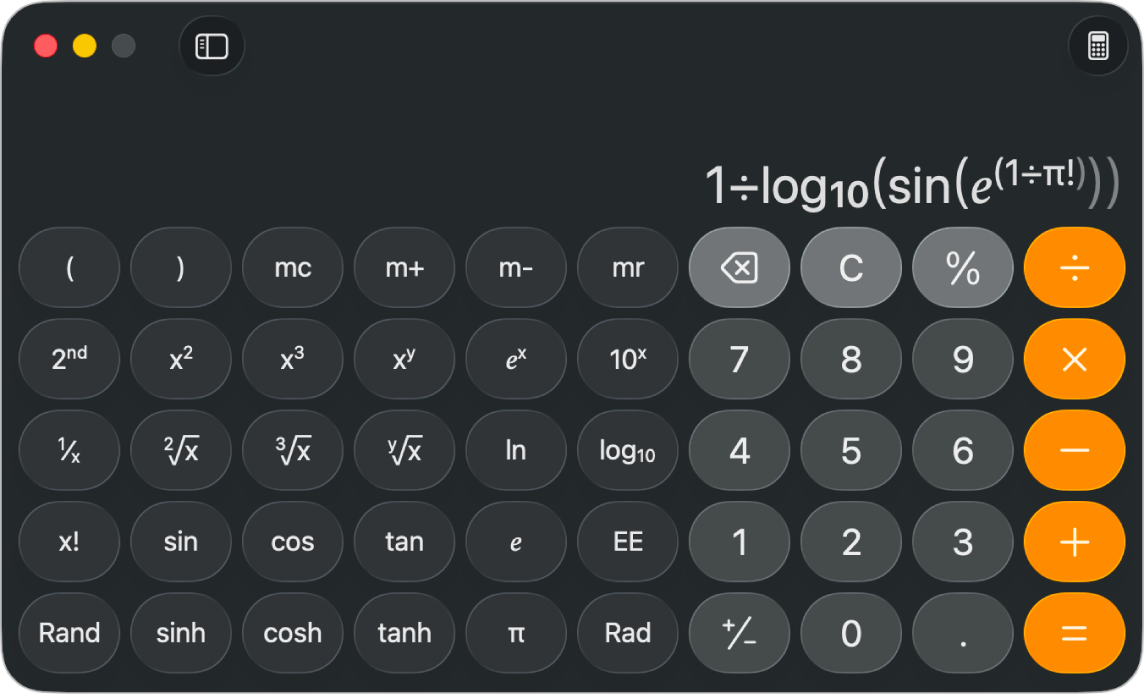
The calculator, in its various forms, remains a cornerstone of technology, bridging the gap between raw numbers and meaningful insights. From the simplest arithmetic to advanced calculus and financial modeling, its ability to execute precise computations rapidly is unparalleled. Mastering your calculator isn’t just about pressing buttons; it’s about understanding the underlying mathematical principles, leveraging specific functions, and troubleshooting common issues that arise from human error or technological nuances.
In a world increasingly reliant on data and quantitative analysis, proficiency with this powerful tool is more relevant than ever. By dedicating time to explore its features, understanding its syntax, and practicing regularly, you can transform your calculator from a mere device into an extension of your analytical capabilities, unlocking new levels of efficiency and accuracy in your academic, professional, and personal pursuits.
aViewFromTheCave is a participant in the Amazon Services LLC Associates Program, an affiliate advertising program designed to provide a means for sites to earn advertising fees by advertising and linking to Amazon.com. Amazon, the Amazon logo, AmazonSupply, and the AmazonSupply logo are trademarks of Amazon.com, Inc. or its affiliates. As an Amazon Associate we earn affiliate commissions from qualifying purchases.