
In the world of finance, percentages are the universal language of performance, risk, and valuation. Whether you are a small business owner calculating profit margins, an investor analyzing dividend yields, or a professional managing a corporate budget, the ability to manipulate these figures is fundamental. While most people are comfortable with multiplying by a percentage—such as finding the sales tax on a purchase—the inverse operation, dividing by a percent, is often misunderstood.
Dividing by a percent is a critical operation for “grossing up” figures, determining original values before deductions, and identifying the true cost of financial services. This guide explores the mechanics of dividing by percentages through the lens of personal and business finance, providing you with the tools to make more informed economic decisions.

The Fundamentals of Percentage Division in Finance
Before applying percentage division to complex financial models, one must master the underlying arithmetic. In finance, a percentage is not a standalone number but a ratio of a whole. To perform any mathematical operation, this ratio must be converted into a format compatible with standard calculators and spreadsheets.
Converting Percentages to Decimals
The first rule of financial mathematics is that percentages must be converted to decimals before division occurs. A percentage is literally “per centum,” or “per one hundred.” Therefore, 5% is 5/100, or 0.05. To divide a financial figure by a percentage, you simply move the decimal point of the percentage two places to the left. For example, if you are dividing a $1,000 dividend by a 4% yield, you are mathematically dividing 1,000 by 0.04.
The Basic Mathematical Formula
The core formula for dividing by a percent is:
Original Value = Resultant Amount / (Percentage / 100)
In a professional setting, this is frequently used to find the “Base Value.” If you know that a certain expense represents 15% of your total budget and that expense is $3,000, you divide $3,000 by 0.15 to discover that your total budget is $20,000. Understanding this relationship allows a business leader to work backward from known variables to uncover the broader financial picture.
Practical Applications in Business: Grossing Up and Margins
In corporate finance, dividing by a percent is most commonly used in “grossing up” calculations and margin analysis. These techniques ensure that a company maintains its profitability after accounting for taxes, fees, and costs of goods sold (COGS).
Calculating Inclusive Tax and VAT
Retailers and service providers often need to extract the base price of an item from a total that already includes tax. If a product sells for $107 inclusive of a 7% sales tax, you cannot simply subtract 7% from $107 (which would be $99.51). Instead, you must divide the total by the “growth factor.”
To do this, you divide the total amount by (1 + the tax rate). In this case, $107 / 1.07 = $100. This division ensures that the tax is calculated correctly based on the original price, a vital step for accurate tax reporting and internal auditing.
Determining Original Prices from Discounts
Marketing departments often analyze the effectiveness of sales by looking at post-discount data. If a luxury brand sees that a watch sold for $800 after a 20% discount, they need to know the original “anchor” price to evaluate brand positioning. By dividing the sale price ($800) by the remaining percentage (80% or 0.80), the financial analyst determines the original price was $1,000. This logic is essential for inventory valuation and revenue forecasting.
Solving for Markup vs. Margin
One of the most frequent errors in business finance is confusing markup with margin. A 25% markup on a $100 item results in a $125 sale price. However, a 25% margin on that same $100 cost requires a different calculation involving division. To achieve a 25% margin, you must divide the cost by the complement of the margin (1 – 0.25).
- $100 / 0.75 = $133.33.
By dividing the cost by the percentage, the business owner ensures that the profit represents the desired portion of the total revenue, protecting the company’s bottom line from inflationary pressures and operational costs.
Investment Analysis: Using Division to Calculate ROI and Yields
For the individual investor, dividing by percentages is a daily necessity. It is the primary method for determining the “Price-to-Earnings” (P/E) expectations and understanding the capitalization rates in real estate.
Dividend Yield and Asset Valuation
Investors often use division to determine how much capital is required to generate a specific income stream. If you want to earn $5,000 a year in passive income from a stock that pays a 4% dividend, you divide your target income by the percentage:
- $5,000 / 0.04 = $125,000.
This calculation tells the investor exactly how much they need to move into that specific asset to reach their financial goal. Without the ability to divide by percent, retirement planning becomes a series of guesses rather than a calculated strategy.
Adjusting for Inflationary Erosion
Inflation is the “hidden tax” that erodes purchasing power. When calculating the real rate of return on an investment, sophisticated investors use division to “deflate” their returns. If a portfolio grows by 8% in a year where inflation is 3%, the “Fisher Equation” in finance suggests a division-based approach to find the real purchasing power increase. By dividing the nominal growth factor (1.08) by the inflation factor (1.03), an investor discovers that their real growth is approximately 4.85%, rather than a simple subtraction of 5%.
Common Pitfalls and Digital Tools for Financial Accuracy
Even seasoned financial analysts can make mistakes when performing percentage division, especially when dealing with negative percentages or compounded growth.
Avoiding the “Percent Change” Trap
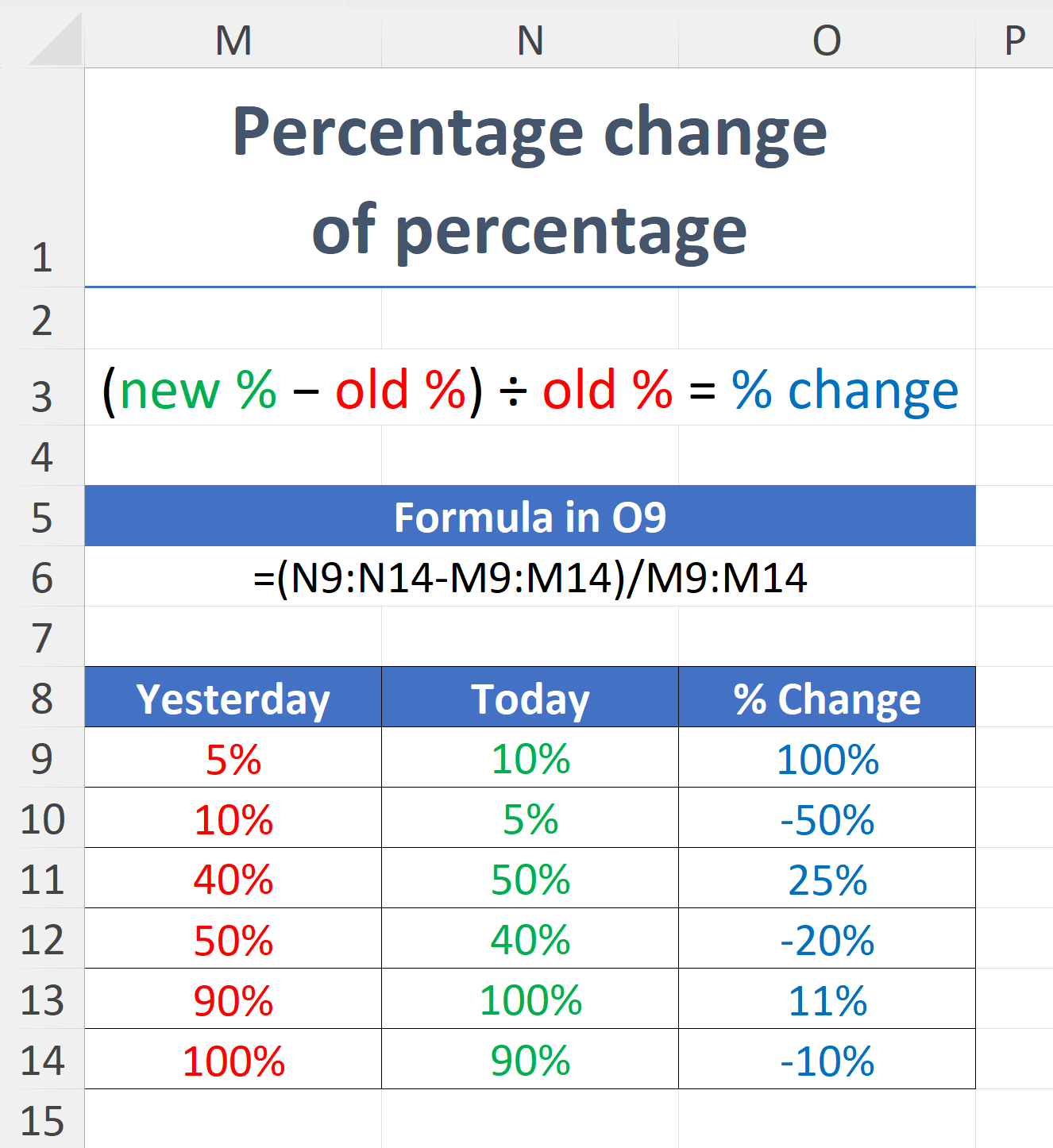
A common mistake in personal finance is assuming that a percentage loss can be recovered by an equal percentage gain. If a stock portfolio drops by 50%, it does not need a 50% gain to break even; it needs a 100% gain. To find this, you divide the original value by the remaining value. Understanding the non-linear nature of percentage division helps investors manage risk and set realistic expectations for market recoveries.
Leveraging Spreadsheet Functions for Error-Free Math
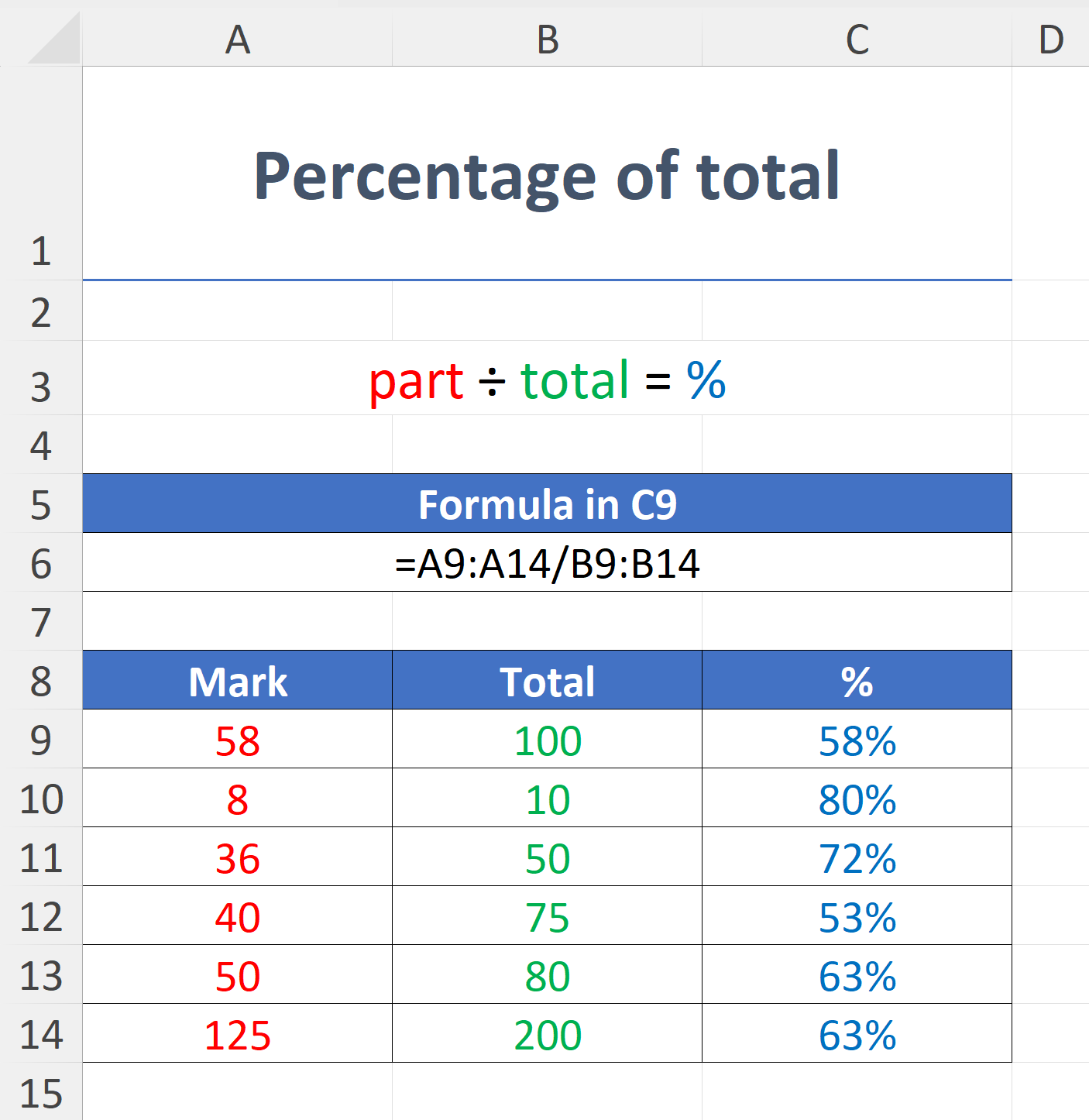
In the modern financial era, manual calculation is often supplemented by software like Microsoft Excel or Google Sheets. To divide by a percent in these tools, one must be careful with formatting. If cell A1 contains “5000” and cell B1 contains “5%”, the formula =A1/B1 will correctly yield 100,000 because the software recognizes the percentage sign as a decimal shift (0.05). However, if B1 is a standard integer “5”, the result will be 1,000. Financial professionals must always verify that their “Cell Format” matches their mathematical intent to avoid catastrophic reporting errors.
Strategic Financial Planning: Scaling Your Income with Percentage-Based Logic
The ultimate goal of mastering financial mathematics is to build a scalable framework for wealth. By using percentage division, you can create a “reverse budget” that prioritizes savings and investment.
Budgeting with the 50/30/20 Rule
Many financial advisors recommend the 50/30/20 rule: 50% for needs, 30% for wants, and 20% for savings. If you know you need to save $2,000 a month to meet your retirement goals, you can use division to determine your required net income.
- $2,000 / 0.20 = $10,000.
This realization—that you need a $10,000 monthly take-home pay to sustain your savings goal—shifts the focus from “cutting costs” to “increasing revenue,” a hallmark of a growth-oriented financial mindset.
Reinvesting Profits for Exponential Growth
For business owners, dividing by percentages helps in determining the “reinvestment rate.” If a business earns a 15% return on invested capital (ROIC), and the owner wants to grow the business by $30,000 next year, they can divide the growth target by the ROIC to see how much capital must be retained rather than taken as a draw.
- $30,000 / 0.15 = $200,000.
This level of clarity allows for strategic capital allocation, ensuring that the business has the liquidity it needs to scale without taking on unnecessary debt.
Conclusion
Learning how to divide by a percent is more than a classroom exercise; it is a vital skill for anyone serious about mastering their money. From the retail floor to the stock market, this mathematical operation allows us to peel back the layers of a price tag or an investment prospectus to see the underlying reality. By converting percentages to decimals and understanding the relationship between parts and wholes, you can calculate margins accurately, plan for taxes effectively, and set retirement goals that are grounded in mathematical certainty. In the high-stakes world of finance, precision is the foundation of prosperity.
aViewFromTheCave is a participant in the Amazon Services LLC Associates Program, an affiliate advertising program designed to provide a means for sites to earn advertising fees by advertising and linking to Amazon.com. Amazon, the Amazon logo, AmazonSupply, and the AmazonSupply logo are trademarks of Amazon.com, Inc. or its affiliates. As an Amazon Associate we earn affiliate commissions from qualifying purchases.