
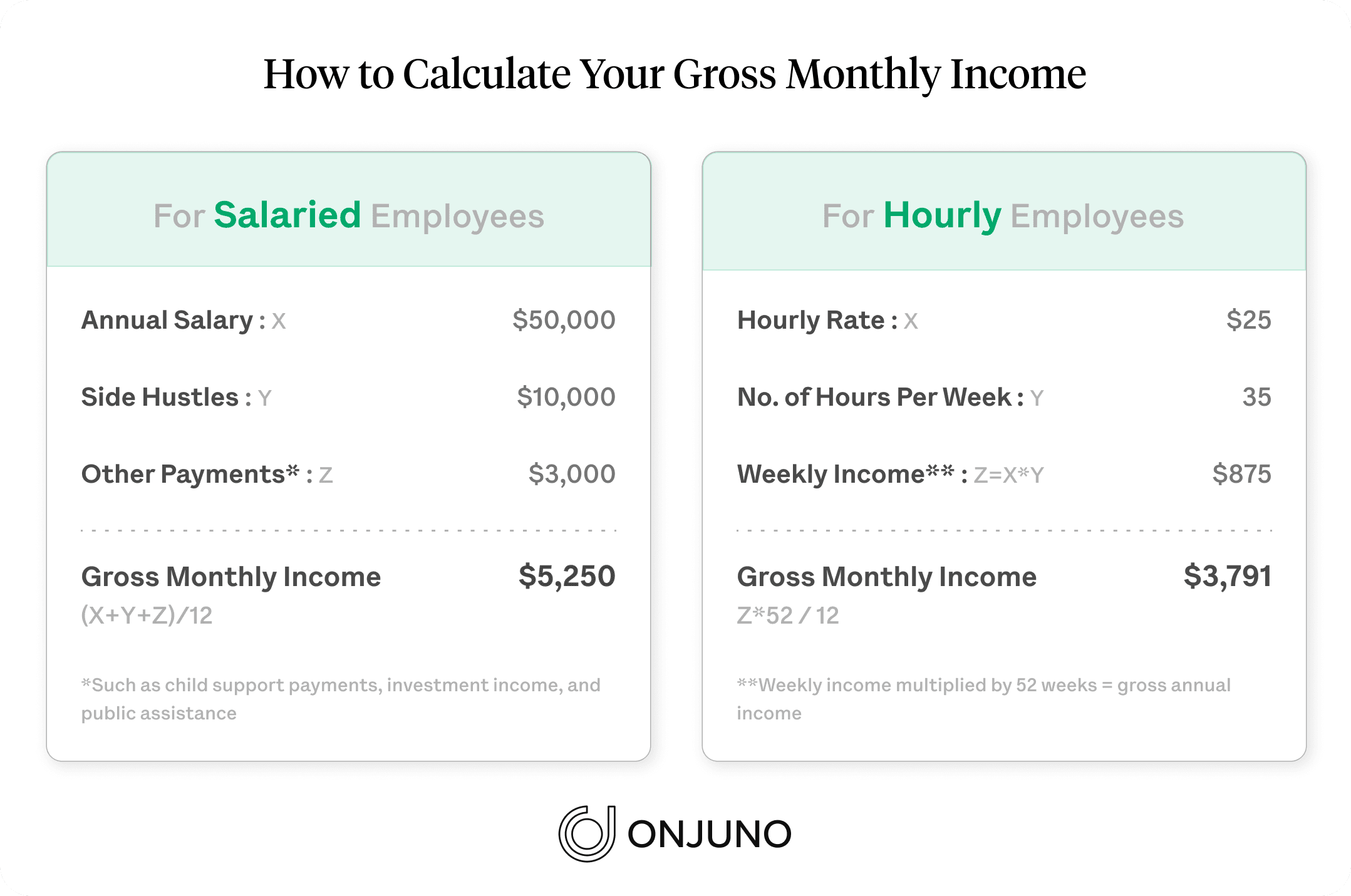
Understanding your monthly income is a cornerstone of effective personal finance. It’s not merely a number on a pay stub; it’s the fundamental figure that dictates your budget, informs your financial goals, influences your lending potential, and ultimately shapes your economic future. For some, calculating this figure is straightforward, a simple glance at a consistent paycheck. For others, particularly those navigating the dynamic landscape of self-employment, gig work, or multiple income streams, the process can be considerably more complex, demanding careful tracking and a strategic approach.
In an increasingly varied economic environment where traditional employment often mixes with freelancing, investments, and side hustles, a clear, accurate understanding of your total monthly financial inflow becomes paramount. This article will guide you through the intricacies of calculating your monthly income, differentiating between gross and net figures, and offering practical strategies for various employment scenarios. By the end, you’ll have a robust framework for assessing your financial standing, enabling smarter decisions and fostering greater financial stability.

Understanding the Fundamentals: Gross vs. Net Income
Before diving into the specifics of calculation, it’s crucial to grasp the fundamental distinction between gross and net income. These two terms are frequently used interchangeably, yet they represent vastly different aspects of your earnings and have significant implications for your financial planning.
Decoding Gross Income
Gross income represents the total amount of money you earn before any deductions are taken out. It’s your raw, untaxed earnings from all sources.
For W-2 employees (those employed by a company):
- Salary or Wages: This is the base amount you’re paid for your work.
- Bonuses: Additional payments given for performance or as a reward.
- Commissions: Earnings based on sales or specific achievements.
- Overtime Pay: Extra wages for hours worked beyond the standard workweek.
- Tips: Income received directly from customers.
- Other Taxable Benefits: While some benefits might be pre-tax deductions, others, like certain fringe benefits or non-cash compensation, can be considered part of your gross taxable income.
For self-employed individuals, freelancers, and small business owners:
- Total Revenue: This includes all money received from clients, sales of products, or services rendered, before any business expenses are deducted.
- Investment Income: Dividends, interest earned from savings accounts or bonds, capital gains, rental income, and royalties are also part of your gross income, though often categorized separately for tax purposes.
- Alimony or Other Taxable Support: While not earned income, these are often included in gross income for tax calculations.
Understanding your gross income is important because it’s the figure often used for loan applications, tax bracket determination, and calculating certain benefits. It provides the broadest picture of your earning capacity.
Calculating Net Income (Take-Home Pay)
Net income, often referred to as “take-home pay,” is the amount of money you actually receive and can spend after all mandatory and voluntary deductions have been subtracted from your gross income. This is the figure that truly impacts your day-to-day budgeting and spending power.
For W-2 employees, common deductions include:
- Federal Income Tax: Withheld based on your W-4 form.
- State Income Tax: Applicable in most states.
- Local Income Tax: Applicable in some cities or counties.
- FICA Taxes (Social Security and Medicare): Mandatory contributions to federal programs.
- Health Insurance Premiums: Your share of the cost for health, dental, or vision insurance.
- Retirement Contributions: Deductions for 401(k), 403(b), or other employer-sponsored retirement plans.
- Other Benefits: Such as life insurance, disability insurance, or commuter benefits.
For self-employed individuals and gig workers, calculating net income is more complex as many deductions are not automatically withheld. You must proactively account for:
- Estimated Taxes: Self-employed individuals are responsible for paying their own federal, state, and FICA taxes, usually through quarterly estimated payments.
- Business Expenses: This is a critical component. Net income for a self-employed person often refers to “profit” after deducting all legitimate business expenses (e.g., office supplies, software subscriptions, marketing costs, professional development, mileage).
- Health Insurance: Unless covered by a spouse’s plan, self-employed individuals typically purchase their own health insurance, which can be a significant monthly expense.
- Self-Funded Retirement: Contributions to SEP IRAs, Solo 401(k)s, or traditional/Roth IRAs are typically made directly by the individual.
The distinction between gross and net income is vital because it’s your net income that defines your actual disposable income for living expenses, savings, and discretionary spending. Mistaking your gross income for your spendable income can lead to severe budgeting errors and financial strain.
Strategies for Salaried and Wage Earners
For individuals with traditional employment, determining monthly income might seem straightforward. However, variations in pay frequency and the presence of variable income components require a structured approach to arrive at an accurate monthly figure.
Analyzing Your Pay Stubs
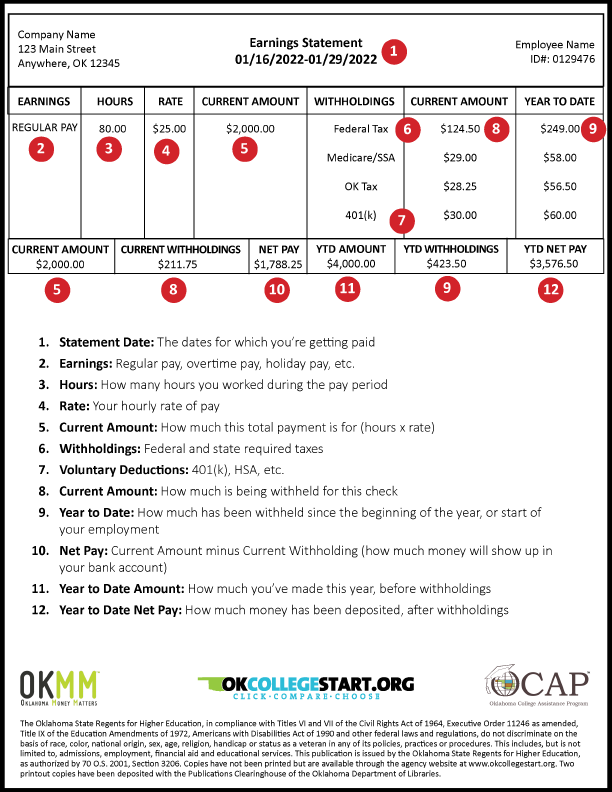
Your pay stub (or earnings statement) is the most critical document for understanding your income. It’s a detailed breakdown of your earnings and deductions.
- Locate Gross Pay: Identify the line item that states your gross pay for that pay period. This is your total earnings before any money is taken out.
- Identify Deductions: Go through each deduction listed. These will typically include federal, state, and local taxes, FICA (Social Security and Medicare), health insurance premiums, and retirement contributions.
- Find Net Pay: The final figure after all deductions is your net pay, or take-home pay.
- Understand Pay Frequency: Note whether you are paid weekly, bi-weekly (every two weeks), semi-monthly (twice a month, e.g., on the 15th and 30th), or monthly.
Once you have your net pay per period, you can convert it to a monthly figure:
- Weekly: Net Pay per week × 4.33 (average weeks in a month)
- Bi-weekly: Net Pay per pay period × 2.16 (average bi-weekly periods in a month)
- Semi-monthly: Net Pay per pay period × 2
- Monthly: Net Pay per month (no conversion needed)
It’s crucial to use the appropriate multiplier for accurate monthly estimation. Remember that bi-weekly pay often results in two months out of the year having three paychecks, which can be a pleasant bonus but shouldn’t be relied upon for consistent monthly budgeting unless you save the extra paycheck for those months.
Accounting for Variable Income (Overtime, Bonuses, Commissions)
Many salaried or hourly employees have income components that fluctuate, making a precise monthly figure harder to pin down.
- Overtime: If you regularly work overtime, you can average your overtime earnings over a period (e.g., the last 3-6 months) to get a more realistic monthly estimate. Be conservative, though, as overtime is not always guaranteed.
- Bonuses: Annual or quarterly bonuses should not be factored into your regular monthly income for budgeting purposes, as they are irregular. Instead, consider them windfalls that can be allocated towards specific goals like debt repayment, savings, or larger purchases. If bonuses are a consistent part of your compensation, you might average them over a year and add a small, conservative portion to your monthly estimate.
- Commissions: For sales roles, commissions can be highly variable. The best approach is to calculate an average of your commissions over a longer period, perhaps 6 to 12 months. Use this average as your estimated monthly commission, but be prepared to adjust your budget if actual commissions deviate significantly. Alternatively, you could budget based solely on your base salary and consider commissions as extra income, providing a buffer.
The key with variable income is to err on the side of caution. Budgeting for the minimum expected income helps prevent overspending and ensures you can meet your obligations even in leaner months.
Navigating Income for Self-Employed and Gig Workers
Determining monthly income as a self-employed individual or gig worker presents a unique set of challenges. Income can be highly irregular, business expenses are an ongoing consideration, and taxes are not automatically withheld. This requires meticulous record-keeping and proactive financial planning.
Tracking All Revenue Streams
The first and most critical step is to diligently track every dollar that comes in. This includes:
- Invoices and Client Payments: Keep detailed records of all invoices sent and payments received from clients.
- Platform Earnings: If you work through platforms (e.g., Upwork, Fiverr, Etsy, Uber, DoorDash), track your earnings from each.
- Product Sales: If you sell goods, record all sales.
- Other Income: Any other income, such as royalties, affiliate commissions, or ad revenue.
Tools for Tracking:
- Spreadsheets: A simple but effective way to log all income and expenses. Google Sheets or Excel templates can be customized.
- Accounting Software: Programs like QuickBooks Self-Employed, FreshBooks, or Wave Accounting are designed for freelancers and small businesses. They automate many tracking processes, categorize transactions, and can generate reports.
- Dedicated Apps: Many budgeting apps can link to bank accounts and categorize income and expenses.
Consistent tracking is not just about knowing your income; it’s essential for managing your business, understanding profitability, and preparing for taxes.
Factoring in Business Expenses
Unlike employees who have taxes and benefits deducted before they see their pay, self-employed individuals must subtract their business expenses from their gross revenue to arrive at their true business profit (which forms the basis of their income).
Common Deductible Expenses:
- Office Expenses: Rent, utilities, internet, phone, home office deduction.
- Software and Subscriptions: Tools necessary for your work (e.g., Adobe Creative Cloud, project management software).
- Equipment: Computers, cameras, specialized tools.
- Marketing and Advertising: Website hosting, social media ads, business cards.
- Professional Development: Courses, conferences, workshops.
- Travel and Mileage: Business-related travel.
- Insurance: Business liability insurance.
- Contractors/Subcontractors: Payments to other freelancers or virtual assistants.
Calculating Net Income After Business Expenses:
For any given month, or averaged over several months, your net business income is:
Total Monthly Revenue – Total Monthly Business Expenses = Net Business Income
This net business income is what you effectively “take home” from your business operations before personal taxes. It’s crucial not to confuse your business revenue with your personal income. Many self-employed individuals pay themselves through an “owner’s draw” or a set salary from their business account to their personal account.
Estimating Quarterly Taxes and Other Deductions
This is arguably the most challenging aspect for the self-employed. Since no employer is withholding taxes, you are responsible for paying your own federal, state, and local taxes, as well as self-employment taxes (Social Security and Medicare) which are usually paid quarterly.
- Self-Employment Tax: As a self-employed individual, you pay both the employer and employee portions of Social Security and Medicare taxes, totaling 15.3% on your net earnings up to a certain limit (for Social Security) and 2.9% for Medicare on all net earnings.
- Income Tax: You also pay federal and state income tax based on your profit after business expenses.
Proactive Tax Planning:
- Set Aside a Percentage: A common rule of thumb is to set aside 25-35% (or even more, depending on your income level and state) of your net business income into a separate savings account specifically for taxes. This ensures the funds are available when quarterly payments are due.
- Consult a Professional: A tax accountant specializing in small businesses can help you accurately estimate your quarterly tax payments and identify all eligible deductions.
- Average Inconsistent Income: If your income fluctuates wildly, average your net business income over the past 6-12 months. Use this average to project your monthly income and, consequently, the amount to set aside for taxes. In lean months, you might dip into your tax savings, but ideally, you’ll replenish it in good months.
Other significant “deductions” for the self-employed include health insurance premiums (which can often be tax-deductible) and contributions to self-funded retirement accounts like a SEP IRA or Solo 401(k). These are personal expenses that must be accounted for out of your net business income.
Incorporating Other Income Sources and Benefits
Many individuals have income streams beyond their primary employment or business. Accurately determining monthly income requires including all consistent and semi-consistent inflows.
Passive and Investment Income
These sources can significantly boost your overall monthly financial picture.
- Dividends: From stocks or mutual funds. If received quarterly or annually, average them out to a monthly figure.
- Interest Income: From savings accounts, CDs, or bonds.
- Rental Income: From properties you own. Remember to subtract property management fees, maintenance costs, and mortgage payments to get the net rental income.
- Royalties: From intellectual property, books, music, or patents.
- Capital Gains Distributions: While typically realized when assets are sold, some funds distribute capital gains periodically.
For these sources, it’s best to track them over a year and then divide by 12 to get an average monthly contribution, especially if they are irregular or annual. For consistent sources like monthly rental income, the calculation is straightforward.
Government Benefits and Allowances
Various government programs can provide a consistent or semi-consistent income flow.
- Social Security Benefits: For retirees, survivors, or the disabled.
- Disability Payments: From federal, state, or private insurance.
- Unemployment Benefits: Temporary income during periods of job loss.
- Child Support or Alimony: Regularly received payments from a former spouse.
- Veterans’ Benefits: Disability compensation or pension.
These sources are often fixed amounts received on a regular schedule, making them easy to incorporate into your monthly income calculation.
Fringe Benefits (Non-Monetary Value)
While not direct cash income, certain employer-provided fringe benefits have a monetary value that enhances your overall financial health. While they don’t count towards your “monthly income” for tax or budgeting purposes in the same way as cash, understanding their value is insightful.
- Employer-Provided Health Insurance: If your employer pays a significant portion or all of your health insurance premiums, this is a substantial benefit that reduces your out-of-pocket costs.
- Employer Contributions to Retirement: Matching contributions to your 401(k) or pension plans represent deferred income that boosts your long-term wealth.
- Life Insurance: Employer-paid life insurance.
- Commuter Benefits: Subsidized public transport passes or parking.
- Wellness Programs/Gym Memberships: Saving you money on health-related expenses.
While you don’t add the cash value of these to your “income” line item, they free up cash flow that would otherwise be spent, indirectly increasing your financial capacity. They’re essential to acknowledge when assessing your total compensation package.
Why Accurately Determining Your Monthly Income Matters
The seemingly simple act of calculating your monthly income has far-reaching implications across all facets of your financial life. Accuracy here isn’t a mere academic exercise; it’s the bedrock upon which sound financial decisions are built.
Building a Robust Budget
Your monthly income is the absolute prerequisite for creating a realistic and effective budget. Without knowing precisely how much money you have coming in, it’s impossible to allocate funds wisely, track expenses accurately, or avoid overspending. A clear income figure allows you to:
- Allocate Funds: Assign specific amounts to categories like housing, food, transportation, and debt repayment.
- Identify Surplus or Deficit: Determine if you have money left over for savings and investments, or if you are spending more than you earn, indicating a need for adjustment.
- Prevent Debt: By living within your means, you can avoid accumulating high-interest debt.
A budget built on accurate income figures provides clarity and control, turning financial ambiguity into actionable plans.
Setting Financial Goals
Whether your aspirations involve buying a home, saving for retirement, funding a child’s education, or traveling the world, each goal requires a financial roadmap. Your monthly income directly impacts your ability to set and achieve these goals.
- Saving Targets: Knowing your income allows you to determine how much you can realistically contribute to savings accounts or investment portfolios each month.
- Investment Decisions: It helps you assess your capacity to take on certain investment risks or make regular contributions to investment vehicles.
- Timelines: Accurate income projections allow you to estimate how long it will take to reach specific financial milestones.
Without a clear understanding of your income, financial goals remain abstract wishes rather than concrete plans with measurable progress.
Loan and Credit Applications
When you apply for a mortgage, car loan, personal loan, or even a credit card, lenders will invariably ask for proof of income. Your reported monthly income is a critical factor in their decision-making process.
- Approval Likelihood: Higher, stable income generally increases your chances of loan approval.
- Loan Amount: Lenders use your income (and debt-to-income ratio) to determine how much money they are willing to lend you.
- Interest Rates: A strong income history can sometimes lead to more favorable interest rates.
Providing accurate, verifiable income information is crucial for navigating the lending landscape and securing the financing you need under favorable terms.
Tax Planning
Accurate income determination is fundamental for effective tax planning, preventing both overpayment and underpayment of taxes.
- Correct Withholdings: For employees, knowing your gross monthly income helps you adjust your W-4 form to ensure appropriate federal and state income tax withholdings, avoiding a large tax bill or refund at year-end.
- Estimated Payments: For the self-employed, accurate income tracking is essential for calculating and making timely quarterly estimated tax payments, preventing penalties.
- Deductions and Credits: Understanding your income allows you to strategically plan for deductions and credits that can lower your taxable income.
Proactive tax planning, informed by a precise understanding of your monthly income, ensures you meet your obligations efficiently and legally, avoiding unpleasant surprises during tax season.
Conclusion
Determining your monthly income is far more than a simple calculation; it’s a foundational exercise in financial literacy and empowerment. Whether you’re a salaried employee, a busy freelancer, or a multifaceted entrepreneur, a clear understanding of your income stream is the compass that guides all your financial decisions. From the critical distinction between gross and net pay to the meticulous tracking required for variable income and self-employment, each step contributes to a more comprehensive and accurate financial picture.
By diligently analyzing pay stubs, tracking every revenue stream, accounting for business expenses, and proactively planning for taxes, you equip yourself with the knowledge to build robust budgets, set achievable financial goals, confidently approach lending institutions, and optimize your tax strategy. Regular review and adjustment of your income calculations are also vital, especially as your career progresses or financial circumstances change. Embrace this practice, and you’ll not only gain unparalleled clarity over your finances but also cultivate a stronger, more resilient financial future.
aViewFromTheCave is a participant in the Amazon Services LLC Associates Program, an affiliate advertising program designed to provide a means for sites to earn advertising fees by advertising and linking to Amazon.com. Amazon, the Amazon logo, AmazonSupply, and the AmazonSupply logo are trademarks of Amazon.com, Inc. or its affiliates. As an Amazon Associate we earn affiliate commissions from qualifying purchases.