
In the realm of finance, percentages are the fundamental language of measurement. Whether you are a retail investor tracking the growth of your portfolio, a business owner analyzing profit margins, or an individual trying to master a personal budget, understanding how to determine percentage is an essential skill. While the basic math may seem elementary, the application of percentages in complex financial scenarios—such as compounding interest, tax obligations, and market volatility—requires a nuanced approach.
This guide provides a professional deep dive into the methodology of calculating percentages within the “Money” niche, ensuring you can make data-driven decisions that safeguard and grow your wealth.
Mastering the Fundamentals of Financial Percentages
Before navigating the complexities of the stock market or corporate balance sheets, one must possess a rock-solid grasp of the core percentage formulas. In finance, a percentage represents a ratio or a fraction of 100, allowing for a standardized comparison between different numerical values regardless of their scale.
The Basic Formula for Daily Transactions
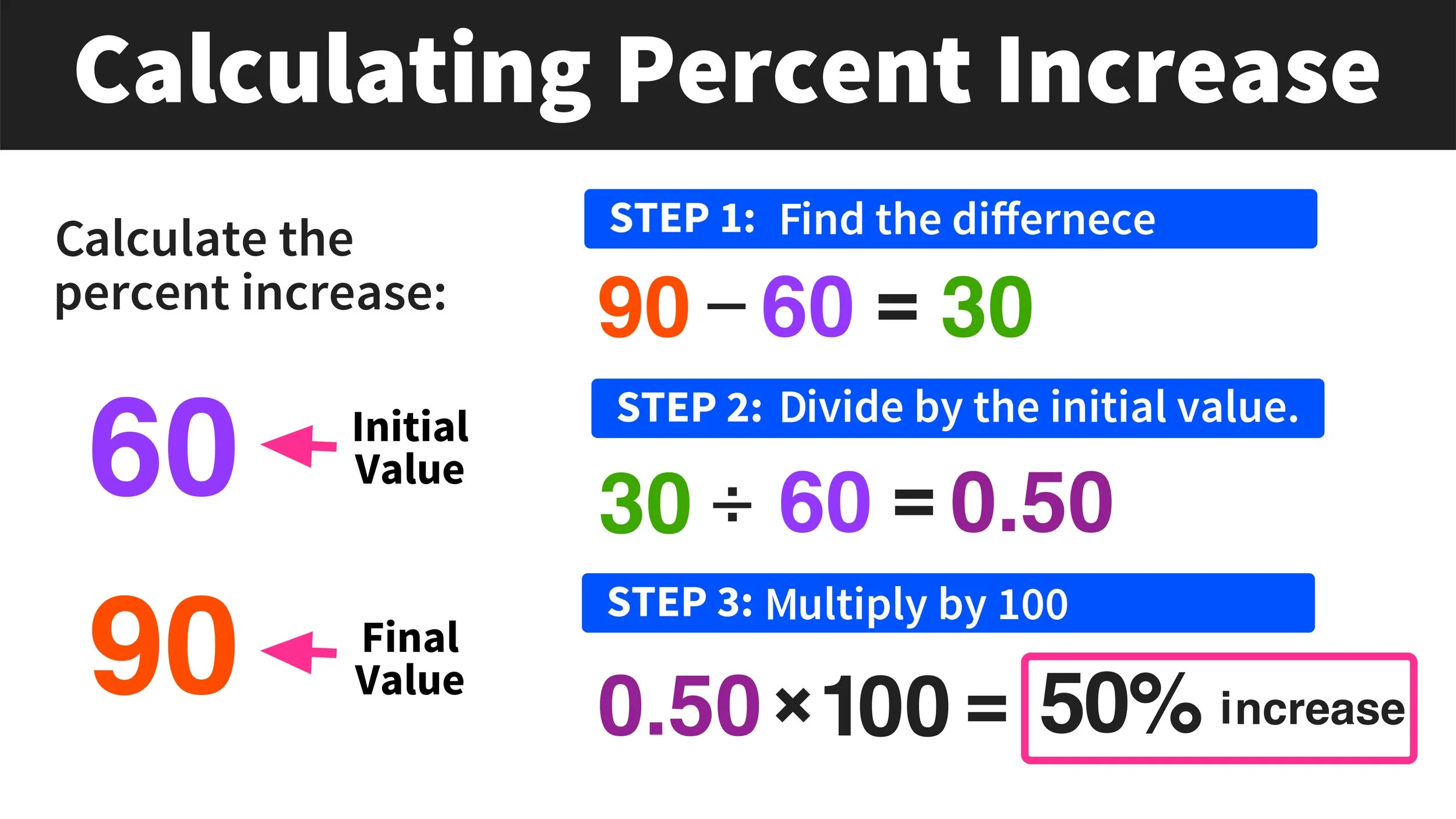
The most frequent calculation you will encounter is finding what percentage one number is of another. The formula is:
(Part / Whole) × 100 = Percentage
For example, if you are setting aside $500 from a $4,000 monthly paycheck for savings, you divide 500 by 4,000 to get 0.125. Multiplying by 100 reveals that your savings rate is 12.5%. This simple calculation is the bedrock of tracking expenses and determining if you are meeting your financial milestones.
Reverse Percentage: Finding the Original Value
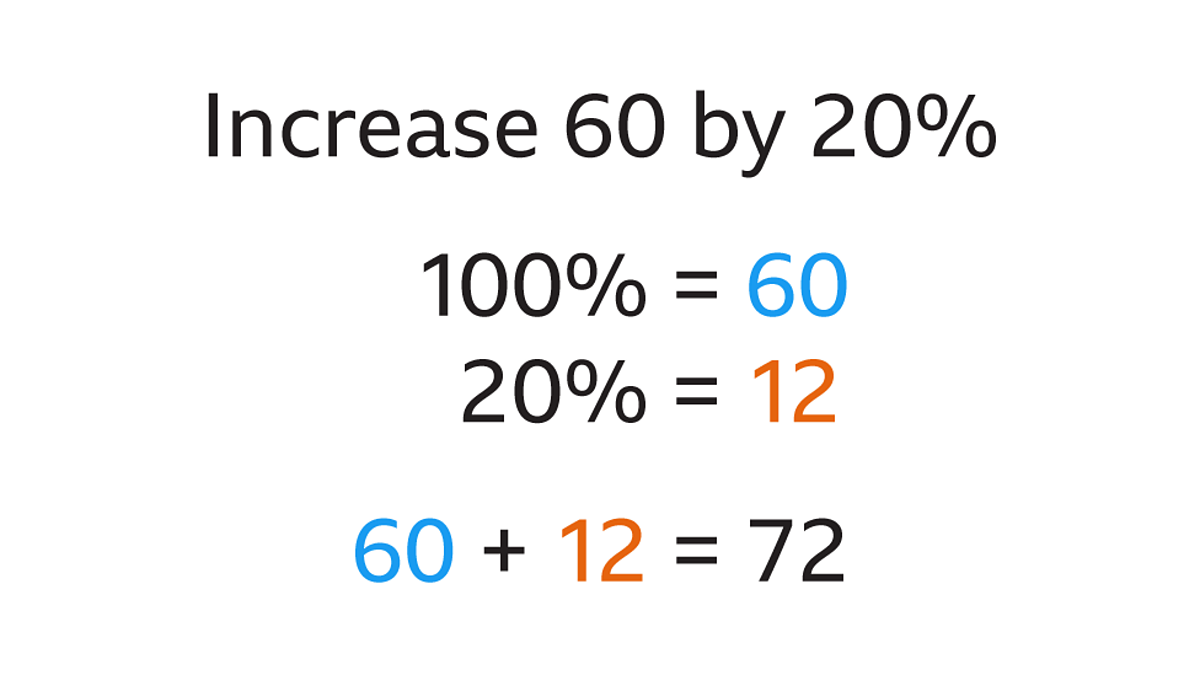
In many financial scenarios, such as retail discounts or tax-inclusive pricing, you need to work backward. If a high-end financial software package is on sale for $850 after a 15% discount, how do you find the original price?
To find the original value, you divide the current value by (1 – the discount rate in decimal form).
$850 / 0.85 = $1,000.
Understanding reverse percentages ensures that you are never misled by marketing tactics and can accurately assess the “real” value of assets and services.
Why Decimals and Fractions Matter in Finance
While we speak in percentages, most financial tools and spreadsheets operate in decimals. A 5% interest rate is 0.05. Misplacing a decimal point by even one position can lead to a 10x error in financial forecasting. Professional financial modeling requires the seamless transition between these formats to ensure that interest calculations and tax provisions are exact.
Evaluating Investment Performance and Growth
For investors, percentages are the primary metric for gauging success. Raw dollar amounts are often deceptive; a $1,000 gain is impressive on a $5,000 investment (20%) but negligible on a $1,000,000 portfolio (0.1%).
Calculating Return on Investment (ROI)
ROI is the gold standard for measuring the efficiency of an investment. To determine the percentage ROI, use the following formula:
[(Current Value – Original Cost) / Original Cost] × 100
If you purchased shares in an Index Fund for $10,000 and the value grew to $11,500, your capital gain is $1,500. Dividing $1,500 by the initial $10,000 gives you a 15% ROI. This percentage allows you to compare the performance of your stocks against other asset classes, such as real estate or bonds, to determine where your capital is most productive.
Compound Interest: The Percentage that Builds Wealth
Unlike simple interest, which is calculated only on the principal, compound interest is calculated on the principal plus the accumulated interest of previous periods. The “percentage” here becomes a powerful engine for exponential growth.
When evaluating a high-yield savings account or a 401(k), the Annual Percentage Yield (APY) is the crucial figure. It accounts for the frequency of compounding within a year, providing a more accurate picture of your earnings than a simple interest rate.
Dividend Yields and Portfolio Allocation
Dividend-seeking investors rely on the “Dividend Yield” percentage to determine the income potential of a stock. This is calculated by dividing the annual dividend per share by the current share price. Furthermore, percentages are used in asset allocation. A balanced portfolio might aim for a 60% equity and 40% fixed-income split. Determining these percentages helps investors manage risk and ensure they are not over-exposed to a single market sector.

Business Finance: Profitability and Margin Analysis
In the corporate world, determining percentages is a daily necessity for maintaining solvency and competitiveness. Profitability is rarely measured in total dollars; it is measured in “margins.”
Gross Profit Margin vs. Net Profit Margin
A business might generate millions in revenue, but if its costs are equally high, the business is failing.
- Gross Profit Margin: Calculated as [(Revenue – Cost of Goods Sold) / Revenue] × 100. This tells you how efficiently a company produces its products.
- Net Profit Margin: Calculated as [Net Income / Revenue] × 100. This is the “bottom line”—what remains after all operating expenses, interest, and taxes are paid.
Investors look for expanding margins as a sign of a healthy, scalable business model.
Markup vs. Margin: Avoiding Costly Errors
One of the most common mistakes in business finance is confusing markup with margin.
- Markup is the percentage added to the cost to reach a selling price. If an item costs $100 and you sell it for $150, the markup is 50%.
- Margin is the percentage of the selling price that is profit. In the same scenario, the $50 profit divided by the $150 selling price results in a 33.3% margin.
Failure to distinguish between these two can lead to pricing strategies that result in unexpected losses.
Break-Even Analysis
Determining the break-even point involves using percentages to understand the relationship between fixed costs and variable costs. By calculating the “Contribution Margin Percentage”—the percentage of each sale that contributes to covering fixed costs—a business owner can determine exactly how much volume is required to move from a loss to a profit.
Personal Finance Management and Debt Reduction
On an individual level, percentages provide a framework for financial discipline and debt elimination. Without these metrics, budgeting becomes a matter of guesswork rather than strategy.
Understanding APR and Interest Charges
When borrowing money—whether through a mortgage, car loan, or credit card—the Annual Percentage Rate (APR) is the most significant number. To understand the true cost of debt, you must be able to determine how the daily or monthly periodic interest rate is derived from the annual percentage. For a credit card with a 24% APR, the monthly interest percentage is 2%. Applying this 2% to a revolving balance allows you to see exactly how much of your payment is going toward interest versus the principal.
The 50/30/20 Budgeting Rule
Financial experts often recommend the 50/30/20 rule as a percentage-based blueprint for wealth management:
- 50% of income to “Needs” (housing, utilities, groceries).
- 30% of income to “Wants” (entertainment, dining out).
- 20% of income to “Financial Goals” (debt repayment, savings, investments).
By converting your spending into percentages, you can maintain your lifestyle regardless of whether your salary increases or decreases. It provides a scalable logic for financial health.
Tax Brackets and Effective Tax Rates
Determining your tax liability requires an understanding of progressive percentage brackets. Many people mistakenly believe that moving into a higher tax bracket means all their income is taxed at that higher rate. In reality, you must calculate the percentage for each “bucket” of income. Your “Effective Tax Rate” is the actual percentage of your total income that goes to the government, which is often significantly lower than your top marginal bracket.
Strategic Decision-Making with Percentages
The ability to calculate and interpret percentages is ultimately about making better choices in a volatile economic landscape.
Analyzing Market Volatility (Percentage Change)
When the stock market “drops 500 points,” it sounds catastrophic. However, if the market index is at 35,000, that is only a 1.4% change—a standard day of trading. Professional analysts always look at percentage change rather than point change. The formula for percentage change is:
[(New Value – Old Value) / Old Value] × 100
Using this formula prevents emotional reactions to market fluctuations and keeps your long-term strategy intact.
Inflation and Purchasing Power
Inflation is perhaps the most critical percentage in the world of money. If inflation is at 7% and your bank account is earning 0.05% interest, you are effectively losing 6.95% of your purchasing power every year. To determine your “Real Rate of Return,” you must subtract the inflation percentage from your nominal investment return. This calculation is vital for retirement planning, ensuring that the nest egg you build today will actually cover your costs of living decades from now.
Conclusion
Determining percentages is far more than a mathematical exercise; it is a vital tool for navigating the world of money. From the granular details of a credit card statement to the high-level analysis of corporate profitability, percentages provide the clarity needed to evaluate performance and plan for the future. By mastering these formulas and understanding their application in ROI, margins, and budgeting, you empower yourself to manage your finances with the precision and insight of a professional.
aViewFromTheCave is a participant in the Amazon Services LLC Associates Program, an affiliate advertising program designed to provide a means for sites to earn advertising fees by advertising and linking to Amazon.com. Amazon, the Amazon logo, AmazonSupply, and the AmazonSupply logo are trademarks of Amazon.com, Inc. or its affiliates. As an Amazon Associate we earn affiliate commissions from qualifying purchases.