
Purchasing a car is one of the most significant financial decisions many individuals make, second only to buying a home. The allure of a new or new-to-you vehicle can often overshadow the critical financial implications, leading many consumers to focus solely on the sticker price or the advertised monthly payment without fully understanding its underlying components. However, taking a proactive and informed approach to determine your car payment is paramount to ensuring financial stability and avoiding future stress. This article delves into the intricate factors that contribute to your car payment, offering a comprehensive guide to help you navigate the process with confidence and make a fiscally responsible decision within the realm of personal finance.

The journey to understanding your car payment begins not at the dealership, but with a thorough assessment of your financial health and a clear grasp of the various elements that combine to form that monthly obligation. From the vehicle’s price and your down payment to the intricacies of interest rates and loan terms, every variable plays a pivotal role. Moreover, smart financial planning extends beyond the loan itself, encompassing crucial additional costs like sales tax, registration, and, most importantly, insurance premiums, which are often overlooked but significantly impact your overall budget. By dissecting these components and employing smart financial tools, you can accurately project your expenses and choose a car payment that comfortably fits your lifestyle without compromising your other financial goals.
Understanding the Core Components of a Car Payment
To effectively determine your car payment, it’s essential to break it down into its fundamental elements. Each component interacts with the others, influencing the final monthly figure and the total cost of the vehicle over the loan’s lifetime.
Vehicle Price and Down Payment
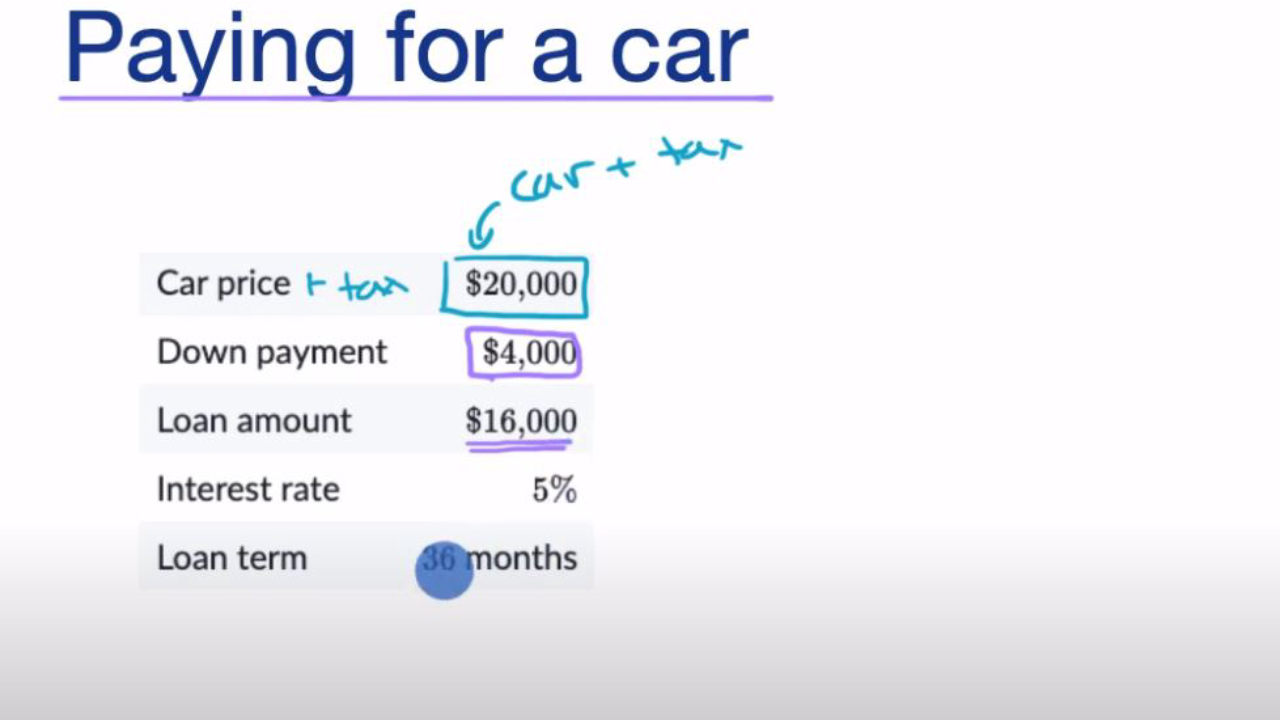
The journey to a car payment begins with the car’s actual price. This isn’t just the Manufacturer’s Suggested Retail Price (MSRP); it often involves negotiation, trade-in value, and various fees. The negotiated price of the vehicle forms the principal amount of your loan before any down payment is applied. A down payment is the initial amount of money you pay upfront toward the purchase of the car, directly reducing the amount you need to borrow. The larger your down payment, the smaller your loan principal will be, which in turn leads to lower monthly payments and less interest paid over the life of the loan. Financial experts often recommend a down payment of at least 10% to 20% for new cars and 10% for used cars, as it significantly improves your loan-to-value ratio, potentially unlocking better interest rates and providing a buffer against depreciation. When you trade in an old vehicle, its agreed-upon value also functions as a form of down payment, further reducing the amount you need to finance.
Loan Term (Length of the Loan)
The loan term, or the length of time you have to repay the loan, is a critical determinant of your monthly payment. Common loan terms range from 36 months (3 years) to 84 months (7 years), with 60 or 72 months being popular choices. A longer loan term typically results in lower monthly payments because the principal amount is stretched over more installments. However, this convenience comes at a cost. A longer term means you’ll be paying interest for a more extended period, leading to a higher total amount of interest paid over the life of the loan. For example, a $30,000 loan at 5% APR for 60 months might have a payment around $566, resulting in about $3,960 in total interest. The same loan stretched to 72 months could drop the payment to $483, but total interest would climb to around $4,776. Moreover, longer loan terms increase the risk of being “upside down” on your loan, meaning you owe more than the car is worth, especially given a car’s rapid depreciation in its early years.
Interest Rate (APR)
The interest rate, often expressed as Annual Percentage Rate (APR), is perhaps the most impactful factor in determining the total cost of your loan and, consequently, your monthly payment. The APR represents the annual cost of borrowing money, including the interest rate and certain fees. A lower APR directly translates to less interest paid over the life of the loan and lower monthly payments for the same principal and term. Your credit score is the most significant factor influencing the interest rate you qualify for; individuals with excellent credit typically receive the lowest rates, while those with lower scores will face higher rates to compensate lenders for increased risk. Other factors include current market interest rates, the specific lender (banks, credit unions, dealership financing), and even the loan term itself (shorter terms sometimes get slightly better rates). Even a percentage point difference in APR can amount to hundreds or thousands of dollars in total interest over a multi-year loan, underscoring the importance of shopping around for the best rate.
Beyond the Basics: Hidden Costs and Additional Factors
While the vehicle price, down payment, loan term, and interest rate form the backbone of your car payment calculation, several other costs can significantly impact your overall financial commitment to a vehicle. These often overlooked factors can inflate your monthly outgoings or require substantial upfront payments.
Sales Tax and Registration Fees
Almost every car purchase is subject to sales tax, which is calculated as a percentage of the vehicle’s purchase price. This tax varies significantly by state and even by local jurisdiction, so understanding the specific rate in your area is crucial. For instance, a 7% sales tax on a $30,000 car adds an extra $2,100 to the cost. In some cases, this amount can be rolled into your car loan, increasing your principal and thus your monthly payment and total interest paid. Alternatively, you might be required to pay it upfront. Beyond sales tax, there are also registration fees, license plate fees, and title fees that are mandatory for legal operation of the vehicle. These fees are usually paid annually or bi-annually and vary based on the vehicle type, age, and location. While often a smaller sum than sales tax, they are non-negotiable costs that must be factored into your total car ownership budget.
Insurance Premiums
Car insurance is not just a hidden cost; it’s a mandatory one in most places and can be a substantial monthly expense that often gets forgotten when calculating a “car payment.” The cost of your insurance premium is influenced by a multitude of factors, including the type of vehicle (make, model, year, safety features, theft rates), your driving record, age, gender, location, and the type and amount of coverage you choose (liability, collision, comprehensive, uninsured motorist, etc.). A sports car will almost certainly cost more to insure than a modest sedan. It is highly advisable to obtain insurance quotes before finalizing your car purchase. Doing so prevents sticker shock and allows you to factor this essential cost into your total monthly transportation budget. Sometimes, a seemingly great deal on a car can be completely negated by prohibitively high insurance premiums, especially for younger drivers or those with less-than-perfect driving histories.
Extended Warranties and Add-ons
Dealerships often present a variety of add-ons and extended warranties during the final stages of a car purchase. These can include paint protection, fabric guards, VIN etching, gap insurance, and various extended service contracts beyond the manufacturer’s warranty. While some, like gap insurance (which covers the difference between what you owe on your loan and the car’s actual value if it’s totaled), might offer genuine value in specific situations, many others can be overpriced and unnecessary. The common tactic is to roll the cost of these items into your car loan, which, while making the monthly payment seem only slightly higher, can add thousands to your overall debt and significantly increase the total interest paid. It’s crucial to scrutinize each add-on, understand its true cost and benefit, and be prepared to decline anything you don’t genuinely need or can acquire more affordably elsewhere. Always consider whether the peace of mind offered by an extended warranty justifies its cost, especially if the car has a strong reliability record or you have a robust emergency fund.
Tools and Strategies for Calculating Your Car Payment
Armed with an understanding of the various components, you can now employ practical tools and strategies to accurately estimate and secure a car payment that aligns with your financial capacity.
Online Car Payment Calculators
One of the most accessible and useful tools at your disposal is the online car payment calculator. These calculators are widely available on bank websites, automotive portals, and financial planning sites. To use one effectively, you’ll input key variables: the vehicle’s price, your anticipated down payment, the estimated interest rate (APR), and your desired loan term. The calculator will then instantly provide an estimated monthly payment. While highly convenient for initial budgeting and comparing different scenarios (e.g., how a larger down payment or a shorter term impacts your payment), remember that these are estimates. They typically don’t include sales tax, registration fees, or other dealer-specific charges unless explicitly stated. Always use multiple calculators to cross-reference results and factor in all additional costs manually to get the most accurate picture.
Pre-Approval and Shopping for Rates
Perhaps the most potent strategy for securing a favorable car payment is to get pre-approved for a loan before you even set foot in a dealership. By applying for a loan with your bank, credit union, or online lenders, you’ll receive a pre-approval letter specifying the maximum loan amount, the interest rate you qualify for, and the terms. This empowers you in several ways:
- Know your budget: You’ll know precisely how much car you can afford without being swayed by dealership sales tactics.
- Negotiating leverage: You arrive at the dealership with your own financing, allowing you to negotiate on the car’s price as a cash buyer. Dealerships often mark up interest rates; having an outside offer allows you to challenge their financing offer or simply use your pre-approval.
- Multiple offers: Shopping for rates from several lenders can lead to better terms. Each “hard inquiry” on your credit report for auto loans within a short period (typically 14-45 days, depending on the scoring model) is usually counted as a single inquiry, so it pays to compare.
The 20/4/10 Rule (and other Budgeting Rules)
For a holistic approach to car budgeting, many financial advisors recommend rules of thumb like the “20/4/10 rule.” This guideline suggests:
- 20% Down Payment: Put at least 20% down to reduce your loan amount and combat immediate depreciation.
- 4-Year Loan Term: Aim for a loan term no longer than four years (48 months) to minimize total interest paid and avoid being upside down on your loan.
- 10% of Gross Income: Your total monthly car expenses (loan payment, insurance, fuel, maintenance) should not exceed 10% of your gross monthly income.
While these rules are guidelines and can be adjusted based on individual financial situations (e.g., for very reliable, low-depreciation used cars, a slightly longer term might be acceptable), they provide an excellent framework for keeping your car purchase affordable and sustainable within your overall personal finance strategy.
Budgeting for Your Car Payment and Total Ownership Costs
Determining the car payment itself is only one part of the equation. A truly financially savvy decision requires budgeting for the entire spectrum of vehicle ownership costs, ensuring your new ride doesn’t become a burden.
Assessing Your Monthly Budget
Before committing to any car payment, take an honest look at your complete monthly budget. Map out all your income sources and fixed expenses (rent/mortgage, utilities, existing loan payments) and variable expenses (groceries, entertainment, personal care). Subtracting your existing expenses from your net income reveals how much disposable income you genuinely have available for a car payment and related costs. It’s crucial not to stretch your budget too thin. A car payment should leave room for savings, investments, emergency funds, and other financial goals. A higher car payment often means sacrificing other essential areas of your financial life. Consider the opportunity cost: what else could that money be doing for you if not going towards an expensive car?

Accounting for Ongoing Expenses
Your car payment is just the tip of the iceberg when it comes to vehicle expenses. A comprehensive budget must also account for all ongoing costs of ownership:
- Fuel: Estimate your monthly fuel costs based on your driving habits and the car’s fuel efficiency (MPG). Gas prices fluctuate, so factor in some buffer.
- Maintenance and Repairs: Every car requires regular maintenance (oil changes, tire rotations, brake service) and, inevitably, repairs. Research typical maintenance schedules and costs for the specific make and model you’re considering. Newer cars might have lower immediate maintenance costs, but parts can be more expensive. Older cars might have lower initial costs but higher repair likelihood.
- Tires: Tires wear out and need replacing, which can be a significant expense, especially for larger vehicles or performance tires.
- Parking/Tolls: If you live or work in an urban area, parking fees and tolls can add up quickly.
- Registration and Inspections: Don’t forget annual renewal fees and any mandatory safety or emissions inspections.
By comprehensively accounting for all these ongoing expenses, alongside your monthly loan and insurance payments, you’ll arrive at a true total cost of car ownership. This holistic financial picture is essential for making an informed decision that supports your overall financial well-being rather than draining it.
In conclusion, determining your car payment is far more intricate than simply accepting the figure presented by a salesperson. It involves a meticulous evaluation of the vehicle’s price, your down payment, the loan term, and the interest rate, all while factoring in crucial additional costs such as sales tax, registration fees, and, most importantly, insurance premiums. By leveraging online calculators, diligently shopping for the best interest rates through pre-approval, and adhering to sound budgeting principles like the 20/4/10 rule, you empower yourself to make a financially intelligent decision. Remember to budget not just for the monthly loan payment, but for all the ongoing expenses of car ownership—fuel, maintenance, and potential repairs. Taking this comprehensive, insightful approach ensures that your new vehicle remains a source of convenience and enjoyment, rather than an unforeseen financial burden, contributing positively to your personal financial health.
aViewFromTheCave is a participant in the Amazon Services LLC Associates Program, an affiliate advertising program designed to provide a means for sites to earn advertising fees by advertising and linking to Amazon.com. Amazon, the Amazon logo, AmazonSupply, and the AmazonSupply logo are trademarks of Amazon.com, Inc. or its affiliates. As an Amazon Associate we earn affiliate commissions from qualifying purchases.