
In the intricate world of finance, where numbers dictate decisions and trends shape futures, the ability to accurately measure change is paramount. Whether you’re a seasoned investor tracking portfolio performance, a business owner analyzing quarterly revenue, or an individual simply trying to understand a salary raise, calculating percentage increase is a fundamental skill. It’s not merely a mathematical exercise; it’s a critical tool for understanding growth, evaluating progress, and making informed financial choices. This guide demystifies the process, providing a clear, step-by-step approach to calculating percentage increase and illustrating its diverse applications within the realm of money.
The Fundamental Concept: Understanding Growth and Change
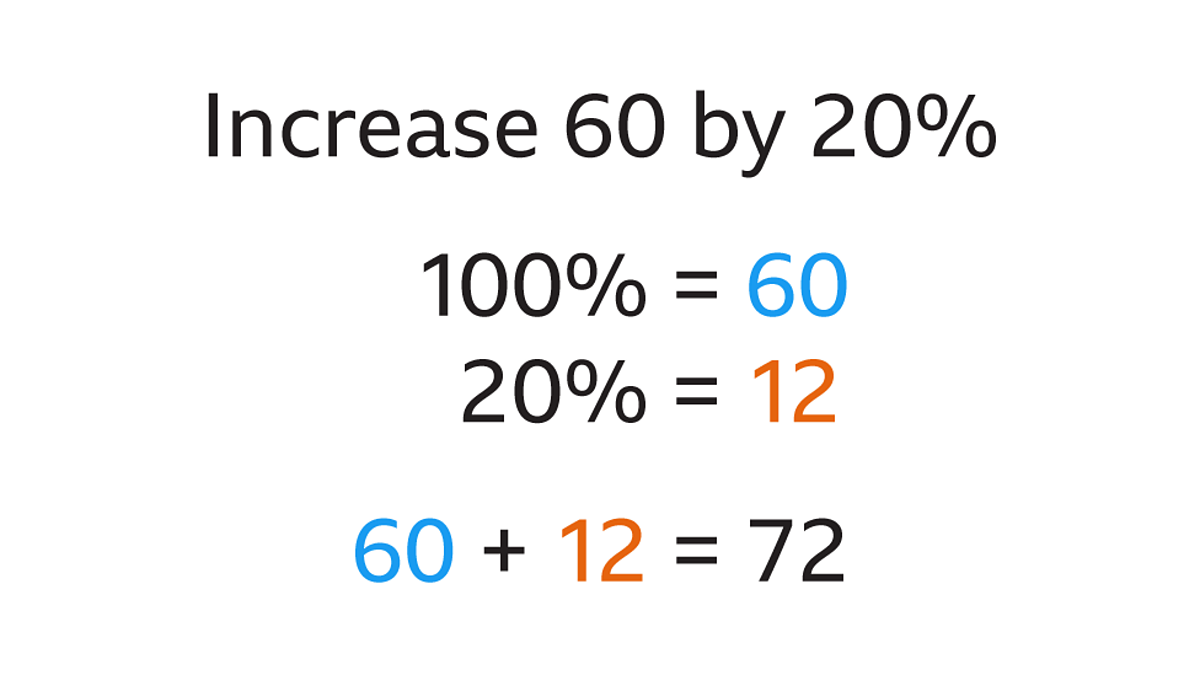
At its core, percentage increase quantifies the relative change between two values over time, expressing that change as a proportion of the original value. Unlike absolute change, which simply tells you the numerical difference, percentage increase provides context, allowing for meaningful comparisons even when the base numbers vary wildly. It translates raw growth into an easily digestible, standardized metric that everyone can understand.
Why Percentage Increase Matters in Finance
For anyone dealing with money, understanding growth is synonymous with understanding opportunity and risk. Percentage increase allows you to:
- Evaluate Performance: Is your investment yielding satisfactory returns? How much has your property value appreciated?
- Track Trends: Are your monthly expenses rising faster than your income? Is your business revenue growing steadily quarter-over-quarter?
- Make Informed Decisions: Should you accept a job offer based on the percentage increase in salary? Is a particular asset increasing in value at a rate that justifies its risk?
- Compare Apples to Oranges: A $100 increase on a $1,000 investment is a 10% gain, while a $100 increase on a $10,000 investment is only a 1% gain. Percentage increase provides the common language for comparison.
Without this metric, financial analysis would be a confusing jumble of absolute figures, making it nearly impossible to gauge true progress or regression in a relative sense.
Distinguishing Absolute vs. Relative Change
Before diving into the calculation, it’s crucial to grasp the difference between absolute and relative change:
- Absolute Change: This is the straightforward numerical difference between the final value and the initial value. If an investment grew from $100 to $120, the absolute change is $20. While simple, it lacks context. Is $20 a good increase? It depends on the starting point.
- Relative Change (Percentage Increase): This takes the absolute change and expresses it as a proportion of the original value, then multiplies by 100 to convert it into a percentage. Using the same example, ($20 / $100) * 100% = 20%. This tells us the investment grew by 20%, which is a much more informative metric.
In finance, relative change, specifically percentage increase, is almost always the preferred metric for assessing growth, as it standardizes the comparison across different scales.
Common Financial Scenarios Requiring Percentage Increase
From personal budgeting to corporate mergers, percentage increase is omnipresent:
- Investment Returns: Calculating the annual growth rate of stocks, bonds, or mutual funds.
- Salary Increases: Determining the true impact of a raise on your take-home pay.
- Inflation Rates: Understanding how much the cost of living has increased over a period.
- Business Growth: Measuring the increase in sales, profits, or market share.
- Budget Variance: Tracking how much actual spending has deviated from planned spending.
These are just a few examples; the utility of percentage increase extends to almost every corner of financial analysis.
The Core Formula: Step-by-Step Calculation
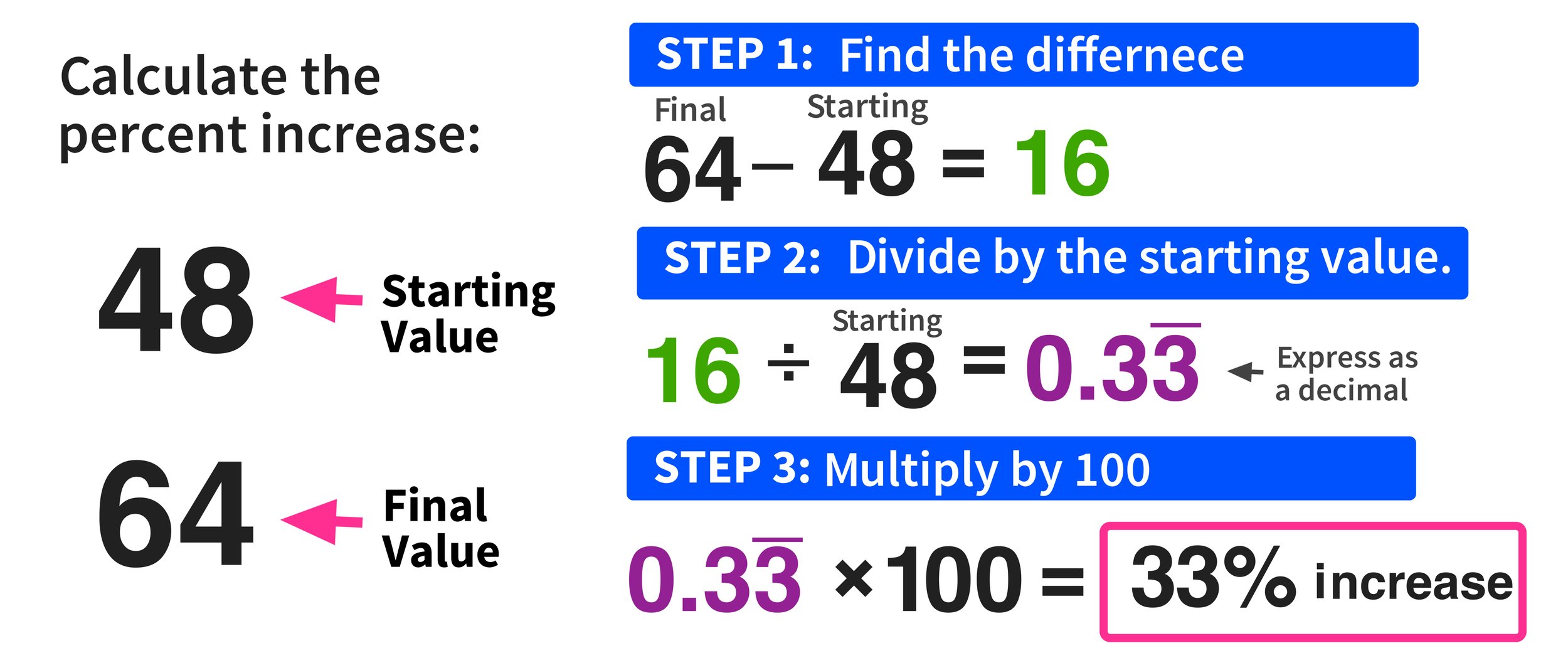
Calculating percentage increase is a straightforward process once you understand the underlying formula and steps. It relies on two key pieces of information: the starting value and the ending value.
The general formula for percentage increase is:
$$ text{Percentage Increase} = left( frac{text{Ending Value} – text{Starting Value}}{text{Starting Value}} right) times 100% $$
Let’s break down each component:
Identifying Your Starting and Ending Values
This is the foundational step. You need to clearly define the two points in time or two values you are comparing.
- Starting Value (or Original Value): This is the initial number, the baseline from which the change occurred. It could be last year’s revenue, your initial investment amount, or your previous salary.
- Ending Value (or New Value): This is the subsequent number, the value after the change has taken place. It could be this year’s revenue, your current investment value, or your new salary.
Example: If your savings account balance went from $5,000 to $5,300:
- Starting Value = $5,000
- Ending Value = $5,300
Subtracting to Find the Absolute Change
The first part of the calculation involves finding the absolute difference between your ending and starting values. This tells you the raw numerical increase.
$$ text{Absolute Change} = text{Ending Value} – text{Starting Value} $$
Using our example:
- Absolute Change = $5,300 – $5,000 = $300
This $300 represents the actual dollar amount your savings increased.
Dividing by the Original Value
Next, you take the absolute change and divide it by the original (starting) value. This step converts the absolute change into a decimal representing the proportional change.
$$ text{Proportional Change} = frac{text{Absolute Change}}{text{Starting Value}} $$
Using our example:
- Proportional Change = $300 / $5,000 = 0.06
This 0.06 means that the increase was 6 hundredths of the original value.
Multiplying by 100 for the Percentage
The final step is to convert the proportional change (decimal) into a percentage by multiplying it by 100. This makes the figure easier to interpret.

$$ text{Percentage Increase} = text{Proportional Change} times 100% $$
Using our example:
- Percentage Increase = 0.06 * 100% = 6%
Therefore, your savings account balance increased by 6%. This step-by-step method ensures accuracy and clarity in understanding how the percentage is derived.
Practical Applications Across Personal Finance
The percentage increase isn’t just an abstract mathematical concept; it’s a vital tool for managing and understanding your personal financial journey. From saving for retirement to tracking daily expenses, it provides invaluable insights.
Tracking Investment Growth (Stocks, Mutual Funds, Retirement Accounts)
Perhaps one of the most common applications, percentage increase is essential for assessing how well your investments are performing.
- Scenario: You invested $10,000 in a mutual fund, and a year later, its value is $11,200.
- Calculation: (($11,200 – $10,000) / $10,000) * 100% = 12%
- Insight: Your mutual fund generated a 12% return over the year. This allows you to compare its performance against benchmarks, other investments, or your financial goals.
Analyzing Salary Raises and Income Growth
Understanding the true impact of a salary increase or growth in your side hustle income requires percentage increase.
- Scenario: Your annual salary increased from $60,000 to $63,000.
- Calculation: (($63,000 – $60,000) / $60,000) * 100% = 5%
- Insight: You received a 5% raise. This figure can be compared against inflation rates to determine if your purchasing power has truly increased, or against industry averages.
Understanding Budget Changes and Expense Increases
Monitoring your expenses is crucial for financial health. Percentage increase helps identify areas where spending is rising disproportionately.
- Scenario: Your monthly grocery bill went from $400 last year to $460 this year.
- Calculation: (($460 – $400) / $400) * 100% = 15%
- Insight: Your grocery expenses have increased by 15%. This significant jump might prompt you to re-evaluate shopping habits or look for more cost-effective options, especially if your income hasn’t increased at a similar rate.
Evaluating Loan Interest Rates and Savings Returns
Whether you’re borrowing or saving, percentage increase frames the cost or benefit.
- Scenario: A savings account advertises an Annual Percentage Yield (APY) of 2.5%. This is a direct measure of the percentage increase your money will experience over a year due to interest. Similarly, a loan’s Annual Percentage Rate (APR) signifies the percentage cost of borrowing.
- Insight: These percentages allow for direct comparison between different financial products, helping you choose the most advantageous options for your money.
Business Finance: Beyond Personal Growth
While invaluable for personal finance, percentage increase takes on an even broader and more strategic role in the business world. It’s a cornerstone for evaluating performance, setting goals, and informing critical business decisions.
Measuring Revenue and Profit Growth
For any business, the health and trajectory are often encapsulated by the growth of its top-line (revenue) and bottom-line (profit).
- Scenario: A company’s quarterly revenue grew from $1,500,000 to $1,800,000.
- Calculation: (($1,800,000 – $1,500,000) / $1,500,000) * 100% = 20%
- Insight: The company experienced a strong 20% increase in revenue. This metric is vital for investors, management, and stakeholders to gauge market acceptance and operational effectiveness. Similarly, analyzing profit increase helps understand efficiency and profitability trends.
Assessing Marketing Campaign ROI and Sales Increases
Marketing departments live and die by their ability to generate measurable returns. Percentage increase is key to demonstrating the effectiveness of campaigns.
- Scenario: A marketing campaign led to an increase in monthly website leads from 500 to 750.
- Calculation: ((750 – 500) / 500) * 100% = 50%
- Insight: The campaign resulted in a 50% increase in leads, providing concrete evidence of its success and justifying further investment or refinement.
Tracking Operational Efficiency Improvements
Businesses constantly seek to improve efficiency, and percentage increase helps quantify these efforts.
- Scenario: A new production process reduced the time to manufacture a widget from 10 minutes to 8 minutes. (This is a decrease in time, but we can express the improvement as a percentage). Or, if we consider output, if output increased from 6 widgets/hour to 7.5 widgets/hour.
- Calculation: ((7.5 – 6) / 6) * 100% = 25% increase in output per hour.
- Insight: The new process led to a 25% improvement in efficiency, directly impacting production capacity and potentially reducing costs.
Financial Ratios and Performance Benchmarking
Many financial ratios rely on percentage change to provide context and enable comparisons across industries or over time. For example, comparing year-over-year growth in assets, equity, or specific expense lines as a percentage helps identify trends, benchmark against competitors, and assess overall financial health. For instance, an increase in current assets may look good, but if it lags behind industry average increases, it might signal an area for improvement.
Common Pitfalls and Advanced Considerations
While the core formula for percentage increase is simple, certain scenarios and advanced applications require a deeper understanding to avoid misinterpretations.
The Impact of Negative Starting Values
The standard percentage increase formula assumes a positive starting value. If your starting value is zero or negative, the formula breaks down or provides misleading results.
- Zero Starting Value: If you start with $0 and gain $100, the percentage increase is mathematically undefined (division by zero). In practical terms, any positive gain from zero is an “infinite” increase.
- Negative Starting Value: If a company’s profit went from -$100 (a loss) to $50 (a profit), the standard formula ( (50 – (-100)) / -100 ) * 100% = (150 / -100) * 100% = -150%. This can be confusing. It’s often clearer to simply state the absolute change and acknowledge the shift from negative to positive.
Chained vs. Simple Percentage Increases (Compound Growth)
When dealing with multiple periods, it’s crucial to distinguish between simple and chained (compound) increases.
- Simple Increase: If an investment grows by 10% in Year 1 and then another 10% in Year 2, a simple addition might suggest a 20% overall increase. This is incorrect.
- Chained (Compound) Increase: The 10% gain in Year 2 is calculated on the new increased value. If you start with $100:
- Year 1: $100 * (1 + 0.10) = $110
- Year 2: $110 * (1 + 0.10) = $121
- Total Increase: (($121 – $100) / $100) * 100% = 21%
This concept of compounding is fundamental to understanding investment growth and is critical for long-term financial planning.
Annualized Percentage Increase for Irregular Periods
Sometimes, you need to compare growth over different timeframes (e.g., a 6-month period vs. a 15-month period). To make these comparable, you can annualize the percentage increase.
- Formula for Annualization:
$$ text{Annualized Increase} = left( left( 1 + frac{text{Percentage Increase}}{text{Number of Periods}} right)^{frac{12}{text{Number of Months}}} – 1 right) times 100% $$
(This is a simplified approach, actual annualization might be more complex for investments). - Example: If your investment grew by 5% over 3 months, the simple annualization (compounded) would be significantly higher. This ensures that different periods are brought to a common annual standard for comparison.
Utilizing Financial Tools for Accuracy (Spreadsheets, Calculators)
While understanding the manual calculation is essential, for practical purposes, especially with complex data sets or frequent calculations, leveraging technology is wise.
- Spreadsheets (e.g., Excel, Google Sheets): These are indispensable. You can set up formulas that automatically calculate percentage increase as you input new data. This is particularly useful for tracking budgets, investment portfolios, or business metrics over time.
- Financial Calculators: Many online or dedicated financial calculators include percentage functions, simplifying the process.
- Online Tools: Numerous websites offer quick percentage increase calculators.
These tools minimize human error and expedite the analytical process, allowing you to focus on interpreting the data rather than just crunching numbers. Mastering the calculation of percentage increase is more than just a mathematical skill; it’s a foundational financial literacy component that empowers individuals and businesses to navigate the complexities of money with greater clarity and confidence.
aViewFromTheCave is a participant in the Amazon Services LLC Associates Program, an affiliate advertising program designed to provide a means for sites to earn advertising fees by advertising and linking to Amazon.com. Amazon, the Amazon logo, AmazonSupply, and the AmazonSupply logo are trademarks of Amazon.com, Inc. or its affiliates. As an Amazon Associate we earn affiliate commissions from qualifying purchases.