
In the world of commerce, a business plan is often described as a roadmap, but for the modern entrepreneur or seasoned executive, it is more accurately described as a financial blueprint. While a vision may ignite a project, it is the fiscal architecture that sustains it. Creating a business plan is the critical process of translating abstract ideas into quantifiable assets, measurable milestones, and scalable revenue models. Whether you are seeking venture capital, applying for a commercial loan, or bootstrapping a side hustle into a full-time enterprise, your business plan serves as the ultimate proof of concept for your venture’s financial viability.

To create a business plan that commands the attention of investors and secures your financial future, you must look beyond the product and focus on the economics of the enterprise. This guide explores how to build a robust business plan through the lens of business finance, capital management, and long-term value creation.
The Financial Foundation: Why Your Business Plan is a Fiscal Roadmap
A business plan is primarily a document of accountability. Before a single dollar is spent on operations, the plan must demonstrate that the proposed business model can generate a return on investment (ROI) that justifies the risk. In the “Money” niche, the business plan is not just about what you will sell, but how that sale translates into sustainable wealth.
Defining Your Business Model and Revenue Streams
The core of any financially sound business plan is a clear definition of the revenue model. You must articulate exactly how the company intends to generate income. Is it a high-volume, low-margin retail model, or a low-volume, high-margin consultancy? Perhaps it is a recurring revenue model based on subscriptions, which offers greater predictability for cash flow management.
In this section of your plan, you should detail the “Unit Economics”—the direct revenues and costs associated with a single unit of sale. Understanding your Customer Acquisition Cost (CAC) in relation to the Lifetime Value (LTV) of a customer is essential. If your LTV is not significantly higher than your CAC, your business plan will reveal a structural financial flaw that must be addressed before seeking capital.
Analyzing Market Economics and Pricing Strategies
Financial success does not happen in a vacuum. Your business plan must include a rigorous analysis of the market’s economic landscape. This involves evaluating the total addressable market (TAM) and determining what percentage of that market you can realistically capture.
Pricing is one of the most powerful levers in business finance. Your plan should justify your pricing strategy—whether it is cost-plus pricing, value-based pricing, or competitive pricing—and demonstrate how this strategy impacts your gross margins. A sophisticated plan will also include a “Sensitivity Analysis,” showing how fluctuations in market prices or supply chain costs could impact your bottom line.
Structuring Your Financial Projections
If the executive summary is the hook of your business plan, the financial projections are the heart. Investors and lenders will spend the majority of their time scrutinizing your tables and charts. These projections should typically cover three to five years and must be rooted in realistic assumptions rather than blind optimism.
The Income Statement (P&L) Forecast
The Pro Forma Income Statement, or Profit and Loss (P&L) statement, is a snapshot of your expected profitability over time. It lists your projected revenues minus the Cost of Goods Sold (COGS) to arrive at a gross profit. From there, you subtract operating expenses (OPEX)—such as rent, salaries, and utilities—to calculate your Net Income.
A professional business plan highlights the “Operating Leverage” of the company. As your revenue grows, do your costs stay fixed, allowing for expanding margins? Highlighting the point at which the business becomes profitable is a key milestone for any financial stakeholder.
Cash Flow Analysis: The Lifeblood of Your Venture
Profit is an accounting concept; cash is a reality. Many profitable businesses fail because they run out of liquid capital. Your business plan must include a detailed Cash Flow Statement that tracks the timing of cash inflows and outflows.
This section should address “Burn Rate”—the rate at which the company spends its initial capital before generating positive cash flow from operations. By identifying the “Cash Runway,” or how many months the business can survive without additional funding, you provide a clear picture of the company’s financial health and the urgency of its milestones.
Balance Sheet Projections and Asset Management
The projected Balance Sheet provides a view of the company’s net worth at specific points in time. It details assets (what the company owns), liabilities (what it owes), and equity (the owners’ stake). In a finance-focused business plan, showing how you will manage your assets—such as inventory turnover or accounts receivable—is crucial. Efficient asset management reduces the need for external financing and increases the overall valuation of the company.

Funding and Capital Structure
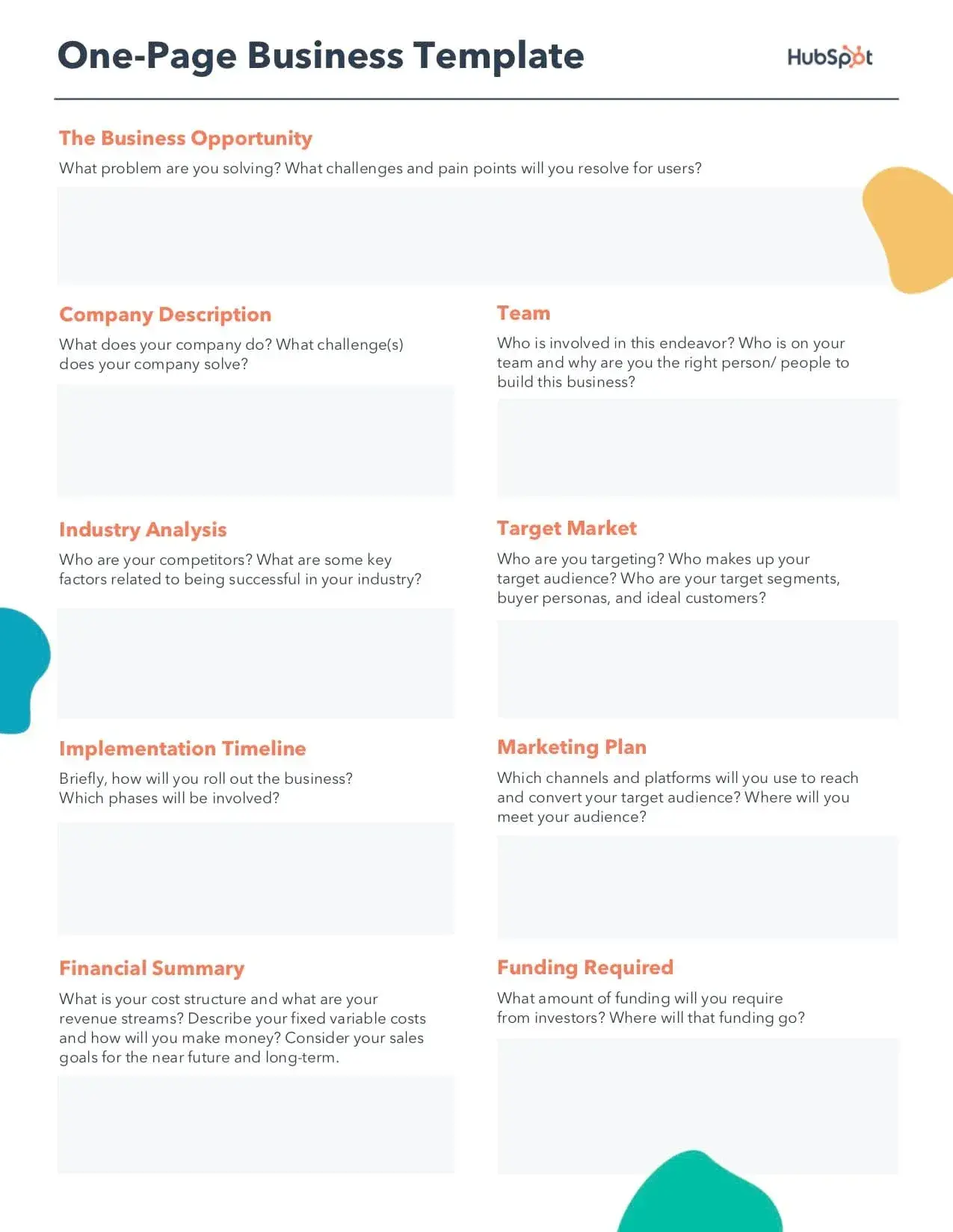
Once you have established how much money you will make, you must address how much money you need to get started. This section of the business plan outlines your capital requirements and the methods you will use to secure that capital.
Identifying Capital Requirements
Be specific about how much funding you are seeking and exactly how it will be allocated. Avoid vague categories like “Marketing” or “Operations.” Instead, break it down: $150,000 for initial inventory, $200,000 for R&D, and $100,000 for a six-month reserve of working capital.
Investors want to see that you are asking for enough money to reach the next major valuation milestone, but not so much that you are unnecessarily diluting their equity or over-leveraging the company with debt.
Debt vs. Equity: Choosing the Right Financing Path
Your business plan should signal your preferred capital structure. Will you seek “Equity Financing” by selling shares to angel investors or VCs? This preserves cash flow because there are no monthly interest payments, but it means giving up a portion of future profits and control.
Alternatively, will you pursue “Debt Financing” through SBA loans or lines of credit? This allows you to retain full ownership, but it places a fixed burden on your monthly cash flow. A sophisticated financial plan may even suggest a “Mezzanine” approach or “Convertible Notes,” which blend elements of both.
Risk Mitigation and Contingency Planning
In finance, risk and reward are inextricably linked. A professional business plan does not ignore risks; it quantifies them and presents a plan to mitigate them. This demonstrates to potential backers that you are a disciplined steward of capital.
Identifying Financial Risks and Market Volatility
What happens if interest rates rise? What if a key supplier increases prices by 20%? What if the sales cycle is twice as long as expected? Your plan should identify these financial risks and explain the “Margin of Safety” built into your projections. Diversifying revenue streams or securing long-term contracts can be presented as strategies to stabilize income against market volatility.
Creating a Break-Even Analysis
One of the most important figures in your business plan is the “Break-Even Point.” This is the specific volume of sales at which total revenue equals total costs—the point where the business stops losing money and starts making it. Calculating this requires a deep understanding of your fixed costs versus variable costs. Showing a clear, attainable path to the break-even point reduces the perceived risk for any investor.
Presenting to Investors: Speaking the Language of ROI
The final goal of your business plan is often to secure a “Yes” from a financial decision-maker. To do this, you must speak the language of finance: Internal Rate of Return (IRR), Net Present Value (NPV), and Exit Multiples.
Crafting an Irresistible Executive Summary for Lenders
While the executive summary covers the entire business, its financial tone is what closes the deal. It should succinctly state the funding requirement, the intended use of funds, the projected growth rate, and the expected return for the investor. If a lender or investor cannot see the potential for a 5x or 10x return (in the case of equity) or a 1.25x debt-service coverage ratio (in the case of a loan) within the first two pages, they may not read the rest.
Exit Strategies and Long-term Value Creation
For many investors, the most important part of the business plan is the end. How will they get their money back? Your plan should outline potential exit strategies: Is the goal an Initial Public Offering (IPO)? A strategic acquisition by a larger competitor? Or a long-term dividend-paying entity?
By detailing the “Exit Multiple”—how the company’s value might be calculated based on its EBITDA (Earnings Before Interest, Taxes, Depreciation, and Amortization) at the time of sale—you provide a clear target for success. This focus on the “end game” proves that you are not just building a product, but building a valuable financial asset.
Creating a business plan is a rigorous exercise in financial discipline. By focusing on revenue models, detailed projections, capital structure, and risk mitigation, you transform a simple idea into a professional investment vehicle. In the world of money, clarity is currency; the more precisely you can map out your fiscal future, the more likely you are to achieve it.
aViewFromTheCave is a participant in the Amazon Services LLC Associates Program, an affiliate advertising program designed to provide a means for sites to earn advertising fees by advertising and linking to Amazon.com. Amazon, the Amazon logo, AmazonSupply, and the AmazonSupply logo are trademarks of Amazon.com, Inc. or its affiliates. As an Amazon Associate we earn affiliate commissions from qualifying purchases.