
A business plan is more than a simple document; it is the financial and operational blueprint of a commercial venture. For entrepreneurs and investors alike, the plan serves as a roadmap that navigates the complexities of market entry, capital allocation, and long-term profitability. Whether you are seeking venture capital, a bank loan, or simply a structured path to growth, a well-constructed business plan bridges the gap between a conceptual idea and a solvent, thriving enterprise.
In the world of finance and business management, the plan acts as a stress test for your assumptions. It forces you to look at the hard numbers—your burn rate, your customer acquisition costs, and your projected margins—before you risk actual capital. The following steps provide a comprehensive framework for building a business plan rooted in financial logic and strategic foresight.

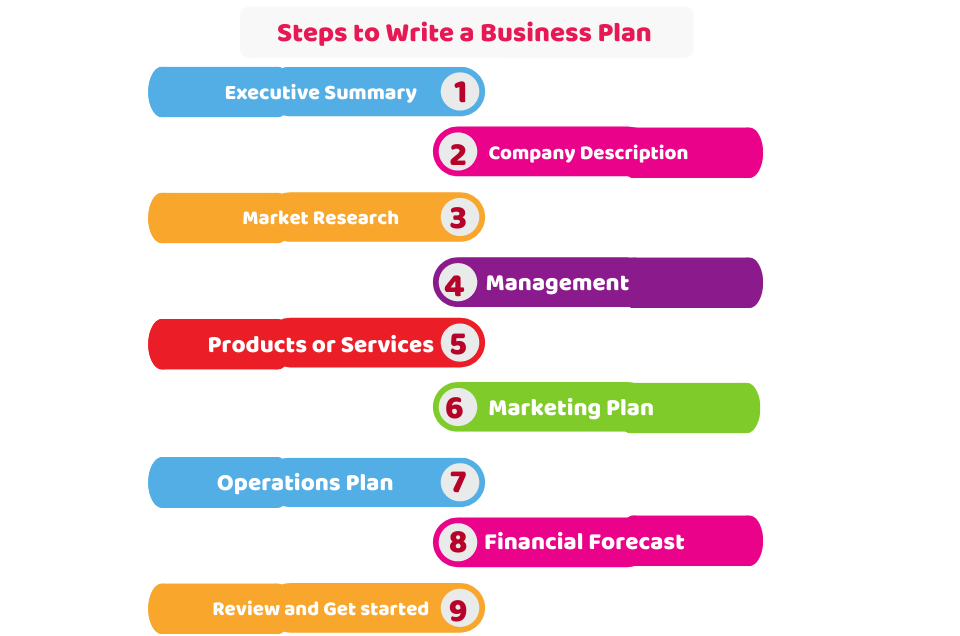
Defining the Financial Vision: The Executive Summary and Company Overview
The first step in creating a business plan is articulating the value proposition through the lens of financial viability. The Executive Summary is often considered the most critical section because it is the first—and sometimes only—part an investor or lender reads. It must concisely summarize the business model, the funding requirements, and the anticipated return on investment.
A common mistake is making this section overly descriptive without addressing the “money” aspect. A professional executive summary should highlight the specific problem the business solves and the size of the financial opportunity it addresses. It should clearly state how much capital is needed and what that capital will achieve in terms of revenue milestones.
Following the summary, the Company Overview provides the structural context. This section details the legal structure of the entity (e.g., LLC, C-Corp, or S-Corp), which has significant implications for tax liability and capital raising. It also outlines the ownership structure, identifying the key stakeholders and their financial interests. This transparency is vital for establishing credibility with external financial partners.
Market Dynamics and Competitive Financial Positioning
No business operates in a vacuum. To project future earnings, you must first understand the economic environment of your industry. This requires a deep dive into market analysis, focusing on the Total Addressable Market (TAM), the Serviceable Addressable Market (SAM), and the Serviceable Obtainable Market (SOM).
Identifying the Total Addressable Market (TAM)
Investors want to see the “ceiling” of your opportunity. The TAM represents the total revenue opportunity available if your product or service achieved 100% market share. By quantifying this figure through bottom-up or top-down analysis, you demonstrate that the niche you are entering is large enough to sustain growth and provide an eventual exit or dividend for shareholders.
Competitive Benchmarking and Margin Analysis
Understanding your competitors is not just about their product features; it is about their financial health and pricing power. Analyzing the gross margins of established players in your sector allows you to set realistic benchmarks for your own venture. If the industry average gross margin is 40% and you are projecting 70%, you must provide a rigorous financial justification for that efficiency. This section of the plan should articulate your “moat”—the competitive advantage that protects your profit margins from being eroded by new entrants.
Developing a Sustainable Revenue Model and Operational Strategy

The core of any business plan is the revenue model. This explains exactly how the business will generate cash flow. In modern finance, this often moves beyond simple unit sales to include subscription models, licensing, or tiered service agreements. Each model carries different implications for cash flow timing and scalability.
Cost of Goods Sold (COGS) and Gross Margin Targets
To arrive at a net profit, you must first master your Cost of Goods Sold (COGS). This includes the direct costs attributable to the production of the goods sold by a company. For a service business, this might include labor hours; for a manufacturing firm, it includes raw materials and factory overhead. By isolating these costs, you can calculate your Gross Margin—the most fundamental indicator of your business’s inherent profitability. A plan that fails to account for fluctuating supply chain costs or labor inflation is a plan that invites financial instability.
Customer Acquisition Costs (CAC) and Lifetime Value (LTV)
In the digital economy, the relationship between CAC and LTV is the ultimate arbiter of success. Your business plan must outline how much it costs to acquire a single customer through marketing and sales efforts. If your CAC exceeds the LTV (the total net profit you expect from a customer over the duration of your relationship), the business is fundamentally unscalable. A robust plan includes a strategy to optimize this ratio, aiming for an LTV that is at least three times the CAC to ensure long-term solvency and reinvestment capability.
The Quantitative Core: Crafting Detailed Financial Projections
The financial section is the engine room of the business plan. This is where qualitative descriptions are converted into quantitative data. Most professional plans require a three-to-five-year forecast, including an income statement, a cash flow statement, and a balance sheet.
The Income Statement (Profit and Loss)
The Income Statement provides a snapshot of your expected revenues and expenses over a specific period. It culminates in the “bottom line” or Net Income. For startups, the focus is often on the “path to profitability.” Your projections should show a clear timeline of when the company expects to move from a net loss to a net profit. This requires realistic assumptions about sales growth, pricing power, and operational scaling.
Cash Flow Statements and Burn Rate Management
Profit is not the same as cash. Many businesses fail because they are “profitable on paper” but run out of liquid cash to pay their bills. The Cash Flow Statement tracks the actual movement of money in and out of the business. This is where you calculate your “Burn Rate”—the rate at which your company spends its capital before reaching positive cash flow. Managing the burn rate is essential for determining when the next round of funding will be required or when the business will become self-sustaining.
The Balance Sheet and Capital Structure
The Balance Sheet provides a view of the company’s financial health at a specific point in time, listing assets, liabilities, and equity. This section is vital for understanding the company’s leverage. A business plan should explain the intended capital structure: how much of the business is funded by debt (loans) versus equity (investor capital). High debt loads can provide tax advantages but also increase financial risk during economic downturns, whereas equity financing dilutes ownership but provides a cushion of non-repayable capital.
Securing Capital and Implementing Financial Governance
The final phase of the business plan addresses the “Ask.” If the purpose of the plan is to raise money, you must be explicit about how much you need and exactly how those funds will be deployed. This is known as the “Use of Proceeds” section.
Choosing Between Debt and Equity Financing
Your plan should reflect a strategic choice regarding your funding source. Debt financing (such as SBA loans or private credit) allows you to retain full ownership but requires regular interest payments, which can strain cash flow. Equity financing (from angel investors or VCs) provides capital without the burden of repayment but requires giving up a portion of future profits and decision-making power. A sophisticated business plan weighs the Weighted Average Cost of Capital (WACC) to determine the most efficient way to fuel growth.
Establishing KPIs and Financial Milestones
A business plan is a living document that requires accountability. To ensure the plan is being executed effectively, you must define Key Performance Indicators (KPIs). These should be financial metrics such as Monthly Recurring Revenue (MRR), Gross Margin percentage, and Debt-to-Equity ratios. By setting specific financial milestones—such as “reaching $1M in annual revenue” or “achieving a 20% EBITDA margin”—you provide a framework for internal governance and external reporting.
Ultimately, creating a business plan step by step is an exercise in financial discipline. It transforms a visionary idea into a structured economic model, providing the clarity needed to attract investment and navigate the volatile waters of the global marketplace. By focusing on the numbers, the risks, and the revenue drivers, you ensure that your business is built on a foundation of fiscal reality rather than mere aspiration.
aViewFromTheCave is a participant in the Amazon Services LLC Associates Program, an affiliate advertising program designed to provide a means for sites to earn advertising fees by advertising and linking to Amazon.com. Amazon, the Amazon logo, AmazonSupply, and the AmazonSupply logo are trademarks of Amazon.com, Inc. or its affiliates. As an Amazon Associate we earn affiliate commissions from qualifying purchases.