
In the intricate world of finance, few concepts hold as much weight and widespread utility as the percentage. From understanding the interest rate on a loan to calculating investment returns, deciphering discounts, or analyzing economic growth, percentages are the universal language that translates raw numbers into understandable proportions and rates. Mastering “how to convert into a percentage” isn’t merely a mathematical exercise; it’s a fundamental skill that empowers individuals and businesses to make informed decisions, track progress, and navigate the complexities of their financial landscapes with confidence and precision.
Without the ability to convert into and interpret percentages, the nuanced details of financial data often remain opaque. A 0.5 interest rate increase, a 15% discount, or a 7% annual return all carry significant implications that can only be grasped by understanding their proportional representation. This article will demystify the process of converting various numerical formats into percentages, explain why this skill is indispensable in finance, and provide practical applications that will enhance your financial acumen.
The Ubiquitous Role of Percentages in Finance
Percentages are more than just numbers; they are powerful analytical tools that standardize comparisons, allowing us to evaluate different financial scenarios on a level playing field. Whether you’re managing personal savings or overseeing a corporate budget, the ability to work with percentages is non-negotiable.
Understanding Interest Rates and Returns
Perhaps the most common financial application of percentages is in conveying interest rates and investment returns. A bank account offers an Annual Percentage Yield (APY), a mortgage carries an Annual Percentage Rate (APR), and bonds yield a certain percentage. When you invest in stocks or mutual funds, your success is often measured by the percentage gain or loss over a period. Understanding how these percentages are derived and what they truly represent is critical for assessing the actual cost of borrowing or the real profitability of an investment. A 5% interest rate on a loan sounds straightforward, but converting the total interest paid over the life of the loan into a percentage of the principal helps reveal the true cost. Similarly, comparing the percentage return of different investment options, regardless of their initial capital, allows for an apples-to-apples evaluation of their performance.
Deciphering Discounts and Markups
For consumers, percentages are key to smart shopping. A “20% off” sale means nothing without the ability to calculate the actual savings in dollar terms. For businesses, markups and profit margins are inherently percentage-based. Understanding how to convert a discount amount into a percentage, or vice-versa, can mean the difference between getting a good deal and overpaying. Conversely, businesses rely on percentage markups to ensure profitability, calculating the percentage increase from cost price to selling price. This numerical fluency enables consumers to maximize savings and empowers businesses to optimize pricing strategies for sustainable growth.
Tracking Financial Growth and Inflation
Percentages are essential for tracking changes over time. Financial growth, whether of a personal portfolio, a company’s revenue, or an entire economy, is typically expressed as a percentage increase or decrease. This allows for clear, comparative analysis across different periods or entities. Inflation, the rate at which the general level of prices for goods and services is rising, is almost exclusively reported as a percentage. A 3% inflation rate, for instance, informs you that your purchasing power has diminished by that percentage. Without this percentage understanding, the impact of economic shifts on your personal wealth or business operations would be far harder to quantify and plan for.
The Foundational Math: Converting Numbers to Percentages
At its core, converting into a percentage is about expressing a part of a whole as a fraction of 100. The term “percent” literally means “per hundred.” Regardless of whether you start with a decimal, a fraction, or a raw number, the goal is to articulate its value in relation to 100.
From Decimals to Percentages
This is the most straightforward conversion. To convert a decimal to a percentage, simply multiply the decimal by 100 and add the percent symbol (%).
Formula: Decimal × 100 = Percentage (%)
Example:
-
A stock grew by 0.15 of its original value. To express this as a percentage: 0.15 × 100 = 15%. So, the stock grew by 15%.
-
The sales tax rate is 0.08. To express this as a percentage: 0.08 × 100 = 8%.
From Fractions to Percentages
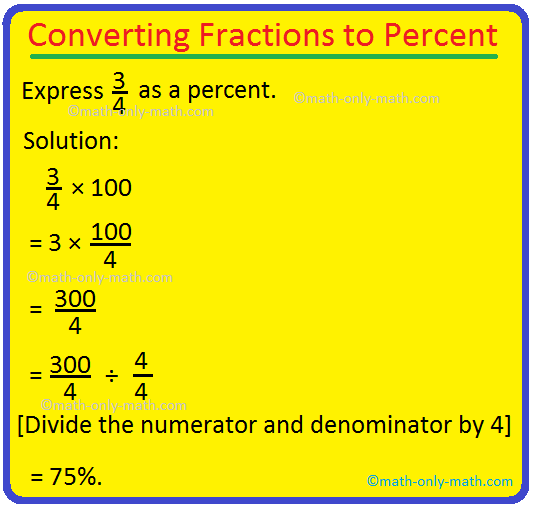
Converting a fraction to a percentage involves two steps: first, convert the fraction to a decimal, and then convert the decimal to a percentage.
Formula: (Numerator ÷ Denominator) × 100 = Percentage (%)
Example:
-
You received a discount of 1/4 off the original price.
-
First, convert 1/4 to a decimal: 1 ÷ 4 = 0.25.
-
Then, convert the decimal to a percentage: 0.25 × 100 = 25%. So, you received a 25% discount.
-
-
An investment returned a profit of 3/5 of its initial capital.
-
3 ÷ 5 = 0.60.
-
0.60 × 100 = 60%. The investment yielded a 60% profit.
-
Converting a Part to a Whole Percentage
Often, you’ll have a specific amount (the “part”) and a total amount (the “whole”), and you’ll need to figure out what percentage the part represents of the whole. This is crucial for calculating things like budget allocations, profit margins, or market share.
Formula: (Part ÷ Whole) × 100 = Percentage (%)
Example:
-
You spent $300 on groceries out of a total monthly budget of $2,000. What percentage of your budget went to groceries?
- ($300 ÷ $2,000) × 100 = 0.15 × 100 = 15%. Groceries represent 15% of your budget.
-
A company earned a profit of $50,000 on total sales of $250,000. What is the profit margin percentage?
- ($50,000 ÷ $250,000) × 100 = 0.20 × 100 = 20%. The profit margin is 20%.
Real-World Financial Applications and Examples
The theoretical understanding of percentage conversion becomes truly powerful when applied to practical financial scenarios. These examples highlight the daily relevance of this skill.
Calculating Loan Interest and Payments
Imagine you take out a $10,000 personal loan with a 7% annual interest rate. To calculate the annual interest amount:
-
Convert 7% back to a decimal: 7 ÷ 100 = 0.07.
-
Multiply by the principal: $10,000 × 0.07 = $700. Your annual interest payment is $700. This inverse conversion (percentage to decimal) is just as vital.

Analyzing Investment Gains and Losses
If your investment portfolio grew from $50,000 to $55,000 in a year, what was your percentage gain?
-
Gain amount: $55,000 – $50,000 = $5,000.
-
Percentage gain: ($5,000 ÷ $50,000) × 100 = 0.10 × 100 = 10%. Your portfolio achieved a 10% return.
Understanding Budget Allocations
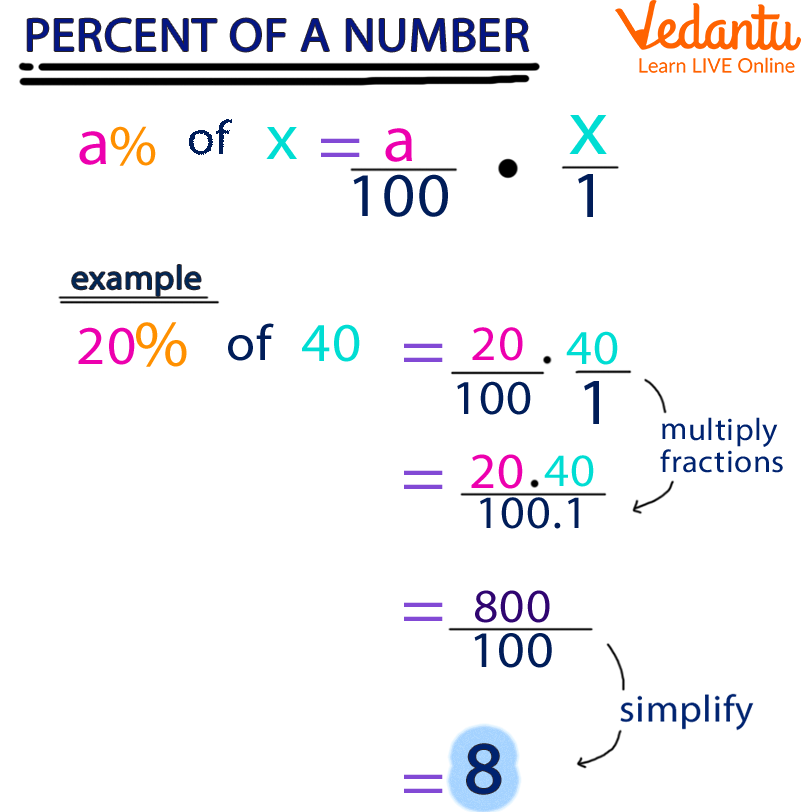
A common financial planning tool is to allocate a percentage of income to various categories (e.g., 50% for needs, 30% for wants, 20% for savings). If your monthly take-home pay is $4,000, how much should you save?
-
Convert 20% to a decimal: 20 ÷ 100 = 0.20.
-
Calculate savings amount: $4,000 × 0.20 = $800. You should aim to save $800 per month.
Discount Calculations for Smart Shopping
You see a jacket priced at $150 with a “30% off” sign. What’s the final price?
-
Calculate the discount amount: $150 × (30 ÷ 100) = $150 × 0.30 = $45.
-
Subtract the discount from the original price: $150 – $45 = $105. The jacket will cost you $105.
Leveraging Financial Tools for Percentage Conversions
While understanding the manual calculations is fundamental, modern financial tools can greatly simplify and accelerate percentage conversions, especially when dealing with large datasets or complex scenarios.
Spreadsheet Software (Excel, Google Sheets)
Spreadsheets are incredibly powerful for financial calculations. They not only perform the conversions instantly but also allow you to apply them across numerous data points.
-
To convert a decimal to a percentage: Enter the decimal (e.g.,
0.15) in a cell, then select the cell and click the ‘%’ (Percent Style) button in the toolbar. It will automatically display as15%. -
To convert a fraction to a percentage: You might need an intermediate step. For
1/4, enter=1/4in a cell, which will show0.25. Then apply the percent style to this cell. -
To convert part to whole: If cell A1 has the ‘part’ ($300) and cell B1 has the ‘whole’ ($2000), enter
=(A1/B1)in cell C1. This will show0.15. Apply the percent style to C1 to get15%.
Online Calculators and Mobile Apps
Numerous websites and mobile applications offer dedicated percentage calculators. These are convenient for quick, one-off calculations without needing to set up a spreadsheet. Many financial apps also integrate percentage calculations for budgeting, investment tracking, and loan amortizations, streamlining the process considerably. While convenient, it’s always wise to understand the underlying math to verify the results or identify potential errors.
The Importance of Mental Math
For everyday financial decisions, developing a knack for mental percentage calculations can be immensely beneficial. Quickly estimating a 10%, 20%, or 50% discount without a calculator can save you time and money. For example, to find 10% of any number, just move the decimal point one place to the left (10% of $150 is $15). From there, you can easily derive 20% (double 10%), 5% (half of 10%), and so on. This skill fosters financial agility and quick decision-making in retail, negotiations, and personal budgeting.
Common Pitfalls and Best Practices
Even with a solid understanding of the mechanics, missteps can occur. Being aware of common pitfalls and adopting best practices can significantly enhance accuracy in financial percentage conversions.
Misinterpreting the Base Value
A frequent error is calculating a percentage based on the wrong “whole” or “base value.” For instance, if a product initially priced at $100 is discounted by 20% to $80, and then later increased by 20%, applying the 20% increase to $100 (the original price) rather than $80 (the current price) would yield an incorrect result. Always ensure you are calculating the percentage of the correct reference amount at that specific point in time.
Rounding Errors and Precision
In finance, precision matters. Rounding too early or too aggressively can lead to significant discrepancies, especially in large-scale calculations or when dealing with compound interest over long periods. When performing intermediate steps, it’s often best to retain several decimal places and only round the final percentage to the appropriate number of decimal places, typically two for most financial contexts, unless greater precision is specified (e.g., interest rates might be quoted to three or four decimal places).
Always Double-Check Your Calculations
Whether you’re using a calculator, a spreadsheet, or mental math, making it a habit to double-check your percentage conversions is a crucial best practice. A simple re-calculation or using an alternative method (e.g., manually verifying a spreadsheet formula) can catch errors before they lead to poor financial decisions. This vigilance fosters accuracy and builds confidence in your financial computations.
In conclusion, the ability to convert into a percentage is far more than a basic math skill; it is a vital component of financial literacy. It empowers you to dissect financial data, evaluate opportunities, understand costs, and make decisions that align with your monetary goals. By mastering these conversions, you gain an indispensable tool for navigating the financial world with clarity, confidence, and control.
aViewFromTheCave is a participant in the Amazon Services LLC Associates Program, an affiliate advertising program designed to provide a means for sites to earn advertising fees by advertising and linking to Amazon.com. Amazon, the Amazon logo, AmazonSupply, and the AmazonSupply logo are trademarks of Amazon.com, Inc. or its affiliates. As an Amazon Associate we earn affiliate commissions from qualifying purchases.