
In the realm of modern computing, data representation is everything. While we often interact with numbers as clean integers or long-string decimals, the need for fractional representation remains a cornerstone of high-precision engineering, financial software development, and UI/UX design. Converting a number to a fraction is not merely a middle-school math exercise; it is a fundamental computational challenge that involves algorithmic logic, software optimization, and an understanding of how hardware processes floating-point arithmetic.
As we move toward more complex AI-driven data analysis and sophisticated web applications, the ability to transition between decimal systems and fractional systems with 100% accuracy is vital. This guide explores the technical methodologies, software tools, and programming logic required to master the conversion of numbers to fractions in a digital environment.
The Algorithmic Logic: How Computers Interpret Rational Numbers
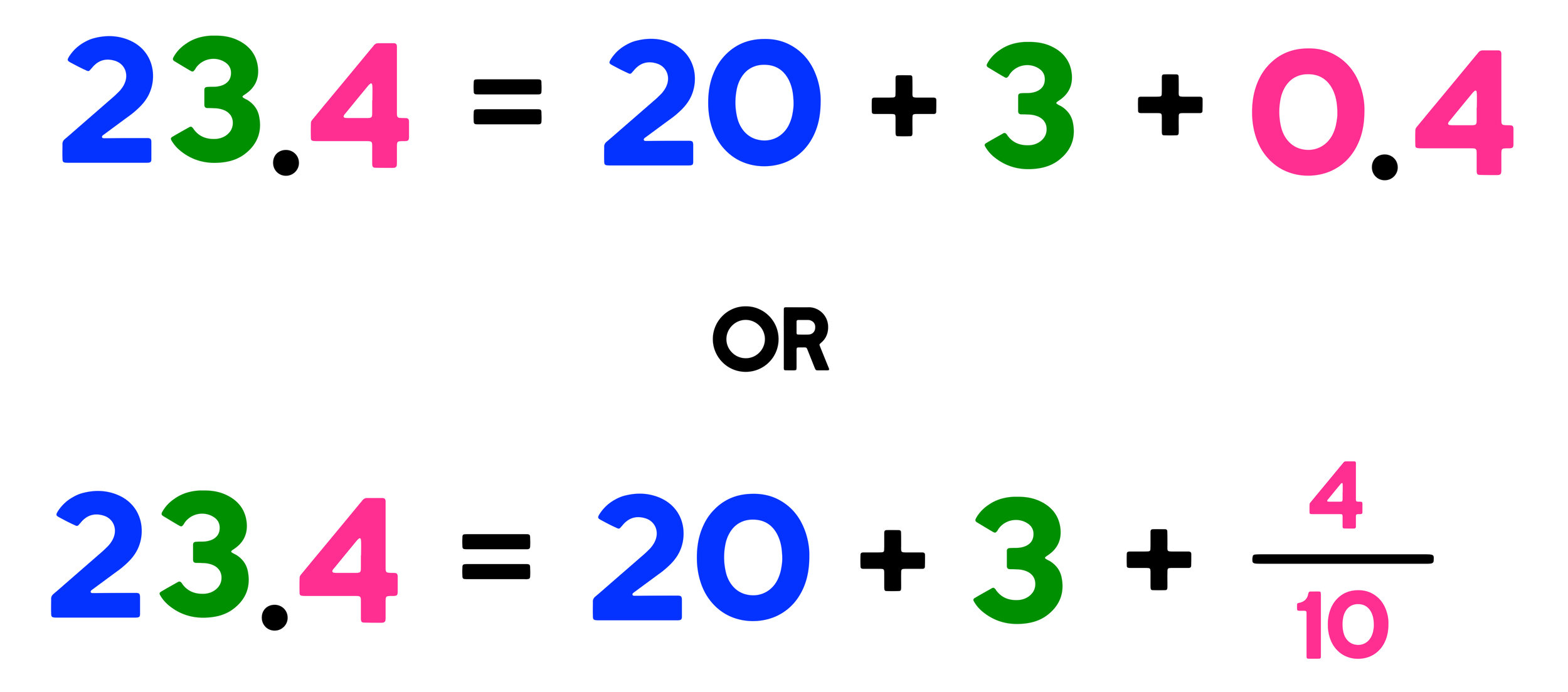
At the heart of any software that performs numerical conversion lies a set of mathematical algorithms. Computers do not inherently “know” what a fraction is; they store numbers in binary. To convert a decimal to a fraction, the system must follow a logical path that identifies the relationship between the numerator and the denominator.
Terminating vs. Repeating Decimals in Software
From a technical standpoint, decimals fall into two categories: terminating and repeating. A terminating decimal (like 0.75) has a finite number of digits. Converting this in a software environment is relatively straightforward: the decimal is placed over a power of ten (75/100) and then reduced using the Greatest Common Divisor (GCD).
Repeating decimals (like 0.333…) present a more complex challenge for developers. These require algebraic algorithms to “cancel out” the infinite tail. For instance, software must recognize the pattern and apply a formula where $x = 0.333…$ to eventually derive $1/3$. Failing to account for repeating patterns results in “precision drift,” a common bug in financial and scientific applications.
The Euclidean Algorithm and GCD
The most efficient way to simplify a fraction within a program is through the Euclidean Algorithm. This is a classic computational method used to find the Greatest Common Divisor of two numbers. By iteratively replacing the larger number with the remainder of its division by the smaller number, the algorithm quickly arrives at the highest common factor. This allows software to reduce “500/1000” to “1/2” in a fraction of a millisecond, ensuring that the user interface remains snappy and the data remains clean.
Leveraging Software Tools for Fractional Conversion
For most professional users, manual conversion is inefficient. Instead, we rely on robust software suites that have these algorithms baked into their core functionality. Whether you are managing a database or creating a technical report, knowing which tool to use is essential.
Precision Formatting in Microsoft Excel and Google Sheets
Excel and Google Sheets are the workhorses of data management. To convert a decimal to a fraction in these environments, one must navigate the “Format Cells” dialogue. Unlike simple rounding, the “Fraction” category in Excel allows users to specify the level of precision—ranging from “up to one digit” (1/4) to “as hundredths” (25/100).
The technical nuance here lies in how the spreadsheet engine handles the underlying value. Even if a cell displays “1/2,” the software maintains the underlying value as “0.5” for calculations. This separation of “display value” and “stored value” is a critical concept in database management, preventing cumulative rounding errors in large datasets.
Specialized Mathematical Software and Web-Based Apps
For engineers and researchers, standard spreadsheets may lack the necessary depth. Tools like WolframAlpha or MATLAB use symbolic math engines to handle fractions. Unlike standard calculators that convert everything to a floating-point decimal, symbolic engines treat a fraction as a single entity ($a/b$). This prevents the loss of data that occurs when a computer tries to represent an infinite number within a 64-bit memory constraint. Web-based API tools also allow developers to integrate these high-precision conversions into their own apps, providing “Fraction-as-a-Service” for niche industries like construction or pharmaceutical compounding.
Coding the Conversion: Python and JavaScript Implementation
For software developers, building a “number-to-fraction” feature requires choosing the right libraries and handling the inherent limitations of floating-point math.
The Python fractions Module
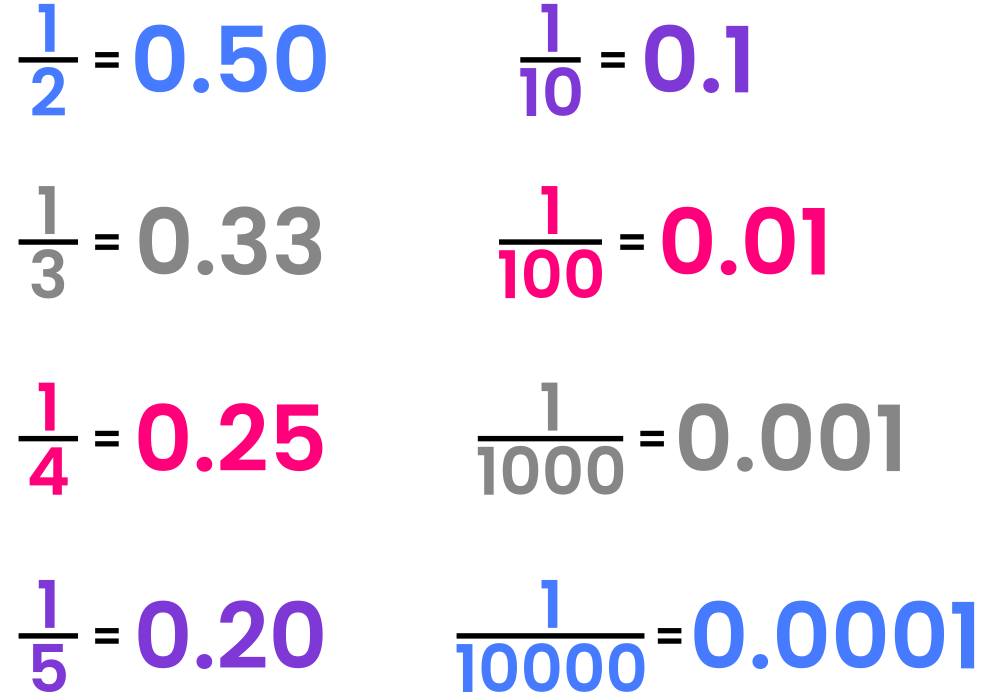
Python is often the language of choice for data science because of its powerful standard library. The fractions module is a prime example of this. By importing Fraction, a developer can instantly convert a float or a string into a rational number.
from fractions import Fraction
print(Fraction('0.75')) # Output: 3/4
The beauty of Python’s approach is that it automatically handles the simplification and the GCD logic mentioned earlier. Furthermore, it allows for arithmetic operations between fractions without ever converting them back to decimals, maintaining perfect precision throughout the execution of the script.
Handling Floating-Point Errors in JavaScript
JavaScript, the language of the web, handles numbers differently. Since all numbers in JS are 64-bit floats (IEEE 754 standard), you often encounter the infamous 0.1 + 0.2 !== 0.3 problem. When building a web-based converter, a developer must account for these tiny “noise” values (e.g., 0.30000000000000004).
To solve this, developers often use libraries like Big.js or Fraction.js. These libraries treat numbers as strings or custom objects to bypass the binary floating-point limitations. This ensures that a user typing “0.333” into a web form gets a clean “333/1000” or a suggested “1/3” rather than a broken approximation.
The Role of AI and Machine Learning in Symbolic Mathematics
As we move into the era of Generative AI, the way we handle numerical conversion is shifting from rigid algorithms to intelligent reasoning. Large Language Models (LLMs) and specialized AI agents are becoming increasingly adept at handling “word-to-math” translations.
Large Language Models (LLMs) and Mathematical Reasoning
While early iterations of LLMs struggled with basic arithmetic, modern models like GPT-4 or Claude 3 use “Chain of Thought” processing to break down conversion tasks. When a user asks an AI to “convert this complex decimal into a fraction for a blueprint,” the AI doesn’t just run a script; it interprets the context. It understands whether the user needs a simplified fraction, a mixed number, or a decimal approximation based on the industry (e.g., 1/16th of an inch for carpentry vs. 0.0625 for scientific precision).
Specialized AI Tools for Academic and Engineering Tasks
Beyond general-purpose AI, specialized tools like ChatGPT’s Advanced Data Analysis or specialized “Math GPTs” integrate Python environments to execute code in the background. This “neuro-symbolic” approach combines the linguistic understanding of AI with the cold, hard logic of a Python script. This ensures that the conversion is not just a “guess” based on patterns, but a mathematically verified result.
Digital Security and Precision: Why Fractions Matter in Cryptography
In the high-stakes world of digital security and blockchain technology, the way numbers are converted and stored can have multi-million dollar consequences.
Avoiding Rounding Errors in High-Stakes Systems
In decentralized finance (DeFi) or high-frequency trading algorithms, even a rounding error at the eighth decimal place can be exploited. This is why many smart contracts utilize “Fixed Point” math or fractional logic. By representing a value as a ratio of two large integers rather than a floating-point decimal, developers can ensure that “dust” (tiny fractions of currency) doesn’t vanish or accumulate incorrectly.
Precision in Graphics and UI Design
Finally, in the tech world of UI/UX and computer graphics, fractions are essential for responsive design. Aspect ratios (16:9, 4:3) are essentially fractions. When a browser calculates the layout of a webpage, it often has to convert screen pixel decimals into fractional ratios to ensure that images don’t distort. A failure in this conversion logic results in “screen tearing” or blurred assets, proving that even in a world dominated by high-speed processors, the humble fraction remains a vital unit of measurement.

Conclusion: The Future of Numerical Representation
Converting a number to a fraction is a task that sits at the intersection of ancient mathematics and cutting-edge technology. From the Euclidean algorithms used in the first computers to the Python libraries powering today’s data science, the goal remains the same: accuracy, clarity, and precision.
As hardware continues to evolve, the way we handle these conversions will likely become even more abstracted. However, for the developer, the engineer, and the tech-savvy professional, understanding the underlying logic—and the tools available to execute it—remains a fundamental skill. Whether you are coding a new app, managing a complex spreadsheet, or prompting an AI, the ability to bridge the gap between decimals and fractions is key to mastering the digital landscape.
aViewFromTheCave is a participant in the Amazon Services LLC Associates Program, an affiliate advertising program designed to provide a means for sites to earn advertising fees by advertising and linking to Amazon.com. Amazon, the Amazon logo, AmazonSupply, and the AmazonSupply logo are trademarks of Amazon.com, Inc. or its affiliates. As an Amazon Associate we earn affiliate commissions from qualifying purchases.