
Navigating the complexities of retirement income can be challenging, and one of the most frequently misunderstood aspects is the taxation of Social Security benefits. For many retirees, Social Security represents a significant portion of their income, making it crucial to understand how these benefits might contribute to your annual tax liability. This guide aims to demystify the process, providing a comprehensive, step-by-step approach to computing taxable Social Security benefits, along with insights into planning strategies and important considerations.
Understanding Social Security Benefits and Taxation
Social Security, established in 1935, serves as a vital safety net, providing retirement, disability, and survivor benefits. While many recipients assume their benefits are entirely tax-free, this is often not the case. The taxation of Social Security benefits was first introduced in 1983 and expanded in 1993, reflecting legislative efforts to shore up the Social Security trust funds and ensure long-term solvency. The amount of your Social Security benefits subject to federal income tax depends on your overall income level, a concept central to understanding the calculation.
Who is Affected by Social Security Taxation?
Simply put, if your total income exceeds certain thresholds, a portion of your Social Security benefits will be subject to federal income tax. This applies to a wide range of retirees, from those with modest additional income to individuals with substantial pensions, investment returns, or part-time earnings. It’s not just the wealthy who are affected; many middle-income retirees find themselves in a position where they owe taxes on their Social Security. Understanding your potential liability allows for better financial planning and helps avoid unwelcome surprises during tax season.
The Concept of Combined Income
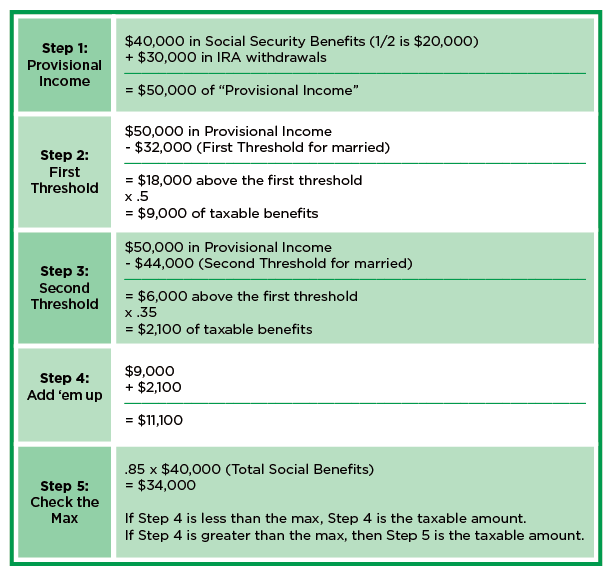
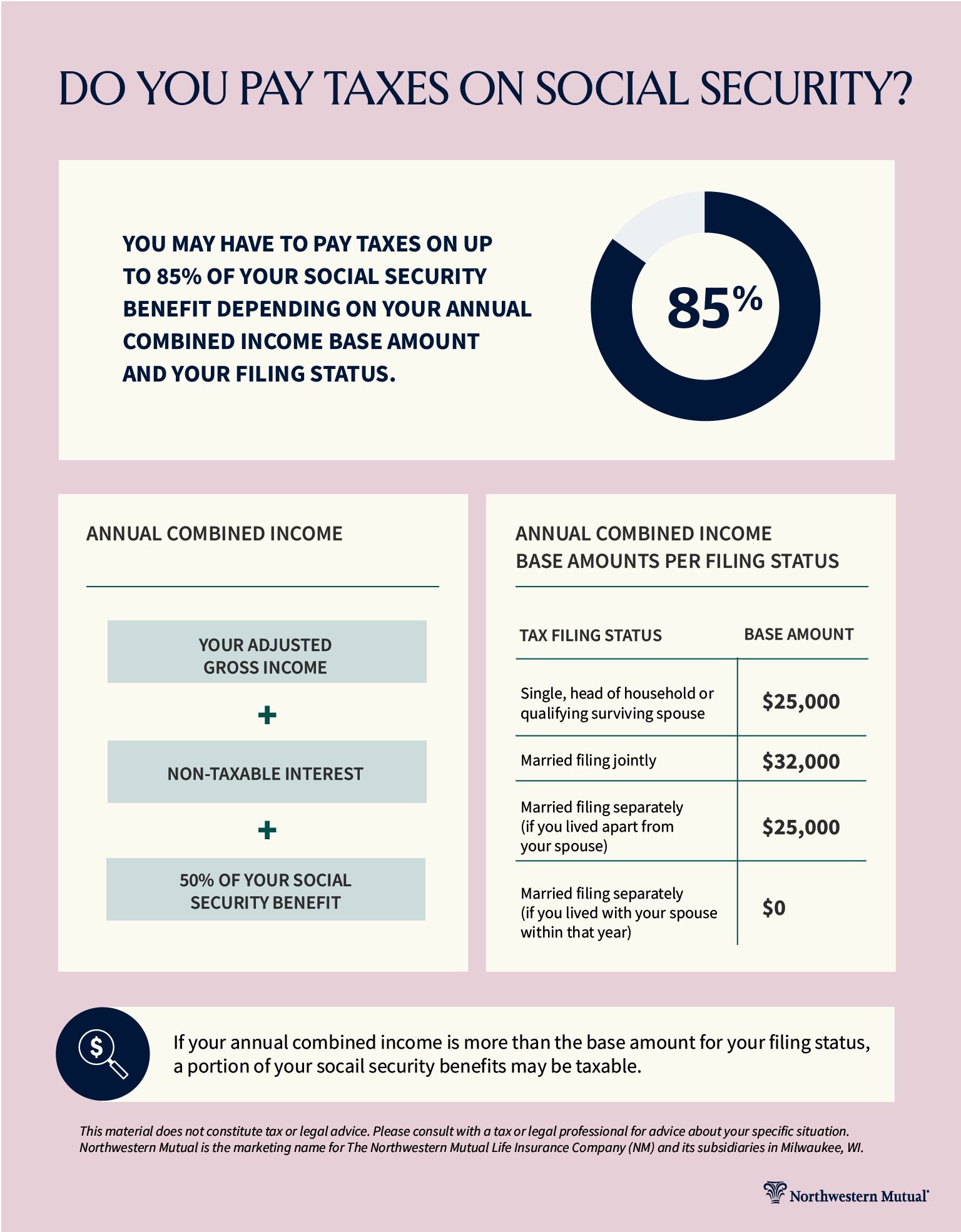
The cornerstone of determining Social Security taxation is what the IRS refers to as “combined income” or “provisional income.” This figure is not your standard Adjusted Gross Income (AGI). Instead, it’s a specific calculation designed solely for this purpose. Your combined income is calculated by taking your Adjusted Gross Income (AGI) before any Social Security benefits are included, then adding back any tax-exempt interest (like interest from municipal bonds), and finally adding 50% of your Social Security benefits. This unique calculation provides the basis for applying the income thresholds that determine how much, if any, of your Social Security benefits will be taxed. It’s crucial to differentiate combined income from other income metrics to accurately perform the necessary calculations.
Step-by-Step Calculation: Determining Your Taxable Benefits
The process of computing taxable Social Security benefits involves a few distinct steps, each building upon the last. Accuracy at each stage is vital for arriving at the correct taxable amount.
Gathering Necessary Information
Before you begin any calculations, ensure you have all the relevant financial documents at hand. This typically includes:
- Form SSA-1099: This statement from the Social Security Administration (SSA) reports the total amount of benefits you received during the year. If you receive a lump sum payment for prior years, only include the portion applicable to the current tax year for the combined income calculation.
- IRS Form 1040 (or relevant tax return): This will help you determine your AGI, excluding Social Security benefits.
- Statements for tax-exempt interest: If you hold municipal bonds or other investments that generate tax-exempt interest, you’ll need these statements.
- Other income statements: W-2s, 1099s for pensions, dividends, capital gains, and other taxable income sources.
Having these documents organized will streamline the calculation process and minimize errors.
Calculating Your Provisional/Combined Income
As discussed, this is the critical preliminary step.
- Start with your Adjusted Gross Income (AGI): This is your gross income minus certain deductions, as reported on your tax return (line 11 on the 2023 Form 1040). Crucially, for this step, ensure this AGI figure does NOT include any Social Security benefits. If your tax software or preparer has already included Social Security, you may need to back it out temporarily for this specific calculation.
- Add any tax-exempt interest: This includes interest from municipal bonds or other sources that are federally tax-exempt.
- Add 50% of your total Social Security benefits: Take the total amount from your SSA-1099 and divide it by two.
Provisional Income = AGI (excluding SS) + Tax-Exempt Interest + 0.50 * Social Security Benefits
This sum is your provisional or combined income, which will be compared against the IRS thresholds.
Applying the Social Security Tax Thresholds
Once you have your provisional income, you’ll compare it against specific thresholds set by the IRS. These thresholds vary based on your tax filing status.
For single, head of household, or qualifying widow(er) filers:
- If your provisional income is between $25,000 and $34,000, up to 50% of your Social Security benefits may be taxable.
- If your provisional income is over $34,000, up to 85% of your Social Security benefits may be taxable.
For married couples filing jointly:
- If your provisional income is between $32,000 and $44,000, up to 50% of your Social Security benefits may be taxable.
- If your provisional income is over $44,000, up to 85% of your Social Security benefits may be taxable.
For married couples filing separately:
- If you lived with your spouse at any time during the tax year, you likely fall under different, often less favorable, rules where any provisional income above $0 can result in up to 85% of benefits being taxable. It’s generally advisable for married couples to file jointly if they want to avoid this scenario, unless specific circumstances dictate otherwise.
These thresholds are not indexed for inflation, meaning more and more retirees become subject to Social Security taxation over time as their benefits and other income sources increase.
The 50% vs. 85% Rules
This is where the actual calculation of the taxable portion of your benefits takes place, based on where your provisional income falls relative to the thresholds. The rules can be intricate, but they generally follow this pattern:
Scenario 1: Provisional Income Exceeds the First Threshold (up to 50% taxable)
If your provisional income exceeds the first threshold (e.g., $25,000 for single filers), but not the second threshold (e.g., $34,000 for single filers), the taxable portion of your Social Security benefits is the lesser of:
- 50% of your Social Security benefits, OR
- 50% of the amount by which your provisional income exceeds the first threshold.
Example (Single Filer):
- Total Social Security benefits: $20,000
- Provisional income: $30,000
- First threshold: $25,000
- 50% of SS benefits: $10,000
- 50% of (Provisional income – First threshold): 0.50 * ($30,000 – $25,000) = 0.50 * $5,000 = $2,500
- The lesser of $10,000 and $2,500 is $2,500. So, $2,500 of your Social Security benefits are taxable.
Scenario 2: Provisional Income Exceeds the Second Threshold (up to 85% taxable)
If your provisional income exceeds the second threshold (e.g., $34,000 for single filers), the taxable portion of your Social Security benefits is the lesser of:
- 85% of your Social Security benefits, OR
- The sum of:
- 50% of the difference between the first and second thresholds (e.g., 0.50 * ($34,000 – $25,000) = $4,500 for single filers), PLUS
- 85% of the amount by which your provisional income exceeds the second threshold.

This two-tier system ensures that the taxable portion increases progressively rather than jumping abruptly. The IRS provides worksheets in Publication 915, “Social Security and Equivalent Railroad Retirement Benefits,” which simplify these calculations significantly.
Practical Considerations and Planning Strategies
Understanding the calculation is only half the battle. Strategic planning can help manage your tax liability on Social Security benefits.
Impact of Other Income Sources
Because the taxation of Social Security benefits is tied to your provisional income, managing other sources of income becomes paramount. This includes:
- Traditional IRA/401(k) withdrawals: These are fully taxable and directly increase your AGI, thereby increasing your provisional income.
- Pension income: Similar to IRA withdrawals, pension payments increase your AGI.
- Wages from part-time work: Any earned income contributes to your AGI.
- Dividends and capital gains: These investment returns also boost your AGI.
- Tax-exempt interest: Even though it’s tax-exempt federally, it still counts towards your provisional income for Social Security taxation purposes.
Carefully planning the timing and amount of withdrawals from retirement accounts and managing investment income can help keep your provisional income below certain thresholds.
Withholding and Estimated Taxes
Once you know a portion of your Social Security benefits will be taxable, you have options to cover that tax liability.
- Voluntary withholding: You can elect to have federal income tax withheld from your Social Security benefits by filing Form W-4V, Voluntary Withholding Request. This can be a convenient way to pay your taxes throughout the year and avoid a large tax bill or underpayment penalties.
- Estimated taxes: If you have other significant taxable income sources, you may need to make quarterly estimated tax payments (Form 1040-ES) to cover the tax on your Social Security and other income.
It’s wise to review your tax situation annually and adjust your withholding or estimated payments as needed.
Strategies to Reduce Taxable Social Security
Several proactive strategies can help minimize the tax on your Social Security benefits:
- Roth conversions: Converting funds from a traditional IRA to a Roth IRA generates taxable income in the year of conversion, but qualified withdrawals from a Roth IRA in retirement are tax-free and do not count towards provisional income. Strategically timed Roth conversions in years with lower overall income can help manage future provisional income.
- Qualified Charitable Distributions (QCDs): If you are age 70½ or older, you can make tax-free distributions directly from your IRA to a qualified charity. These QCDs reduce the taxable amount of your IRA distributions, thus lowering your AGI and potentially your provisional income.
- Tax-efficient investment strategies: Holding income-producing assets in tax-advantaged accounts (like Roth IRAs/401(k)s, or even municipal bonds for their federal tax-exempt interest, despite its inclusion in provisional income) can be beneficial. However, remember tax-exempt interest still impacts provisional income.
- Delaying Social Security benefits: While not directly reducing taxable benefits, delaying benefits allows them to grow larger. If you have other income to live on, this can defer reliance on Social Security, potentially keeping your provisional income lower in earlier retirement years when you might still be working or drawing from other sources.
- Managing capital gains: If you have control over when you realize capital gains, spreading them out over multiple years or utilizing tax-loss harvesting can help control your AGI.
These strategies require careful planning, often in conjunction with a financial advisor.
Beyond the Basics: Important Nuances and Exceptions
While the core rules apply broadly, certain situations present unique challenges or exceptions.
Married Filing Separately
As briefly mentioned, married individuals filing separately face particularly stringent rules. If you live with your spouse at any point during the tax year and file separately, you generally must include up to 85% of your Social Security benefits in taxable income if your provisional income is above $0. This effectively means most couples filing separately will have a significant portion of their benefits taxed. This unfavorable treatment is an incentive for married couples to file jointly unless there are specific, compelling reasons not to (e.g., significant medical deductions for one spouse, or liability concerns).
Foreign Income and Other Complex Scenarios
If you receive Social Security benefits and also have foreign income, are a nonresident alien, or have other unique financial circumstances, the rules can become more complicated. U.S. tax treaties with certain countries may affect the taxation of Social Security benefits. Similarly, beneficiaries of Railroad Retirement benefits have similar but distinct rules for benefit taxation. In such complex cases, professional tax advice is indispensable.
Future Changes and Staying Informed
Tax laws are not static. While the Social Security taxation framework has been stable for decades, there is always the potential for legislative changes. It’s crucial to stay informed about any new tax laws or proposals that could impact how your Social Security benefits are taxed. Resources like the IRS website, official Social Security Administration publications, and reputable financial news sources are excellent for keeping up-to-date.
Utilizing Financial Tools and Professional Advice
Given the intricacies of Social Security taxation and its interaction with other income sources, leveraging available tools and expert guidance can be highly beneficial.
Online Calculators and Software
Many reputable financial websites offer free online calculators that can estimate your taxable Social Security benefits. Tax preparation software (like TurboTax, H&R Block, etc.) also incorporates these calculations, often guiding you through the process step-by-step based on your input. These tools can provide a good initial estimate and help you understand the impact of various income levels. However, they are only as accurate as the information you provide.
When to Consult a Financial Advisor or Tax Professional
While self-calculation is possible, for many, especially those with complex financial situations, consulting a qualified financial advisor or tax professional is invaluable. They can:
- Help you accurately calculate your provisional income and taxable benefits.
- Advise on personalized strategies to minimize your overall tax burden, considering your Social Security, retirement withdrawals, investments, and other income.
- Assist with Roth conversions, QCDs, and other advanced tax planning techniques.
- Ensure compliance with all current tax laws and regulations.
- Help you plan for future changes in income or tax law.
Proactive planning with a professional can lead to significant tax savings over your retirement years, ensuring you retain more of your hard-earned benefits.
In conclusion, understanding how to compute taxable Social Security is a fundamental aspect of effective retirement financial planning. By meticulously calculating your provisional income, applying the correct thresholds, and implementing strategic planning, you can navigate the tax landscape with confidence and optimize your financial well-being in retirement.
aViewFromTheCave is a participant in the Amazon Services LLC Associates Program, an affiliate advertising program designed to provide a means for sites to earn advertising fees by advertising and linking to Amazon.com. Amazon, the Amazon logo, AmazonSupply, and the AmazonSupply logo are trademarks of Amazon.com, Inc. or its affiliates. As an Amazon Associate we earn affiliate commissions from qualifying purchases.