
In the intricate world of finance, understanding growth and change is paramount. Whether you’re a seasoned investor tracking portfolio performance, a business owner analyzing quarterly revenue, or an individual managing personal expenses, the ability to accurately compute increase percentages is a foundational skill. This simple yet powerful metric provides a clear, standardized way to measure the magnitude of change over time, allowing for insightful comparisons and informed decision-making. Far more than just a mathematical exercise, it’s a window into trends, performance, and potential.
The Fundamental Role of Increase Percentage in Finance
At its core, an increase percentage quantifies the relative change between an initial value and a subsequent, larger value. It translates absolute gains into a proportional measure, making it easier to grasp the significance of that change, irrespective of the scale of the original numbers. In the financial domain, this concept is indispensable for a multitude of reasons, touching every aspect from micro-level personal budgets to macro-level economic indicators.
Defining Increase Percentage
An increase percentage is a dimensionless quantity expressed as a fraction of 100, representing how much a value has grown in relation to its starting point. For instance, if an investment grows from $100 to $120, the absolute increase is $20. But the percentage increase tells us that the investment grew by 20% of its original value. This relative measure is crucial because a $20 increase on a $100 investment (20%) is far more significant than a $20 increase on a $10,000 investment (0.2%). It helps normalize changes, allowing for apples-to-apples comparisons across different asset classes, company sizes, or time periods. It’s a metric that speaks to efficiency, performance, and the velocity of growth.
Why Financial Professionals and Individuals Need It
For financial professionals, the increase percentage is a daily tool. Portfolio managers use it to articulate the return on investment (ROI) to clients, comparing their fund’s performance against market benchmarks. Business analysts rely on it to track year-over-year revenue growth, profit margin improvements, or expense reductions, providing critical insights into a company’s financial health and operational efficiency. Economists employ it to monitor inflation rates, GDP growth, or unemployment changes, painting a picture of the broader economic landscape.
For individuals, its utility is equally compelling. Tracking the percentage growth of a savings account, monitoring salary increases over time, or understanding the percentage change in utility bills allows for proactive personal financial management. It helps in evaluating the effectiveness of investment strategies, setting realistic financial goals, and identifying areas where spending might be increasing disproportionately. Without this tool, financial data would remain a collection of disparate numbers, devoid of the context needed for meaningful analysis.
Deconstructing the Formula for Financial Growth
The beauty of the increase percentage lies in its simplicity. While its applications are vast and complex, the underlying mathematical formula is straightforward and universally applicable. Mastering this formula is the first step towards unlocking deeper financial insights.
The Basic Mathematical Equation
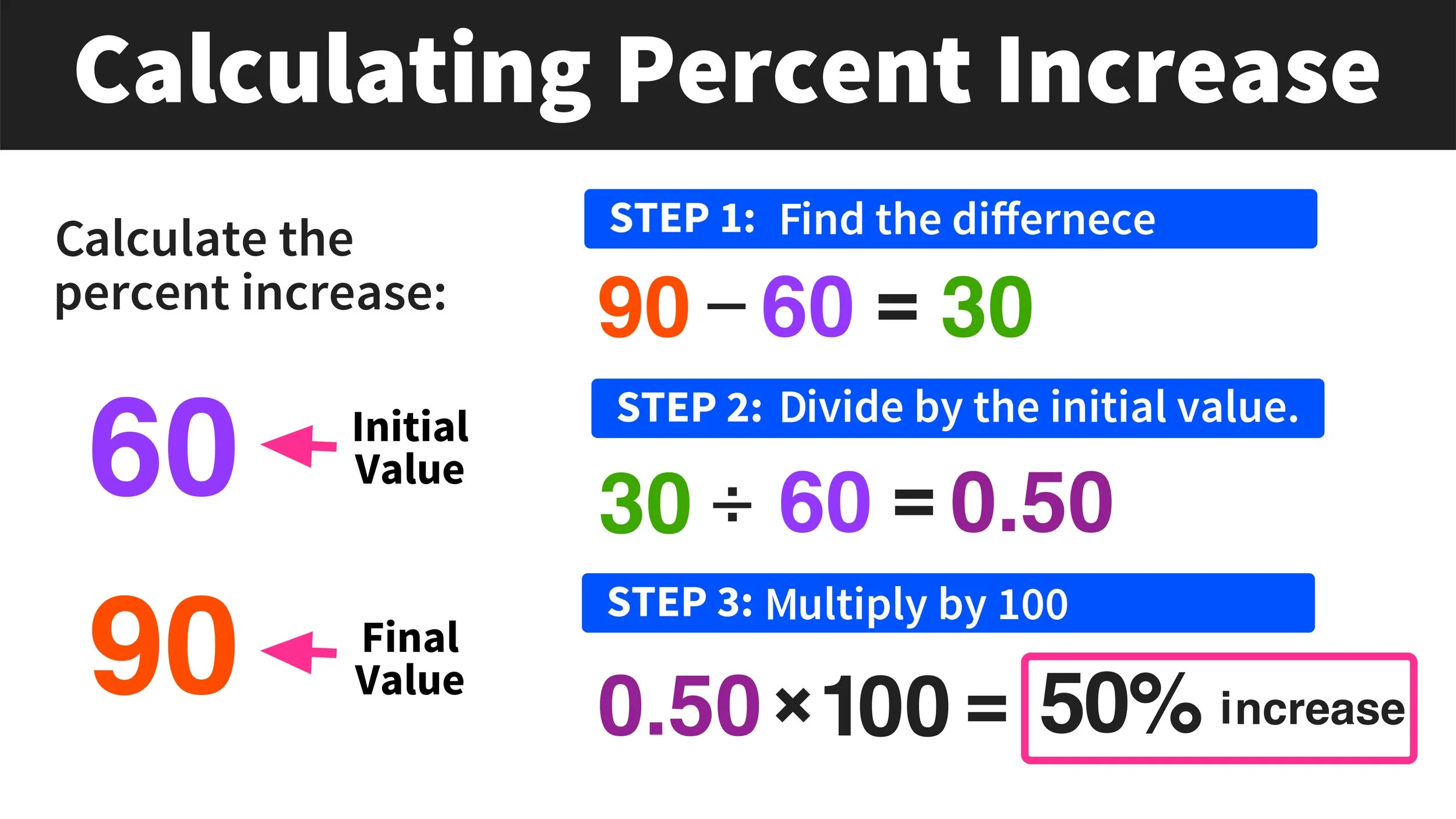
The formula for computing an increase percentage is:
Increase Percentage = ((New Value - Old Value) / Old Value) * 100
Let’s break down each component:
- Old Value (or Original Value): This is the starting point, the baseline figure from which the change is measured. In finance, this could be the initial investment, last year’s revenue, or last month’s expense.
- New Value: This is the ending point, the current or subsequent figure after the change has occurred. This might be the current investment value, this year’s revenue, or this month’s expense.
- New Value – Old Value: This part of the formula calculates the absolute increase (or the difference). It tells you the raw numerical gain.
- Divide by Old Value: Dividing the absolute increase by the original value expresses the gain as a fraction of the starting point. This is crucial for converting the absolute change into a relative one.
- Multiply by 100: This final step converts the decimal fraction into a percentage, making it easily interpretable.
Step-by-Step Calculation Guide
Let’s walk through an example to solidify the process. Imagine you invested $5,000 in a stock last year, and today its value is $6,250.
-
Step 1: Identify Old and New Values.
- Old Value (Initial Investment) = $5,000
- New Value (Current Investment Value) = $6,250
-
Step 2: Calculate the Absolute Increase (Difference).
- Absolute Increase = New Value – Old Value
- Absolute Increase = $6,250 – $5,000 = $1,250
-
Step 3: Divide by the Old Value.
- Fractional Increase = Absolute Increase / Old Value
- Fractional Increase = $1,250 / $5,000 = 0.25
-
Step 4: Convert to Percentage.
- Increase Percentage = Fractional Increase * 100
- Increase Percentage = 0.25 * 100 = 25%
So, your investment has seen a 25% increase. This step-by-step approach ensures accuracy and clarity, regardless of the financial scenario.
Practical Applications in Personal and Business Finance
The versatility of the increase percentage truly shines when applied to real-world financial scenarios. It’s not just an academic concept; it’s a vital tool for assessing performance, forecasting, and making strategic decisions.
Investment Portfolio Performance
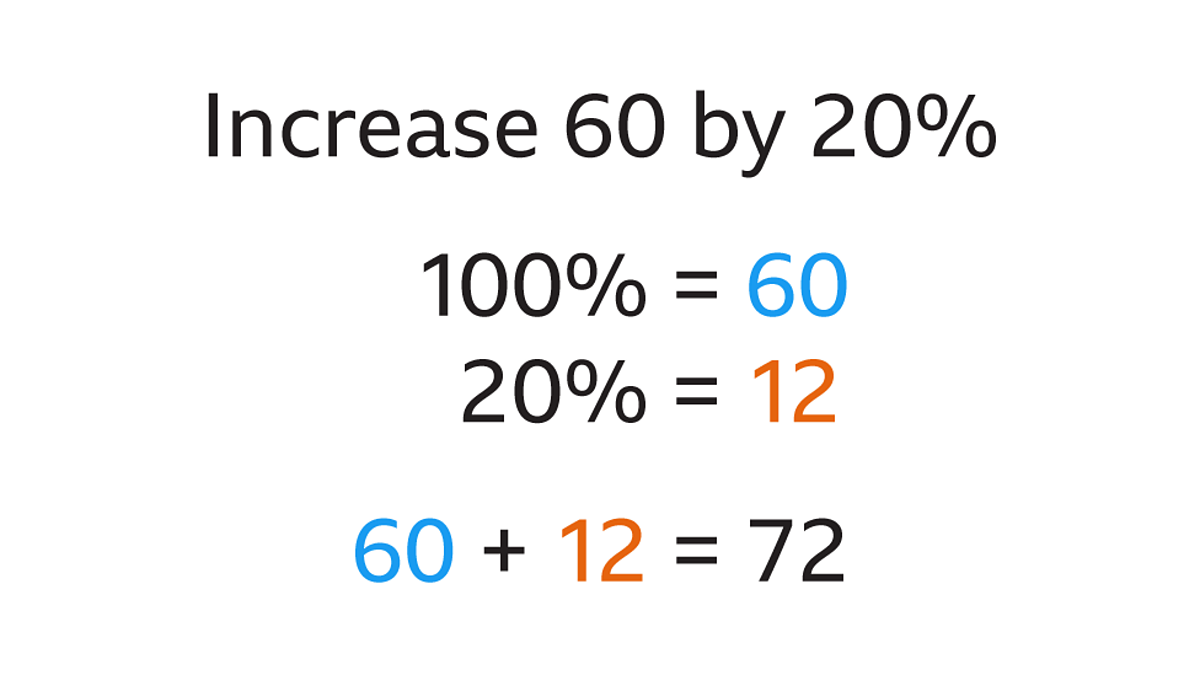
For investors, the increase percentage is synonymous with return on investment (ROI). It’s the primary metric for evaluating how well an asset, a fund, or an entire portfolio has performed over a given period.
- Example: Stock Price Increase. You bought 100 shares of Company X at $50 per share (Old Value = $5,000). A year later, the stock is trading at $65 per share (New Value = $6,500).
- Increase Percentage = (($6,500 – $5,000) / $5,000) * 100 = ( $1,500 / $5,000 ) * 100 = 0.30 * 100 = 30%.
- This 30% increase allows you to compare its performance against other investments, market indices, or your personal financial goals.
- Annualized Growth Rate. For investments held over multiple years, calculating the compound annual growth rate (CAGR) often involves a more complex formula, but the underlying principle of measuring periodic percentage increase remains. For simpler, single-period assessments, the direct increase percentage is sufficient.
Business Financial Analysis
Businesses thrive on growth, and the increase percentage is the go-to metric for measuring it across various facets of operations.
- Example: Quarterly Sales Growth. A retail business generated $150,000 in sales in Q1 (Old Value) and $180,000 in Q2 (New Value).
- Increase Percentage = (($180,000 – $150,000) / $150,000) * 100 = ($30,000 / $150,000) * 100 = 0.20 * 100 = 20%.
- This 20% sales growth is a key indicator of the business’s market penetration, marketing effectiveness, or product demand.
- Profit Margin Improvements. If a company’s gross profit margin increased from 30% to 33%, the absolute increase is 3 percentage points. The percentage increase in the margin itself would be ((33 – 30) / 30) * 100 = 10%. This distinction is important for precise analysis.
- Expense Reduction. Measuring how much overhead costs have been reduced from one period to another is also a crucial application. If marketing expenses dropped from $10,000 to $8,000, that’s a 20% decrease percentage, calculated using the same formula but resulting in a negative number, which is then interpreted as a reduction.
Personal Finance and Budgeting
Even in daily personal finance, increase percentages offer valuable insights that empower better decision-making.
- Example: Salary Increase. Your annual salary increased from $60,000 (Old Value) to $63,000 (New Value).
- Increase Percentage = (($63,000 – $60,000) / $60,000) * 100 = ($3,000 / $60,000) * 100 = 0.05 * 100 = 5%.
- This 5% raise helps you understand if your income is keeping pace with inflation or if you’re making significant financial progress.
- Tracking Savings Growth. If your savings account balance went from $1,000 to $1,005 due to interest, that’s a 0.5% increase, which helps you understand the return on your liquid assets.
- Monitoring Spending Changes. Observing a utility bill increase from $100 to $115 indicates a 15% increase, prompting you to investigate potential reasons or adjust your budget.
Common Pitfalls and Advanced Considerations
While the increase percentage is straightforward, certain nuances and advanced considerations are vital for accurate interpretation and to avoid common missteps.
Avoiding Misinterpretations
- Starting from Zero: If the old value is zero, the calculation becomes undefined (division by zero). In such cases, one must describe the increase in absolute terms or state that a percentage increase cannot be meaningfully computed from zero. For example, if a startup had $0 revenue last year and $100,000 this year, you can’t calculate a percentage increase from zero. You simply state the absolute revenue generated.
- The Base Value Matters: A small absolute increase can translate to a huge percentage increase if the base value is very small. For instance, increasing a $10 investment to $20 is a 100% increase. While mathematically correct, it might not be as impactful as a 10% increase on a $1,000,000 portfolio, which represents a $100,000 gain. Always consider the absolute numbers alongside the percentages.
- Contextualizing the Percentage: A 5% salary increase sounds good, but if inflation is 7%, your real purchasing power has actually decreased. Always factor in relevant economic indicators and specific industry benchmarks for a holistic view.
Time Horizon and Annualization
The time period over which the increase is measured is critical. A 10% increase over a month is far more impressive than a 10% increase over a year.
- Annualization: For investments or business metrics, it’s often useful to annualize percentages to allow for consistent comparison. For example, a 2% monthly increase compounded over 12 months isn’t just 24%; it’s (1 + 0.02)^12 – 1, which is approximately 26.82%. Understanding compounding is vital for long-term financial planning.
- Consistency: When comparing growth rates, ensure the time periods are identical (e.g., Q1 vs. Q1 year-over-year, or month-over-month). Inconsistent periods lead to flawed conclusions.
Leveraging Financial Tools for Accuracy
While manual calculation is fundamental, financial tools simplify the process, especially with large datasets.
- Spreadsheets (Excel, Google Sheets): These are invaluable. You can easily set up formulas (
=(B2-A2)/A2and then format as percentage) to calculate increase percentages for dozens or hundreds of entries simultaneously. They also allow for quick scenario analysis. - Online Calculators: Numerous websites offer simple percentage increase calculators, useful for quick, one-off computations.
- Financial Software: Investment platforms, accounting software, and budgeting apps often automate these calculations, presenting data in intuitive dashboards. However, understanding the underlying formula ensures you can interpret their results confidently.
Mastering Increase Percentage for Informed Financial Decisions
Computing the increase percentage is more than just arithmetic; it’s a critical analytical skill that empowers individuals and businesses to navigate the financial landscape with greater clarity and confidence. It’s the language of growth, enabling you to quantify progress, identify areas for improvement, and benchmark performance.
Beyond the Numbers: Strategic Insights
The true power of understanding increase percentages lies in the strategic insights they unlock. By regularly tracking and analyzing these changes, you can:
- Identify Trends: Consistent positive percentage increases might indicate a strong market position or successful strategy. Conversely, stagnant or declining percentages signal a need for intervention.
- Set Realistic Goals: Knowing your historical growth rates allows you to set achievable targets for future investments, savings, or business expansion.
- Evaluate Performance Against Benchmarks: Comparing your investment’s percentage increase against a relevant market index, or your company’s revenue growth against industry averages, provides crucial context on how well you’re truly performing.

Empowering Your Financial Journey
The ability to compute and interpret increase percentages is a cornerstone of financial literacy. It equips you to:
- Make Smarter Investments: By understanding ROI, you can allocate capital more effectively.
- Optimize Business Operations: By tracking key performance indicators (KPIs) via percentage changes, businesses can identify operational inefficiencies or market opportunities.
- Achieve Personal Financial Goals: From saving for retirement to paying down debt, understanding your percentage progress keeps you motivated and informed.
In conclusion, the computation of increase percentage is not merely a mathematical exercise but a vital analytical discipline in finance. It transforms raw data into meaningful insights, offering a clear lens through which to view growth, assess performance, and ultimately, make more informed and strategic financial decisions. Mastering this fundamental skill is an investment in your financial future, yielding returns far beyond mere numerical accuracy.
aViewFromTheCave is a participant in the Amazon Services LLC Associates Program, an affiliate advertising program designed to provide a means for sites to earn advertising fees by advertising and linking to Amazon.com. Amazon, the Amazon logo, AmazonSupply, and the AmazonSupply logo are trademarks of Amazon.com, Inc. or its affiliates. As an Amazon Associate we earn affiliate commissions from qualifying purchases.