
In the intricate world of finance, understanding growth, change, and performance is paramount. Whether you’re tracking personal savings, evaluating investment returns, analyzing business profitability, or assessing salary increments, the ability to accurately compute a percentage increase is an indispensable skill. It provides a standardized metric that allows for meaningful comparisons over time, stripping away the absolute numbers to reveal the true rate of expansion or improvement. This guide delves into the essence of percentage increase, breaking down its calculation, highlighting its financial applications, and equipping you with the knowledge to wield this powerful tool effectively for informed decision-making.
Understanding the Fundamentals of Percentage Increase
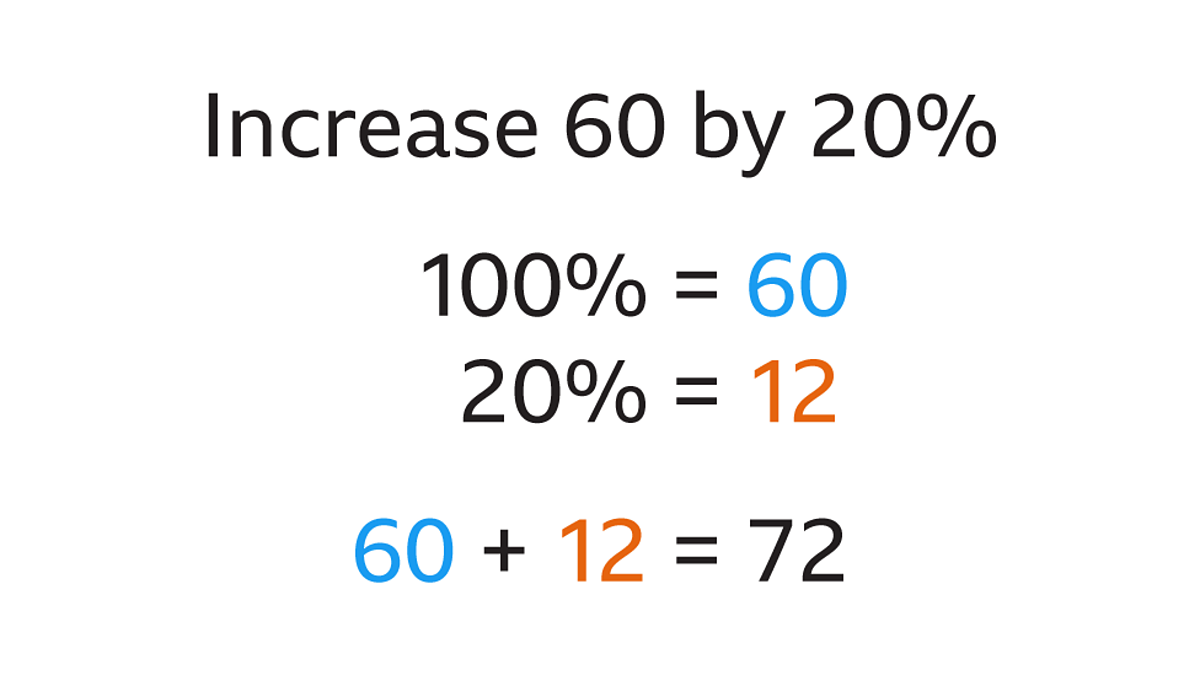
At its core, a percentage increase quantifies the relative growth of a value from an initial point to a subsequent point. It transforms raw numerical changes into a relatable proportion of the original amount, making it easier to grasp the magnitude of change irrespective of the initial scale.
What is a Percentage Increase?
A percentage increase represents the extent to which a quantity has grown in relation to its starting value, expressed as a percentage. For instance, if your savings account balance grows from $1,000 to $1,100, the absolute increase is $100. However, stating it as a 10% increase (relative to the original $1,000) provides a more insightful measure of its growth efficiency. This relative measure is critical because a $100 increase on a $1,000 balance is far more significant than a $100 increase on a $100,000 balance.
It’s a foundational concept in mathematics with profound implications across various disciplines, particularly in financial analysis. By standardizing growth into a percentage, we gain a common language for discussing and comparing different financial scenarios, regardless of their varying magnitudes.
Why is Percentage Increase Important in Finance?
The significance of percentage increase in the financial sector cannot be overstated. It serves as a universal benchmark for evaluating performance, gauging efficiency, and projecting future trends.
- Investment Performance: Investors regularly use percentage increase to measure the return on investment (ROI) for stocks, bonds, mutual funds, and real estate. A 15% increase in a stock’s value over a year tells you more about its performance than merely stating it gained $50 per share, especially when comparing it to other investment options with different initial prices.
- Business Growth: Businesses rely on percentage increase to track key performance indicators (KPIs) such as sales growth, profit margin expansion, customer acquisition rates, and market share increases. A business reporting a 20% year-over-year revenue increase demonstrates robust growth, which is attractive to investors and informs strategic planning.
- Economic Analysis: Economists and policymakers utilize percentage increase to monitor macroeconomic indicators like GDP growth, inflation rates, employment figures, and consumer spending. These percentages provide insights into the health and direction of national and global economies.
- Personal Finance Management: Individuals use it to track the growth of their net worth, the increase in their salary, the appreciation of their assets (like a home), or the rise in their living expenses. Understanding these increases helps in budgeting, financial planning, and negotiating.
Without the ability to compute percentage increase, financial analysis would be reduced to a collection of raw numbers, making comparison, interpretation, and strategic planning significantly more challenging.
The Step-by-Step Calculation Process
Calculating a percentage increase involves a straightforward formula that can be applied consistently across various financial contexts. Mastering this formula is the first step toward leveraging this powerful metric.
Formula Breakdown
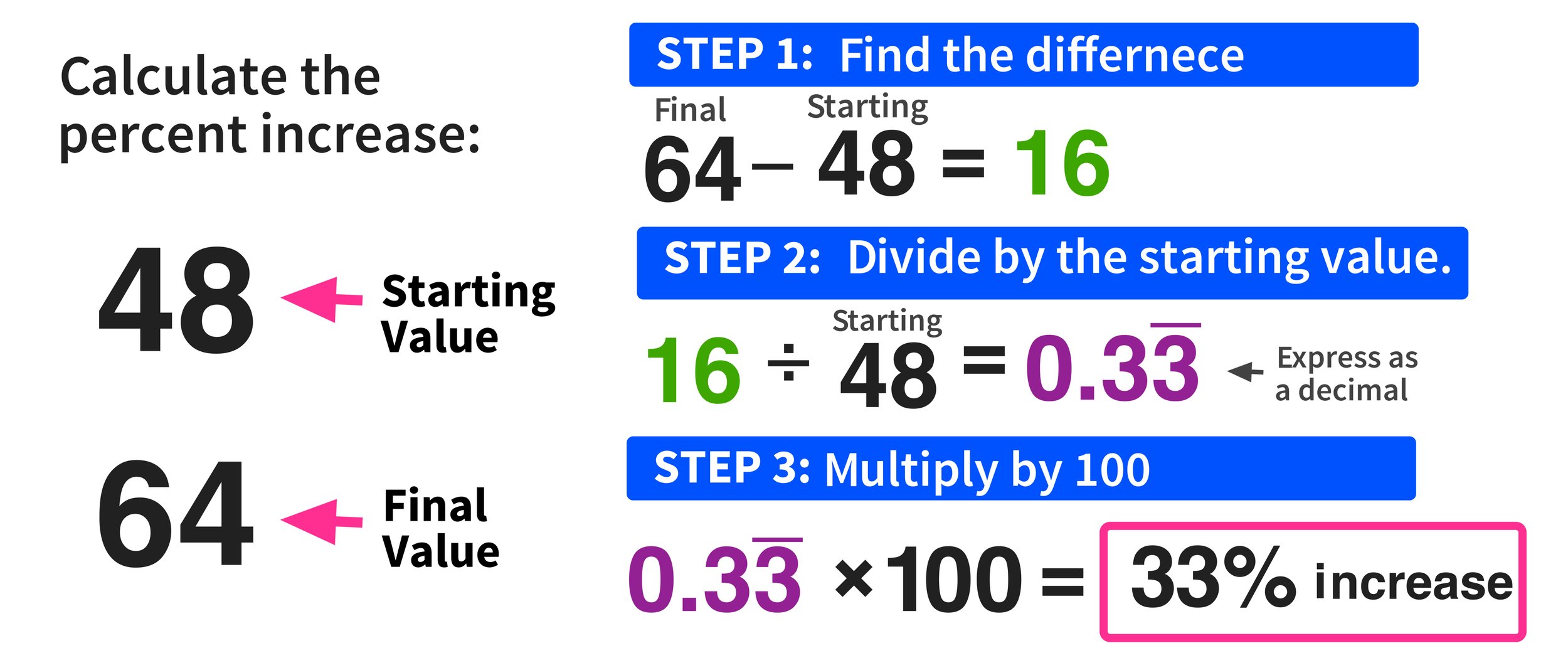
The fundamental formula for calculating a percentage increase is:
$$ text{Percentage Increase} = left( frac{text{New Value} – text{Original Value}}{text{Original Value}} right) times 100 $$
Let’s break down each component:
- Original Value (or Old Value): This is the starting point, the baseline figure from which the growth is measured.
- New Value (or Current Value): This is the end point, the figure after the change has occurred.
- Difference (New Value – Original Value): This calculates the absolute amount of the increase.
- Ratio to Original Value: Dividing the difference by the original value expresses the increase as a decimal fraction of the original amount.
- Multiply by 100: Converting the decimal fraction into a percentage by multiplying by 100.
It’s crucial that the “Original Value” is a positive, non-zero number. If the original value is zero or negative, the standard percentage increase formula cannot be applied directly in a meaningful way, and alternative metrics or contextual explanations are required.
Practical Examples: Personal Finance
Let’s apply the formula to common personal finance scenarios.
Example 1: Savings Account Growth
Suppose you started the year with $5,000 in your savings account, and by year-end, it grew to $5,350.
- Original Value = $5,000
- New Value = $5,350
- Difference = $5,350 – $5,000 = $350
- Percentage Increase = ($350 / $5,000) * 100 = 0.07 * 100 = 7%
Your savings account increased by 7%.
Example 2: Investment Portfolio Appreciation
An investment portfolio valued at $75,000 at the beginning of a quarter rises to $82,500 by the end of the quarter.
- Original Value = $75,000
- New Value = $82,500
- Difference = $82,500 – $75,000 = $7,500
- Percentage Increase = ($7,500 / $75,000) * 100 = 0.10 * 100 = 10%
Your investment portfolio achieved a 10% return for the quarter.
Practical Examples: Business Growth and Investment
Percentage increase is equally vital in the business and investment analysis sphere.
Example 1: Quarterly Revenue Growth
A company reported Q1 revenue of $1.2 million and Q2 revenue of $1.44 million.
- Original Value = $1,200,000
- New Value = $1,440,000
- Difference = $1,440,000 – $1,200,000 = $240,000
- Percentage Increase = ($240,000 / $1,200,000) * 100 = 0.20 * 100 = 20%
The company experienced a 20% increase in revenue from Q1 to Q2.
Example 2: Stock Price Appreciation
A stock you own was purchased at $120 per share and is now trading at $156 per share.
- Original Value = $120
- New Value = $156
- Difference = $156 – $120 = $36
- Percentage Increase = ($36 / $120) * 100 = 0.30 * 100 = 30%
Your stock investment has seen a 30% increase.
These examples illustrate the versatility of the percentage increase calculation across different scales and contexts within finance.
Common Pitfalls and Considerations
While the formula for percentage increase is straightforward, there are subtle nuances and common mistakes that can lead to misinterpretations or incorrect calculations. Being aware of these pitfalls is crucial for accurate financial analysis.

Misinterpreting the Base Value
The “Original Value” or base value is the denominator in the formula and fundamentally dictates the percentage. A common error is mistakenly using the new value or an average value as the base. Always ensure you are dividing by the starting figure from which the change is being measured. If you’re comparing year-over-year growth, the previous year’s figure must be the original value. Using an incorrect base value will lead to a skewed and inaccurate percentage.
The Impact of Negative Starting Values
The standard percentage increase formula is designed for situations where the original value is positive. If the original value is zero or negative, the formula breaks down.
- Zero Original Value: If the original value is zero, division by zero is undefined. In such a case (e.g., going from $0 profit to $100 profit), stating an “infinite” percentage increase is technically correct but not practically useful. It’s better to state the absolute increase or explain the context qualitatively.
- Negative Original Value: If the original value is negative (e.g., going from a -$500 loss to a -$200 loss, or from a -$500 loss to a $100 profit), the percentage calculation can be misleading. For instance, increasing from -$500 to -$200 is a positive change, but the formula might yield a negative percentage if interpreted simplistically. In these scenarios, it’s often clearer to focus on the absolute change in value or use alternative metrics that measure improvement from a negative baseline. For example, moving from a loss to a smaller loss is an improvement, but using the standard percentage increase formula might not capture the economic reality intuitively.
Differentiating Percentage Increase from Percentage Change
It’s important to distinguish between a “percentage increase” and a more general “percentage change.” While a percentage increase specifically denotes growth, a percentage change can encompass both increases and decreases. When a value decreases, we compute a “percentage decrease” using a slightly modified approach (or simply get a negative result from the general percentage change formula).
The general formula for percentage change is:
$$ text{Percentage Change} = left( frac{text{New Value} – text{Original Value}}{text{Original Value}} right) times 100 $$
If the result is positive, it’s a percentage increase. If it’s negative, it’s a percentage decrease. By explicitly using “percentage increase,” we are confirming that the new value is indeed greater than the original value. Being precise with terminology ensures clarity in financial reporting and analysis.
Leveraging Percentage Increase for Informed Financial Decisions
Beyond mere calculation, the true power of percentage increase lies in its application to make better, data-driven financial decisions. It transforms raw data into actionable insights for various stakeholders.
Tracking Investment Performance
For investors, percentage increase is the primary metric for evaluating portfolio performance.
- Comparing Assets: It allows for an apples-to-apples comparison of different investments (stocks, bonds, real estate) regardless of their initial cost. A stock that went from $10 to $12 (20% increase) can be directly compared to a bond that yielded 5% over the same period.
- Benchmarking: Investors often compare their portfolio’s percentage increase against a relevant market index (e.g., S&P 500). If your portfolio increased by 8% while the S&P 500 increased by 10%, your portfolio underperformed the market.
- Long-Term Growth: Tracking cumulative percentage increases over extended periods (e.g., 5-year or 10-year annualized returns) provides a clear picture of long-term wealth accumulation and the effectiveness of investment strategies.
Analyzing Business Growth and Profitability
Businesses frequently employ percentage increase to assess operational and financial health.
- Sales Growth: Tracking percentage increase in sales revenue quarter-over-quarter or year-over-year indicates market acceptance and business expansion.
- Profit Margin Expansion: An increasing percentage in profit margins (net income as a percentage of revenue) signifies improved operational efficiency and cost control.
- Customer Acquisition/Retention: An increase in the percentage of new customers or retained customers indicates successful marketing and customer service efforts.
- Expense Control: Conversely, analyzing the percentage increase in specific expense categories helps identify areas where costs might be escalating unnecessarily. For example, a 15% increase in administrative costs while revenue only grew by 5% might signal a need for internal review.
Evaluating Salary Raises and Cost of Living Adjustments
For individuals, percentage increase helps contextualize personal financial changes.
- Salary Increases: A 3% salary increase might sound modest, but when calculated against your previous salary, it provides the precise impact on your take-home pay. It’s also useful for comparing against inflation rates; if your salary increase is less than the inflation percentage, your real purchasing power has decreased.
- Cost of Living: Monitoring the percentage increase in core living expenses (housing, groceries, utilities) over time is vital for budgeting and understanding the eroding effect of inflation on your disposable income.
- Asset Appreciation: Calculating the percentage increase in the value of personal assets, such as a home or a car, helps in understanding wealth growth outside of traditional investments.
By consistently applying percentage increase calculations, individuals and organizations can gain deeper insights into their financial trajectories and make more informed strategic decisions.
Tools and Resources for Easier Calculation
While manual calculation is fundamental, various tools can streamline the process, especially when dealing with large datasets or frequent computations.
Spreadsheet Software (Excel/Google Sheets)
Spreadsheets are perhaps the most ubiquitous and powerful tools for calculating percentage increases. Their formula-driven nature makes repetitive calculations efficient and error-resistant.
- Basic Formula: If your original value is in cell A1 and your new value is in cell B1, the formula to compute percentage increase would be
=(B1-A1)/A1*100. - Data Series: Spreadsheets excel at handling series data, allowing you to quickly calculate year-over-year or month-over-month increases across many rows of financial data.
- Visualizations: Beyond calculation, spreadsheets can generate charts and graphs (line charts for trends, bar charts for comparisons) to visually represent percentage increases, enhancing insights.
Proficiency in spreadsheet software is a valuable skill for anyone engaged in financial analysis.
Online Calculators and Financial Apps
For quick, one-off calculations or users who prefer a simpler interface, numerous online calculators and mobile financial apps are available.
- Ease of Use: These tools typically provide input fields for the original and new values and instantly display the percentage increase.
- Accessibility: They are readily accessible via web browsers or smartphones, making them convenient for on-the-go analysis.
- Specialized Calculators: Some apps or websites offer specialized calculators for specific financial scenarios, such as investment ROI calculators or compound interest calculators, which inherently involve percentage increase computations.
While useful for quick checks, these tools might lack the flexibility and power of spreadsheets for complex analysis.
Programming for Automated Analysis
For advanced users or those dealing with vast quantities of data (e.g., algorithmic trading, large-scale financial modeling), programming languages like Python or R offer robust capabilities for automated percentage increase calculations and subsequent analysis.
- Scalability: Scripts can process millions of data points, performing calculations and generating reports efficiently.
- Integration: These languages can integrate with financial APIs to pull real-time data, allowing for dynamic calculation of percentage changes in market prices or economic indicators.
- Customization: Programmatic approaches allow for highly customized calculations, conditional logic, and integration into broader analytical frameworks.
This method is more complex and requires coding knowledge but provides the highest degree of flexibility and automation for sophisticated financial professionals.
Conclusion
The ability to accurately compute a percentage increase is more than just a mathematical exercise; it’s a cornerstone of financial literacy and sound decision-making. From personal budgeting and investment strategy to corporate financial analysis and macroeconomic interpretation, this simple yet powerful metric provides clarity, enables meaningful comparisons, and illuminates pathways for growth and improvement. By understanding its formula, recognizing potential pitfalls, and leveraging appropriate tools, you empower yourself to navigate the financial landscape with greater confidence and precision. Embrace the percentage increase as an essential tool in your financial toolkit, and watch as your understanding of monetary dynamics deepens and your financial decisions become increasingly astute.
aViewFromTheCave is a participant in the Amazon Services LLC Associates Program, an affiliate advertising program designed to provide a means for sites to earn advertising fees by advertising and linking to Amazon.com. Amazon, the Amazon logo, AmazonSupply, and the AmazonSupply logo are trademarks of Amazon.com, Inc. or its affiliates. As an Amazon Associate we earn affiliate commissions from qualifying purchases.