
Closing a credit card, while seemingly a straightforward task, is a decision that carries significant financial implications. For Capital One cardholders contemplating this step, understanding the process, potential impacts, and best practices is crucial for maintaining a healthy financial profile. This comprehensive guide will walk you through everything you need to know about how to close a Capital One credit card, ensuring you make an informed decision and execute the process smoothly.
Capital One, as one of the largest and most recognizable financial institutions, offers a wide array of credit card products. Whether you’ve outgrown your starter card, consolidated debt, or are simply streamlining your finances, responsibly closing an account is key to protecting your credit score and future financial well-being.

Understanding When and Why to Close a Credit Card
Before initiating the closure of your Capital One credit card, it’s essential to evaluate your reasons and understand the potential ramifications. Closing a credit card isn’t always the best financial move, and sometimes alternatives can serve your interests better.
Valid Reasons for Closing a Card
There are several compelling reasons why closing a credit card might be a sensible financial decision:
-
Eliminating Temptation and Managing Debt: If you find yourself consistently overspending or struggling with revolving debt, closing a credit card can be a powerful step towards regaining control. Removing access to easy credit can help break a cycle of borrowing.
-
High Annual Fees without Commensurate Benefits: Many premium credit cards come with annual fees. If you’re no longer utilizing the perks, rewards, or benefits that justify the cost, closing the card or downgrading to a no-annual-fee option can save you money.
-
Simplifying Your Finances: For those with multiple credit cards, consolidating or closing accounts can simplify budgeting and reduce the number of statements and due dates to track. This can lead to better organization and fewer missed payments.
-
Poor Card Fit or Obsolete Benefits: Perhaps your financial needs or spending habits have changed, and your current Capital One card no longer offers the best rewards or benefits for your lifestyle. Upgrading to a different card or closing one to open another that better suits your needs might be appropriate.
-
Ending a Financial Phase: For example, if you obtained a student credit card and have since graduated and established a more robust credit history, you might decide to close the initial card in favor of more advanced financial products.
Potential Drawbacks to Consider
Despite valid reasons, closing a credit card can have negative impacts, particularly on your credit score:
-
Impact on Credit Utilization Ratio: This is the ratio of your total credit card balances to your total available credit. Closing a card reduces your total available credit, which can increase your utilization ratio if you carry balances on other cards. A higher utilization ratio negatively affects your credit score. For example, if you have $1,000 in debt across two cards with $5,000 limits each (total available credit $10,000), your utilization is 10%. If you close one card, your available credit drops to $5,000, making your utilization 20% (assuming the debt remains on the other card), which is worse.
-
Shortening Your Average Age of Accounts (AAoA): Credit scoring models, like FICO and VantageScore, consider the average age of all your credit accounts. Closing an older account reduces this average, potentially lowering your score. While closed accounts with a positive payment history can remain on your report for up to 10 years, their impact on the AAoA diminishes over time.
-
Loss of Rewards and Benefits: Any accumulated rewards points, miles, or cash back associated with the card will likely be forfeited upon closure if not redeemed beforehand. You also lose access to any travel insurance, extended warranties, or purchase protection benefits the card might have offered.
-
Emergency Fund Access: A credit card can serve as an essential tool for emergencies. Closing your only credit card might leave you without a safety net for unexpected expenses.
Alternatives to Closing
Before proceeding, consider these alternatives:
-
Downgrading or Product Change: Contact Capital One to see if you can switch to a different card within their portfolio, perhaps one with no annual fee or better-suited benefits, without closing the account entirely. This often preserves your credit history.
-
Balance Transfers: If debt is the issue, a balance transfer to a card with a 0% introductory APR might be a better strategy than outright closure, allowing you to pay down debt without incurring high interest.
-
“Freezing” the Card: If temptation is the primary concern, simply cutting up the card or keeping it in a secure location (like a safe deposit box) can remove the immediate temptation to spend, without impacting your credit score.
Preparing for the Closure Process
Once you’ve weighed the pros and cons and decided that closing your Capital One credit card is the right move, thorough preparation is key to a smooth process and avoiding unforeseen complications.
Settle Your Balance Completely
This is arguably the most critical step. You cannot close a credit card account that has an outstanding balance.
-
Pay Off Every Penny: Ensure your balance is absolutely $0. This includes any pending transactions, accrued interest, or residual fees. Make your final payment well in advance to allow time for it to clear.
-
What if I Don’t? If you attempt to close an account with a balance, Capital One will likely refuse or keep the account open until the balance is paid, potentially continuing to accrue interest and fees. This defeats the purpose of closure and can harm your credit.
Redeem Any Outstanding Rewards
Don’t let your hard-earned rewards go to waste.
-
Check Your Rewards Balance: Log into your Capital One account online or through their app to check your current rewards balance.
-
Redeem Before Closure: Once the account is closed, any unredeemed rewards will typically be forfeited. Use them for cash back, gift cards, travel, or whatever options are available through your specific card’s program.
Update Recurring Payments
Credit cards are often linked to various recurring bills and subscriptions.
-
List All Automatic Payments: Go through your past statements to identify any subscriptions (streaming services, gym memberships), utility bills, or online purchases that automatically charge your Capital One card.
-
Switch Payment Methods: Update these payment methods to another credit card, debit card, or bank account before closing the Capital One card. This prevents service interruptions or missed payments, which can incur late fees or negatively impact your credit.
Download and Save Statements
Keeping records of your financial history is always a good practice.
-
Access Digital Statements: Most financial institutions allow you to download several years of statements from your online account.
-
Save for Your Records: Download PDF copies of your last few statements, and especially the final statement showing a zero balance. These can be useful for tax purposes, disputing charges, or simply for your personal financial records.
The Step-by-Step Guide to Closing Your Capital One Card
With your preparations complete, you’re ready to formally close your Capital One credit card account.
Contacting Capital One
The most effective way to close a Capital One credit card is by phone.
-
Call Customer Service: Dial the customer service number located on the back of your credit card or visit the Capital One website for the correct contact information. Be prepared to verify your identity with personal information.
-
Be Clear About Your Intent: Clearly state that you wish to close your credit card account. The representative may ask for your reasons, which you can provide or simply state that it’s a personal financial decision.
-
Prepare for Retention Offers: Capital One, like many issuers, may try to retain you as a customer. They might offer incentives like a lower interest rate, a waived annual fee, or bonus rewards. If you’re firm in your decision to close, politely decline these offers.
-
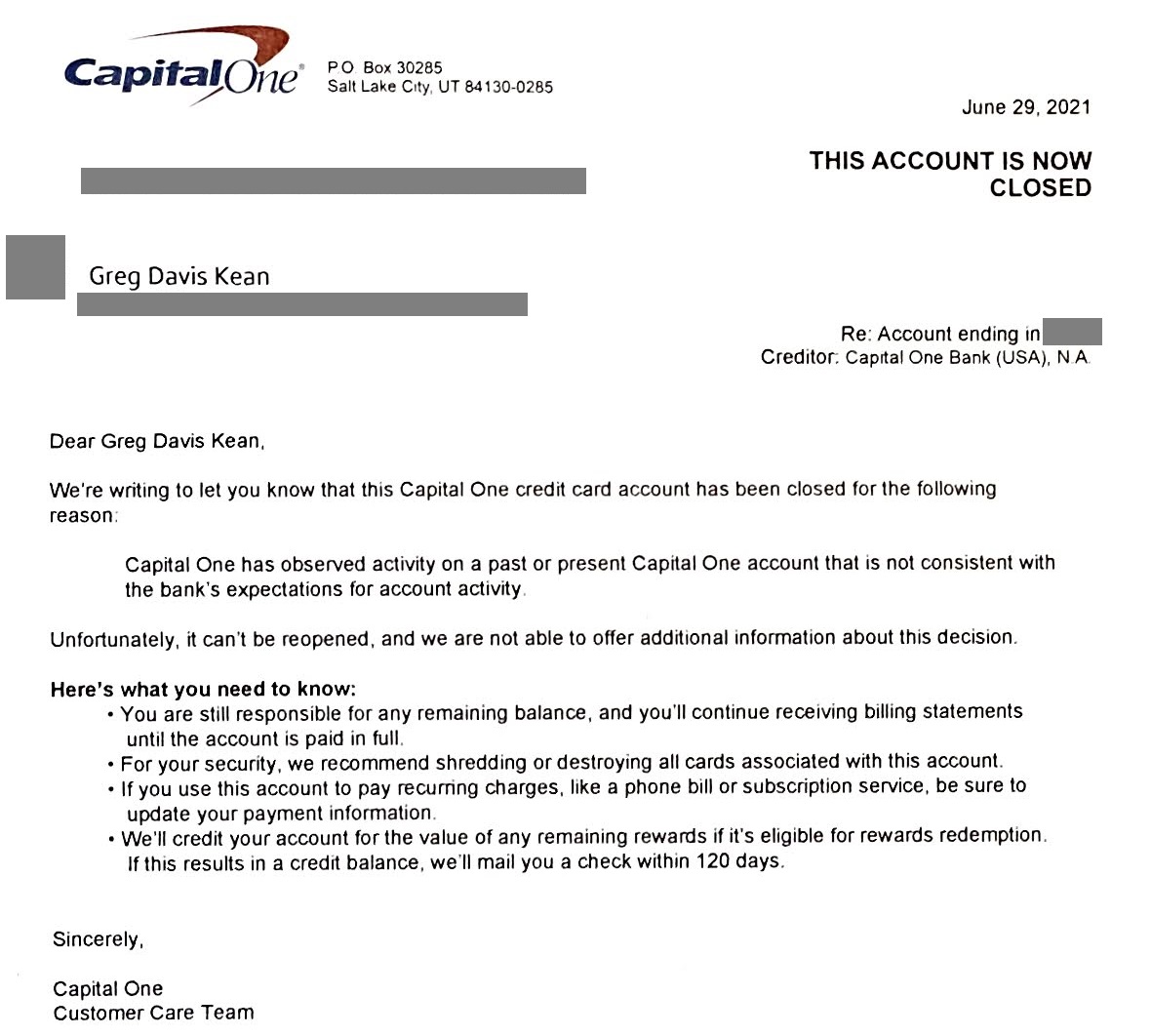
Request Confirmation: Ask the representative to confirm that the account will be closed immediately and that you will receive written confirmation of the closure. This documentation is crucial for your records.
What to Say and Ask
During the call, keep these points in mind:
-
“I would like to close my Capital One credit card account ending in [last four digits].”
-
“Please confirm that the balance is zero and that no further charges or fees will be applied after today.”
-
“Can you send me a confirmation letter or email verifying the account closure?”
-
“What is the effective date of the closure?”
After the Call: Essential Follow-Up
Your responsibility doesn’t end when you hang up the phone.
-
Destroy the Card: Once the account is confirmed closed, physically destroy the credit card. Cut it into multiple pieces, ensuring the chip and magnetic stripe are thoroughly severed. This prevents unauthorized use.
-
Monitor Your Credit Report: Approximately 30-60 days after closure, check your credit report with all three major bureaus (Experian, Equifax, TransUnion) to ensure the account is reported as “closed by grantor” or “closed by consumer” with a zero balance. You can get free annual reports from AnnualCreditReport.com. Report any discrepancies immediately.
-
Look for Written Confirmation: Wait for the written confirmation letter or email from Capital One. If you don’t receive it within a reasonable timeframe (e.g., 2-4 weeks), follow up with customer service.
Post-Closure Considerations and Financial Best Practices
Closing a credit card is a point in time, but its effects can linger. Understanding these long-term implications is part of responsible financial management.
Monitoring Your Credit Report Regularly
-
Ongoing Vigilance: Continue to regularly monitor your credit reports. While a closed account with positive history can remain on your report for up to 10 years, ensuring its status remains correct is important. Check for any unexpected activity or re-opening attempts.
-
Understand Its Impact: Familiarize yourself with how credit scores are calculated. Knowing the weight given to payment history, amounts owed, length of credit history, new credit, and credit mix will help you understand how any financial decision, including closing a card, affects your score.
Managing Your Remaining Credit Accounts
-
Credit Utilization Management: If you closed a card and it increased your overall credit utilization, be extra diligent about paying down balances on your remaining cards. Keeping your utilization below 30% (ideally below 10%) is crucial for a good credit score.
-
Payment Discipline: Consistently make all payments on time and in full whenever possible. Payment history is the most significant factor in your credit score.
-
Avoid Opening Too Much New Credit: Resist the urge to immediately open new credit cards to replace the one you closed. Too many new inquiries in a short period can temporarily lower your score.
The Long-Term Impact on Your Financial Health
-
Credit Score Fluctuation: Your credit score may dip slightly in the short term due to the reduced available credit and potentially a shorter AAoA. However, if you manage your remaining credit responsibly, your score will likely rebound and improve over time.
-
Achieving Financial Goals: If closing the card helps you achieve financial goals like debt freedom or simplified budgeting, the short-term credit score dip may be a worthwhile trade-off for long-term financial stability and peace of mind.
-
Responsible Credit Management: Ultimately, closing a credit card is one aspect of responsible credit management. It’s about making deliberate choices that align with your broader financial strategy, whether that’s reducing debt, saving money, or simplifying your financial life.
Common Questions and Expert Tips
Even after the process is understood, certain questions frequently arise.
Will Closing My Card Hurt My Credit Score Immediately?
Yes, it often can, but typically not severely or permanently if you have other healthy credit accounts. The immediate impact primarily stems from the reduction in your total available credit (increasing your utilization ratio) and potentially shortening your average age of accounts. The effects tend to be more pronounced for individuals with a short credit history or very few other active credit lines. For those with a long, established credit history and multiple other cards, the impact might be minimal and temporary.
What if I Have a Small Balance Left?
Even a small balance prevents closure. Pay it off. If it’s a very small amount (e.g., a few cents of residual interest), the Capital One representative might be able to waive it, but assume you’ll need to pay it to ensure a clean slate.
Can I Reopen a Closed Capital One Account?
Generally, no. Once a credit card account is formally closed, especially by the consumer, it cannot typically be reopened. You would need to apply for a new Capital One credit card, which would involve a new credit check and a new account opening on your credit report.
Expert Tip 1: Strategic Closures
If you have multiple credit cards and need to close some, prioritize strategically:
-
Close newer cards first: These have less impact on your average age of accounts.
-
Close cards with high annual fees and unused benefits: This saves you money directly.
-
Close cards with low credit limits: These have less impact on your overall available credit.
-
Avoid closing your oldest card: This typically has the most positive impact on your AAoA.
Expert Tip 2: Keep an Emergency Card
Even if you’re trying to reduce your reliance on credit, it’s often wise to keep at least one credit card open with a decent credit limit for emergencies. This provides a financial safety net and helps maintain a positive credit history, especially if it’s an older account. Make a small purchase on it periodically and pay it off immediately to keep it active.
Closing a Capital One credit card requires careful thought and meticulous execution. By understanding the financial implications, preparing diligently, and following the correct steps, you can ensure a smooth transition that aligns with your broader financial goals, safeguarding your credit and setting yourself up for continued financial success.
aViewFromTheCave is a participant in the Amazon Services LLC Associates Program, an affiliate advertising program designed to provide a means for sites to earn advertising fees by advertising and linking to Amazon.com. Amazon, the Amazon logo, AmazonSupply, and the AmazonSupply logo are trademarks of Amazon.com, Inc. or its affiliates. As an Amazon Associate we earn affiliate commissions from qualifying purchases.