
In today’s dynamic economic landscape, every dollar counts. For many households, auto insurance represents a significant, recurring expense that often goes unexamined once the initial policy is purchased. However, being proactive about your auto insurance doesn’t just potentially save you money; it ensures you have the right coverage for your evolving life circumstances. Changing auto insurance isn’t merely a transaction; it’s a strategic financial decision that can optimize your budget, enhance your protection, and provide peace of mind. This comprehensive guide will walk you through the process, equipping you with the knowledge and tools to make an informed and financially savvy switch.
Why You Should Consider Changing Your Auto Insurance
Many drivers stick with their current insurer out of inertia, convenience, or a belief that switching is too complicated or won’t yield substantial benefits. This passive approach often costs them hundreds, if not thousands, of dollars over time. Understanding the compelling reasons to re-evaluate your policy is the first step towards smarter financial management.
Seeking Cost Savings
The primary motivator for most people to explore changing their auto insurance is the potential for cost savings. Insurance rates are not static; they fluctuate based on a multitude of factors, and what was once the cheapest option for you might no longer be. Insurers frequently adjust their algorithms, offer new discounts, or change their pricing strategies. Remaining with an insurer year after year without comparing alternatives means you could be missing out on significantly lower premiums. Competition in the auto insurance market is fierce, and companies are often willing to offer enticing rates to win new customers. By actively shopping around, you force insurers to compete for your business, driving down costs. This is not about sacrificing quality; it’s about finding the best value for your specific needs.
Improving Coverage and Service
Beyond cost, the quality of your coverage and the service you receive are paramount. Your current policy, while seemingly adequate, might have gaps or limitations that expose you to financial risk in the event of an accident. Perhaps you’ve never fully understood what your policy covers or excludes, or maybe your deductible is uncomfortably high. A new policy could offer more robust coverage options, higher limits, or additional features like rental car reimbursement or roadside assistance that better suit your needs.
Furthermore, customer service can vary dramatically between insurers. A company with a strong reputation for claims handling, responsive customer support, and a user-friendly digital experience can make a significant difference during stressful times. If you’ve had frustrating experiences with your current insurer, or if their claims process is slow and inefficient, seeking a provider with superior service is a legitimate and financially prudent reason to switch. A smooth claims process can save you considerable time, stress, and potentially unexpected out-of-pocket expenses.
Adapting to Life Changes
Life is a journey of constant change, and your auto insurance needs evolve right alongside it. Major life events can significantly impact both the type of coverage you require and the rates you’re offered.
- Marriage: Getting married often results in lower rates as insurers view married individuals as more responsible.
- Moving: Relocating to a new zip code or city can drastically alter your premiums, either up or down, depending on local crime rates, traffic congestion, and accident statistics.
- New Vehicle: Buying a new car, especially one with advanced safety features, can qualify you for new discounts. Conversely, a high-performance or luxury vehicle will likely increase your rates.
- Adding or Removing Drivers: Bringing a new teenage driver onto your policy will almost certainly increase costs, while a child leaving home might lead to reductions.
- Changes in Driving Habits: If you’ve started working from home and drive significantly less, you might qualify for low-mileage discounts.
- Improving Credit Score: Your credit score (in most states) plays a role in determining your premiums, so an improved score could lead to better rates.
- Accident Forgiveness Eligibility: After a period of safe driving, you might become eligible for accident forgiveness with certain insurers.
Failing to re-evaluate your policy after such events means you could be overpaying or, worse, underinsured for your current circumstances.
Reacting to Rate Increases
Perhaps the most common trigger for exploring a switch is an unexpected increase in your renewal premium. While some minor fluctuations are normal, a significant hike without a corresponding change in your driving record or claims history warrants immediate action. Insurers may raise rates due to broad market trends, increased claims in your area, or changes in their own financial performance. You shouldn’t passively accept these increases. Instead, view them as an opportunity to leverage competition and find a better deal elsewhere. Many insurers bank on customer complacency, but an active consumer is an empowered one, ready to find an insurer who values their business.
The Strategic Steps to Changing Your Policy
Changing auto insurance can seem daunting, but by breaking it down into manageable steps, you can navigate the process efficiently and confidently. A systematic approach ensures you compare policies effectively and avoid any gaps in coverage.
Assessing Your Current Coverage Needs
Before you even begin shopping, take stock of your existing policy. Understand precisely what you’re covered for, your deductibles, and your limits for liability, collision, and comprehensive coverage. More importantly, reflect on your current financial situation, assets, and driving habits.
- What are your state’s minimum requirements? You must meet these, but often they are insufficient.
- How much liability coverage do you need? If you have significant assets (home, savings), you’ll want higher liability limits to protect them in case you’re at fault in a major accident.
- Is collision and comprehensive coverage still necessary? If your car is older and its market value is low, the cost of these coverages might outweigh the potential payout. Consider dropping them to save money.
- What deductible can you comfortably afford? A higher deductible lowers your premium but means you pay more out-of-pocket if you file a claim.
- Do you need extras like rental car reimbursement, roadside assistance, or GAP insurance?
A clear understanding of your needs will prevent you from overpaying for unnecessary coverage or, conversely, being dangerously underinsured.
Gathering Quotes Effectively
Once you know what you need, it’s time to shop. This is where modern financial tools and resources shine.
- Online Comparison Websites: Platforms like Policygenius, Compare.com, or The Zebra allow you to enter your information once and receive multiple quotes from various insurers simultaneously. This is a highly efficient way to get a broad overview of the market.
- Direct Insurers: Don’t forget to check quotes directly from large carriers like GEICO, Progressive, State Farm, Allstate, and Liberty Mutual. Sometimes, they offer exclusive online rates.
- Independent Insurance Agents: These agents work with multiple insurance companies and can often find competitive rates by shopping around on your behalf. They can also provide personalized advice and explain complex policy details.
- Captive Agents: Agents who work for a single company (e.g., a State Farm agent) can be knowledgeable about their specific products but won’t be able to compare across different carriers. Still, it’s worth getting a quote from them if you’re considering their specific brand.
When gathering quotes, ensure you provide consistent and accurate information across all platforms. Inaccuracies can lead to misleading quotes and headaches down the line. Have your current policy information, vehicle details (VIN), driver’s license numbers, and claims history readily available.
Evaluating Potential Insurers and Policies
Comparing quotes isn’t just about looking at the bottom line premium. It requires a meticulous side-by-side comparison of the policies themselves.
- Coverage Limits and Deductibles: Ensure the new quotes match the specific coverage types, limits, and deductibles you’ve determined you need. An artificially low premium might hide significantly reduced coverage or much higher deductibles.
- Discounts Applied: Verify that all applicable discounts (multi-policy, good driver, safe vehicle, professional affiliation, good student, etc.) have been factored into the quote.
- Insurer Reputation: Beyond price, consider the financial strength and customer service reputation of the insurer. Check ratings from organizations like A.M. Best (for financial strength) and J.D. Power (for customer satisfaction). Read online reviews and consumer complaints. A cheap policy from an unreliable insurer can be far more costly in the long run if they deny claims or provide poor service.
- Claim Process: Research how easy it is to file a claim, the average processing time, and their communication methods.
- Policy Add-ons and Features: Some insurers offer unique perks like disappearing deductibles, accident forgiveness, or pet injury coverage. Weigh the value of these against their cost.
Create a spreadsheet to systematically compare options. This will help you visualize the differences and make a truly informed financial decision.
Executing the Switch Seamlessly
Once you’ve chosen a new insurer, the final steps are critical to ensure a smooth transition without any lapse in coverage.
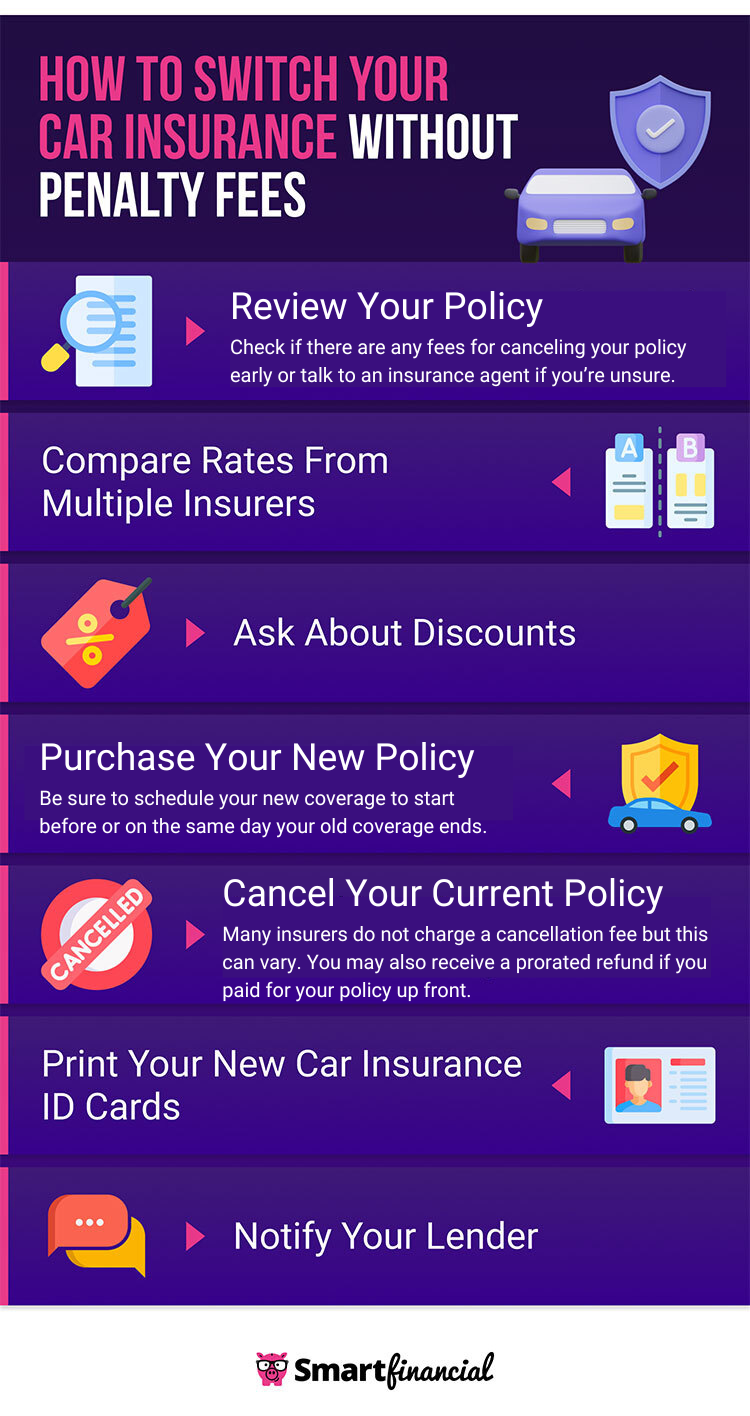
- Do NOT Cancel Your Old Policy Prematurely: This is arguably the most crucial piece of advice. Only cancel your old policy after your new policy has been activated and you have received confirmation of coverage (e.g., ID cards, policy documents). A lapse in coverage, even for a day, can have serious consequences, including fines, license suspension, and significantly higher rates when you try to get new insurance.
- Set the Start Date: Coordinate the start date of your new policy to align perfectly with the end date of your old policy.
- Notify Your Old Insurer: Once your new policy is firmly in place, contact your old insurer to cancel. Be prepared for them to try and retain your business, possibly by offering a better rate. If they do, compare it against your new offer one last time.
- Refunds: If you paid your previous policy in full, you should receive a prorated refund for any unused premium.
- Update Lienholders: If you have a car loan or lease, notify your lender or leasing company of your new insurance provider. They will need updated proof of insurance.
Key Factors Influencing Your Auto Insurance Rates
Understanding what drives your insurance premiums empowers you to make choices that can lead to significant savings. While some factors are beyond your immediate control, many can be influenced over time.
Your Personal Profile and Driving History
Your individual circumstances and past behavior are paramount in how insurers assess your risk.
- Driving Record: A clean driving record is your most valuable asset. Accidents, traffic violations (speeding tickets, DUIs), and claims history will substantially increase your rates. The fewer incidents on your record, the lower your premiums.
- Age and Gender: Younger, less experienced drivers (especially males under 25) typically face higher rates due to statistical higher accident rates. As drivers mature and gain experience, rates generally decrease.
- Marital Status: Married individuals often receive lower rates, as they are statistically less likely to file claims.
- Occupation: Some professions are considered lower risk, while others might incur slightly higher rates. Certain professional associations might also qualify for group discounts.
- Credit Score: In most states, your credit-based insurance score (which uses elements of your credit report but is not the same as a typical credit score) is a significant factor. A higher score often indicates greater financial responsibility and is correlated with fewer claims, leading to lower premiums.
Vehicle Characteristics and Usage
The car you drive and how you use it directly impact the insurer’s potential payout in the event of a claim.
- Make, Model, and Year: More expensive, powerful, or luxurious cars generally cost more to insure because they are more costly to repair or replace. Vehicles with high theft rates also tend to have higher premiums.
- Safety Features: Cars equipped with advanced safety features (e.g., anti-lock brakes, airbags, adaptive cruise control, lane departure warning) often qualify for discounts as they reduce the likelihood or severity of accidents.
- Anti-Theft Devices: Alarms, immobilizers, and GPS tracking systems can also lead to discounts.
- Annual Mileage: The more you drive, the higher your risk of being in an accident. If you drive significantly less than the average, you might qualify for low-mileage discounts.
- Vehicle Usage: Whether your car is used for commuting, pleasure, or business will affect your rates. Commuter vehicles typically have higher premiums.
Geographic Location and Credit Score
Where you live and your financial responsibility (as reflected in your credit score) are critical factors.
- Zip Code: Urban areas with higher traffic density, crime rates, and vandalism often have higher premiums than rural or suburban areas. Your specific neighborhood can even influence rates.
- Garaging Location: Where you park your car overnight (e.g., in a secure garage vs. street parking) can impact your rates.
- State Regulations: Each state has its own insurance laws, minimum coverage requirements, and regulatory environment, which can cause significant variations in average premiums.
- Credit-Based Insurance Score: As mentioned, a strong credit history often correlates with lower insurance costs, as insurers see it as an indicator of responsible behavior. Improving your credit score over time can therefore translate into tangible savings on your auto insurance.
Maximizing Your Savings: Insider Tips and Strategies
Beyond simply changing insurers, several proactive strategies can help you consistently secure the best possible rates without compromising on essential coverage.
Leveraging Discounts
Discounts are often the easiest way to reduce your premium, and many drivers aren’t aware of all the savings opportunities available to them. Always ask your potential insurer about every discount they offer.
- Bundling: Combining your auto insurance with home, renters, or life insurance from the same provider can often lead to significant multi-policy discounts.
- Multi-Vehicle Discount: Insuring more than one vehicle with the same company.
- Good Driver/Safe Driver: For drivers with a clean record over a specified period (e.g., 3-5 years).
- Good Student: For young drivers (typically under 25) who maintain a certain GPA.
- Defensive Driving Course: Completing an approved defensive driving course can sometimes earn you a discount.
- Vehicle Safety Features: Anti-lock brakes, airbags, anti-theft systems, and advanced driver-assistance systems.
- Low Mileage: For drivers who put fewer miles on their car annually.
- Pay-in-Full/Paperless/Auto-Pay: Discounts for convenient payment methods or opting for electronic communications.
- Telematics/Usage-Based Insurance: Programs that monitor your driving habits (speed, braking, mileage) via an app or device can offer discounts for safe drivers.
Adjusting Deductibles and Coverage Levels
Strategic adjustments to your policy’s financial components can significantly impact your premiums.
- Increasing Your Deductible: Choosing a higher deductible (e.g., going from $500 to $1,000) for collision and comprehensive coverage will lower your premium, as you’re taking on more of the financial risk yourself in the event of a claim. Ensure you have enough in your emergency fund to cover this higher deductible if needed.
- Revisiting Coverage Types: As your car ages and depreciates, the cost of collision and comprehensive coverage might exceed its actual value or the potential payout. For older, lower-value cars, dropping these coverages can save money.
- Evaluating Liability Limits: While higher liability limits protect your assets, there’s a point of diminishing returns. Work with an agent to determine adequate, but not excessive, liability protection based on your net worth.
Maintaining a Clean Driving Record and Good Credit
These two factors are foundational for long-term insurance savings.
- Drive Safely: Avoiding accidents and traffic violations is the single most effective way to keep your premiums low. A clean driving record directly translates to lower perceived risk by insurers.
- Monitor and Improve Your Credit Score: Regularly check your credit report for errors and work to improve your credit score. Paying bills on time, reducing debt, and maintaining a healthy credit mix can positively impact your credit-based insurance score, leading to better rates in many states.
The Power of Bundling
Bundling insurance policies with the same provider is one of the most substantial ways to save money. Insurers love customers who consolidate their business, as it increases customer loyalty and retention. When you bundle auto insurance with homeowner’s, renter’s, or even life insurance, you can often unlock discounts that are not available when purchasing policies separately. Always get quotes for bundled packages versus individual policies to see the true savings potential. This strategy not only saves you money but also streamlines your financial management by having fewer companies to deal with.
Common Pitfalls to Avoid When Switching
While changing auto insurance can be financially rewarding, several missteps can lead to unexpected costs, coverage gaps, or future complications. Being aware of these pitfalls allows you to navigate the process smoothly.
The Dangers of Coverage Lapses
The most critical mistake to avoid is having a lapse in your auto insurance coverage, even for a single day.
- Legal Consequences: Most states mandate continuous auto insurance. A lapse can result in fines, vehicle impoundment, suspension of your driver’s license or vehicle registration, and other legal penalties.
- Higher Future Premiums: Insurers view a lapse in coverage as a red flag, indicating higher risk. When you eventually seek new insurance, you will likely face significantly higher premiums, as you’ll be considered a “high-risk” driver.
- Financial Vulnerability: The period without coverage leaves you completely exposed to financial ruin if you’re involved in an accident. All repair costs, medical expenses, and potential lawsuits would come directly out of your pocket.
Always ensure your new policy is active and confirmed before canceling your old one. Coordinate the start and end dates precisely.
Misinterpreting Policy Comparisons
It’s tempting to simply choose the cheapest quote, but this can be a costly error.
- Not Comparing “Apples to Apples”: Ensure that when you compare quotes, you are comparing policies with identical or very similar coverage limits, deductibles, and endorsements. A significantly cheaper quote might be offering less robust liability protection, higher deductibles, or omitting crucial coverages you need (like rental car reimbursement).
- Overlooking Hidden Costs/Fees: Some insurers might have different fee structures for policy changes, cancellations, or specific services. While usually minor, it’s worth understanding the full cost implication beyond the premium.
- Focusing Only on Price: As discussed, price is important, but it’s not the only factor. A policy from a reputable insurer with excellent customer service and a smooth claims process can be worth a slightly higher premium compared to a budget insurer with a poor track record.
Thoroughly review policy documents and ask questions if anything is unclear. Don’t be afraid to request an itemized breakdown of coverage and costs.
Overlooking Insurer Reputation and Service
Your auto insurance is there to protect you financially when you need it most – after an accident or incident. The quality of your insurer’s service becomes paramount at this stressful time.
- Poor Claims Handling: An insurer known for slow claim processing, difficult adjusters, or frequent claim denials can turn an already unpleasant situation into a nightmare, potentially leaving you with significant out-of-pocket expenses and prolonged inconvenience.
- Lack of Accessibility: Consider how easy it is to contact your insurer. Do they offer 24/7 support? Is their online portal user-friendly? Can you reach a human easily if needed?
- Financial Stability: Ensure your chosen insurer is financially stable. While rare, an insurer going out of business could leave policyholders in a difficult situation. Check ratings from independent agencies like A.M. Best.
Investigate reviews and ratings from independent consumer organizations (like J.D. Power) and read testimonials. A seemingly cheap policy isn’t a good deal if the company doesn’t deliver when you file a claim. Your peace of mind and financial security are too important to compromise.

Conclusion
Changing auto insurance is a proactive financial decision that empowers you to control your expenses, ensure adequate protection, and adapt to life’s many changes. It’s not a one-time event but rather a process you should revisit periodically, especially during major life transitions or policy renewal cycles. By systematically assessing your needs, diligently gathering and comparing quotes, and avoiding common pitfalls, you can unlock significant savings and secure a policy that offers both financial value and robust peace of mind. Taking the time to manage your auto insurance strategically is a smart money move that will benefit your wallet and your future.
aViewFromTheCave is a participant in the Amazon Services LLC Associates Program, an affiliate advertising program designed to provide a means for sites to earn advertising fees by advertising and linking to Amazon.com. Amazon, the Amazon logo, AmazonSupply, and the AmazonSupply logo are trademarks of Amazon.com, Inc. or its affiliates. As an Amazon Associate we earn affiliate commissions from qualifying purchases.