
In the modern digital economy, the subscription model has become the bedrock of corporate revenue. Among these, Amazon Prime stands as the titan of “convenience commerce.” For many, the annual or monthly fee is viewed as a mandatory utility—a cost of living in the 21st century. However, as household budgets tighten and the “subscription fatigue” phenomenon takes hold, savvy consumers are beginning to question the actual return on investment (ROI) of their memberships.
Canceling Amazon Prime is more than just a technical process; it is a strategic financial move. By auditing these recurring costs, you reclaim control over your cash flow and dismantle the psychological triggers that lead to impulsive spending. This guide explores the financial implications of the Prime ecosystem, provides a definitive roadmap for cancellation, and offers strategies to maintain your purchasing power without the membership fee.
Assessing the ROI: Is Amazon Prime Still a Sound Financial Investment?
Before proceeding to the “how-to,” it is essential to conduct a cold, hard audit of your spending. Amazon Prime’s price point has climbed steadily over the years, now sitting at a significant $139 annually or $14.99 monthly for U.S. subscribers. To justify this expense from a personal finance perspective, your tangible savings must exceed the cost of the membership.
Analyzing the Real Cost of Convenience
The primary value proposition of Prime is “free” two-day shipping. However, in the world of finance, nothing is truly free. Amazon often builds the cost of logistics into the product pricing or requires a minimum threshold for non-members. To determine your ROI, review your order history from the past twelve months.
If you make fewer than 25 orders a year, and those orders are often over the $35 “free shipping” threshold available to non-members, you are effectively paying $139 for a service you aren’t utilizing. Furthermore, one must account for the “Prime Video” and “Amazon Music” components. If you already pay for Netflix, Hulu, or Spotify, the overlap in services represents a “leaky bucket” in your budget—paying twice for the same category of entertainment.
The Psychology of the “Free Shipping” Trap
From a behavioral economics standpoint, Amazon Prime acts as a “commitment device.” Once you have paid the membership fee, you feel a psychological pressure to use the service to “get your money’s worth.” This often leads to “filler spending”—adding unnecessary items to your cart just because the shipping is perceived as free.
Financial health is built on intentionality. By removing the Prime badge, you reintroduce a “friction point” into your shopping experience. This friction—having to consider shipping costs or wait a few extra days—is often enough to prevent impulsive purchases that harm your long-term savings goals.
The Step-by-Step Financial Exit: How to Properly Terminate Your Prime Membership
Once you have determined that the membership no longer serves your financial goals, the next step is to navigate the cancellation process. Amazon, like many subscription-based giants, utilizes “dark patterns”—user interface designs intended to make it difficult to leave. Following these steps ensures you successfully stop the recurring charge and maximize any potential recovery of funds.
Navigating the Desktop and Mobile Interfaces
To cancel via a desktop browser, log in and navigate to “Account & Lists,” then select “Prime.” On the management page, look for the “Manage Membership” update bar. You will likely be prompted with several screens highlighting “lost benefits” or offering a switch to a cheaper monthly plan. From a wealth-management perspective, ignore these “sunk cost” anchors. Proceed to “End Membership and Benefits.”
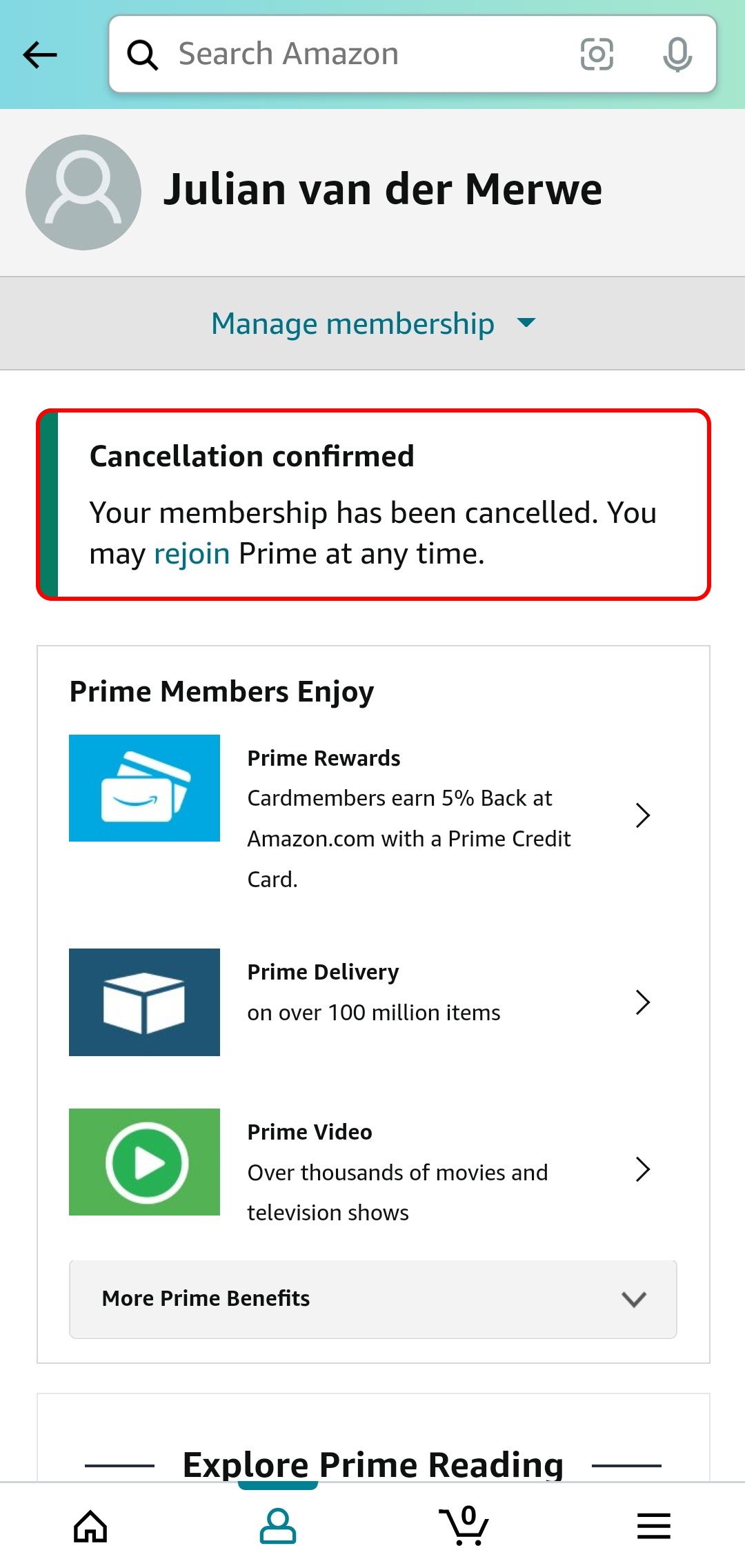
On the mobile app, the process is tucked away under the user icon (the person silhouette). Navigate to “Your Account” > “Manage Prime Membership.” Again, you will encounter multiple confirmation pages. Ensure you click through until you receive a confirmation email. Without that email, the transaction is not legally finalized in their system, and you risk a surprise charge on your next billing cycle.
Securing Refunds for Unused Benefits
A critical but often overlooked financial tip is the Amazon refund policy. If you have paid for your annual membership but have not used any Prime benefits (such as shipping, Video, or Kindle services) during the current billing period, you are typically eligible for a full refund of the current term’s fee.

Even if you have used the services, Amazon occasionally offers a prorated refund depending on your usage and your jurisdiction’s consumer protection laws. During the cancellation flow, pay close attention to the wording regarding “Ending Now” versus “End at the end of the period.” If the system offers an immediate refund, it is usually the superior financial choice, as it returns liquid capital to your bank account immediately rather than letting it sit as “pre-paid” credit for a service you no longer want.
Strategic Alternatives: Managing Your Monthly Cash Flow Post-Prime
Life after Prime does not mean an end to online shopping; it means a transition to more strategic, cost-effective habits. Many consumers fear that losing Prime will lead to exorbitant shipping costs, but the retail landscape is far more competitive than it was a decade ago.
Comparison Shopping and Aggregator Tools
One of the hidden costs of Prime is “price anchoring.” Because we pay for the membership, we often assume Amazon has the lowest price and fail to check elsewhere. Post-cancellation, you should utilize browser extensions and price-tracking tools like CamelCamelCamel or Honey.
By comparing prices with competitors like Walmart, Target, or specialized retailers, you will often find that the “base price” elsewhere is lower, offsetting any shipping costs. Additionally, many retailers offer free shipping on orders over $35 without a membership fee, effectively matching the Prime experience for larger, planned purchases.
The “Wait and Batch” Method for Shipping Savings
The most effective way to save money post-Prime is the “Batching Method.” Instead of ordering items the moment the thought enters your head, keep a running list in your cart. Once the total exceeds the free shipping threshold (usually $35 on Amazon for non-members), place the order.
This serves two financial purposes:
- It eliminates shipping costs.
- It serves as a 48-hour cooling-off period. Often, by the time you reach the $35 threshold, you’ll realize you didn’t actually need half the items in the cart, leading to significant monthly savings on “lifestyle creep” purchases.
Combating Subscription Fatigue in the Digital Economy
The decision to cancel Amazon Prime should be part of a larger, systemic audit of your financial life. We are currently living in an era of “micro-transactions,” where $10 here and $15 there can quietly bleed a budget dry, totaling thousands of dollars annually.
Auditing Your Recurring Expenses
Take this opportunity to download your last three months of bank statements. Highlight every recurring “SAAS” (Software as a Service) or membership fee. This includes streaming services, gym memberships, news subscriptions, and cloud storage.
Ask yourself the same questions we applied to Prime: What is the ROI? Am I paying for the potential to use it, or the actual usage? In personal finance, the goal is to align your spending with your values. If you value home ownership or retirement more than the ability to watch one specific show on a fourth streaming platform, the choice becomes clear.
Building a Leaner Financial Lifestyle
Reducing your “fixed” monthly costs is the fastest way to increase your savings rate. Unlike cutting back on groceries, which requires constant daily willpower, canceling a subscription is a “one-and-done” decision that pays dividends every single month.
The $139 saved from Amazon Prime, if invested in a low-cost index fund with an average 7% return, would grow to nearly $2,000 over ten years. When you combine this with the cancellation of other unused subscriptions, you aren’t just “saving a few bucks”—you are building a significant investment engine fueled by the elimination of corporate convenience fees.

Conclusion: Reclaiming Financial Agency
Canceling Amazon Prime is a symbolic and practical step toward financial independence. It represents a shift from being a passive consumer to an intentional manager of your wealth. By navigating the technical steps to end the membership, analyzing the true ROI of your spending, and adopting smarter shopping habits, you protect your capital from the erosion of “convenience culture.”
The digital world is designed to make spending seamless and saving difficult. By introducing intentional friction and auditing your recurring costs, you ensure that your money is working for your future, not just for a retail giant’s bottom line. Start your cancellation today, audit your subscriptions, and watch your financial margin grow.
aViewFromTheCave is a participant in the Amazon Services LLC Associates Program, an affiliate advertising program designed to provide a means for sites to earn advertising fees by advertising and linking to Amazon.com. Amazon, the Amazon logo, AmazonSupply, and the AmazonSupply logo are trademarks of Amazon.com, Inc. or its affiliates. As an Amazon Associate we earn affiliate commissions from qualifying purchases.