
Managing fixed expenses is a cornerstone of robust personal financial planning. Among these expenses, insurance premiums often represent a significant portion of a household’s monthly or annual budget. While Allstate is a titan in the insurance industry, offering a wide array of products from auto and homeowners to life insurance, there are numerous financial reasons why a consumer might choose to part ways with the provider. Whether you have found a more competitive rate elsewhere, are consolidating your policies for a bundling discount, or are selling the insured asset, knowing how to navigate the cancellation process efficiently is vital for protecting your cash flow.

Canceling an insurance policy is more than just a clerical task; it is a strategic financial move that requires timing, documentation, and an understanding of your contractual rights. This guide provides a comprehensive look at how to exit your Allstate policy while maximizing your potential refunds and ensuring your financial security remains intact throughout the transition.
Understanding the Financial Impact of Changing Insurance Providers
Before initiating a cancellation, it is essential to conduct a cost-benefit analysis. Insurance is not merely a legal requirement for drivers or homeowners; it is a risk management tool designed to protect your net worth. Changing providers should always be viewed through the lens of financial optimization.
Evaluating Your Current Premiums and Policy Value
The first step in any financial reorganization is an audit of current expenditures. Review your Allstate declarations page to understand exactly what you are paying for. Look at your liability limits, comprehensive and collision deductibles, and any added riders like roadside assistance or rental reimbursement. Compare these costs against quotes from competitors. If another A-rated insurer offers the same level of protection for 15% to 20% less, the move is likely a sound financial decision. However, consider “loyalty discounts” or “vanishing deductibles” you may have accrued with Allstate, as these represent realized value that will be lost upon cancellation.
The Hidden Costs of Early Cancellation
While most modern insurance policies allow for cancellation at any time, some may carry a “short-rate” cancellation fee. This is a penalty charged if you cancel before the end of the policy term. Most commonly, Allstate policies are canceled on a “pro-rata” basis, meaning you are only charged for the days you were actually covered. However, it is prudent to confirm with your agent whether any administrative fees or short-rate penalties apply, as these can eat into your expected savings.
Impact on Your Personal Budget and Cash Flow
Timing your cancellation is critical for maintaining liquid cash. If you pay your premiums via monthly Electronic Funds Transfer (EFT), canceling mid-cycle requires careful coordination with your bank to prevent an accidental withdrawal. Conversely, if you pay your premiums in full annually or semi-annually, a cancellation will trigger a refund of the “unearned premium.” This influx of cash should be factored into your short-term financial planning, perhaps being redirected into a high-yield savings account or toward the down payment of your new policy.
Step-by-Step Financial Logistics: How to Successfully Cancel Your Policy
To ensure a clean break and the timely return of your funds, you must follow a specific set of logistical steps. Verbal agreements are rarely sufficient in the world of corporate finance; documentation is your best defense.
Reviewing Your Policy Terms and Conditions
Every insurance contract contains a section detailing the cancellation procedures. Some states have specific regulations regarding how many days’ notice a consumer must provide. Reviewing these terms ensures you are not in breach of contract, which could theoretically impact your “insurance score”—a metric similar to a credit score that insurers use to determine your risk level and premium costs.
Contacting Your Agent vs. Corporate Headquarters
Allstate operates through a network of captive agents. Your local agent has a financial interest in keeping your policy active, as their commission is tied to renewals. While contacting your agent is the standard route, be prepared for a “retention pitch.” From a financial perspective, listen to any counter-offers they may provide—such as new discounts or policy adjustments—but remain firm if your market research indicates a better deal elsewhere. If you prefer to avoid the sales pressure, you can contact Allstate’s corporate customer service line or send a formal written notice to their headquarters.
Securing Your Refund for Prepaid Premiums
One of the most important financial aspects of canceling is the refund of the unearned premium. If you cancel your policy halfway through a six-month term for which you paid $1,200 upfront, you are legally entitled to a refund of the remaining $600 (minus any applicable fees). Ensure that Allstate has your current mailing address or updated banking information to facilitate this transfer. It typically takes 7 to 14 business days for these funds to be disbursed. Monitor your accounts closely to ensure the refund matches your pro-rata calculations.

Avoiding the “Insurance Gap” and Protecting Your Assets
A critical mistake many individuals make during the cancellation process is creating a “lapse in coverage.” From a financial standpoint, a lapse is a significant liability that can have long-term repercussions on your wealth.
The Financial Risk of Lapsed Coverage
If you cancel your Allstate policy before your new coverage is active, you are effectively self-insuring. In the event of a car accident or a house fire during this gap, you would be personally responsible for all damages, which could lead to bankruptcy or the total loss of your assets. Furthermore, insurance companies view a history of lapsed coverage as a high-risk indicator. When you eventually go to sign up for a new policy, you will likely be charged a “high-risk” premium, which can be significantly more expensive than standard rates.
Timing Your New Policy for Maximum Efficiency
The most effective way to transition is to have your new policy start date coincide with your Allstate cancellation date. Ideally, set the new policy to begin at 12:01 AM on the same day you set the Allstate policy to terminate. This “overlap” ensures that there is never a moment where your assets are unprotected. By coordinating these dates, you maintain a continuous insurance history, which keeps your premiums low over the long term.
Notifying Your Lender or Lienholder
If you have a mortgage on your home or a loan on your vehicle, your lender has a financial interest in your insurance status. Most loan agreements require you to maintain specific levels of coverage to protect the collateral. When you cancel Allstate, you must provide your lender with the details of your new insurance provider immediately. Failure to do so may result in the lender purchasing “force-placed insurance” on your behalf. Force-placed insurance is notoriously expensive and provides minimal protection, serving only to protect the lender’s interest, not yours. Avoiding this unnecessary expense is a key part of the cancellation strategy.
Beyond Cancellation: Re-evaluating Your Long-Term Insurance Strategy
The act of canceling an insurance policy should trigger a broader review of your financial strategy. Markets change, and the policy that was right for you three years ago may no longer be the most efficient use of your capital.
Shopping the Market for Competitive Rates
The insurance industry is highly competitive, and “price optimization” algorithms used by companies can sometimes lead to “loyalty taxes,” where long-term customers end up paying more than new customers. Financial experts recommend shopping for insurance every one to two years. Use this cancellation as an opportunity to benchmark your costs against the broader market. Utilize independent agents who can shop multiple carriers simultaneously to find the best actuarial fit for your specific risk profile.
Bundling vs. Unbundling: A Cost-Benefit Analysis
While Allstate heavily promotes bundling (combining auto, home, and life insurance), it is not always the most cost-effective route. Sometimes, “unbundling”—using different carriers for different needs—can result in lower total premiums. Use a spreadsheet to compare the total cost of a bundled package versus the sum of individual policies from specialized carriers. The goal is to minimize the total outflow of capital while maintaining the necessary coverage ceilings.
Adjusting Deductibles to Influence Monthly Liquidity
When setting up your new policy after leaving Allstate, consider how your deductible affects your monthly cash flow. If you have a robust emergency fund, increasing your deductible from $500 to $1,000 or $2,500 can drastically reduce your monthly premiums. This is a form of self-insurance that rewards those with strong financial discipline. The money saved on premiums can then be invested, potentially earning a return that far exceeds the cost of a higher deductible in the event of a claim.
Finalizing Your Financial Exit from Allstate
To conclude the process, you must ensure that all ties are officially severed to prevent future financial disputes or automated charges.
Confirming the Cancellation in Writing
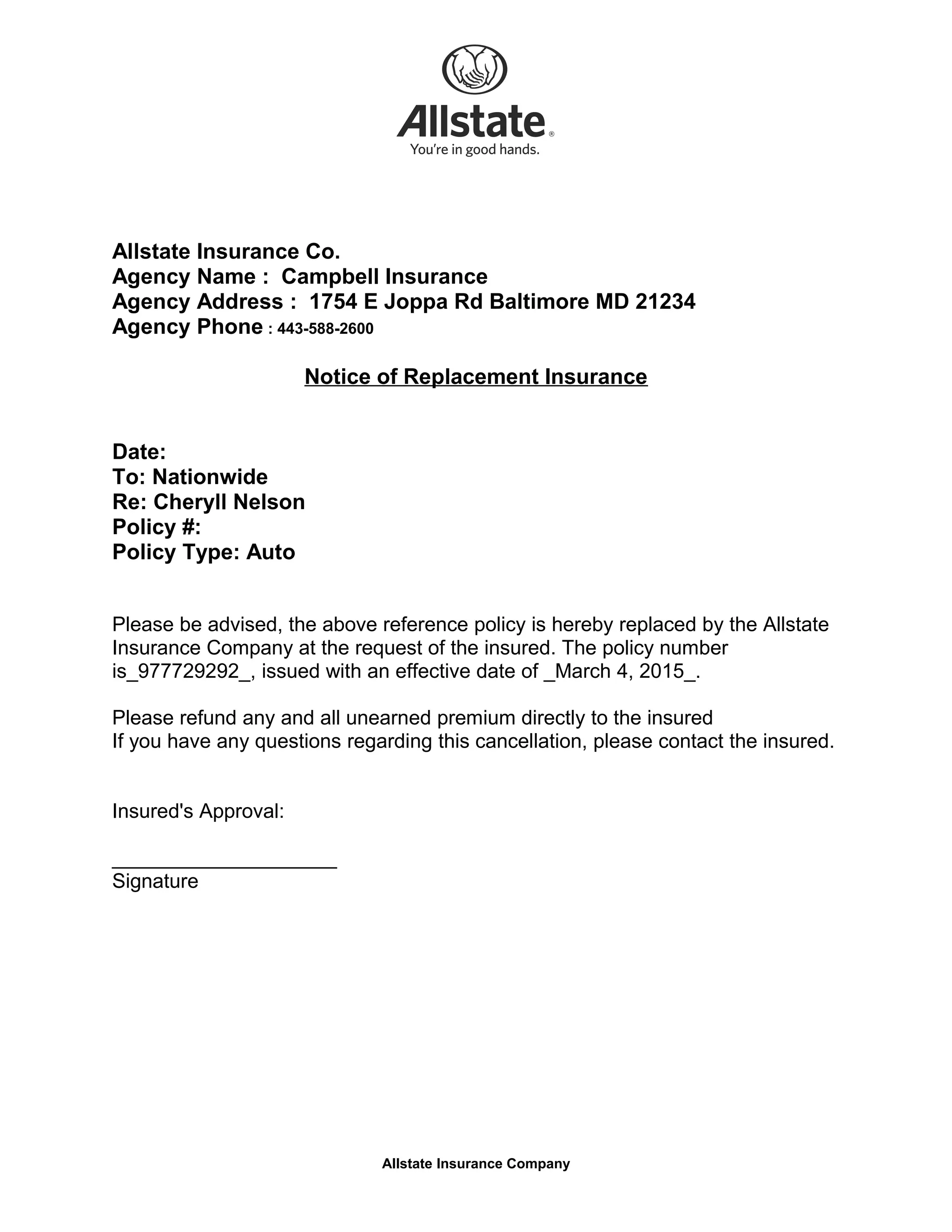
After you have spoken with an agent or initiated the cancellation through the app or website, request a “Cancellation Confirmation Letter.” This document serves as legal proof that your policy was terminated at your request on a specific date. If a claim arises later or if there is a dispute regarding unpaid premiums, this letter is your primary piece of evidence. Keep a digital copy in your financial records for at least seven years.
Monitoring Your Bank Statements for Residual Charges
Even after a policy is canceled, automated billing systems can sometimes take a billing cycle to update. Monitor your credit card or bank statements for the month following your cancellation. If an unauthorized charge from Allstate appears, contact your bank immediately to dispute the transaction using your cancellation confirmation as supporting documentation. Protecting your accounts from these “phantom charges” ensures that your financial transition is complete and that your capital is being used exactly where you intend it to be.
aViewFromTheCave is a participant in the Amazon Services LLC Associates Program, an affiliate advertising program designed to provide a means for sites to earn advertising fees by advertising and linking to Amazon.com. Amazon, the Amazon logo, AmazonSupply, and the AmazonSupply logo are trademarks of Amazon.com, Inc. or its affiliates. As an Amazon Associate we earn affiliate commissions from qualifying purchases.