
The stock market is often visualized as a frantic floor of shouting traders in colorful vests, but the modern reality is a silent, lightning-fast digital ecosystem that facilitates trillions of dollars in transactions every year. For the individual investor or the professional fund manager, understanding how stocks are traded is more than a technical curiosity; it is a fundamental pillar of financial literacy. By mastering the mechanics of the market, investors can better navigate price volatility, reduce transaction costs, and execute strategies that align with their long-term financial goals.
The Infrastructure of the Global Stock Market
To understand how stocks are traded, one must first look at the environment where these transactions occur. At its core, the stock market is a network of exchanges where buyers and sellers meet to exchange shares of publicly held companies. This infrastructure is designed to provide liquidity, transparency, and a fair playing field for all participants.
Stock Exchanges: The Primary Venues
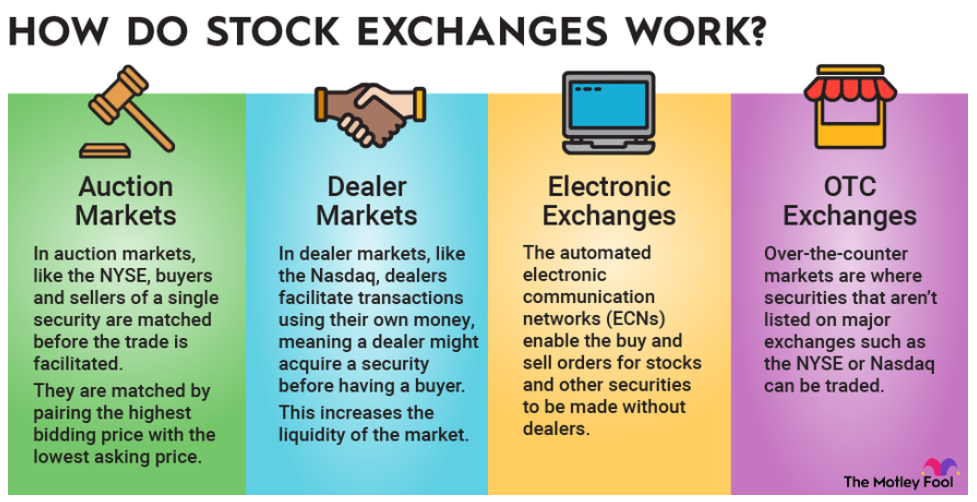
An exchange is a centralized location—now almost entirely digital—where securities are bought and sold. The two most prominent models are the New York Stock Exchange (NYSE) and the Nasdaq. The NYSE historically operated as an auction market, where specialists on the floor matched buyers and sellers. Today, while the iconic floor still exists, the vast majority of NYSE trades are executed electronically.
In contrast, the Nasdaq is a dealer market. In this model, “market makers” carry an inventory of stocks and stand ready to buy or sell from market participants at publicly quoted prices. Regardless of the model, these exchanges provide the essential “order book” that lists all the buy and sell requests currently available in the market.
The Role of Brokerage Firms
Individual investors cannot simply walk into an exchange and buy shares. Instead, they must use a brokerage firm. Brokers act as the intermediaries between the investor and the exchange. When you place an order on a mobile app or a desktop platform, your broker receives that request and routes it to an exchange or a third-party liquidity provider. In the modern era, the rise of discount brokerages has democratized access to these markets, removing many of the high commission barriers that once kept retail investors at a distance.
Regulation and Oversight
A critical part of the trading infrastructure is the regulatory framework that ensures fairness. In the United States, the Securities and Exchange Commission (SEC) oversees the markets to protect investors from fraud and manipulation. Alongside the SEC, the Financial Industry Regulatory Authority (FINRA) acts as a self-regulatory organization to monitor the behavior of brokerage firms. These entities ensure that companies disclose relevant financial information and that the “pipes” of the financial system remain functional and transparent.
The Mechanics of the Trade: From Order to Execution
When an investor decides to buy or sell a stock, a sequence of events is triggered that happens in milliseconds. Understanding this process requires a grasp of the “Bid-Ask Spread” and the various types of orders that can be placed.
Understanding the Bid and the Ask
In any stock trade, there are always two prices listed. The “Bid” is the highest price a buyer is willing to pay for a share, while the “Ask” is the lowest price a seller is willing to accept. The difference between these two is known as the “spread.”
For highly liquid stocks like Apple or Microsoft, the spread might be only a penny, meaning the cost of entering and exiting a trade is very low. However, for smaller companies with fewer shares traded daily, the spread can be wider, which represents a hidden cost for the investor. Market makers earn their living by capturing this spread, providing liquidity to ensure that a buyer can almost always find a seller.
Market Orders vs. Limit Orders
How a trade is executed depends largely on the order type selected by the investor.
-
Market Order: This is an instruction to buy or sell a stock immediately at the best available current price. Market orders prioritize speed over price. In a fast-moving market, the price you pay might be slightly different from the price you saw on your screen a moment prior.
-
Limit Order: This is an instruction to buy or sell a stock only at a specific price or better. A buy limit order ensures you don’t pay more than a certain amount, while a sell limit order ensures you don’t sell for less than your target. While limit orders provide price control, there is a risk that the order will never be filled if the stock price does not reach your specified level.
The Matching Engine
Once an order is sent to the exchange, it enters a “matching engine.” This is a sophisticated software algorithm that scans the order book to find a counterparty. If you are buying 100 shares of a company at $50, the matching engine looks for someone selling 100 shares (or several people selling smaller amounts) at that same price. Once a match is found, the trade is “executed,” and a confirmation is sent back to the broker.
Modern Trading Technology and Digital Evolution

The way stocks are traded has been revolutionized by technology. Gone are the days of paper certificates and telephone calls to brokers. Today, high-frequency trading and mobile accessibility define the landscape.
High-Frequency Trading (HFT) and Algorithms
A significant portion of daily trading volume is now driven by algorithms rather than human decision-making. High-frequency trading (HFT) firms use powerful computers to execute thousands of trades per second. These firms look for tiny price discrepancies across different exchanges and capitalize on them. While controversial, HFT generally increases market liquidity and narrows the bid-ask spread, making it cheaper for the average retail investor to trade.
Dark Pools
Not all trades happen on public exchanges. Large institutional investors, such as pension funds or insurance companies, often need to trade millions of shares at once. If they did this on a public exchange, it could cause massive price swings. To avoid this, they use “dark pools”—private forums for trading securities that are not accessible to the public. These venues allow institutions to execute large blocks of shares without tipping off the rest of the market until the trade is completed.
The Rise of Retail Trading Apps
In the last decade, the user experience of trading has changed dramatically. Mobile-first platforms have introduced features like fractional shares, which allow investors to buy $5 worth of a high-priced stock like Amazon rather than having to pay for a full share. This has shifted the demographic of the stock market, bringing in younger, more active participants. This “gamification” of trading has increased market participation but also raised questions about the risks of frequent, short-term speculation for inexperienced investors.
Strategies and Styles: How Investors Approach the Market
Understanding the mechanics of a trade is the “how,” but the “why” is determined by an investor’s strategy. Different participants use the infrastructure of the market in various ways to achieve their financial objectives.
Day Trading vs. Long-Term Investing
-
Day Traders: These participants buy and sell stocks within the same trading day. They rely on technical analysis—the study of price charts and patterns—to make quick profits from small price movements. Day trading requires high speed, sophisticated software, and a significant amount of time.
-
Long-Term Investors: Also known as “buy and hold” investors, these individuals purchase stocks with the intention of owning them for years or even decades. They focus on fundamental analysis, looking at a company’s earnings, management quality, and competitive position. For these investors, the daily “noise” of the stock market is less important than the company’s long-term growth trajectory.
Technical vs. Fundamental Analysis
The methodology behind a trade often falls into one of these two camps. Fundamental analysts look at the “Money” side of the business: balance sheets, income statements, and economic cycles. They trade based on what they believe a company is actually worth. Technical analysts, on the other hand, believe that all known information is already baked into the price. They trade based on statistical trends and market psychology, using indicators like moving averages and volume to predict future price action.
The Role of Dividends and Passive Income
Trading isn’t always about the change in stock price. Many investors trade stocks specifically for their dividend yield. When you buy a stock, you are a partial owner of the company. If that company is profitable, it may choose to distribute a portion of those profits to shareholders in the form of dividends. For many in the personal finance space, trading dividend-paying stocks is a primary strategy for building a stream of passive income.
Settlement and Clearing: What Happens After the Trade
The trade execution is just the beginning. After the “buy” or “sell” button is clicked, a complex back-end process ensures that the ownership of the shares is legally transferred and the money is moved correctly.
The T+2 Settlement Cycle
In the United States and many other markets, stock trades currently operate on a “T+2” settlement cycle. This means that if you trade a stock on Monday (Trade date), the legal transfer of ownership and the movement of cash are not officially completed until Wednesday (two business days later). During this time, clearinghouses act as intermediaries to guarantee the trade.
Clearinghouses and the DTCC
The Depository Trust & Clearing Corporation (DTCC) is the primary entity responsible for the “plumbing” of the U.S. financial markets. It provides clearing and settlement services, ensuring that the buyer has the money and the seller has the shares. By centralizing this process, clearinghouses reduce the risk that one party will fail to deliver on their end of the deal, which maintains the overall stability of the financial system.
Custodianship
When you buy a stock, you don’t usually receive a physical paper certificate. Instead, your shares are held in “street name” by your broker or a custodian bank. This digital record-keeping makes it possible to sell your shares instantly without needing to physically move assets. This system of digital custodianship is what allows the modern stock market to function at its current scale and speed.
Conclusion: The Importance of Market Knowledge
Trading stocks is a sophisticated process that combines human psychology, advanced technology, and rigorous regulation. For someone focused on personal finance and wealth building, understanding how these pieces fit together is essential. It demystifies the fluctuations seen on the news and provides the confidence needed to engage with the market. Whether you are a long-term investor building a retirement nest egg or a trader looking for short-term opportunities, the mechanics of the market are the foundation upon which financial success is built. By recognizing how orders are executed, how technology shapes pricing, and how settlement ensures security, you can move from being a passive observer to an informed participant in the global economy.
aViewFromTheCave is a participant in the Amazon Services LLC Associates Program, an affiliate advertising program designed to provide a means for sites to earn advertising fees by advertising and linking to Amazon.com. Amazon, the Amazon logo, AmazonSupply, and the AmazonSupply logo are trademarks of Amazon.com, Inc. or its affiliates. As an Amazon Associate we earn affiliate commissions from qualifying purchases.