
In an increasingly digitized world, the ability to manage personal affairs, including travel, hinges significantly on our interaction with technology. The simple act of cancelling an American Airlines flight, once a laborious phone call or an in-person visit, has been transformed into a sophisticated digital process. This article delves into the technological ecosystem that facilitates flight cancellations, exploring the platforms, security measures, and evolving tools that empower travelers to manage their itineraries with unprecedented control and efficiency. For the modern traveler, understanding the digital architecture behind such a seemingly straightforward task is key to a seamless experience.
Navigating American Airlines’ Digital Ecosystem for Cancellations
The cornerstone of modern travel management lies within the digital platforms provided by airlines. American Airlines, like many industry leaders, has invested heavily in developing a robust digital ecosystem designed for self-service, ensuring that managing a flight, including cancellation, is as intuitive and accessible as possible.
The AA Website: Your Primary Digital Gateway
The American Airlines website serves as the quintessential digital gateway for travelers seeking to manage their bookings. From the moment you land on the homepage, the design and functionality are geared towards guiding users through various tasks, including the often-dreaded cancellation process.
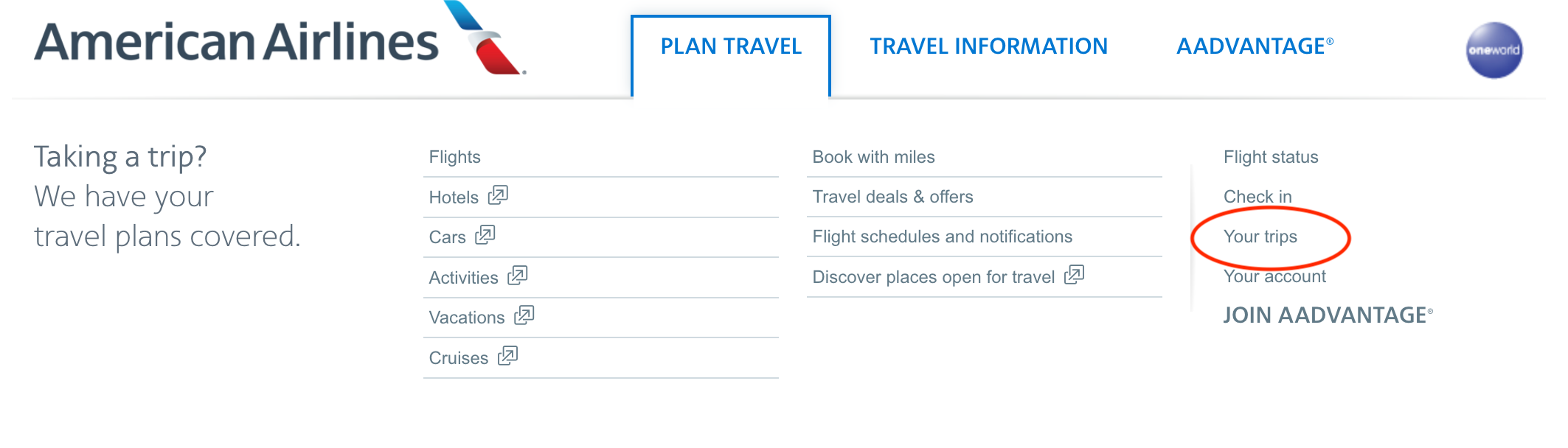
The journey typically begins with logging into your AAdvantage account or accessing your reservation using the record locator and last name. This initial authentication step is a critical security measure, leveraging encrypted connections (often SSL/TLS protocols) to protect your personal and flight information from unauthorized access. Once authenticated, users navigate to the “My Trips” or “Manage Trips” section. This interface is meticulously designed, presenting a dashboard view of upcoming itineraries. Each flight is displayed with key details, and crucially, options for modification or cancellation.
Clicking on a specific flight initiates a step-by-step digital workflow. The user interface (UI) is crafted to be clear and unambiguous, guiding you through selections such as “Cancel Trip” or “Change Trip.” The system will then present information pertinent to your specific ticket – fare rules, potential cancellation fees, or the option to receive a travel credit. This information is pulled in real-time from American Airlines’ extensive database, ensuring accuracy based on your original booking conditions and the current time relative to your departure. After confirming your intention to cancel, the system processes the request, issuing a digital confirmation and, if applicable, details about refunds or travel credits. These digital receipts are instantly generated and often emailed, providing an immutable record of the transaction. The entire process, from login to confirmation, is engineered for efficiency, minimizing clicks and cognitive load for the user.
The American Airlines Mobile App: On-the-Go Management
Complementing the website, the American Airlines mobile app extends the digital ecosystem to the palm of your hand, offering unparalleled convenience for managing flights. The app is not merely a scaled-down version of the website but a distinct platform optimized for mobile user experience (UX) and leveraging device-specific features.
The mobile app provides all the core functionalities of the website, allowing users to view, change, and cancel flights with ease. Its intuitive design often utilizes gesture-based navigation and streamlined menus, making the process quicker than on a desktop browser. For instance, accessing “My Trips” is usually a prominent feature on the app’s home screen after logging in. The cancellation workflow within the app mirrors the website’s logical progression, displaying fare rules and refund options clearly.
One of the significant technological advantages of the mobile app is its integration with device notifications. Push notifications can alert travelers to flight status changes, gate information, and importantly, policy updates that might affect a potential cancellation. This real-time communication is powered by backend systems that constantly monitor flight data and trigger alerts based on predefined rules. Furthermore, the app seamlessly syncs with your online account, meaning any changes made via the app are immediately reflected on the website and vice-versa. This cross-platform consistency is crucial for a cohesive digital experience, powered by synchronized databases and APIs that ensure data integrity across all touchpoints. The mobile app truly embodies the ethos of “convenience at your fingertips,” transforming what could be a cumbersome task into a few taps on a smartphone.
Technological Safeguards and Policy Enforcement
Behind the user-friendly interfaces lies a complex network of technological safeguards and algorithmic processes that ensure security, fairness, and compliance with intricate airline policies during a flight cancellation.
Data Security and Privacy in Digital Transactions
When you cancel a flight, you are interacting with systems that handle sensitive personal and financial data. American Airlines, like all major online service providers, employs robust data security measures to protect this information. The foundation of this security is encryption. All communications between your device and the airline’s servers are typically protected by SSL/TLS (Secure Sockets Layer/Transport Layer Security) protocols, which encrypt data in transit, making it unreadable to interceptors.
Beyond transport encryption, the airline adheres to stringent data storage and processing standards. Compliance with industry regulations such as PCI DSS (Payment Card Industry Data Security Standard) is paramount for handling credit card information, ensuring that cardholder data is protected throughout its lifecycle. User authentication is another critical layer of defense. Strong password policies, often coupled with multi-factor authentication (MFA) — where a secondary verification code is sent to your phone or email – significantly reduce the risk of unauthorized account access. These security protocols are not merely checkboxes but are continuously monitored, updated, and audited to counteract evolving cyber threats. The integrity of your personal data and the security of your financial transactions are the bedrock upon which the trust in digital self-service is built.
Algorithmic Determination of Refunds and Fees

The financial implications of cancelling a flight – whether you receive a full refund, a partial credit, or incur a fee – are not arbitrary. They are meticulously determined by complex algorithms that process a multitude of data points in real-time. Each ticket purchased has a specific “fare rule” attached to it, a set of conditions dictated by the type of fare (e.g., Basic Economy, Main Cabin, First Class), the flexibility options purchased (e.g., refundable vs. non-refundable), and the timing of the cancellation relative to the departure date.
When a cancellation request is initiated, the system’s backend immediately queries its databases. It retrieves the original fare class, the purchase date, the current date, and any specific promotions or waivers that might apply. These data points are fed into an algorithmic engine that, based on predefined business rules, calculates the precise refund amount, potential cancellation fees, or the value of any travel credit. This automated process ensures consistency and accuracy across all cancellations, eliminating human error and bias. Furthermore, this system is integrated with payment gateways via secure APIs (Application Programming Interfaces) to facilitate the actual processing of refunds back to the original form of payment. The complexity lies in managing thousands of distinct fare rules and dynamically applying them to individual bookings, a task made efficient and scalable only through sophisticated computational logic and robust database management systems.
Overcoming Common Tech Glitches During the Process
Even with advanced digital systems, users may occasionally encounter technical hurdles. Knowing how to diagnose and address these common glitches is crucial for a smooth cancellation process.
Account Access and Authentication Challenges
One of the most frequent technical issues users face revolves around account access and authentication. Forgetting passwords is a common occurrence, necessitating a password reset. These workflows, while standard, rely on prompt email or SMS delivery for verification codes. Delays in receiving these codes can be frustrating. Furthermore, multi-factor authentication (MFA) adds an extra layer of security but can sometimes lead to issues if your registered phone number or email is outdated, or if there are synchronization problems with authenticator apps.
Troubleshooting these issues often involves checking spam folders for verification emails, verifying your registered contact information, and ensuring your mobile device’s date and time are automatically synced, as discrepancies can affect authenticator app tokens. Browser-related problems can also impede login or cancellation. Outdated browser versions, excessive cached data, or conflicting browser extensions can interfere with the website’s functionality. Clearing your browser’s cache and cookies, trying an incognito/private browsing window, or switching to a different browser can often resolve these seemingly inexplicable access issues, as it ensures you are interacting with the most current version of the website’s code.
Navigating System Errors and Seeking Digital Assistance
Despite rigorous testing, system errors can occasionally occur during complex transactions like flight cancellations. These manifest as generic error messages, preventing the completion of the process. While frustrating, these messages often provide a technical code or a brief description that can be helpful for support staff.
When faced with an error, the first step is often to refresh the page or try the process again. If the error persists, American Airlines provides several digital channels for assistance. Their online FAQs and knowledge base are rich repositories of information, often containing solutions to common error codes or step-by-step guides for specific issues. For more direct support, AI-powered chatbots are increasingly deployed on airline websites and apps. These chatbots can often interpret your query, identify the problem using natural language processing (NLP), and guide you through basic troubleshooting steps or even escalate your issue to a human agent if necessary. This blend of automated and human digital support ensures that even when the self-service systems encounter a hiccup, a resolution path remains readily accessible. Engaging with these digital assistance tools efficiently can save significant time and stress compared to traditional phone calls.
Enhancing Your Digital Travel Management Experience
The evolution of technology continues to reshape how we interact with travel services, pushing towards more predictive, personalized, and efficient digital experiences.
Proactive Use of Digital Tools for Trip Flexibility
Beyond reactive cancellation, modern digital tools offer proactive capabilities to manage trip flexibility. Savvy travelers leverage functionalities such as price alerts, which, while not directly related to cancellation, can inform decisions about rebooking or cancelling and re-purchasing. Understanding the digital footprint of your reservation – from your initial search queries to your booking history – can provide insights into potential future policy changes or offers. Airlines are increasingly offering digital wallets or travel credit systems, making the process of receiving and utilizing future travel credits from cancellations seamless. By digitally storing these credits within your account, travelers can avoid paper vouchers and complex redemption codes, simplifying future bookings. Utilizing profile management within your AAdvantage account to keep contact information, payment methods, and travel preferences updated ensures that any future changes or cancellations can be processed without unnecessary friction or delays.

The Future of Cancellation: AI, Automation, and Personalized Digital Journeys
The future of flight cancellation and travel management is deeply intertwined with advancements in artificial intelligence (AI) and automation. Predictive analytics, driven by machine learning algorithms, will become more sophisticated. Airlines will leverage vast datasets – including historical cancellation patterns, weather forecasts, and geopolitical events – to anticipate potential disruptions and even suggest proactive solutions before a traveler even considers cancellation. This could involve offering alternative flights, rebooking options, or even compensation before a significant event occurs.
AI-powered chatbots and virtual assistants are evolving beyond simple FAQ responses. Next-generation conversational AI will be capable of handling complex transactional processes, including processing cancellations, calculating intricate refund scenarios, and even facilitating rebooking on partner airlines without human intervention. This will create a hyper-personalized digital journey, where the system understands individual traveler preferences, loyalty status, and historical behavior to offer tailored options and expedite processes. We can anticipate even greater integration with other travel technologies, such as smart home devices and voice assistants, allowing travelers to manage their itineraries through natural language commands. The ultimate goal is to create an intelligent, responsive, and invisible layer of technology that anticipates needs and resolves issues before they become problems, transforming the cancellation process from a reactive chore into a proactive, intelligent service.
In conclusion, cancelling an American Airlines flight today is a testament to the power of digital transformation. It is a process underpinned by sophisticated web and mobile applications, stringent data security protocols, and complex algorithms that ensure accuracy and efficiency. For the technologically astute traveler, understanding these underlying systems not only facilitates a smoother experience but also highlights the ongoing evolution of digital self-service in the travel industry. As AI and automation continue to advance, we can look forward to even more intuitive, proactive, and personalized ways to manage our travel plans, ensuring that the digital journey is as effortless as the flight itself.
aViewFromTheCave is a participant in the Amazon Services LLC Associates Program, an affiliate advertising program designed to provide a means for sites to earn advertising fees by advertising and linking to Amazon.com. Amazon, the Amazon logo, AmazonSupply, and the AmazonSupply logo are trademarks of Amazon.com, Inc. or its affiliates. As an Amazon Associate we earn affiliate commissions from qualifying purchases.