
For millions of Americans, Social Security represents the cornerstone of a stable retirement strategy. While it was never intended to be the sole source of income for retirees, it provides a guaranteed, inflation-adjusted lifetime annuity that acts as a hedge against market volatility and longevity risk. However, the system is notoriously complex. Understanding how your benefits are calculated is not just a matter of curiosity; it is a fundamental requirement for effective financial planning.
The calculation involves a multi-step process that accounts for your entire working history, the timing of your claim, and even the current economic environment. By mastering these variables, you can make informed decisions about when to stop working and how to maximize your lifetime payout.

The Foundation: Determining Your Primary Insurance Amount (PIA)
The journey to your Social Security check begins with two critical acronyms: AIME and PIA. These form the mathematical core of your benefit. The Social Security Administration (SSA) does not simply look at your last few years of work; it looks at your entire career, specifically focusing on your highest-earning years.
Step 1: Calculating Your Average Indexed Monthly Earnings (AIME)
To determine your benefit, the SSA first looks at your “Average Indexed Monthly Earnings” (AIME). This process begins by listing your earnings for every year you worked and paid Social Security taxes. Because a dollar in 1985 had different purchasing power than a dollar today, the SSA “indexes” your past earnings to account for changes in general wage levels.
The SSA selects your 35 highest-earning years after they have been indexed. If you worked more than 35 years, the lower-earning years are dropped. If you worked fewer than 35 years, the SSA must plug in “zeros” for the remaining years to reach the 35-year mark. This is a critical point for personal finance planning: every year you work beyond 35 years that replaces a low-earning or zero-earning year will directly increase your AIME, and subsequently, your monthly benefit. Once the top 35 years are selected and summed, the total is divided by 420 (the number of months in 35 years) to reach your AIME.
Step 2: Applying the Formula to Find Your PIA
The Primary Insurance Amount (PIA) is the actual monthly benefit you are entitled to receive if you claim at your Full Retirement Age (FRA). The SSA applies a progressive formula to your AIME using “bend points.” These bend points change annually based on national wage trends.
For an individual reaching age 62 in 2024, the formula is as follows:
-
90% of the first $1,174 of AIME.
-
32% of AIME over $1,174 and up to $7,078.
-
15% of AIME over $7,078.
This progressive structure is designed to provide a higher “replacement rate” for lower-income workers while still providing higher absolute dollar amounts for those who earned more during their careers. By understanding these tiers, you can see how incremental increases in your career earnings impact your final check—specifically, earnings that fall into the 15% bracket provide a smaller marginal benefit increase than those in the 90% or 32% brackets.
The Impact of Timing: Full Retirement Age and Claiming Strategies
Once your PIA is established, the next most significant factor in your calculation is when you choose to start receiving benefits. While you can claim as early as age 62, your monthly check will be significantly different depending on whether you claim early, at your Full Retirement Age, or late.
Defining Your Full Retirement Age (FRA)
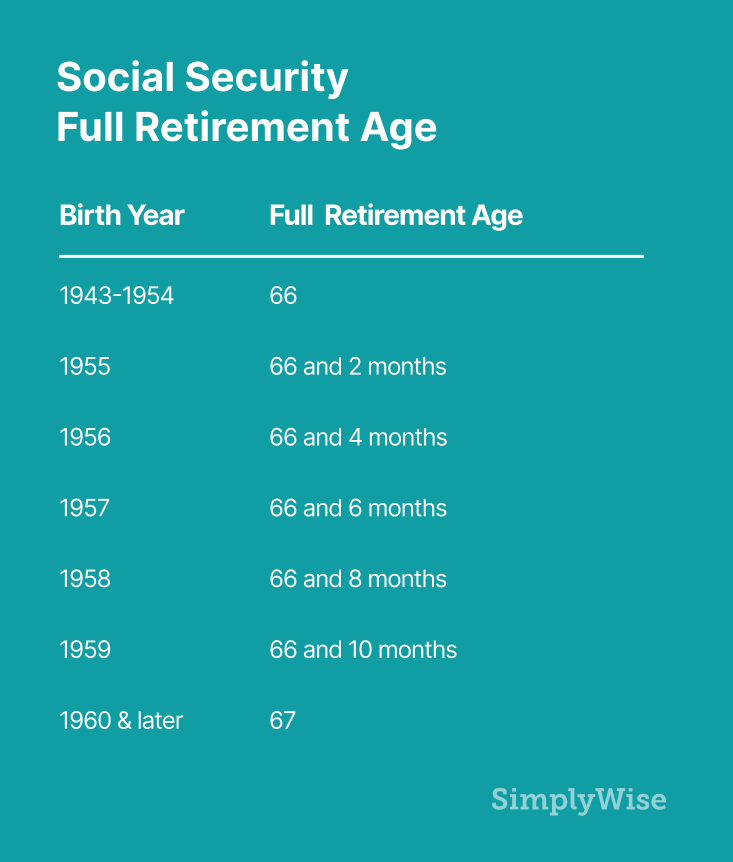
Your FRA is the age at which you are entitled to 100% of your PIA. For decades, the FRA was 65. However, due to legislative changes designed to ensure the system’s solvency, the FRA has gradually increased. For anyone born in 1960 or later, the FRA is 67. Knowing your exact FRA is the “North Star” of your Social Security calculation, as all reductions or increases are measured against this date.
The Cost of Claiming Early
You can begin taking Social Security at age 62, but doing so comes with a permanent reduction in your monthly benefit. The reduction is calculated based on the number of months prior to your FRA that you begin receiving payments.
-
For the first 36 months before your FRA, your benefit is reduced by 5/9 of 1% for each month.
-
For any months beyond 36, the benefit is further reduced by 5/12 of 1% per month.
If your FRA is 67 and you claim at 62, you are claiming 60 months early. This results in a 30% permanent reduction in your monthly benefit. For many, the “bird in the hand” philosophy of claiming early is tempting, but from a financial longevity perspective, this reduction can be a significant hurdle in later stages of life when healthcare costs typically rise.
The Reward for Delayed Retirement Credits
Conversely, the SSA rewards those who wait. For every year you delay claiming beyond your FRA—up until age 70—your benefit increases by 8% annually. This is known as Delayed Retirement Credits (DRC).
If your FRA is 67 and you wait until age 70, you will receive 124% of your PIA. This 8% simple interest increase is guaranteed and inflation-adjusted, making it one of the most effective “investment” returns available in the financial world. There is no benefit to waiting past age 70, as the credits stop accumulating at that point.
Navigating the Earnings Limit and Taxation
Calculations do not stop at the benefit amount; you must also calculate how much of that benefit you actually get to keep. Two primary factors can reduce your net Social Security income: the Retirement Earnings Test and federal income taxes.
The Retirement Earnings Test
If you are under your Full Retirement Age and continue to work while receiving Social Security benefits, your payments may be temporarily reduced if your earnings exceed certain thresholds.
-
In 2024, the limit is $22,320. For every $2 you earn above this limit, the SSA withholds $1 in benefits.
-
In the year you reach your FRA, a higher limit applies ($59,520 in 2024), and the SSA withholds $1 for every $3 earned over the limit until the month you reach your FRA.
It is important to note that these “withheld” benefits are not lost forever. Once you reach your FRA, the SSA recalculates your benefit amount upward to account for the months in which benefits were withheld. However, in the short term, this can significantly impact your cash flow.
Taxation of Benefits
Social Security benefits are not always tax-free. Whether you pay taxes on your benefits depends on your “combined income,” which is the sum of your adjusted gross income (AGI), non-taxable interest, and half of your Social Security benefits.
-
Individuals: If your combined income is between $25,000 and $34,000, you may pay income tax on up to 50% of your benefits. Above $34,000, up to 85% may be taxable.
-
Joint Filers: If you and your spouse have a combined income between $32,000 and $44,000, you may pay tax on up to 50% of benefits. Above $44,000, up to 85% may be taxable.
Strategic tax planning—such as managing withdrawals from 401(k)s or IRAs—is essential to minimize the “tax torpedo” that can occur when Social Security benefits become taxable.
Specialized Calculations: Spousal and Survivor Benefits
Social Security is not just an individual benefit; it is a family-based insurance program. This adds another layer to the calculation process, particularly for married couples or those who are divorced.
Spousal Benefits
A spouse who did not work or had lower earnings may be eligible for a spousal benefit. This can be up to 50% of the higher-earning spouse’s PIA, provided the higher-earning spouse has already filed for their own benefit.
Crucially, if the lower-earning spouse claims their spousal benefit before their own FRA, the amount is reduced. However, even if the higher-earning spouse delays until 70 to get the 124% increase, the spousal benefit is always calculated based on the PIA (the age 67 amount), not the delayed amount.
Survivor Benefits
Calculation changes drastically upon the death of a spouse. The surviving spouse is generally eligible to receive the higher of their own benefit or 100% of the deceased spouse’s benefit. This is where the strategy of the higher-earning spouse delaying until age 70 becomes most powerful; it doesn’t just maximize their own benefit, it maximizes the “safety net” for the surviving spouse.

Leveraging Digital Tools for Precise Estimates
While manual calculations provide a deep understanding of the mechanics, the most accurate way to project your future income is through digital financial tools. The Social Security Administration provides a “my Social Security” account portal, which uses your actual earnings history to provide estimates at various claiming ages.
Beyond the basic government calculators, many financial advisors use specialized software to run “what-if” scenarios. These tools can compare the cumulative lifetime benefits of claiming at 62 versus 70, taking into account life expectancy, inflation, and the “opportunity cost” of not having that money invested in the stock market earlier.
In a professional financial plan, calculating Social Security should never be done in a vacuum. It must be integrated with your personal savings, pension plans, and anticipated lifestyle costs. By understanding the AIME, the PIA bend points, the impact of claiming ages, and the tax implications, you move from guesswork to a data-driven retirement strategy that ensures long-term financial security.
aViewFromTheCave is a participant in the Amazon Services LLC Associates Program, an affiliate advertising program designed to provide a means for sites to earn advertising fees by advertising and linking to Amazon.com. Amazon, the Amazon logo, AmazonSupply, and the AmazonSupply logo are trademarks of Amazon.com, Inc. or its affiliates. As an Amazon Associate we earn affiliate commissions from qualifying purchases.