
Understanding your wage increase is more than just seeing a bigger number on your paycheck; it’s about gauging your financial growth, assessing your market value, and making informed decisions about your career and personal finances. In an ever-evolving economic landscape, knowing precisely how to calculate and interpret your wage increase is a fundamental skill for every professional. This guide will demystify the process, from basic percentage calculations to understanding the real impact of inflation on your earnings.
Understanding the Fundamentals of Wage Increases
Before diving into the numbers, it’s crucial to grasp why wage increases occur and the various forms they can take. This foundational understanding sets the stage for accurate calculation and strategic financial planning.
Why Wage Increases Matter
A wage increase is often seen as a direct reflection of an employee’s growing value to an organization, an adjustment to market rates, or a necessary measure to combat inflation. For individuals, it directly impacts their purchasing power, ability to save, invest, and meet financial goals. For employers, competitive wage increases are vital for talent retention, motivation, and overall organizational health. Ignoring or misinterpreting a wage increase can lead to missed financial opportunities or a false sense of financial security.
Different Types of Wage Increases
Not all wage increases are created equal. They typically fall into several categories, each with its own underlying rationale:
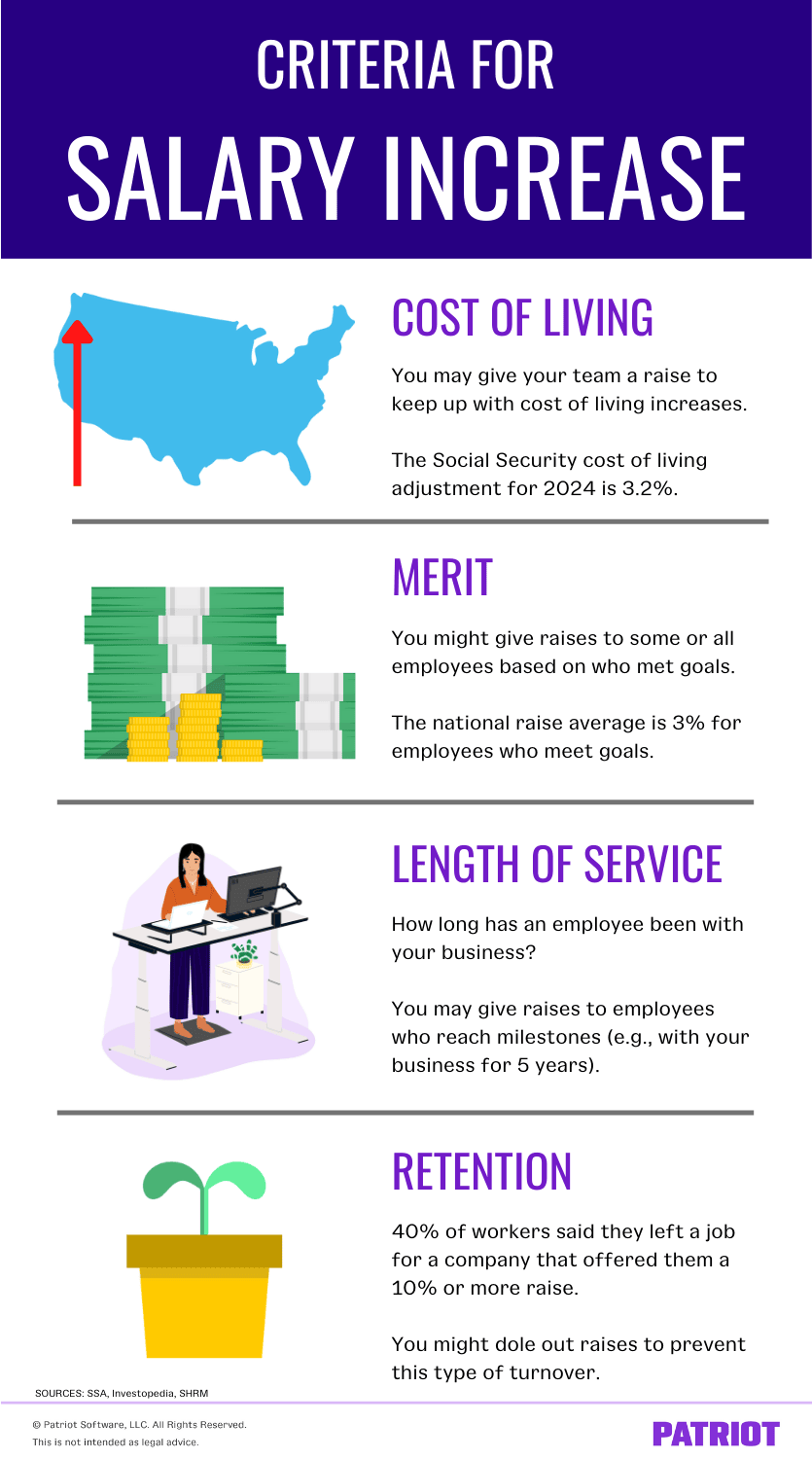
- Merit-Based Increase: This is a performance-driven raise, awarded based on an individual’s excellent performance, achievement of goals, or significant contributions to the company. It’s a recognition of individual effort and impact.
- Cost-of-Living Adjustment (COLA): Often tied to inflation rates, COLA increases aim to maintain employees’ purchasing power in the face of rising costs for goods and services. It’s designed to ensure your salary doesn’t lose value over time.
- Promotional Increase: When an employee moves into a higher role with increased responsibilities, a promotional raise is typically granted. This reflects the added value and more demanding nature of the new position.
- Market Adjustment: Sometimes, an employee’s current salary might fall below the prevailing market rate for their role, skills, and experience. A market adjustment raise aims to bring their compensation in line with industry standards to remain competitive.
- Across-the-Board Increase: Less common now, this is a uniform percentage increase given to all employees, regardless of individual performance, often due to strong company profits or collective bargaining agreements.
Identifying the type of increase you’ve received can provide valuable context for your financial planning and career trajectory.
The Core Calculation: Percentage Increase
At its heart, calculating a wage increase is a simple percentage problem. However, applying this correctly and consistently is key to tracking your financial progress accurately.
Basic Formula and Examples
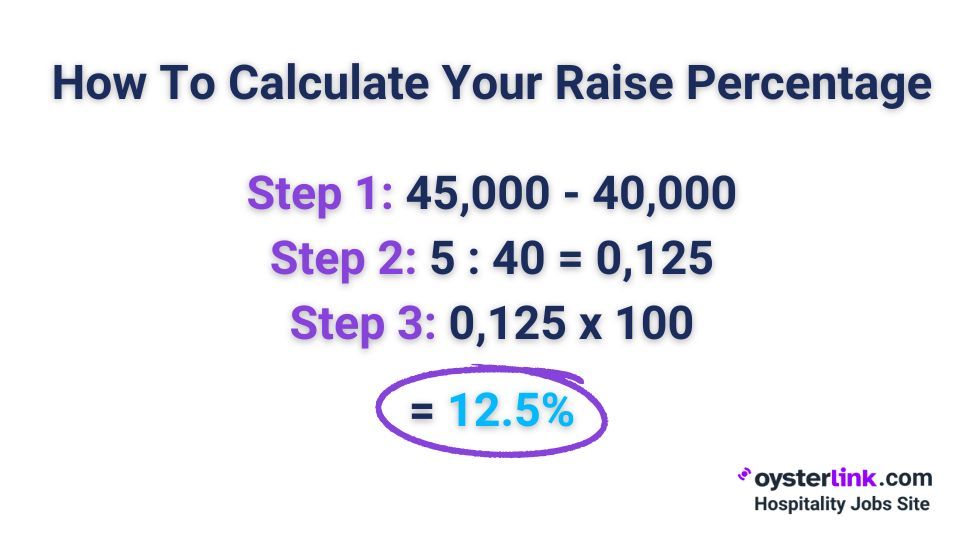
The most straightforward way to calculate a wage increase is to determine the percentage change between your old and new salaries.
Formula:
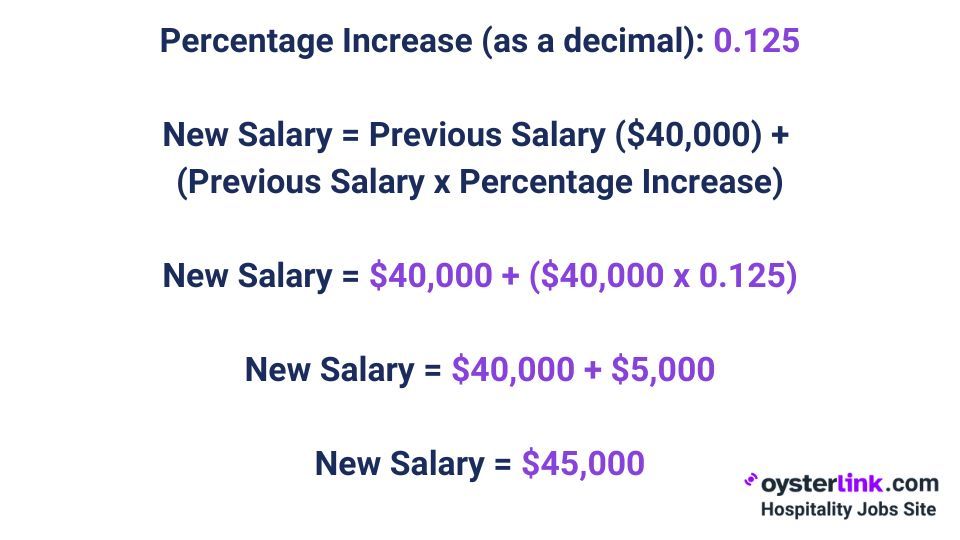
Percentage Increase = ((New Salary - Old Salary) / Old Salary) * 100
Let’s illustrate with an example:
-
Scenario 1: Hourly Wage
- Old Hourly Wage: $20/hour
- New Hourly Wage: $22/hour
- Increase = ($22 – $20) / $20 = $2 / $20 = 0.10
- Percentage Increase = 0.10 * 100 = 10%
-
Scenario 2: Annual Salary
- Old Annual Salary: $60,000
- New Annual Salary: $63,000
- Increase = ($63,000 – $60,000) / $60,000 = $3,000 / $60,000 = 0.05
- Percentage Increase = 0.05 * 100 = 5%
These basic calculations provide a clear numerical representation of your raise.
Accounting for Bonuses and Other Compensation
While the basic formula works well for base salary, your total compensation package might include other elements like bonuses, commissions, or stock options. When assessing your overall financial growth, it’s important to consider these factors.
If your bonus structure changes significantly, or if a regular bonus is suddenly tied to performance metrics you didn’t previously have, this affects your total potential earnings. For a holistic view of your compensation increase, you might calculate the percentage increase of your “total target cash compensation” (base salary + target bonus/commission).
For example, if your base salary increased by 5%, but your target annual bonus (which is performance-dependent) also increased by 10% from the previous year, your overall compensation increase might be higher or lower depending on the proportion of each component. While harder to predict with certainty, understanding the potential growth in these variable components is crucial for a complete financial picture.
Beyond the Nominal: Real Wage Increase and Inflation
A common pitfall in assessing wage increases is to look solely at the nominal percentage. In reality, the purchasing power of your money is constantly eroded by inflation. Understanding your “real” wage increase provides a more accurate picture of your financial progress.
What is Real Wage Increase?
A real wage increase reflects how much more goods and services you can actually afford after your raise, taking inflation into account. If your nominal wage increases by 5%, but inflation for the same period is 3%, your real wage increase is only 2%. This means that while your paycheck is larger, the amount of additional value it brings to your life is less than the nominal percentage suggests.
The Impact of Inflation on Purchasing Power
Inflation, defined as the rate at which the general level of prices for goods and services is rising, and consequently, the purchasing power of currency is falling, is a critical economic factor. When inflation is high, a seemingly good nominal wage increase can turn into a stagnant or even negative real wage increase, meaning you can afford less than before despite earning more. For personal finance, consistently achieving a real wage increase is paramount to long-term financial health and growth.
Calculating Your Real Wage Growth
Calculating your real wage increase involves comparing your nominal wage increase to the rate of inflation. While there are complex economic formulas, a simplified and widely accepted method is:
Simplified Formula:
Real Wage Increase (%) = Nominal Wage Increase (%) - Inflation Rate (%)
Let’s use an example:
- Nominal Wage Increase: 5%
- Inflation Rate (e.g., measured by the Consumer Price Index or CPI) for the same period: 3%
- Real Wage Increase = 5% – 3% = 2%
This means that your ability to purchase goods and services has effectively increased by 2%, not 5%.
A more precise, but still accessible, formula often used:
Real Wage = Nominal Wage / (1 + Inflation Rate) (This gives the factor, convert to percentage for increase)
To calculate the percentage increase using this method:
- Calculate the purchasing power of your old salary:
Old Salary / (1 + Old Inflation Rate)(often simplified as 1) - Calculate the purchasing power of your new salary:
New Salary / (1 + Current Inflation Rate) - Then, use the basic percentage increase formula on these “real” values.
For most practical purposes, the simplified subtraction method provides a sufficiently accurate and actionable insight into your real wage growth. The key is to source a reliable inflation rate for your region and period, typically from government statistics like the Bureau of Labor Statistics (BLS) in the U.S.
Factors Influencing Your Wage Increase Potential
While calculations provide the numbers, understanding the forces that drive wage increases is crucial for maximizing your earning potential and negotiating effectively.
Market Value and Industry Benchmarks
Your market value is determined by factors such as your skills, experience, location, and the demand for your role within your industry. Companies regularly benchmark salaries against competitors to attract and retain talent. Keeping abreast of industry salary surveys, job postings, and professional networking can give you a strong indication of your market value. If your current salary lags behind these benchmarks, it strengthens your case for a market adjustment.
Performance, Skills, and Contribution
Individual performance remains a cornerstone of merit-based increases. Exceeding expectations, taking on new responsibilities, acquiring in-demand skills, and demonstrating measurable impact on company goals are all powerful levers. Documenting your achievements and quantifying your contributions throughout the year provides concrete evidence to support your request for a raise. Specialized skills, especially in high-demand fields like AI, data science, or cybersecurity, command higher wages due to scarcity.
Company Performance and Economic Climate
The financial health of your employer significantly influences their ability and willingness to offer raises. A company experiencing robust growth and profitability is more likely to grant generous increases. Conversely, a company facing economic headwinds or restructuring might have limited bandwidth for salary adjustments. Broader economic trends, such as recessions, labor shortages, or sector-specific booms, also play a crucial role, influencing everything from hiring demand to inflation rates. Understanding these external factors helps set realistic expectations and informs your strategy.
Leveraging Your Calculations for Financial Planning
The act of calculating your wage increase isn’t just an academic exercise; it’s a vital component of robust financial planning. These numbers should inform your budgeting, savings, investment strategies, and career decisions.
Budgeting and Savings Adjustments
Once you’ve calculated your nominal and, more importantly, your real wage increase, you can adjust your budget accordingly. A real increase means you have more discretionary income. This is an opportune time to:
- Increase your emergency fund contributions: Aim for 3-6 months of living expenses.
- Boost your retirement savings: Maximize contributions to 401(k)s, IRAs, or other retirement vehicles.
- Allocate funds to specific financial goals: Whether it’s a down payment for a house, paying off debt faster, or funding a child’s education.
- Avoid lifestyle creep: Resist the urge to automatically spend the entire raise. Instead, consciously allocate it to your financial priorities.
Even if your real wage increase is modest or zero, understanding this helps you prioritize spending and potentially identify areas for cost reduction.
Strategic Career Growth and Negotiation
Your wage increase calculations are powerful tools for career advancement.
- For Performance Reviews: Present your achievements and use market data to demonstrate why you deserve a raise that reflects your value and market worth.
- For Job Searches: Knowing your current real earnings and market value allows you to negotiate for a salary package that represents a genuine step forward, not just a nominal bump that inflation erodes.
- For Long-Term Planning: Consistently tracking your real wage growth helps you evaluate if your career path is truly delivering financial progress. If you find your real wages consistently stagnant or declining, it might signal a need to acquire new skills, seek new opportunities, or reconsider your career strategy.
By mastering the calculation of wage increases, both nominal and real, you equip yourself with essential knowledge to manage your personal finances effectively, make astute career decisions, and ultimately build a more secure financial future. This isn’t just about the numbers; it’s about understanding your worth and proactively steering your financial destiny.
aViewFromTheCave is a participant in the Amazon Services LLC Associates Program, an affiliate advertising program designed to provide a means for sites to earn advertising fees by advertising and linking to Amazon.com. Amazon, the Amazon logo, AmazonSupply, and the AmazonSupply logo are trademarks of Amazon.com, Inc. or its affiliates. As an Amazon Associate we earn affiliate commissions from qualifying purchases.