
Purchasing a vehicle is a significant financial decision for many individuals and families. While the initial excitement often focuses on the make, model, and features, a crucial aspect that profoundly impacts the overall cost is the vehicle loan interest. Understanding how to calculate this interest is not merely an academic exercise; it’s a vital skill that empowers consumers to make informed financial choices, negotiate better terms, and ultimately save thousands of dollars over the life of their loan. This comprehensive guide will demystify the process, from understanding the core components of interest to leveraging sophisticated tools and strategies for minimizing your financial outlay.
Understanding the Fundamentals of Vehicle Loan Interest
Before diving into the mechanics of calculation, it’s essential to grasp the foundational concepts that underpin vehicle loan interest. This knowledge forms the bedrock for informed decision-making.
What is Loan Interest?
At its core, interest is the cost of borrowing money. When you take out a vehicle loan, a lender provides you with a sum of money to purchase a car, and in return, you agree to pay back the principal amount (the original sum borrowed) plus an additional charge, which is the interest. This charge compensates the lender for the risk they take by lending money and for the opportunity cost of not using that money elsewhere. Interest is typically expressed as an annual percentage rate (APR), but the actual interest paid is calculated over the loan’s term based on the outstanding principal balance.
Key Components of a Vehicle Loan
To calculate vehicle loan interest accurately, you must be familiar with its primary components:
- Principal Amount: This is the initial amount of money you borrow to purchase the vehicle, less any down payment or trade-in value. If a car costs $30,000 and you put down $5,000, your principal amount would be $25,000.
- Interest Rate: This is the percentage charged by the lender for the use of their money, usually expressed annually. A lower interest rate translates to less money paid over the loan term.
- Loan Term: This refers to the duration over which you agree to repay the loan, typically expressed in months (e.g., 36, 48, 60, 72, or even 84 months). A longer loan term generally results in lower monthly payments but accrues more interest over the loan’s life.
- Annual Percentage Rate (APR): While often used interchangeably with the interest rate, APR is a broader measure of the cost of borrowing. It includes the interest rate plus certain other fees charged by the lender, such as origination fees, making it a more comprehensive representation of the total cost. When comparing loans, always use the APR for an apples-to-apples comparison.
Fixed vs. Variable Interest Rates
Vehicle loans primarily come with two types of interest rates:
- Fixed Interest Rate: The most common type for auto loans, a fixed interest rate remains constant throughout the entire loan term. This provides predictability, as your monthly principal and interest payment will not change, making budgeting easier.
- Variable Interest Rate: Less common for standard auto loans but sometimes found in specific lending products, a variable interest rate can fluctuate over the loan term based on a benchmark index (e.g., the prime rate). While they might offer lower initial rates, they carry the risk of increasing payments if interest rates rise, making budgeting more challenging and the total cost unpredictable. For the purpose of calculating interest, most vehicle loans will operate under a fixed-rate structure.
Manual Calculation Methods for Vehicle Loan Interest
While modern financial tools automate much of the calculation, understanding the manual methods provides valuable insight into how interest accrues and impacts your payments. This foundational knowledge empowers you to scrutinize loan offers and understand the underlying mathematics.
Simple Interest Calculation
The simplest form of interest calculation is for a single period or when the interest is only applied to the original principal. For car loans, however, interest is usually applied over many periods (monthly).
To calculate the total simple interest over the life of a loan:
- Total Interest = Principal x Interest Rate x Loan Term (in years)
For example, a $25,000 loan at a 5% interest rate over 5 years (60 months) would have a total simple interest of:
$25,000 * 0.05 * 5 = $6,250.
However, this is a simplified view. Real-world vehicle loans use compound interest on a declining balance.
Amortization Schedule and Compound Interest
Vehicle loans are typically “amortizing loans,” meaning each monthly payment consists of both principal and interest, and over time, the interest portion decreases while the principal portion increases. The interest for each period (usually monthly) is calculated on the remaining principal balance. This is where compound interest comes into play, as interest is effectively earned on previously accrued interest (or, in this case, on the principal that hasn’t been repaid yet).
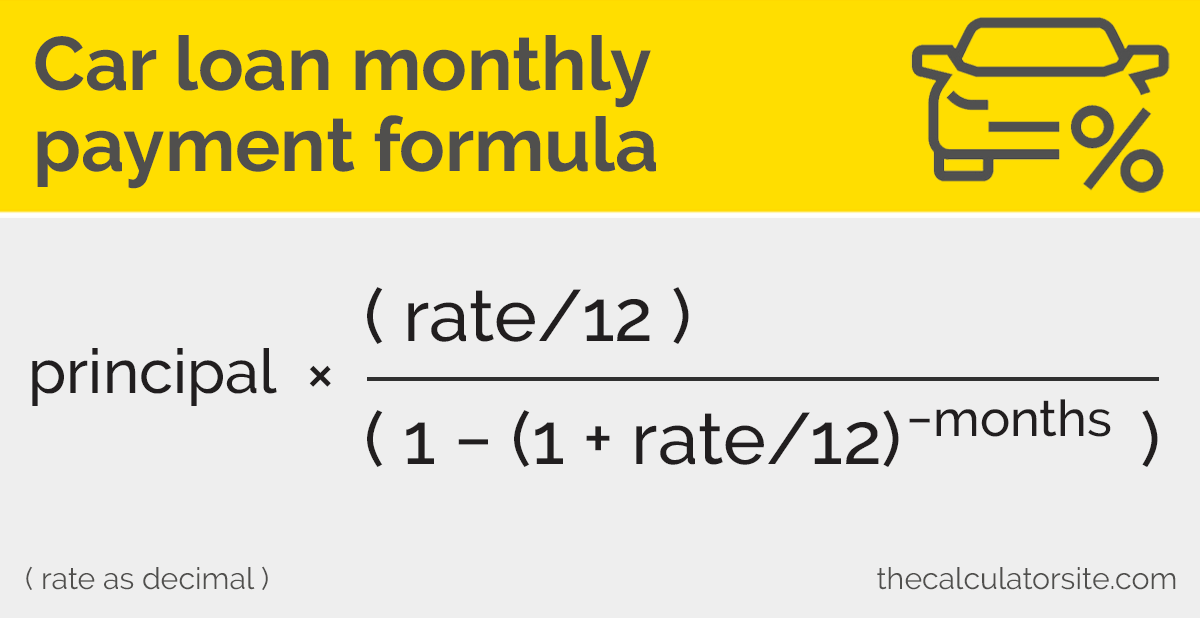
The formula for a fixed-payment amortizing loan can be complex:
M = P [ i(1 + i)^n ] / [ (1 + i)^n – 1]
Where:
- M = Monthly Payment
- P = Principal Loan Amount
- i = Monthly Interest Rate (Annual Rate / 12)
- n = Total Number of Payments (Loan Term in Months)
Let’s illustrate with an example:
- Principal (P) = $25,000
- Annual Interest Rate = 5% (0.05)
- Monthly Interest Rate (i) = 0.05 / 12 = 0.00416667
- Loan Term = 5 years = 60 months (n)
Using the formula (or an online calculator for simplicity):
Monthly Payment (M) ≈ $471.78
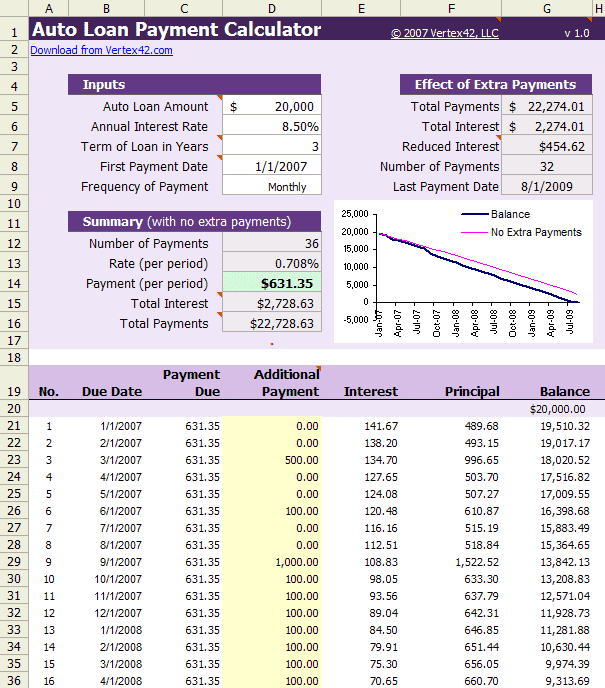
Now, to understand the interest for each month, you would build an amortization schedule:
-
Month 1:
- Interest = Remaining Principal ($25,000) * Monthly Interest Rate (0.00416667) = $104.17
- Principal Paid = Monthly Payment ($471.78) – Interest Paid ($104.17) = $367.61
- New Principal Balance = $25,000 – $367.61 = $24,632.39
-
Month 2:
- Interest = Remaining Principal ($24,632.39) * Monthly Interest Rate (0.00416667) = $102.63
- Principal Paid = $471.78 – $102.63 = $369.15
- New Principal Balance = $24,632.39 – $369.15 = $24,263.24
This process continues for all 60 months. You’ll notice that the interest portion of your payment decreases each month as your principal balance shrinks, and a larger portion of your payment goes towards the principal. Summing up the “Interest Paid” column over the entire 60 months will give you the total interest paid on the loan. In this example, the total interest paid would be approximately $3,306.80.
The Impact of Down Payments and Loan Terms
Both your down payment and loan term significantly alter the total interest paid:
- Down Payment: A larger down payment reduces the principal amount you need to borrow. Since interest is calculated on the principal, a smaller principal immediately translates to less interest paid over the life of the loan. It also demonstrates financial stability to lenders, potentially qualifying you for a lower interest rate.
- Loan Term: While a longer loan term (e.g., 72 or 84 months) offers lower monthly payments, it substantially increases the total interest you pay. The principal takes longer to pay down, meaning interest accrues on a larger balance for a longer period. Conversely, a shorter loan term (e.g., 36 or 48 months) means higher monthly payments but significantly less total interest.
Leveraging Financial Tools for Accuracy
While manual calculations provide insight, modern financial tools offer speed, accuracy, and convenience for calculating vehicle loan interest and understanding its implications.
Online Loan Calculators
The internet is replete with free, user-friendly online loan calculators provided by financial institutions, automotive websites, and personal finance portals. These tools typically require you to input the principal amount, interest rate (APR), and loan term. In a matter of seconds, they generate:
- Your estimated monthly payment.
- The total interest paid over the life of the loan.
- The total cost of the loan (principal + interest).
- Often, they can also produce a full amortization schedule, breaking down each payment into principal and interest components.
Always use calculators from reputable sources to ensure accuracy. These tools are invaluable for comparing different loan scenarios quickly, such as how varying down payments or loan terms affect your payments and total interest.
Spreadsheet Software (Excel/Google Sheets)
For those who prefer a more hands-on approach and desire greater customization, spreadsheet software like Microsoft Excel or Google Sheets is incredibly powerful. You can create your own amortization schedule using built-in financial functions:
- PMT Function: Calculates the payment for a loan based on constant payments and a constant interest rate.
=PMT(rate, nper, pv)rate: The interest rate per period (e.g., 5%/12 for monthly).nper: The total number of payments (e.g., 60 for 5 years).pv: The present value, or the total value of all loan payments now (the principal).
- IPMT Function: Calculates the interest payment for a given period of an investment based on constant payments and a constant interest rate.
- PPMT Function: Calculates the payment on the principal for a given period of an investment based on constant payments and a constant interest rate.
By setting up a table and using these functions, you can build a dynamic amortization schedule that automatically updates as you change the principal, rate, or term. This is particularly useful for financial planning and scenario analysis.
Financial Apps and Their Features
Numerous personal finance apps available for smartphones and tablets offer loan calculation capabilities. Many budgeting apps integrate loan calculators directly, allowing you to not only estimate loan costs but also track your payments against an existing loan. Some specialized loan apps even offer features like:
- Debt Snowball/Avalanche Planners: Tools to help you strategize early loan payoffs.
- Refinance Calculators: To determine potential savings from refinancing.
- “What If” Scenarios: Allowing you to explore how extra payments could reduce your loan term and total interest.
These apps provide convenience and mobility, making it easy to run calculations on the go, whether you’re at a dealership or simply planning your budget.
Strategies to Minimize Your Vehicle Loan Interest
Understanding how to calculate interest is one thing; actively working to reduce it is another. Several proactive strategies can significantly lower the total interest you pay over the life of your vehicle loan.
Improving Your Credit Score
Your credit score is arguably the most significant factor influencing the interest rate you’re offered. Lenders use your credit score to assess your creditworthiness and the risk of default.
- Higher Credit Score = Lower Risk = Lower Interest Rates.
Before applying for a car loan, review your credit report for errors and take steps to improve your score if it’s not optimal. This could involve paying down existing debts, paying bills on time, and avoiding new credit inquiries in the months leading up to your car purchase. Even a few points’ difference in your credit score can translate into thousands of dollars saved on interest over a multi-year loan.
Making a Larger Down Payment
As discussed, a larger down payment directly reduces the principal amount you need to borrow. This has a dual benefit:
- Lower Principal = Less Interest Accrued: Since interest is calculated on the outstanding balance, a smaller starting balance means less interest from day one.
- Improved Loan-to-Value (LTV) Ratio: Lenders look favorably on lower LTV ratios (the amount borrowed compared to the car’s value) as it reduces their risk. A stronger LTV can sometimes lead to a better interest rate offer.
Saving up for a substantial down payment is one of the most effective ways to lower your total interest cost and reduce your monthly payment.
Choosing Shorter Loan Terms
While tempting to opt for a longer loan term (e.g., 72 or 84 months) to achieve lower monthly payments, this strategy almost always results in paying significantly more interest overall.
- Shorter Term = Higher Monthly Payment = Less Total Interest: By paying off the loan faster, you give less time for interest to accrue. If your budget allows, always opt for the shortest loan term you can comfortably afford. Even reducing a 60-month loan to 48 months can lead to substantial interest savings. Use loan calculators to compare the total cost difference between various loan terms.
Refinancing Your Auto Loan
If you already have a vehicle loan but your financial situation has improved (e.g., your credit score has increased, or interest rates have dropped since you took out the original loan), refinancing could be a smart move. Refinancing involves taking out a new loan, often with a different lender, to pay off your existing one.
- Lower Interest Rate: If you qualify for a lower interest rate, your monthly payments will decrease, and you’ll pay less interest over the remaining life of the loan.
- Shorter Term: You might also refinance to a shorter loan term to accelerate repayment and save on interest, accepting a higher monthly payment in return.
Always calculate the potential savings from refinancing, considering any new fees associated with the new loan.
Beyond the Numbers: Important Considerations
While the mathematics of interest calculation are crucial, several other factors play a significant role in the true cost and management of your vehicle loan.
Total Cost of Ownership
When evaluating a vehicle purchase, it’s vital to look beyond just the loan interest and consider the “total cost of ownership.” This includes:
- Purchase Price: The sticker price of the vehicle.
- Interest Paid: The focus of this article.
- Fees and Taxes: Sales tax, registration fees, documentation fees, etc.
- Insurance: Premiums for comprehensive and collision coverage, which are often required for financed vehicles.
- Maintenance and Repairs: Routine service, unexpected repairs, tires.
- Fuel Costs: Ongoing expenses based on mileage and fuel efficiency.
- Depreciation: The loss in value of the vehicle over time.
Factoring in all these elements provides a realistic picture of how the vehicle will impact your finances, helping you choose a car that fits your budget holistically.
Understanding Loan Agreements and Fine Print
Never sign a loan agreement without thoroughly reading and understanding all its terms and conditions. Pay close attention to:
- APR vs. Interest Rate: Ensure you understand all included fees.
- Prepayment Penalties: Some loans might charge a fee if you pay off the loan early. Most auto loans do not have these, but it’s crucial to confirm.
- Late Payment Penalties: What are the charges for missing a payment?
- Default Clauses: What constitutes a default, and what are the consequences?
- GAP Insurance: Often offered by dealers, this covers the difference between what you owe on your loan and the car’s actual cash value if it’s totaled or stolen. Understand if you need it and if the dealer’s price is competitive.
If any clause is unclear, ask the lender for clarification. A transparent understanding of your loan agreement protects you from unexpected costs and complications.
The Role of APR vs. Interest Rate
As briefly mentioned, it’s essential to differentiate between the nominal interest rate and the Annual Percentage Rate (APR). The interest rate is the cost of borrowing the principal alone. The APR, however, includes the interest rate plus other costs associated with the loan, such as origination fees, processing fees, or credit report fees that the lender might roll into the loan.
- Always compare offers based on their APR, as it gives you the most accurate representation of the total annual cost of borrowing. A loan with a slightly lower nominal interest rate but higher fees might end up having a higher APR than a loan with a slightly higher nominal interest rate but no additional fees. Focusing on APR ensures you’re comparing the true cost of credit across different lenders.
In conclusion, calculating vehicle loan interest is a fundamental skill for any car buyer. By understanding the core components, utilizing appropriate calculation methods, leveraging modern financial tools, and implementing strategic financial practices, you can navigate the complexities of auto financing with confidence. This not only minimizes your interest payments but also contributes to a stronger overall financial well-being, allowing you to enjoy your new vehicle without unnecessary financial burden.
aViewFromTheCave is a participant in the Amazon Services LLC Associates Program, an affiliate advertising program designed to provide a means for sites to earn advertising fees by advertising and linking to Amazon.com. Amazon, the Amazon logo, AmazonSupply, and the AmazonSupply logo are trademarks of Amazon.com, Inc. or its affiliates. As an Amazon Associate we earn affiliate commissions from qualifying purchases.