
Understanding how your Social Security income is calculated is a cornerstone of effective retirement planning. For many Americans, Social Security represents a significant, if not primary, source of retirement funds, yet its intricacies often remain a mystery. Demystifying this process empowers individuals to make informed decisions about when to claim benefits, how to maximize their income, and integrate it seamlessly into their broader financial strategy. This guide delves into the core components that determine your monthly Social Security check, offering a clear roadmap to estimating and understanding your future income.
The Pillars of Social Security: Eligibility and Key Terms
Social Security benefits are not a one-size-fits-all proposition; they are a direct reflection of your lifetime earnings and when you choose to begin receiving them. Before diving into calculations, it’s crucial to grasp the fundamental concepts that underpin the system.

Firstly, eligibility is based on “quarters of coverage” or “credits.” Most individuals need 40 credits, earned by working and paying Social Security taxes, to qualify for retirement benefits. You can earn up to four credits each year, meaning you typically need at least 10 years of work history to be eligible. The amount of earnings required for a credit changes annually.
Once eligible, your benefit amount is primarily determined by two key figures: your Average Indexed Monthly Earnings (AIME) and your Primary Insurance Amount (PIA).
-
Average Indexed Monthly Earnings (AIME): This figure represents your average monthly earnings over your 35 highest-earning years, adjusted for historical wage growth (indexing). The indexing process ensures that past earnings are brought up to a more current value, reflecting changes in the national average wage index over time. This prevents early career earnings from being unfairly devalued by inflation. If you have fewer than 35 years of earnings, zero-earning years will be included in the calculation, which can significantly lower your AIME.
-
Primary Insurance Amount (PIA): Your PIA is the benefit you would receive if you claim Social Security exactly at your Full Retirement Age (FRA). It’s derived from your AIME through a progressive formula that uses “bend points.” These bend points are dollar amounts where a different percentage is applied to portions of your AIME. The formula is structured to replace a higher percentage of earnings for lower-income workers than for higher-income workers, ensuring a safety net for those with more modest earnings. The bend points themselves are also adjusted annually.
Understanding these foundational elements is the first step toward accurately calculating your future Social Security income.
Factors That Shape Your Benefit Amount
Beyond eligibility and the core AIME/PIA calculation, several dynamic factors can significantly alter the final Social Security income you receive. These include your earnings history, your claiming age, and ongoing cost-of-living adjustments (COLAs).
Your Comprehensive Earnings History
The Social Security Administration (SSA) maintains a detailed record of your annual earnings throughout your working life. This earnings history is paramount because, as mentioned, your AIME is calculated from your 35 highest-earning years. Any gaps in employment, periods of low earnings, or years spent working “under the table” (where no Social Security taxes were paid) can negatively impact your overall benefit. Conversely, consistently high earnings over a long career will lead to a higher AIME and, consequently, a higher PIA. It’s crucial to regularly review your earnings statement, which you can access via your “my Social Security” account, to ensure its accuracy. Errors could inadvertently reduce your future benefits.
The Critical Decision of Your Claiming Age
Perhaps the most impactful decision you’ll make regarding Social Security is when to start collecting benefits. While you can begin receiving benefits as early as age 62, doing so will result in a permanent reduction from your PIA. Conversely, delaying benefits past your Full Retirement Age (FRA) will result in a permanent increase.
-
Early Claiming (Age 62 to FRA): If you claim benefits before your FRA, your monthly payment will be reduced by a certain percentage for each month you claim early. The reduction can be substantial; claiming at age 62 typically results in a reduction of about 25% to 30% of your PIA, depending on your FRA. This reduction is permanent.
-
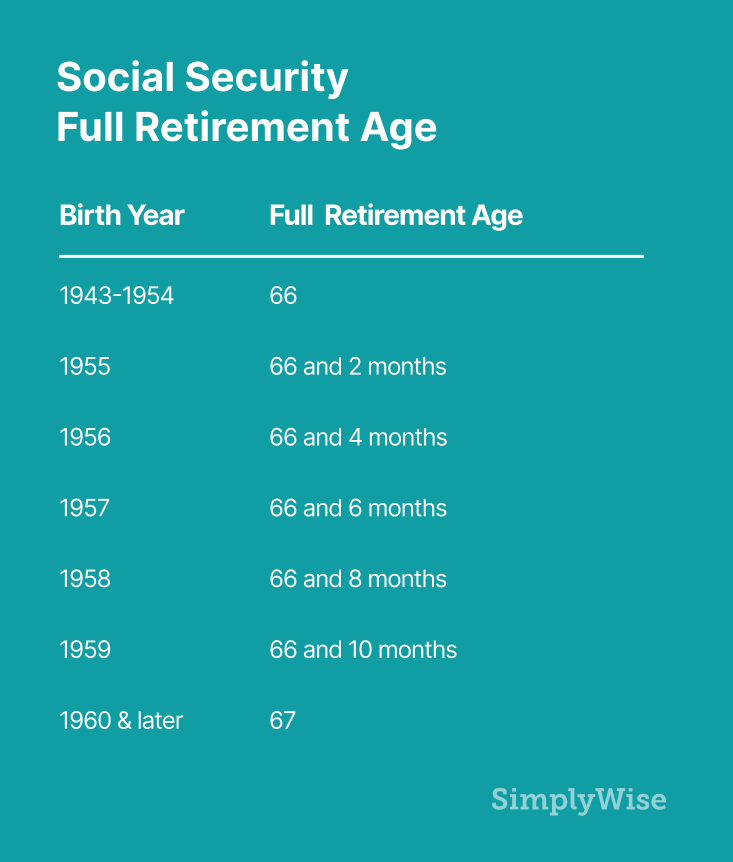
Full Retirement Age (FRA): Your FRA depends on your birth year. For those born in 1943-1954, it’s 66. It gradually increases to 67 for those born in 1960 or later. Claiming at your FRA means you receive 100% of your calculated PIA.
-
Delayed Claiming (FRA to Age 70): For each year you delay claiming past your FRA, up to age 70, your benefit amount increases by a set percentage, known as “delayed retirement credits.” These credits accumulate at a rate of 8% per year (or two-thirds of 1% per month) for individuals born in 1943 or later. This means waiting until age 70 can result in a benefit that is 24% to 32% higher than your PIA, again depending on your FRA. Beyond age 70, no further delayed retirement credits are earned.
Cost-of-Living Adjustments (COLAs)
Once you begin receiving benefits, your monthly payment is subject to annual Cost-of-Living Adjustments (COLAs). These adjustments are designed to help Social Security benefits keep pace with inflation, maintaining your purchasing power over time. COLAs are determined by changes in the Consumer Price Index for Urban Wage Earners and Clerical Workers (CPI-W) and are typically announced in October for the following year. While COLAs can increase your benefit, they are not guaranteed every year and are dependent on economic conditions.
A Step-by-Step Guide to Estimating Your Benefits
While the exact calculation can be complex, the Social Security Administration provides excellent tools to estimate your benefits. Here’s how to approach it:
Accessing Your Earnings Record with “my Social Security”
The single most crucial step is to create and regularly review your personal “my Social Security” account at www.ssa.gov. This online portal provides access to your official earnings record, which is the foundation for all benefit calculations. It allows you to:
-
Verify the accuracy of your reported earnings.
-
Get personalized estimates of your future retirement, disability, and survivor benefits at different claiming ages (e.g., age 62, FRA, age 70).
-
Review your benefit estimate for you and your family.
-
Access your Social Security Statement online.
Errors in your earnings record can occur, so proactive review ensures that all your eligible earnings are counted towards your benefit.
Understanding Your “Average Indexed Monthly Earnings” (AIME)
As discussed, your AIME is derived from your 35 highest-earning years, indexed for wage growth. While you won’t manually calculate the indexing yourself, understanding that the SSA uses this indexed amount (not your raw historical earnings) is key. Your “my Social Security” account will display your estimated AIME or provide the information needed for internal calculations. The indexing process essentially translates earnings from past decades into current-dollar equivalents, ensuring they reflect their relative value at the time.
Calculating Your “Primary Insurance Amount” (PIA)
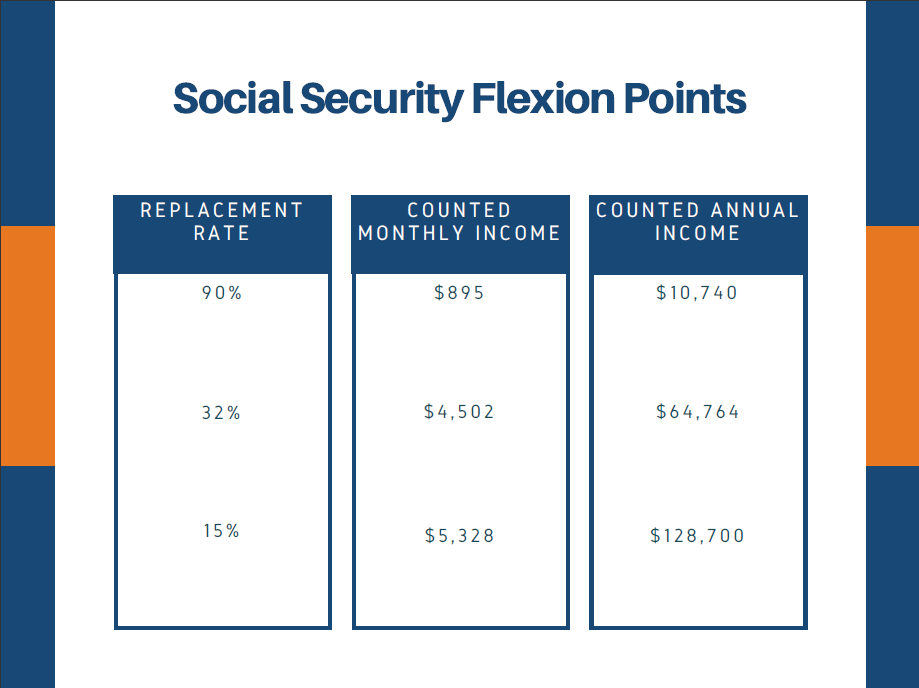
Once your AIME is established, the SSA applies a progressive formula involving “bend points” to calculate your PIA. For example, for someone reaching age 62 in 2024, the formula might look something like this:
-
90% of the first portion of AIME (up to the first bend point)
-
32% of AIME between the first and second bend points
-
15% of AIME above the second bend point
The specific bend points change each year. The “my Social Security” estimator handles this complex calculation for you, showing you your estimated PIA—the benefit you’d receive at your Full Retirement Age.
Adjusting for Your Claiming Age
With your PIA in hand, you can then see how your claiming age affects your actual monthly benefit.
-
Claiming at FRA: You receive 100% of your PIA.
-
Claiming Early: For each month prior to your FRA, your PIA is reduced. For example, if your FRA is 67 and you claim at 62, your benefit will be reduced by approximately 30%.
-
Claiming Late: For each month after your FRA, up to age 70, your PIA is increased by delayed retirement credits (8% annually). If your FRA is 67 and you claim at 70, your benefit will be approximately 24% higher than your PIA.
Your “my Social Security” account provides personalized estimates for all these scenarios, making it straightforward to compare the financial impact of different claiming ages.
Spousal and Survivor Benefits
It’s also important to remember that Social Security offers benefits beyond individual retirement. Spouses may be eligible for benefits based on their spouse’s earnings record (typically up to 50% of the working spouse’s PIA), and survivor benefits are available to eligible family members upon the death of a worker. These benefits also have their own eligibility rules and claiming age considerations, which can be explored on the SSA website.
Leveraging Tools and Expertise for Precision
While “my Social Security” is your primary resource, other tools and professional advice can provide deeper insights.
The Social Security Administration’s Online Tools
Beyond your personalized account, the SSA website offers several publicly available calculators, including:
-
Retirement Estimator: Provides estimates based on your actual earnings record.
-
Quick Calculator: Offers a rough estimate using simplified inputs.
-
Benefit Calculators: For specific scenarios like early retirement or disability.
These tools are invaluable for exploring various “what if” scenarios, such as how increased future earnings might affect your benefits or comparing claiming ages.
Third-Party Calculators
Numerous financial websites and organizations offer their own Social Security calculators. While these can be helpful for general planning, always remember they are third-party estimates. They may not have access to your exact earnings record or the most up-to-date bend points and indexing factors, so their accuracy can vary. Use them as complementary tools, but rely primarily on the SSA’s official estimates.
Professional Financial Advisors
For complex situations, such as coordinating Social Security with other retirement income sources, optimizing benefits for married couples, or understanding the impact on taxes, a qualified financial advisor specializing in retirement planning can be an invaluable resource. They can help you integrate Social Security into your holistic financial plan, considering your entire asset portfolio, tax situation, and longevity expectations.
Strategies to Maximize Your Social Security Income
Understanding the calculation process naturally leads to strategies for optimizing your benefits.
Working Longer and Consistently
Since your AIME is based on your 35 highest-earning years, working beyond 35 years can be highly beneficial. If you replace a low-earning year from early in your career with a higher-earning year later on, your AIME will increase, leading to a higher PIA. Conversely, taking extended breaks from work or having fewer than 35 years of earnings will include zero-earning years in your AIME calculation, which will lower your overall benefit.
The Power of Delaying Benefits
As highlighted earlier, delaying claiming past your Full Retirement Age (up to age 70) results in a substantial increase in your monthly benefit due to delayed retirement credits. This is often the most significant lever individuals have to boost their Social Security income. For a person with an FRA of 67, waiting until 70 could mean a benefit that is 24% higher for life compared to claiming at FRA. This strategy is particularly powerful for those who expect to have a long life expectancy or who have other income sources to cover their expenses in their late 60s.
Strategic Coordination for Married Couples
Married couples have unique opportunities to optimize their combined Social Security income. Strategies include:
-
“File and Suspend” (for those who turned 62 by January 1, 2016): While largely phased out, some individuals may still have access to elements of this.
-
Restricted Application (for those born before January 2, 1954): This allows an individual to claim spousal benefits at FRA while letting their own benefits continue to grow until age 70.
-
Coordinated Delay: One spouse (often the higher earner) delays claiming until age 70 to maximize their benefit, which will also provide a higher survivor benefit for the surviving spouse. The other spouse might claim earlier or at FRA, based on their earnings history and financial needs.
Careful planning is essential to determine the optimal strategy for your unique situation.
Understanding the Earnings Limit (If Claiming Early)
If you claim Social Security benefits before your Full Retirement Age and continue to work, your benefits may be reduced if your earnings exceed a certain limit. This “earnings test” only applies before FRA. Once you reach your FRA, you can earn any amount without your Social Security benefits being reduced. The SSA will withhold a portion of your benefits for earnings above the annual limit, but the withheld amounts are not permanently lost; they are added back into your benefit calculation once you reach your FRA, effectively raising your PIA.
Calculating your Social Security income doesn’t have to be daunting. By understanding the core components, leveraging the powerful tools provided by the SSA, and strategically considering your claiming age and work history, you can confidently estimate and optimize this vital component of your retirement financial plan.
aViewFromTheCave is a participant in the Amazon Services LLC Associates Program, an affiliate advertising program designed to provide a means for sites to earn advertising fees by advertising and linking to Amazon.com. Amazon, the Amazon logo, AmazonSupply, and the AmazonSupply logo are trademarks of Amazon.com, Inc. or its affiliates. As an Amazon Associate we earn affiliate commissions from qualifying purchases.