
Navigating the complexities of Social Security benefits can seem daunting, but understanding the calculation process is a cornerstone of effective retirement planning. For millions of Americans, Social Security represents a crucial component of their financial security in later life. Far from being a simple, one-size-fits-all payout, your benefit amount is a highly personalized figure, intricately linked to your earnings history, age at which you claim benefits, and several other factors. This guide aims to demystify the process, breaking down the mechanics of how the Social Security Administration (SSA) determines your entitlement, empowering you to make informed decisions about your financial future.

Decoding the Foundations of Your Social Security Entitlement
Before diving into the numbers, it’s essential to grasp the underlying principles and eligibility criteria that govern Social Security benefits. This foundational understanding sets the stage for appreciating the subsequent calculation steps.
The Core Purpose and Scope of Social Security
Social Security is a comprehensive federal program designed to provide a safety net for workers and their families. While most commonly associated with retirement income, it also offers disability benefits, survivors’ benefits, and Medicare. Funded primarily through payroll taxes (FICA taxes) paid by current workers and their employers, it operates on a pay-as-you-go system, with contributions going to support current beneficiaries. Its fundamental goal is to replace a portion of pre-retirement income, ensuring a baseline level of financial stability for retirees and those facing qualifying life events.
Eligibility: Earning Your Work Credits
To qualify for Social Security retirement benefits, you must earn a certain number of “work credits” throughout your career. In 2024, you earn one work credit for every $1,730 in earnings, up to a maximum of four credits per year. Most people need 40 credits to be eligible for retirement benefits, which typically translates to 10 years of work. It’s important to accumulate these credits, as they are the gateway to receiving any benefits at all. The SSA keeps a detailed record of your earnings and the credits you’ve accumulated, which you can track through your personalized “My Social Security” account.
Key Determinants of Your Benefit Amount
While work credits determine eligibility, three primary factors significantly influence the size of your monthly benefit check:
- Your Lifetime Earnings History: The SSA considers your earnings over your entire working career, up to the annual Social Security earnings limit. Higher earnings generally lead to higher benefits, as more taxes were paid into the system.
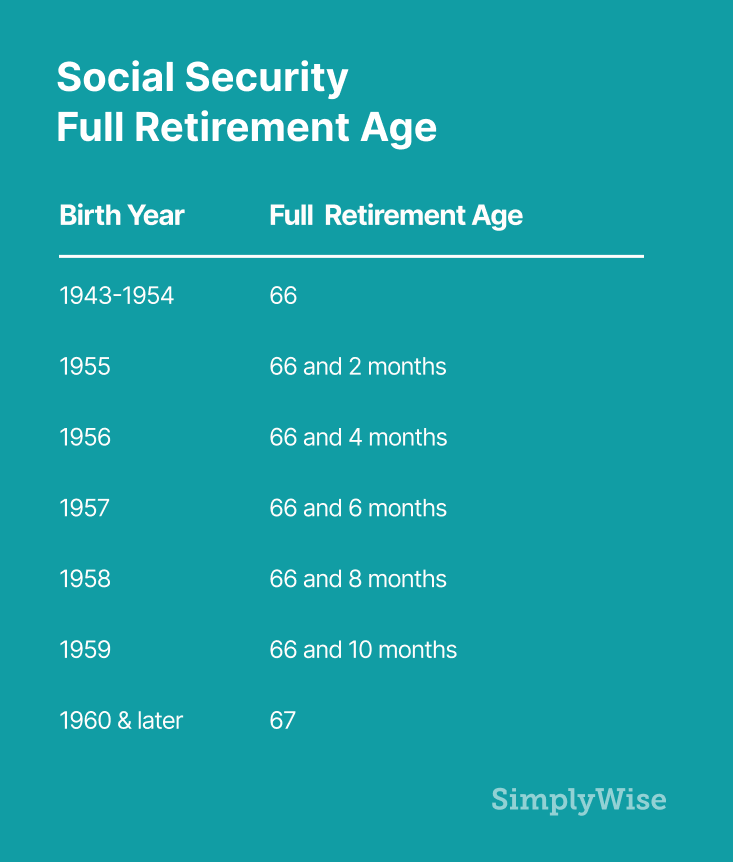
- Your Full Retirement Age (FRA): This is the age at which you are entitled to 100% of your primary insurance amount (PIA). Your FRA depends on your birth year, ranging from 66 for those born between 1943 and 1954, gradually increasing to 67 for those born in 1960 or later.
- Your Claiming Age: You can start receiving retirement benefits as early as age 62, but doing so results in a permanently reduced benefit. Conversely, delaying beyond your FRA, up to age 70, can significantly increase your monthly payment through delayed retirement credits.
The Step-by-Step Calculation: From Earnings to PIA
The heart of the Social Security calculation lies in determining your Primary Insurance Amount (PIA). This is the benefit you would receive if you claim at your Full Retirement Age. The process involves two main stages: calculating your Average Indexed Monthly Earnings (AIME) and then applying a progressive formula using “bend points.”
Unraveling Your Average Indexed Monthly Earnings (AIME)
Your AIME is a crucial input that attempts to fairly represent your career-average earnings in a way that accounts for wage inflation over time.
Selecting Your Highest Earning Years
The SSA doesn’t just average all your earnings. Instead, it focuses on your highest-earning years. For retirement benefits, the SSA takes your 35 highest-earning years. If you have fewer than 35 years of earnings, the missing years are filled in with zeroes, which can significantly lower your average. This structure incentivizes a longer working career to maximize benefits.
The Power of Indexing
Simply using raw past earnings wouldn’t be fair, as a dollar earned in the 1980s had far more purchasing power than a dollar today. To address this, the SSA “indexes” your past earnings. Indexing adjusts your earnings from previous years to reflect the change in general wage levels over time. Each year’s earnings are multiplied by an indexing factor, bringing their value up to a common level, typically the average wage index for the year you turn 60. Earnings from the year you turn 60 onward are not indexed, as they are considered recent enough. This process ensures that your earlier, lower nominal earnings are given their proper weight in the calculation. After indexing your 35 highest earning years, these indexed earnings are summed and then divided by 420 (the number of months in 35 years) to arrive at your Average Indexed Monthly Earnings (AIME).
Applying Bend Points to Determine Your Primary Insurance Amount (PIA)
Once your AIME is calculated, the SSA uses a progressive formula with “bend points” to determine your PIA. This progressive formula means that lower earners receive a higher percentage of their average earnings back as benefits compared to higher earners, reflecting the program’s social adequacy goals.
Understanding the PIA Formula
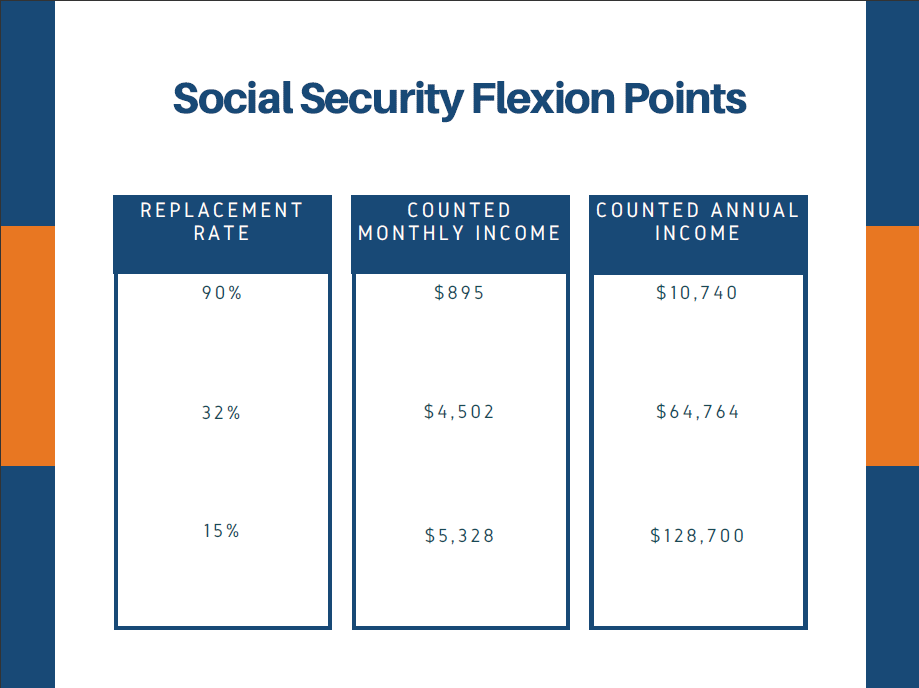
The PIA formula is structured with three different percentages applied to segments of your AIME. These segments are defined by “bend points,” which are dollar amounts that change annually based on the national average wage index. For example, for someone reaching age 62 in 2024, the formula is:
- 90% of the first $1,174 of your AIME
- 32% of your AIME between $1,174 and $7,078
- 15% of your AIME above $7,078
The sum of these three calculations yields your Primary Insurance Amount (PIA). It’s crucial to understand that these bend points apply only to the AIME calculation, not to your final benefit amount after claiming adjustments.
The Significance of Bend Points
The bend points illustrate the progressive nature of Social Security. The program replaces 90% of the first segment of AIME, a much higher percentage than the 15% applied to the highest segment. This ensures that individuals with lower lifetime earnings receive a proportionally larger benefit relative to their contributions, providing a more robust safety net for those who need it most. High earners still receive higher absolute benefits, but the replacement rate (benefit as a percentage of prior earnings) is lower than for low earners.
The Critical Role of Your Claiming Age
While your PIA is the foundational figure, it’s not necessarily the amount you’ll receive. Your actual monthly benefit is heavily influenced by the age at which you choose to start receiving payments. This is where strategic decision-making can significantly impact your lifetime Social Security income.
Identifying Your Full Retirement Age (FRA)
Your Full Retirement Age (FRA), sometimes called “normal retirement age,” is the age at which you are entitled to 100% of your PIA. As mentioned, this age varies based on your birth year. It’s a critical benchmark because it dictates how your benefit will be adjusted if you claim earlier or later. For those born between 1943 and 1954, FRA is 66. It then incrementally rises by two months per birth year until it reaches 67 for anyone born in 1960 or later. Understanding your specific FRA is the first step in planning your claiming strategy.
The Implications of Early Claiming
You have the option to start receiving Social Security retirement benefits as early as age 62. However, choosing to claim early comes with a significant and permanent reduction in your monthly benefit. The reduction is calculated based on the number of months you claim before your FRA. For example, if your FRA is 67 and you claim at 62, your benefit will be reduced by approximately 30%. This reduction is permanent, meaning your checks will be smaller for the rest of your life, even after you reach your FRA. While it might seem appealing to get funds sooner, the cumulative impact of these reductions over potentially decades of retirement can be substantial. Early claiming is often considered by those who are unable to work, have health issues, or desperately need the income, but it comes at a cost.
Boosting Benefits with Delayed Retirement Credits
Conversely, if you delay claiming your Social Security benefits beyond your Full Retirement Age, up to age 70, you can earn Delayed Retirement Credits (DRCs). These credits permanently increase your monthly benefit. For each year you delay past your FRA, your benefit increases by 8% (for those born in 1943 or later). This means that by delaying from FRA (e.g., 67) to age 70, you could increase your monthly benefit by 24% (3 years x 8% per year). This is a guaranteed, inflation-adjusted return on your decision to wait, making it a powerful strategy for those who are financially able to defer benefits. After age 70, there are no further increases for delaying, so there is no financial advantage to waiting past that point.
Utilizing SSA Resources and Strategic Planning for Maximization
Understanding the calculation is just the first step. The Social Security Administration provides robust tools and resources to help you estimate your benefits and plan effectively. Combining this with strategic thinking can help you maximize your lifetime benefits.
Interpreting Your Social Security Statement and Online Tools
The most direct way to get a personalized estimate of your benefits is through the Social Security Administration itself.
- Your Annual Social Security Statement: If you’re 60 or older and not yet receiving benefits, the SSA mails you a physical statement annually. For everyone else, or if you prefer digital access, you can create a “My Social Security” online account. This account provides immediate access to your current earnings record and personalized estimates of your future retirement, disability, and survivor benefits at various claiming ages. Regularly reviewing your earnings record is crucial to ensure accuracy; mistakes can impact your future benefits.
- SSA’s Online Calculators: The SSA website offers several useful calculators, including the Retirement Estimator. This tool allows you to plug in different retirement ages and future earnings scenarios to see how they might affect your benefit. These official resources are invaluable for getting reliable, tailored information specific to your situation.
Strategies to Enhance Your Lifetime Benefits
Maximizing your Social Security benefits often involves a combination of financial planning and strategic claiming decisions.
- Work Longer and Increase Earnings: Since your benefit is based on your 35 highest indexed earning years, working longer (especially if you have fewer than 35 years of substantial earnings) can replace low or zero-earning years with higher ones. Also, increasing your earnings during your peak earning years will directly contribute to a higher AIME and thus a higher PIA.
- Coordinate Benefits with a Spouse: For married couples, strategic claiming can significantly boost combined lifetime benefits. One common strategy involves the higher earner delaying benefits to earn delayed retirement credits, while the lower earner may claim earlier. Spousal benefits, based on the higher earner’s record, also play a role and should be considered.
- Understand Taxation of Benefits: Depending on your “combined income” (adjusted gross income plus non-taxable interest plus one-half of your Social Security benefits), a portion of your Social Security benefits may be taxable at the federal level, and in some states. Factoring this into your overall financial plan is crucial.
- Consider Other Income Sources: Social Security is often meant to be one leg of a three-legged stool for retirement income, along with pensions and personal savings/investments. A robust retirement plan ensures you aren’t solely reliant on Social Security.
Important Considerations and Professional Guidance
While this guide breaks down the calculation, individual situations can be complex. Life events such as divorce, disability, widowhood, or receiving a government pension can introduce special rules and considerations that affect your benefits.
It is highly recommended to consult with a qualified financial advisor who specializes in retirement planning. They can help you analyze your specific financial situation, project your future needs, and develop a personalized Social Security claiming strategy that aligns with your broader financial goals. An advisor can provide insights into factors like longevity risk, inflation, and how Social Security fits into your overall investment portfolio, ensuring you make the most informed decision for a secure and comfortable retirement.
aViewFromTheCave is a participant in the Amazon Services LLC Associates Program, an affiliate advertising program designed to provide a means for sites to earn advertising fees by advertising and linking to Amazon.com. Amazon, the Amazon logo, AmazonSupply, and the AmazonSupply logo are trademarks of Amazon.com, Inc. or its affiliates. As an Amazon Associate we earn affiliate commissions from qualifying purchases.