
In an increasingly data-driven and computationally complex world, understanding fundamental mathematical operations remains paramount. Among these, the trigonometric functions — sine, cosine, and tangent — stand out for their pervasive utility across countless scientific and technological domains. From the ancient study of celestial bodies to the sophisticated algorithms powering today’s artificial intelligence, the principles of trigonometry provide an essential framework for understanding periodic phenomena, geometric relationships, and spatial transformations. For anyone venturing into fields such as computer graphics, robotics, signal processing, or even advanced data analysis, mastering the calculation of sin, cos, and tan is not merely an academic exercise but a practical necessity.
This article delves into the various technological methods available for calculating these crucial functions, moving beyond manual methods to explore the power and precision offered by modern digital tools. We will uncover how scientific calculators, spreadsheet software, programming languages, and specialized applications have revolutionized our ability to apply trigonometry, making complex calculations accessible and efficient. Furthermore, we’ll examine the profound impact these calculations have on the cutting edge of technology, highlighting their indispensable role in shaping the digital landscape we inhabit.
The Fundamental Role of Trigonometry in Technology
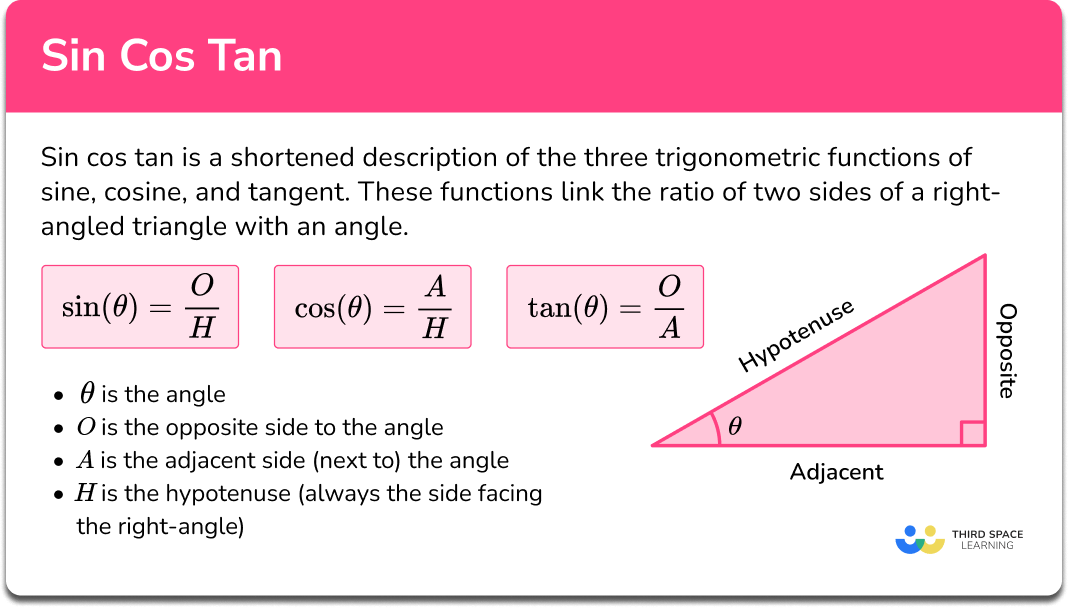
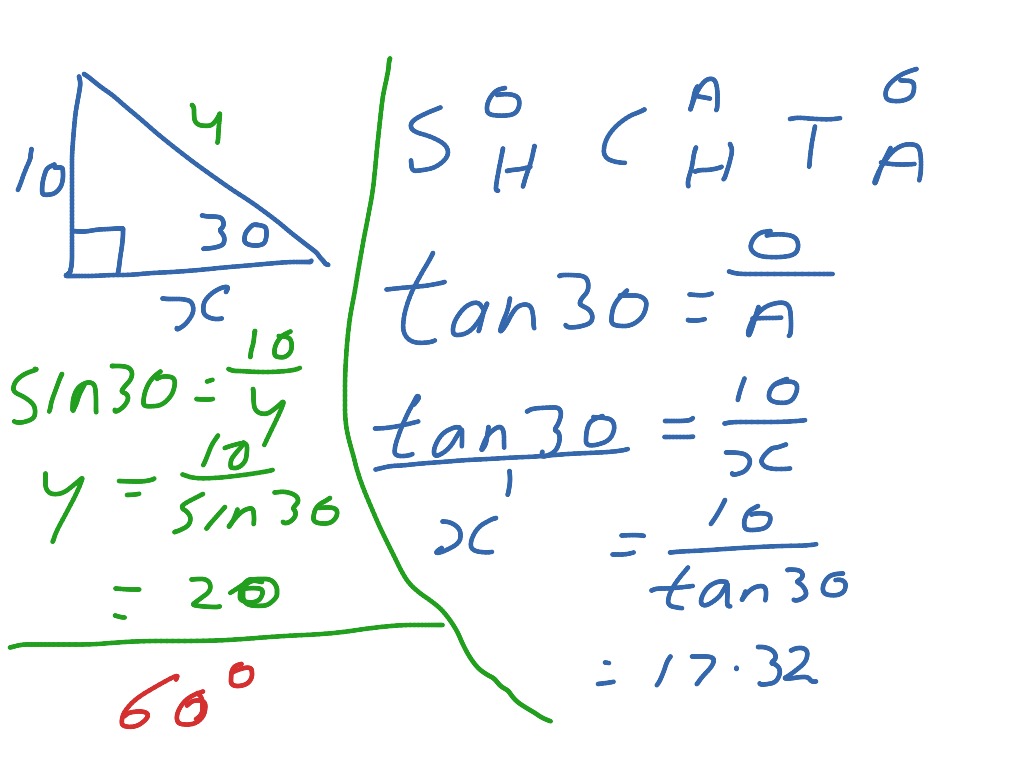
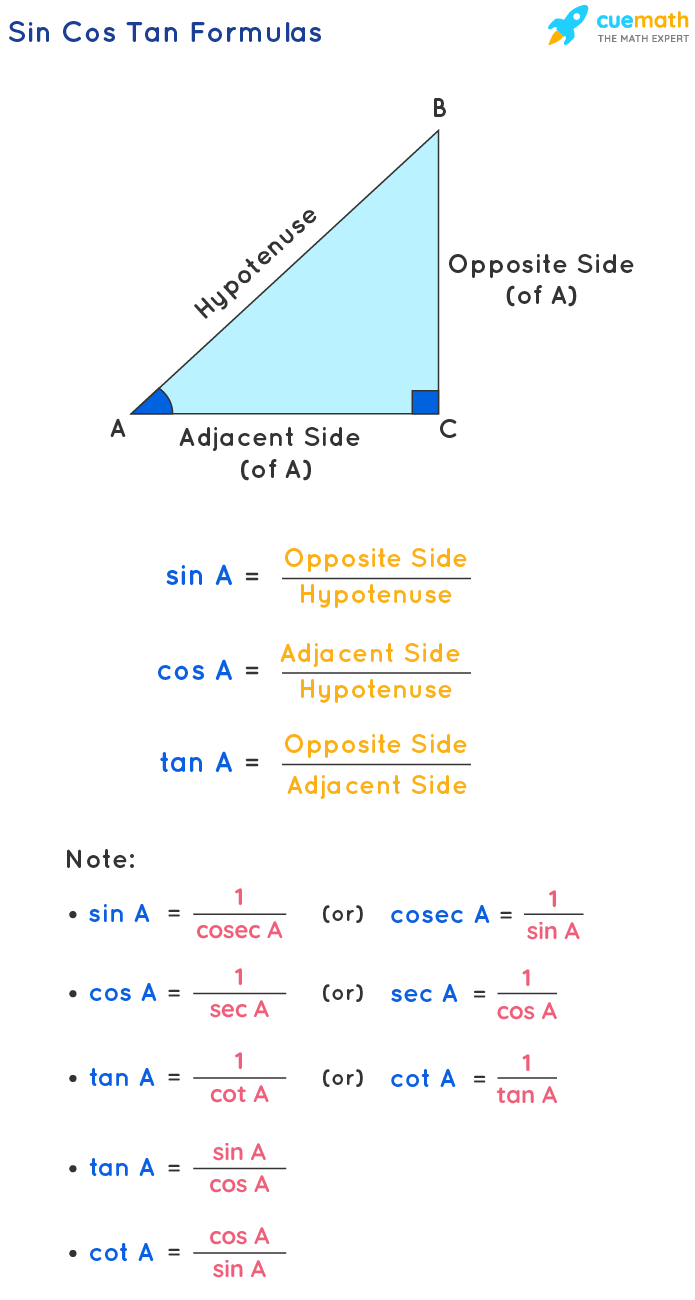
Trigonometry, derived from the Greek words “trigonon” (triangle) and “metron” (measure), is a branch of mathematics concerned with the relationships between the angles and sides of triangles. Specifically, right-angled triangles form the basis for defining sine, cosine, and tangent. These functions relate an angle within a right triangle to the ratio of two side lengths.
- Sine (sin): The ratio of the length of the side opposite the angle to the length of the hypotenuse.
- Cosine (cos): The ratio of the length of the side adjacent to the angle to the length of the hypotenuse.
- Tangent (tan): The ratio of the length of the side opposite the angle to the length of the side adjacent to the angle. (It can also be defined as sin/cos).
While these definitions might seem simple, their implications extend far beyond basic geometry. In the realm of technology, trigonometry provides the mathematical backbone for describing oscillations, rotations, waves, and vector components—elements critical to simulating physical environments, processing digital signals, and controlling mechanical systems.
Understanding Sine, Cosine, and Tangent in a Tech Context
In technology, sine, cosine, and tangent are rarely encountered as abstract ratios in isolated right triangles. Instead, they are typically applied to analyze continuous phenomena or to manipulate objects in a coordinate system. For instance, the smooth oscillation of a pendulum, the propagation of sound waves, or the trajectory of a projectile can all be modeled using sine and cosine functions. In computer graphics, these functions are used to rotate objects around an axis, scale them, or translate them across a screen, forming the basis of 2D and 3D transformations. When a character in a video game turns, or a camera pans, trigonometry is working behind the scenes to calculate the new positions of every pixel.
From Ancient Geometry to Digital Precision
The origins of trigonometry can be traced back to ancient Egyptian and Babylonian mathematics, further developed by Greek astronomers like Hipparchus and Ptolemy. Their work was primarily for astronomical calculations, mapping the stars and predicting planetary movements. For centuries, these calculations were painstakingly performed using lookup tables and manual interpolation. The precision was limited by the tables themselves and prone to human error.
The advent of the digital age fundamentally transformed this landscape. With the invention of electronic computers, the ability to perform complex calculations rapidly and accurately became unprecedented. Algorithms like the CORDIC (COordinate Rotation DIgital Computer) algorithm and polynomial approximations enabled microprocessors to calculate trigonometric functions with high precision in milliseconds. This leap from manual tables to digital algorithms was a pivotal moment, unlocking new frontiers in scientific computing, engineering design, and technological innovation. It allowed for the creation of intricate simulations, real-time data processing, and highly responsive control systems that would have been impossible with previous methods.
Leveraging Digital Tools for Trigonometric Calculations
The modern tech professional has a plethora of tools at their disposal for calculating sine, cosine, and tangent. These tools range from dedicated hardware to versatile software platforms, each offering different levels of convenience, precision, and integration capabilities.
Scientific Calculators: The Original Portable Powerhouse
Before the widespread availability of powerful computers, scientific calculators were the workhorses for engineers, scientists, and students. These handheld devices are specifically designed to handle complex mathematical functions, including all trigonometric operations. Most scientific calculators offer dedicated “sin,” “cos,” and “tan” buttons. Users simply input the angle (ensuring the correct mode—degrees or radians—is selected) and press the corresponding function button. Advanced models can also perform inverse trigonometric functions (arcsin, arccos, arctan) and hyperbola functions, making them indispensable for fieldwork, examinations, and quick checks. Despite the rise of software, the reliability and portability of a scientific calculator still make it a valuable tool for many.
Spreadsheet Software: Beyond Basic Math
Programs like Microsoft Excel, Google Sheets, or LibreOffice Calc are far more than just tools for data organization; they are powerful computational engines. Spreadsheets provide built-in functions for sine, cosine, and tangent, making them ideal for tabular data analysis, engineering calculations, and financial modeling where these functions might be indirectly applied (e.g., in wave pattern analysis of stock data, although this delves into more advanced applications).
To calculate sin(angle) in Excel, you would use the formula =SIN(angle_in_radians). Similarly, =COS(angle_in_radians) and =TAN(angle_in_radians) are used for cosine and tangent. A crucial point here is that spreadsheet functions typically expect angles in radians. If your angle is in degrees, you must first convert it using the RADIANS() function (e.g., =SIN(RADIANS(angle_in_degrees))). This feature allows for dynamic calculations across entire datasets, enabling users to quickly visualize trends or test different parameters without reprogramming.
Programming Languages: Automation and Integration
For tasks requiring automation, custom logic, or integration into larger software systems, programming languages are the ultimate tool. Languages like Python, JavaScript, C++, and Java all provide robust mathematical libraries that include trigonometric functions.
- Python: The
mathmodule is standard. You canimport mathand then usemath.sin(angle_in_radians),math.cos(angle_in_radians),math.tan(angle_in_radians). Python also providesmath.degrees()andmath.radians()for conversion. Its simplicity and extensive libraries make it a favorite for scientific computing and data analysis. - JavaScript: The
Mathobject providesMath.sin(angle_in_radians),Math.cos(angle_in_radians), andMath.tan(angle_in_radians). JavaScript is critical for web development, where trigonometric functions are often used for animations, interactive graphics, and user interface elements. - C++: The
<cmath>header providessin(),cos(),tan(). These functions also operate on radians. C++ is fundamental for high-performance computing, game engines, and embedded systems where speed and control are paramount.
Using programming languages offers unparalleled flexibility. Developers can embed these calculations into complex algorithms, create real-time simulations, process large datasets, and build custom applications that leverage trigonometry for specific technological challenges.
Online Calculators and Mobile Apps: Instant Accessibility
For quick calculations without the need for dedicated software or hardware, online calculators and mobile apps offer convenient solutions. Websites like Wolfram Alpha, Desmos, or Google’s built-in calculator provide instant access to trigonometric functions. Many smartphone apps mimic the functionality of scientific calculators, often with enhanced graphical interfaces or conversion tools. These tools are excellent for students, professionals needing a rapid check, or anyone without immediate access to more powerful computing resources. Their accessibility underscores how deeply embedded trigonometric calculation has become in our daily digital interactions.
Practical Applications of Sin, Cos, Tan in Modern Tech
The practical applications of sine, cosine, and tangent span a vast array of technological fields, underscoring their fundamental importance.
Computer Graphics and Game Development
Trigonometry is the bedrock of 2D and 3D computer graphics. Every rotation, translation, and scaling of an object in a virtual environment relies on trigonometric calculations.
- Rotations: Rotating an object around an axis (e.g., in a CAD program or a video game) involves applying sine and cosine to determine the new coordinates of its vertices. Rotation matrices, which are heavily based on these functions, dictate how objects appear to turn in space.
- Lighting and Shading: Calculating how light interacts with surfaces often involves determining the angle between a light source and the surface normal, which again utilizes trigonometric functions to achieve realistic shading and reflections.
- Camera Movement: When a camera “looks at” a scene or follows a character, its position and orientation are continuously updated using trigonometry to maintain the correct perspective.
- Skeletal Animation: The movement of character limbs in games and animated films, articulated through joints, is calculated using trigonometric functions to ensure realistic bending and movement.
Robotics and Automation
In robotics, precise control of movement and orientation is critical, making trigonometry an indispensable tool.
- Kinematics: The study of motion without considering its causes. Forward kinematics uses trigonometry to determine the end effector’s position based on joint angles. Inverse kinematics, often more complex, calculates the joint angles required to reach a specific end effector position. Both are fundamental for programming robot arms to perform tasks like assembly or surgery.
- Navigation: Autonomous robots and drones use trigonometry to calculate headings, adjust trajectories, and interpret sensor data. For instance, determining the distance to an obstacle from two sensor readings at different angles.
- Path Planning: Algorithms for robot movement through complex environments often use trigonometric functions to calculate optimal paths, avoiding collisions and maintaining efficiency.
Signal Processing and Telecommunications
Many natural and artificial signals, such as sound waves, radio waves, and electrical currents, are periodic or can be decomposed into periodic components.
- Waveform Analysis: Sine and cosine waves are the fundamental building blocks for analyzing complex signals. Fourier analysis, a cornerstone of signal processing, uses trigonometric series to decompose any periodic signal into a sum of simple sine and cosine waves of different frequencies and amplitudes. This allows engineers to filter noise, compress audio/video, and understand signal characteristics.
- Modulation and Demodulation: In telecommunications, information is encoded onto carrier waves using modulation techniques (e.g., amplitude modulation, frequency modulation), which heavily rely on trigonometric functions to alter the properties of a sine wave based on the signal being transmitted.
- Image Processing: In image compression (like JPEG), the Discrete Cosine Transform (DCT) is used to convert image data into frequency components, which are then selectively discarded to reduce file size without significant perceived loss of quality.
Data Science and Machine Learning
While perhaps less direct than in other fields, trigonometry plays a subtle but significant role in data science and machine learning, particularly when dealing with cyclical or periodic data.
- Feature Engineering: For data with a cyclical nature (e.g., time of day, day of week, month of year), using sine and cosine transformations can encode the periodicity, preventing the model from inferring a linear relationship where none exists. For example, 11 PM (23:00) is closer to 1 AM (1:00) than to 11 AM (11:00) in a 24-hour cycle. Sine and cosine transform these into continuous values that capture this cyclical relationship.
- Neural Networks: In some advanced neural network architectures, especially those dealing with sequences or spatial data, trigonometric functions might be used in activation functions or positional encodings to introduce non-linearity or spatial awareness.
- Optimization Algorithms: While not directly calculating sin/cos/tan on input data, many optimization algorithms (like gradient descent) operate in spaces where understanding angles and directions, and thus implicit trigonometric relationships, is crucial for convergence.
Beyond Basic Calculation: Tips for Accuracy and Efficiency
Merely knowing how to press a button or type a function is only the first step. For accurate and efficient application of trigonometry in technological contexts, several considerations are paramount.
Understanding Radians vs. Degrees
One of the most common pitfalls in trigonometric calculations, particularly when using software, is mixing up radians and degrees.
- Degrees: A full circle is 360 degrees.
- Radians: A full circle is 2π radians.
Most programming languages and spreadsheet functions default to radians because they are more natural units in calculus and advanced mathematics. Always be explicit about the unit of your angle and ensure your tool or code is configured accordingly. Many tools offer conversion functions (e.g.,RADIANS()in Excel,math.radians()in Python).
Handling Edge Cases and Approximations
While digital tools offer high precision, it’s important to understand their limitations.
- Floating-Point Precision: Computers represent real numbers using floating-point arithmetic, which can lead to tiny inaccuracies. For instance,
sin(pi)might not be exactly zero but a very small number like1.22e-16. In most practical scenarios, these errors are negligible, but in highly sensitive calculations, they must be accounted for. - Domain and Range: Be mindful of the domain for functions like
tan(x)(undefined at π/2 + nπ) and the range forarcsin(x)andarccos(x)(typically -1 to 1). Inputting values outside these ranges will result in errors.
Integrating Trigonometry into Complex Systems
In real-world applications, trigonometric calculations are rarely standalone. They are integrated into larger systems through APIs, libraries, and frameworks.
- Libraries and Frameworks: Utilize established math libraries (e.g., NumPy in Python for array operations, OpenGL or DirectX for graphics) that have optimized and highly accurate implementations of trigonometric functions.
- Performance Considerations: In high-performance applications like game engines, the efficiency of trigonometric calculations can be critical. Some engines might use lookup tables or specialized hardware instructions for faster approximations when absolute precision isn’t required.
- Debugging: When calculations produce unexpected results, systematically check angle units, input values, and the order of operations within your code or formulas.
The Future of Trigonometric Calculation: AI and Advanced Computing
As technology continues its rapid evolution, the methods and applications of trigonometric calculations are also advancing.
AI-Driven Simulation and Modeling
While AI doesn’t directly “calculate” sin, cos, or tan in the traditional sense, it heavily relies on models and simulations where these functions are foundational. AI models, particularly in fields like physics simulation, robotics, and aerospace engineering, learn from and operate on data derived from systems whose behaviors are inherently trigonometric. Future AI could potentially optimize the use of these functions in complex models, find novel applications, or even approximate complex periodic functions more efficiently than traditional methods. AI-powered design tools could leverage deep understanding of spatial relationships to automate the generation of trigonometric-based geometries or motion paths.
Quantum Computing and Enhanced Precision
Quantum computing, still in its nascent stages, promises to revolutionize many computational tasks. While not directly aimed at basic sin/cos/tan calculations, its ability to handle immense computational complexity could indirectly benefit fields that rely heavily on trigonometry for highly complex simulations or real-time control, such as quantum chemistry, advanced materials science, or ultra-precise navigation systems. The inherent nature of quantum mechanics, often described with wave functions and periodic phenomena, suggests that trigonometric principles will remain central, albeit within entirely new computational paradigms.
In conclusion, the ability to calculate sine, cosine, and tangent has evolved dramatically from ancient manual methods to today’s powerful digital tools. Far from being an outdated concept, trigonometry remains a vibrant and essential component of modern technology, empowering innovation across diverse fields. As we continue to push the boundaries of what’s technologically possible, these fundamental mathematical functions will undoubtedly continue to play a critical role, underpinning the next generation of digital advancements.
aViewFromTheCave is a participant in the Amazon Services LLC Associates Program, an affiliate advertising program designed to provide a means for sites to earn advertising fees by advertising and linking to Amazon.com. Amazon, the Amazon logo, AmazonSupply, and the AmazonSupply logo are trademarks of Amazon.com, Inc. or its affiliates. As an Amazon Associate we earn affiliate commissions from qualifying purchases.