
In the world of finance, numbers are the language of progress. However, raw figures rarely tell the full story. If your investment account grew by $1,000, is that a cause for celebration or a sign of stagnation? The answer depends entirely on where you started. This is why understanding how to calculate the rise in percentage—often referred to as percentage increase—is perhaps the most vital tool in a financier’s arsenal.
Whether you are tracking the growth of a retirement portfolio, evaluating the success of a side hustle, or analyzing corporate quarterly earnings, percentage rise provides the context necessary for informed decision-making. It levels the playing field, allowing you to compare a small-cap stock’s explosive growth against the steady climb of a blue-chip giant. In this guide, we will explore the fundamental mechanics of this calculation and its critical applications across the landscape of personal and business finance.
The Fundamental Formula for Calculating Percentage Increase
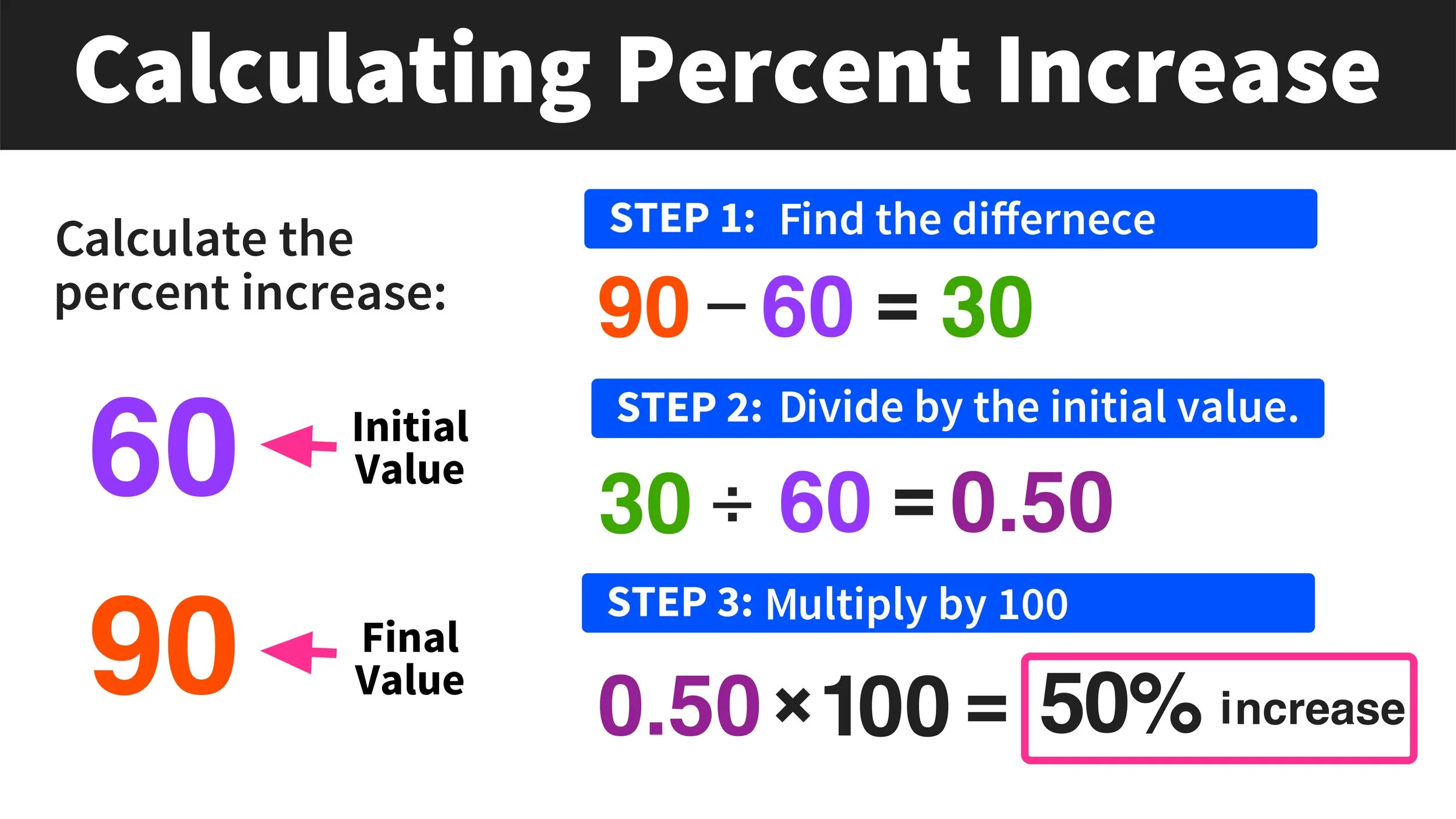
At its core, calculating a percentage rise is a three-step mathematical process. While many digital tools and financial calculators can perform this task instantaneously, understanding the manual logic is essential for any serious investor who wants to perform “back-of-the-envelope” analysis during a meeting or a market shift.
Breaking Down the Math: Step-by-Step
To find the percentage increase between two values, you must identify the “Original Value” (where you started) and the “New Value” (where you are now). The formula is as follows:
((New Value – Original Value) / Original Value) × 100 = Percentage Rise
- Find the Difference: Subtract the original value from the new value. This gives you the absolute growth.
- Divide by the Start: Divide that difference by the original value. This creates a decimal representation of the growth relative to the starting point.
- Convert to Percentage: Multiply the result by 100 to shift the decimal point and arrive at the percentage.
For example, if you invested $5,000 in a mutual fund and it is now worth $6,200, the calculation would be:
($6,200 – $5,000) / $5,000 = 0.24.
0.24 × 100 = 24%.
Real-World Examples in Personal Budgeting
Percentage rise isn’t just for the stock market; it is a diagnostic tool for your personal cash flow. Suppose your monthly grocery bill rose from $400 last year to $550 this year. Using the formula, we see a 37.5% increase. If your salary only rose by 5% during that same period, the percentage rise calculation reveals a significant “lifestyle squeeze” that a simple dollar-amount comparison might mask. By viewing your expenses through the lens of percentage growth, you can identify which areas of your budget are inflating faster than your income, allowing for strategic adjustments.
Applying Percentage Rise to Investment Portfolios
For the modern investor, the percentage rise is the ultimate metric of efficiency. It answers the question: “How hard is my money working for me?” In the context of the money niche, we use this calculation to compare assets of wildly different scales.
Tracking Stock Market Gains
In equity trading, prices are constantly in flux. If a tech stock priced at $150 rises by $15, and a retail stock priced at $30 rises by $6, which performed better?
- The tech stock rose by 10% ($15 / $150).
- The retail stock rose by 20% ($6 / $30).
Even though the tech stock had a higher dollar-value increase, the retail stock provided double the return on investment (ROI). This is why professional traders focus almost exclusively on percentage moves. It allows for a standardized comparison across a diverse portfolio, helping you allocate capital toward the most “efficient” growers rather than just the most expensive stocks.
Understanding Compounded Growth vs. Simple Increase
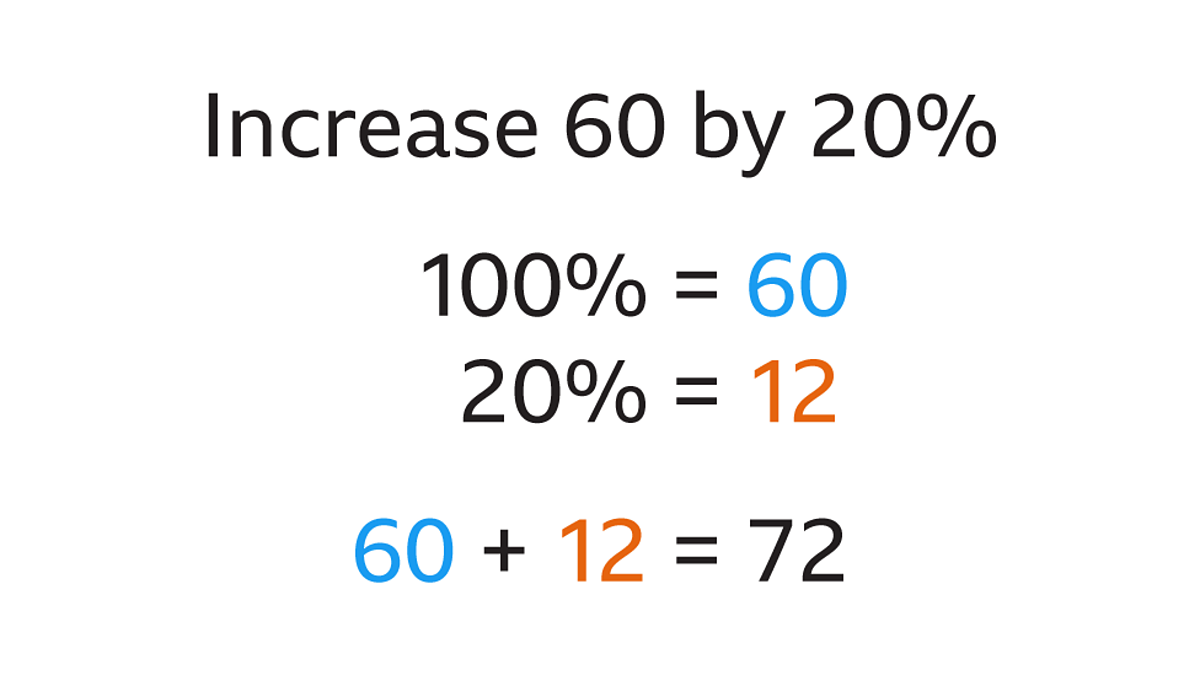
When discussing a rise in percentage over long periods, we often encounter the “Compound Annual Growth Rate” (CAGR). While a simple percentage rise tells you the total growth from point A to point B, CAGR tells you the smoothed-out annual rate. This is crucial for evaluating long-term wealth building. If your retirement fund rose 100% over 10 years, it didn’t grow 10% each year; due to compounding, the annual percentage rise required is actually closer to 7.2%. Understanding how these percentages layer upon one another is the secret to mastering the “Rule of 72” and other wealth-multiplication strategies.
Factoring in Inflation: Real vs. Nominal Rise
A critical trap in finance is celebrating a “nominal” percentage rise without considering the “real” rise. If your savings account offers a 4% annual interest rate (percentage rise in capital), but the national inflation rate is 5%, you are technically losing 1% of your purchasing power every year. To be a successful wealth builder, you must subtract the percentage rise of the Consumer Price Index (CPI) from the percentage rise of your assets to find your true “real” gain.
Measuring Business Performance and Revenue Growth
For entrepreneurs and business owners, the percentage rise is the primary indicator of scalability and market health. It transforms raw sales data into actionable business intelligence.
Year-Over-Year (YoY) and Month-Over-Month (MoM) Metrics
In business finance, we rarely look at a single month in isolation. Instead, we look at the percentage rise in revenue compared to previous periods.
- YoY Growth: Compares the current month to the same month in the previous year. This accounts for seasonality (e.g., a retail store comparing December sales).
- MoM Growth: Compares the current month to the previous month. This is used by startups to measure “velocity”—the speed at which they are acquiring new customers.
A steady 5% MoM increase might seem small, but through the power of compounding, it results in an annual growth of nearly 80%. Investors in the venture capital space prioritize these percentage trends over raw profit because they indicate the future potential of the enterprise.
Using Percentage Rise to Evaluate Marketing ROI
When you spend money on a side hustle or a corporate marketing campaign, you need to know if the “spend” generated a sufficient “rise.” If you spend $1,000 on ads and your sales rise from $5,000 to $7,000, you have achieved a 40% rise in revenue. By calculating the percentage rise in customer acquisition costs (CAC) against the percentage rise in Lifetime Value (LTV), a business owner can determine if their marketing strategy is sustainable. If the cost to acquire a customer is rising by a higher percentage than the revenue that customer brings in, the business model is heading toward a fiscal cliff.
Common Pitfalls and How to Avoid Them
While the calculation itself is straightforward, the interpretation of a percentage rise can be deceptive. Professional financial analysts look beyond the surface number to avoid “statistical mirages.”
The Dangers of the “Low Base” Effect
One of the most common distortions in financial reporting is the “low base” effect. If a company has a revenue of $1 and it increases to $2, that is a 100% rise. If a competitor has a revenue of $1 million and increases to $1.1 million, that is only a 10% rise. In headlines, the first company looks like a superstar, but in reality, the second company added $100,000 in value while the first added only $1. Whenever you see a massive percentage rise, always check the original value to ensure the growth is significant in terms of actual currency.
Distinguishing Between Percentage Points and Percentage Rise
This is a frequent point of confusion in financial news. If the Federal Reserve raises interest rates from 3% to 4%, is that a 1% rise?
- In terms of percentage points, yes, it is a 1-point increase.
- In terms of percentage rise, it is actually a 33.3% increase ( (4-3)/3 ).
When dealing with loans, mortgages, or bond yields, failing to make this distinction can lead to massive errors in calculating interest expenses. A “1% increase” on a 3% loan sounds small, but a “33% rise” in your interest obligation reveals the true weight of the change on your cash flow.

Conclusion: The Strategic Value of the Percentage Rise
Mastering how to calculate a rise in percentage is more than a mathematical exercise; it is a shift in mindset. It moves you away from looking at money as a static pile of cash and toward seeing it as a dynamic engine of growth. By focusing on percentages, you gain the ability to compare apples to oranges—comparing a high-yield savings account to a rental property, or a dividend stock to a tech startup.
In the pursuit of financial independence, the goal is rarely to just “make more money.” The goal is to maximize the percentage rise of your net worth while minimizing the percentage rise of your liabilities. When you can fluently calculate and interpret these shifts, you stop being a passive observer of your bank account and start being the architect of your financial future. Whether the market is bullish or bearish, the percentage rise remains the most honest metric of where you’ve been and how far you have left to go.
aViewFromTheCave is a participant in the Amazon Services LLC Associates Program, an affiliate advertising program designed to provide a means for sites to earn advertising fees by advertising and linking to Amazon.com. Amazon, the Amazon logo, AmazonSupply, and the AmazonSupply logo are trademarks of Amazon.com, Inc. or its affiliates. As an Amazon Associate we earn affiliate commissions from qualifying purchases.