
Understanding how to calculate percentage savings is a fundamental skill in both personal and business finance. It transcends the simple awareness of money saved, providing a critical lens through which to evaluate financial decisions, track progress, and optimize resource allocation. Whether you’re a prudent individual managing a household budget, an investor monitoring returns, or a business professional seeking cost efficiencies, mastering this calculation empowers you with actionable insights that raw monetary figures alone cannot provide.
The Fundamental Importance of Understanding Your Savings
Merely knowing you saved $50 is one thing; understanding that $50 represents a 25% reduction on an original $200 expense is quite another. The percentage context transforms a simple number into a powerful metric, revealing the true impact and scale of your financial prudence or astute decision-making.

Beyond the Raw Numbers: Why Percentages Matter
Percentage savings offer a standardized way to compare different saving scenarios, regardless of the absolute dollar amounts involved. For instance, saving $10 on a $20 item (50% savings) is proportionally more impactful than saving $50 on a $1,000 item (5% savings), even though the dollar amount saved is greater in the latter case. This proportional understanding allows for more intelligent financial planning and prioritization. It highlights efficiency and effectiveness, enabling individuals and organizations to identify where their saving efforts yield the most significant relative benefits. This perspective is invaluable for assessing promotional offers, negotiating prices, or evaluating the success of cost-cutting initiatives. Without percentage context, it’s easy to misinterpret the true value of a discount or a saving opportunity, potentially leading to suboptimal choices.
Practical Applications Across Financial Spheres
The utility of percentage savings extends across numerous financial domains. In personal finance, it’s crucial for budgeting, evaluating sales, and tracking progress towards financial goals. For example, understanding the percentage saved on groceries helps optimize shopping habits, while knowing the percentage return on an investment portfolio allows for a clear assessment of its performance. In business finance, percentage savings are vital for procurement, cost management, and project evaluation. A procurement manager might use percentage savings to benchmark supplier performance or evaluate the success of new negotiation strategies. A project manager would track percentage savings against budget to ensure financial discipline. Investors use percentage returns (a form of percentage savings on capital) to compare different investment vehicles and make informed allocation decisions. This universal applicability underscores why mastering this calculation is not just a niche skill but a broad financial literacy requirement.
The Core Formula: Calculating Percentage Savings
The underlying principle for calculating percentage savings is straightforward: it involves comparing the amount saved against the original cost or value. This simple relationship forms the basis for various practical applications.
Simple Savings: One-Time Transactions
For a single item or transaction where you know the original price and the discounted price (or the amount saved), the formula is:
Percentage Savings = (Amount Saved / Original Price) × 100
Alternatively, if you know the original price and the new (lower) price:
-
Calculate the Amount Saved: Original Price – New Price
-
Apply the Formula: (Amount Saved / Original Price) × 100
Example:
You bought a gadget for $150 that originally cost $200.
-
Amount Saved = $200 – $150 = $50
-
Percentage Savings = ($50 / $200) × 100 = 0.25 × 100 = 25%
This method is ideal for evaluating sales, discounts, or one-off expense reductions. It instantly quantifies the benefit of a particular purchase or negotiation.
Regular Savings: Over a Period
When dealing with ongoing expenses or budgeting over a period, the calculation might involve comparing a planned expenditure to an actual one, or comparing current spending to previous spending.
Percentage Savings = ((Original Total Expense – New Total Expense) / Original Total Expense) × 100
Example:
Your average monthly grocery bill was $800. After implementing new shopping strategies, your bill is now $650 per month.
-
Amount Saved per month = $800 – $650 = $150
-
Percentage Savings = ($150 / $800) × 100 = 0.1875 × 100 = 18.75%
This application is particularly useful for tracking the effectiveness of long-term cost-reduction efforts in personal budgets or business operations.
Comparing Prices: Identifying Discounts
Often, you might encounter an item with a stated discount percentage, and you need to verify the price or understand the original value. While not strictly “calculating percentage savings,” understanding the relationship is crucial. If an item is 20% off, you are paying 80% of the original price.
-
To find the discounted price: Original Price × (1 – Discount Percentage as a decimal)
-
To find the original price given the discounted price and percentage discount: Discounted Price / (1 – Discount Percentage as a decimal)
Example (verifying):
A shirt originally costs $50 and is advertised as 30% off.
Discounted price = $50 × (1 – 0.30) = $50 × 0.70 = $35.
If you were presented with a $35 price tag and wanted to know the original price assuming a 30% discount:
Original Price = $35 / (1 – 0.30) = $35 / 0.70 = $50.
These calculations are foundational, providing the bedrock for more complex financial analysis and decision-making.
Applying Percentage Savings in Personal Finance
In personal finance, calculating percentage savings is not merely an academic exercise; it’s a practical tool for empowering individuals to make smarter financial decisions, achieve their goals faster, and build lasting wealth.
Budgeting and Expenditure Analysis
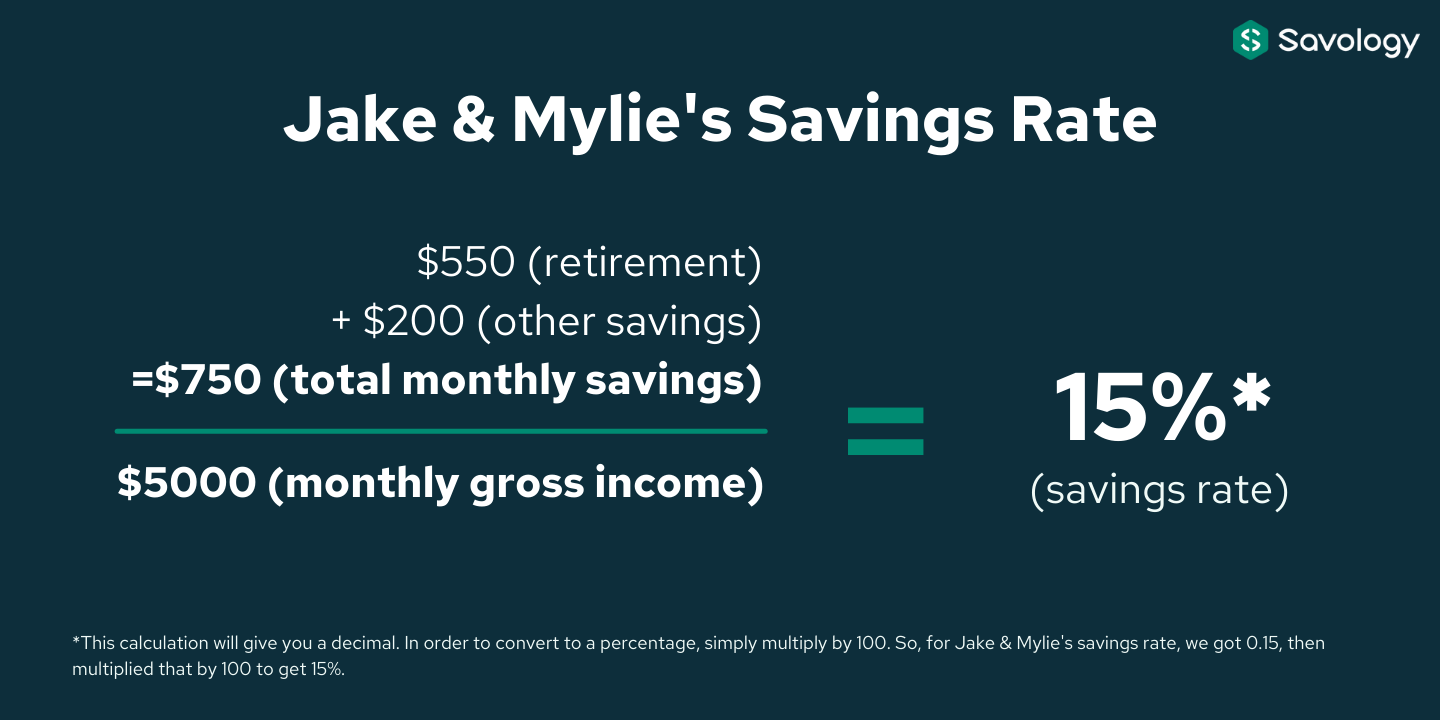
A core component of effective personal finance is budgeting, and percentage savings provide critical insights into its success. When you set a budget for a category (e.g., dining out $200/month) and manage to spend less (e.g., $150), calculating the percentage saved ($50/$200 = 25%) offers a clear measure of your discipline and efficiency. Regularly analyzing percentage savings across various budget categories can pinpoint areas where you are excelling and areas that might need further adjustment. This deeper analysis moves beyond simply seeing if you stayed within budget; it reveals the extent of your success and helps refine future spending plans. It can highlight whether a particular cost-cutting measure, like cooking more meals at home, is making a significant percentage impact on your food budget.
Tracking Investment Growth and Returns
While often referred to as “returns” or “yield,” the concept of percentage savings is directly applicable to investment performance. When an investment grows, the increase in value can be seen as a “saving” or gain on your initial capital.
Percentage Return = ((Current Value – Original Investment) / Original Investment) × 100
This calculation is vital for assessing the effectiveness of your investment strategies, comparing the performance of different assets (stocks, bonds, real estate), and understanding your portfolio’s overall growth relative to market benchmarks or inflation. A 10% return on an investment signifies a substantial gain that can dramatically compound over time, directly contributing to long-term wealth accumulation. It helps individuals understand the power of compound interest and the real impact of investment decisions.
Evaluating Debt Reduction Strategies
For those managing debt, percentage savings can illustrate the effectiveness of debt reduction efforts. While you’re not technically “saving money” by paying off debt, you are saving on future interest payments, which is a form of financial optimization. Calculating the percentage reduction in interest paid over a specific period due to accelerated payments can be highly motivating.
Example: If by making an extra payment of $100, you reduce the total interest paid on a loan by $10, you can see the efficiency of that $100 as a form of “saving” against future costs. While not a direct percentage savings formula in the traditional sense, understanding the proportional impact of early payments on total interest cost relates to the same principle of financial optimization. A more direct application is comparing interest rates: switching from a 15% APR credit card to an 8% APR personal loan can represent a significant percentage saving on interest expenses, freeing up more capital for principal reduction.
Percentage Savings in Business Finance
For businesses, the ability to calculate and interpret percentage savings is a cornerstone of sound financial management, strategic planning, and operational efficiency. It directly impacts profitability, competitiveness, and resource allocation.
Cost Optimization and Efficiency Metrics
Businesses constantly strive to reduce costs without compromising quality or productivity. Percentage savings provide the most robust metric for evaluating the success of cost optimization initiatives. Whether it’s reducing utility bills, streamlining operational processes, or implementing new technologies, expressing the cost reduction as a percentage of the original expense offers a clear, comparable measure. For example, if a new energy-efficient system reduces electricity costs from $10,000 to $7,500 per month, the 25% ($2,500/$10,000) percentage saving immediately quantifies the project’s success and its ongoing impact on the bottom line. This metric is crucial for performance reviews, setting future targets, and justifying capital expenditures aimed at efficiency gains.
Supplier Negotiations and Procurement Savings
Procurement is an area where percentage savings are meticulously tracked. When negotiating with suppliers, a procurement professional aims to secure the best possible terms. The difference between the initial quoted price and the final negotiated price, expressed as a percentage, represents the procurement savings. These percentage figures are vital for:
-
Benchmarking: Comparing the effectiveness of different negotiation strategies or procurement teams.
-
Supplier Performance: Assessing which suppliers offer the best value or are most willing to negotiate favorably.
-
Budget Adherence: Demonstrating how procurement efforts contribute to staying within or under budget for materials and services.
-
Strategic Sourcing: Identifying opportunities for greater savings through bulk purchasing, long-term contracts, or alternative suppliers.
A 5% saving on a multi-million dollar supply contract can translate into significant capital that can be reinvested into growth initiatives or directly boost profitability.
Project ROI and Budget Adherence
Projects, whether internal or external, operate under budgetary constraints. Calculating percentage savings against a project’s allocated budget is a critical indicator of financial control and project management effectiveness. If a project was budgeted for $500,000 and completed for $475,000, the 5% saving ($25,000/$500,000) reflects prudent management. This metric helps in:
-
Evaluating Project Managers: Assessing their ability to manage resources efficiently.
-
Future Planning: Providing historical data to create more accurate budgets for similar future projects.
-
Return on Investment (ROI): While ROI often focuses on revenue generation, cost savings are a direct contributor to a project’s financial success and positive ROI. Savings effectively increase the net benefit of the project.
By consistently applying percentage savings calculations, businesses can cultivate a culture of financial discipline, identify opportunities for continuous improvement, and ultimately enhance their financial health and competitive advantage.
Leveraging Your Percentage Savings Knowledge for Financial Growth
The act of calculating percentage savings is more than just arithmetic; it’s a foundational step towards building robust financial intelligence. Applying this knowledge strategically can profoundly influence your financial growth trajectory, whether personal or business-related.
Setting Realistic Financial Goals
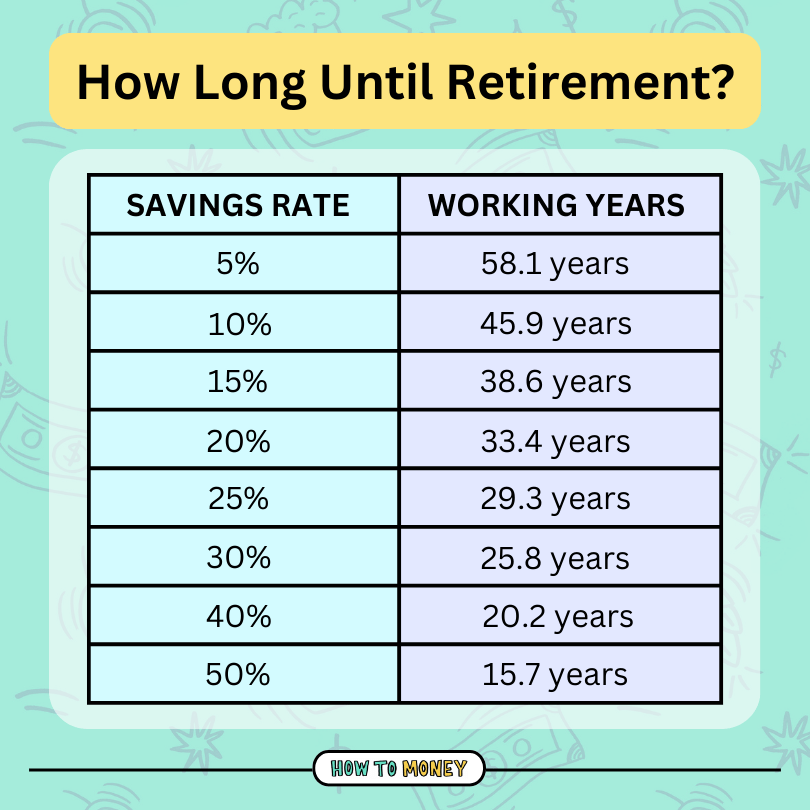
Understanding percentage savings allows for the setting of more informed and achievable financial goals. Instead of simply aiming to “save more money,” you can articulate goals like “reduce discretionary spending by 15% this quarter” or “increase investment returns by 2% next year.” Such percentage-based goals are specific, measurable, and provide clear benchmarks for progress. They make large, daunting financial aspirations (e.g., saving for a down payment or retirement) digestible into smaller, actionable steps. For a business, this might translate to “achieve a 7% reduction in operating costs across all divisions” or “improve procurement savings by an average of 3% on all new contracts.” These precise goals are easier to track and celebrate, fostering motivation and consistency.
Identifying Opportunities for Improvement
Regularly calculating and reviewing percentage savings acts as a diagnostic tool. In personal finance, if you consistently achieve 20% savings on your grocery budget but only 5% on your entertainment spending, it highlights where further optimization efforts might be most effective. This allows for targeted adjustments rather than broad, less impactful cuts. For businesses, identifying departments or projects with lower-than-average percentage savings signals areas requiring closer scrutiny, process improvements, or renegotiation strategies. This analytical approach drives continuous improvement, ensuring that resources are always being utilized as efficiently as possible and that potential cost efficiencies are not overlooked. It empowers data-driven decision-making, shifting from reactive spending to proactive financial management.
Fostering a Savings-Oriented Mindset
Perhaps one of the most significant long-term benefits of understanding percentage savings is the cultivation of a savings-oriented mindset. When you consistently see and quantify the proportional impact of your efforts, it reinforces the value of prudent spending and strategic financial planning. This mindset encourages a proactive approach to financial health, where seeking value, negotiating effectively, and optimizing expenditures become second nature. For individuals, this translates into greater financial resilience and the accelerated achievement of personal financial milestones. For businesses, it instills a culture of cost-consciousness and efficiency that pervades all levels of the organization, ultimately bolstering profitability and sustainability. The ability to articulate savings not just in dollars but in meaningful percentages fosters a deeper appreciation for financial discipline and its powerful cumulative effects over time.
aViewFromTheCave is a participant in the Amazon Services LLC Associates Program, an affiliate advertising program designed to provide a means for sites to earn advertising fees by advertising and linking to Amazon.com. Amazon, the Amazon logo, AmazonSupply, and the AmazonSupply logo are trademarks of Amazon.com, Inc. or its affiliates. As an Amazon Associate we earn affiliate commissions from qualifying purchases.