
Understanding how to calculate a percentage off is more than just a convenient trick for seasonal shopping; it is a fundamental pillar of financial literacy. Whether you are a consumer trying to stretch a household budget or a business owner evaluating the impact of a promotional campaign on your bottom line, the ability to manipulate these figures with precision is essential. In the realm of personal and business finance, percentages represent the language of change, growth, and savings.
By mastering the mechanics of discounts, you empower yourself to make objective decisions, avoiding the psychological traps set by retailers and ensuring that every dollar saved is a dollar that can be redirected toward wealth-building activities.

The Mathematical Foundation of Discounting
At its core, calculating a percentage off is a two-step arithmetic process. However, to truly integrate this into your financial toolkit, you must understand the relationship between the original price, the discount rate, and the final cost.
The Standard Formula for Manual Calculation
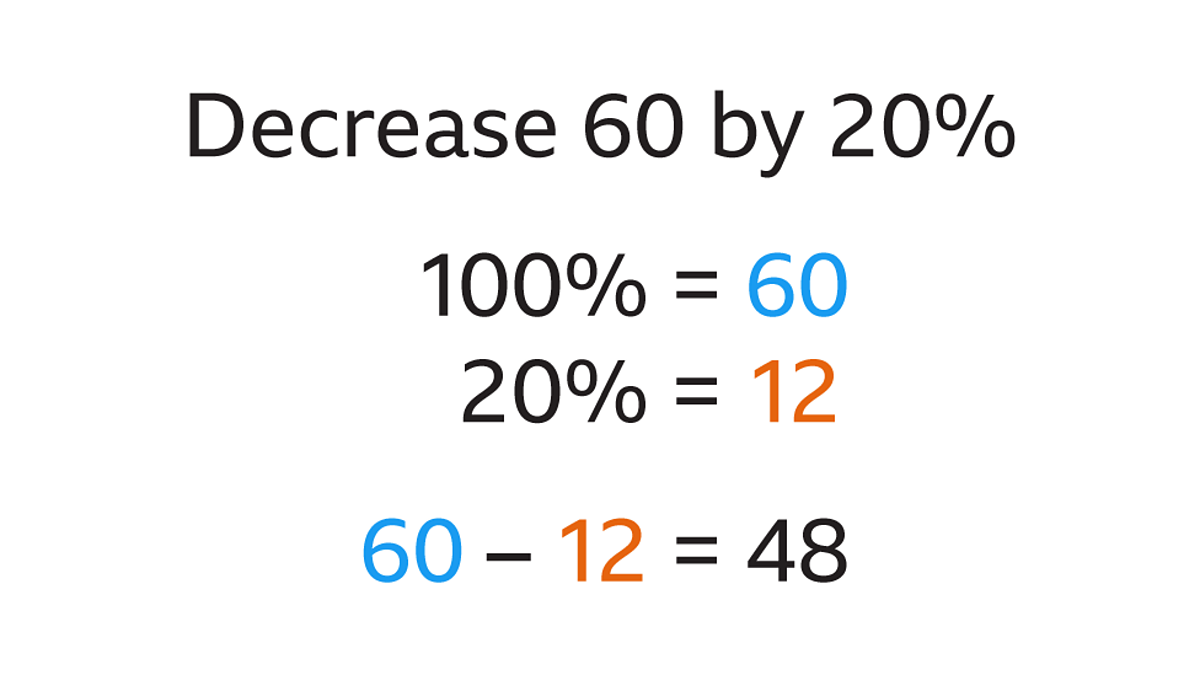
To find the amount you will save (the discount value), you multiply the original price by the decimal form of the percentage. To find the final price, you subtract that savings from the original amount.
- Find the Discount Amount:
Original Price × (Discount Percentage / 100) = Savings - Find the Final Price:
Original Price - Savings = Final Price
For example, if a high-yield financial seminar is priced at $500 with a 15% early-bird discount:
- $500 × 0.15 = $75 (Savings)
- $500 – $75 = $425 (Final Price)
The Unitary Method for Fast Estimation
In a fast-paced environment—such as a real estate negotiation or a time-sensitive investment opportunity—you may not have a calculator handy. The “10% Method” is a staple of mental financial math. To find 10% of any number, simply move the decimal point one place to the left. Once you have 10%, you can easily find other increments:
- For 5%: Take half of the 10% value.
- For 20%: Double the 10% value.
- For 25%: Divide the original price by four.
This mental agility allows for “on-the-fly” budgeting, ensuring you never overextend your liquidity based on a misunderstanding of a price reduction.
Calculating the Reverse: Finding the Original Price
Occasionally, in financial auditing or tax preparation, you may know the final price and the discount rate, but need to find the original value. The formula is:
Final Price / (1 - Discount Decimal) = Original Price
If you paid $80 for a stock market subscription after a 20% discount, the original price was $80 / 0.80, which equals $100. Understanding this reverse calculation is vital for verifying invoice accuracy and assessing the true value of assets.
Strategic Budgeting: The Role of Discounts in Personal Wealth
From a personal finance perspective, a discount is only a “saving” if it aligns with your pre-existing financial goals. Understanding the math behind “percentage off” helps you navigate the thin line between frugal living and impulsive spending.
The Sales Trap and Opportunity Cost
Retailers use percentages to trigger an emotional response. A “40% off” sign often creates a sense of urgency that overrides rational budgeting. In finance, we must consider the opportunity cost. If you buy an item for $60 that was originally $100, you didn’t “save” $40; you spent $60.
To turn a discount into a genuine financial win, the “saved” $40 should be immediately transferred into a high-yield savings account or an investment portfolio. If the $40 remains in your checking account and is eventually spent on coffee or entertainment, the percentage off provided no long-term benefit to your net worth.
Integrating Discounts into Monthly Cash Flow Projections
For those who manage their household like a business, discounts are variables in a cash flow statement. When a recurring expense—such as insurance premiums or software subscriptions—offers a percentage off for annual versus monthly billing, the calculation becomes an Internal Rate of Return (IRR) problem.
If a service costs $20/month ($240/year) but offers a 20% discount for an annual payment ($192), you are effectively earning a 20% return on that capital by paying upfront. In a market where a standard savings account might yield 4-5%, choosing the discounted annual payment is a mathematically superior financial move.

Business Finance: Leveraging Discounts for Profitability
For business owners and freelancers, the “percentage off” calculation is a double-edged sword. While it can drive volume and clear inventory, it directly impacts gross margins and net profitability.
Gross Margin vs. Discount Rates
A common mistake in business finance is failing to realize that a 10% discount does not equal a 10% reduction in profit; it is often much higher. If your product costs $60 to make and you sell it for $100, your profit is $40 (a 40% margin).
If you offer a 20% discount, the new sale price is $80. Your cost remains $60, leaving you with only $20 in profit. By offering a 20% discount, you have slashed your profit by 50%. Understanding this mathematical reality is crucial when designing promotional strategies to ensure that “percentage off” campaigns don’t inadvertently lead to a cash flow crisis.
The Impact of Cumulative and Successive Discounts
In B2B (Business to Business) transactions, “stackable” discounts are common. It is vital to remember that percentages are not additive; they are multiplicative. If a vendor offers a 10% trade discount and an additional 5% discount for early payment, the total discount is not 15%.
- Original Price: $1,000
- Less 10%: $900
- Less 5% of $900: $45 ($900 – $45 = $855)
- Effective Discount: 14.5%
Precision in these calculations ensures that accounts payable and receivable departments maintain accurate ledgers and that the business maintains its projected EBITDA (Earnings Before Interest, Taxes, Depreciation, and Amortization).
Digital Tools and Financial Calculators for Precision
While manual calculation builds the mental “muscle” for financial literacy, modern finance relies on digital precision. Leveraging tools ensures that human error does not compromise a budget or a business deal.
Leveraging Spreadsheet Functions for Bulk Calculations
In platforms like Microsoft Excel or Google Sheets, calculating percentage off across hundreds of inventory line items or budget entries is a matter of simple syntax.
To calculate a 20% discount on a value in cell A1, the formula is =A1*0.80. To show only the savings, the formula is =A1*0.20. Using absolute cell references (e.g., $B$1) for the discount rate allows a financial analyst to perform “what-if” scenarios, instantly seeing how changing a discount from 15% to 18% impacts the total quarterly revenue.
Finance Apps and Real-Time Comparison Tools
In the era of FinTech, mobile applications have moved beyond simple calculators. Many personal finance apps now include “Discount Comparison” modules that factor in sales tax and shipping costs. When evaluating a “percentage off” deal online, it is essential to calculate the “landed cost”—the final price after all variables are applied. A 10% discount on an item with high shipping fees may be more expensive than a full-price item with free shipping.
Psychological Finance: Percentages vs. Fixed Dollar Amounts
The way a discount is framed—the “percentage off” versus a “dollar amount off”—plays a significant role in consumer behavior and financial decision-making. This is often referred to in behavioral economics as “The Rule of 100.”
The Rule of 100 in Financial Planning
The Rule of 100 suggests that for items under $100, a percentage discount appears more attractive (e.g., 25% off a $20 shirt sounds better than $5 off). Conversely, for items over $100, a dollar amount often carries more weight (e.g., $500 off a $2,000 laptop sounds better than 25% off).
As a savvy financial actor, you must train yourself to convert these figures back and forth. By converting a “20% off” marketing lure into a hard dollar amount, you can better judge whether the “savings” are worth the expenditure of your hard-earned capital.
Evaluating Long-Term Savings on Recurring Costs
Finally, the most powerful use of the “percentage off” calculation is in evaluating long-term financial commitments. A 0.5% reduction in a mortgage interest rate or a 1% lower expense ratio on a mutual fund might seem negligible as a percentage. However, when calculated over 30 years using compound interest math, these small percentages off represent tens, or even hundreds, of thousands of dollars.
In conclusion, knowing how to calculate a percentage off is the first step in transitioning from a passive spender to an active financial manager. By applying these formulas with a focus on opportunity cost, margin protection, and long-term value, you transform a simple math problem into a powerful engine for financial growth. Regardless of the scale—from a grocery bill to a corporate merger—the logic remains the same: precision in percentages leads to prosperity in totals.
aViewFromTheCave is a participant in the Amazon Services LLC Associates Program, an affiliate advertising program designed to provide a means for sites to earn advertising fees by advertising and linking to Amazon.com. Amazon, the Amazon logo, AmazonSupply, and the AmazonSupply logo are trademarks of Amazon.com, Inc. or its affiliates. As an Amazon Associate we earn affiliate commissions from qualifying purchases.