
In the world of finance, whether you are managing a multimillion-dollar corporate portfolio or simply trying to balance a household budget, the ability to calculate and interpret percentages is perhaps the most critical mathematical skill you can possess. Percentages are the universal language of money; they describe growth, quantify risk, define interest rates, and measure the efficiency of investments.
Understanding how to calculate a percentage from numbers is not just a schoolroom exercise—it is a foundational pillar of financial literacy. When you see a “5% return on investment” or a “2.5% mortgage rate,” those numbers represent the velocity and direction of your wealth. This guide will take you through the essential methodologies for calculating percentages within the context of money, investing, and business finance, ensuring you have the tools to make informed, data-driven financial decisions.
The Fundamental Formula for Financial Literacy
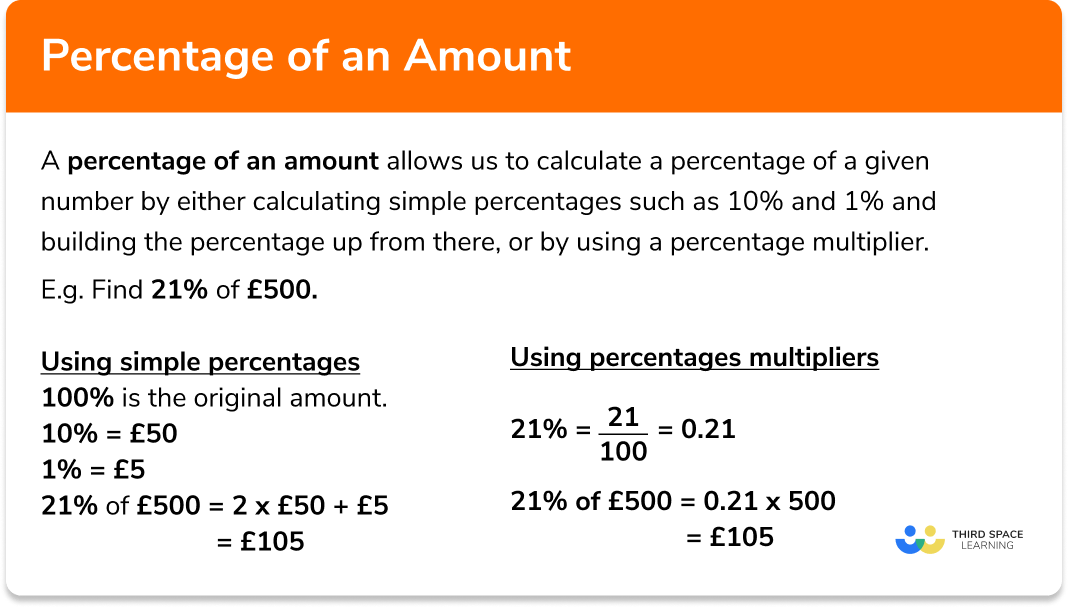
Before diving into complex investment strategies, one must master the basic arithmetic of percentages. At its core, a percentage is a way to express a number as a fraction of 100. In the context of money, this usually represents a portion of a total sum, such as a tax rate, a discount, or a portion of an annual budget.
Understanding the Base Equation
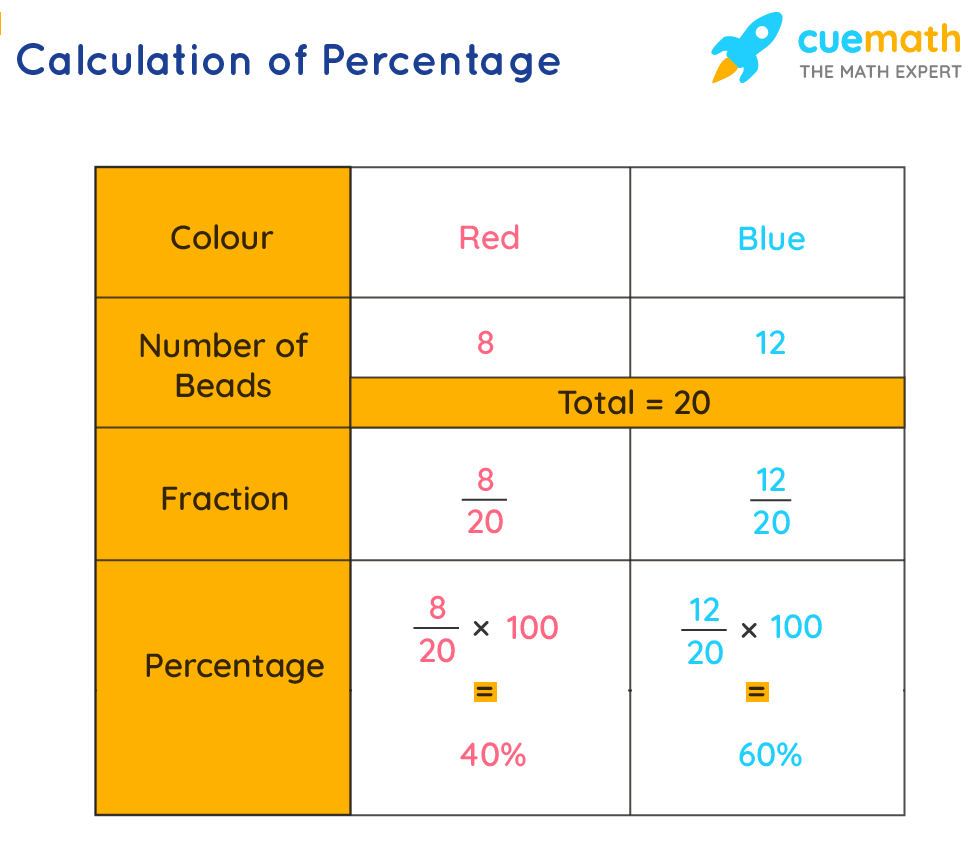
The simplest way to calculate a percentage from two numbers is to divide the “part” by the “whole” and then multiply the result by 100. The formula looks like this:
Percentage (%) = (Value / Total Value) × 100
For example, if you are looking at your monthly income of $5,000 and you realize you spent $1,200 on rent, calculating the percentage of your income dedicated to housing is straightforward: ($1,200 / $5,000) = 0.24. Multiplying 0.24 by 100 gives you 24%. In financial planning, knowing this percentage is far more valuable than the raw number alone, as it allows you to compare your spending against standard financial benchmarks, such as the rule that housing should ideally consume less than 30% of your gross income.
Common Financial Scenarios: Discounts and Increases
In personal finance, you frequently encounter percentage increases (like inflation or raises) and percentage decreases (like market drops or sales).
To calculate a percentage increase, you subtract the original value from the new value, divide by the original value, and multiply by 100.
Formula: [(New Value – Old Value) / Old Value] × 100
If your side hustle earned $1,000 last month and $1,300 this month, your growth is [($1,300 – $1,000) / $1,000] × 100 = 30%. Conversely, if you are shopping and see an item marked down from $200 to $150, the percentage discount is calculated the same way: [($200 – $150) / $200] × 100 = 25%. Mastering these quick shifts between raw numbers and percentages allows you to assess the “value” of a deal or the “momentum” of your earnings instantly.
Calculating Investment Returns and Growth
For investors, percentages are the primary metric used to evaluate performance. Looking at the dollar amount of a gain is often misleading; a $1,000 gain on a $10,000 investment is impressive, while a $1,000 gain on a $1,000,000 investment is negligible.
ROI (Return on Investment)
The most common application of percentage calculation in the “Money” niche is the Return on Investment (ROI). This metric tells you how efficiently your capital is working for you.
To calculate ROI:
ROI = [(Current Value of Investment – Cost of Investment) / Cost of Investment] × 100
If you purchased shares in a tech company for $5,000 and sold them a year later for $6,200, your net profit is $1,200. To find the percentage return: ($1,200 / $5,000) × 100 = 24%. In the world of investing, comparing the ROI of different assets—stocks, bonds, or real estate—is the only way to determine where your money is best utilized. A high-yield savings account offering 4% might seem safe, but when compared to a diversified index fund averaging 10% over a decade, the percentage difference represents a massive divergence in long-term wealth.
Compound Interest vs. Simple Interest
While basic percentages deal with static numbers, financial growth is often dynamic. Understanding the percentage-based nature of compound interest is vital for long-term wealth building. Simple interest is calculated only on the principal amount, while compound interest is calculated on the principal plus the accumulated interest of previous periods.
When you calculate the annual percentage yield (APY) on a bank account, you are looking at the effect of compounding. Even a small 1% difference in a percentage rate can result in tens of thousands of dollars in difference over a 30-year investment horizon. This “math of momentum” is why financial advisors emphasize starting early; the percentage of growth applies to an ever-increasing “whole,” creating an exponential curve.
Mastering Business Finance: Margins and Markups

For entrepreneurs and business owners, percentages are the difference between a thriving enterprise and bankruptcy. Two of the most misunderstood yet vital percentage calculations are profit margins and markups. While they use the same numbers, they tell very different stories about your business’s health.
Profit Margin Calculation
Profit margin is a percentage that expresses how much of every dollar of sales a company actually keeps as profit.
Gross Profit Margin = [(Total Revenue – Cost of Goods Sold) / Total Revenue] × 100
If your business sells a product for $100 and it costs $60 to manufacture, your gross profit is $40. The profit margin is ($40 / $100) × 100 = 40%. This percentage is a key indicator of operational efficiency. If your revenue increases but your profit margin percentage decreases, it suggests that your expenses are growing faster than your sales, a red flag for any business owner.
Revenue Share and Commission Structures
In the world of online income and side hustles, percentages often dictate how earnings are split. If you are an affiliate marketer or a salesperson, you likely work on a commission basis. Understanding how to calculate your “cut” from the total sale is essential for verifying your paychecks.
If a platform takes a 15% commission on your sales and you sell $3,000 worth of services, you must be able to calculate the deduction: ($3,000 × 0.15) = $450. Your net take-home is $2,550. Conversely, if you are looking to hire a freelancer for your business, you might offer them a percentage of the project’s profit. Being able to toggle between these percentages allows for transparent and fair financial negotiations.
Personal Budgeting and Debt Management
On a personal level, percentages help you visualize your financial life in a way that raw numbers cannot. They provide a framework for stability and a roadmap for debt elimination.
The 50/30/20 Rule
One of the most popular personal finance frameworks is the 50/30/20 rule. It suggests that you should allocate your after-tax income into three percentage-based categories:
- 50% to Needs: Rent, groceries, utilities, and insurance.
- 30% to Wants: Dining out, travel, and hobbies.
- 20% to Savings and Debt Repayment.
To implement this, you must convert your total monthly income into these three “buckets” using percentage math. If you earn $4,000 a month, you know immediately that your “Needs” should not exceed $2,000. If your rent alone is $1,800, you are operating at 45% of your total budget on just one “Need,” leaving only 5% ($200) for all other essentials. This percentage-based perspective reveals the fragility of a budget that raw numbers might hide.
Interest Rates on Loans and Credit
Debt is the inverse of an investment; it is a percentage that works against you. When you carry a balance on a credit card with a 22% APR (Annual Percentage Rate), you are essentially paying a “fee” for the privilege of using that money.
To understand the daily cost of debt, you can divide the annual percentage by 365. A 22% APR becomes approximately 0.06% per day. While that seems small, applying that percentage to a $10,000 balance means you are losing $6 every single day to interest. Calculating the percentage of your monthly payments that goes toward interest versus the principal is the first step in the “debt avalanche” or “debt snowball” methods of financial recovery.
Advanced Financial Tools and Automation
While manual calculation is a vital skill, the modern financial landscape relies on tools to handle complex, multi-variable percentage changes.
Utilizing Spreadsheets for Complex Percentages
For serious financial tracking, software like Excel or Google Sheets is indispensable. These tools use specific syntax to calculate percentages automatically. For instance, to find the percentage change between cell A1 (old price) and B1 (new price), you would use the formula =(B1-A1)/A1 and then format the cell as a percentage.
Using spreadsheets allows you to run “what-if” scenarios. What if your investment returns drop from 8% to 6%? What if you increase your 401(k) contribution by 2%? By automating these percentage calculations, you can project your net worth decades into the future, providing a level of financial clarity that is impossible with mental math alone.
Avoiding Common Mathematical Pitfalls in Finance
One of the most dangerous mistakes in money management is the “asymmetric return” trap. If an investment portfolio loses 50% of its value, many people mistakenly believe it only needs a 50% gain to get back to even.
However, the math says otherwise. If $100 drops by 50%, you have $50. To get from $50 back to $100, you need a $50 gain. But $50 is 100% of your current $50 balance. Therefore, a 50% loss requires a 100% gain just to break even. Understanding this percentage relationship is crucial for risk management. It illustrates why preserving capital is often more important than chasing high-percentage gains: the math of recovery is always harder than the math of loss.
By mastering the calculation of percentages from numbers, you move from being a passive observer of your finances to an active strategist. Whether you are optimizing a business margin, calculating an investment’s ROI, or simply sticking to a 50/30/20 budget, these percentages are the compass points that will guide you toward long-term financial freedom.
aViewFromTheCave is a participant in the Amazon Services LLC Associates Program, an affiliate advertising program designed to provide a means for sites to earn advertising fees by advertising and linking to Amazon.com. Amazon, the Amazon logo, AmazonSupply, and the AmazonSupply logo are trademarks of Amazon.com, Inc. or its affiliates. As an Amazon Associate we earn affiliate commissions from qualifying purchases.